







עולם המדע ועולם הבדיה
Copyright © 2024
עולם המדע ועולם הבדיה
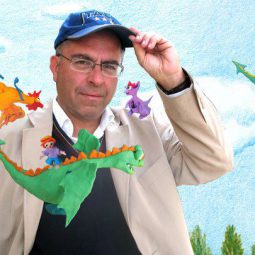
Artwork in photo: Rotem Omri


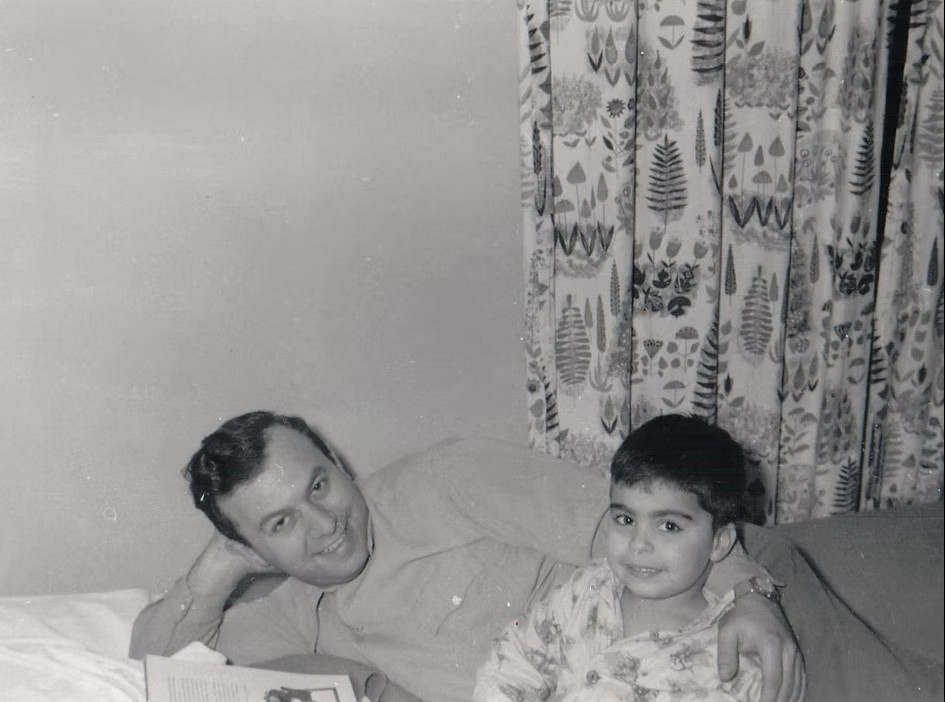
האמנתי בפיטר פן.

“And what do you think they had on the shelf? aha, aha,
And what do you think they had on the shelf?
If you want to find out, go look for yourself…”

על המדף מה היה?
אם תרצה לדעת חפש בעצמך…
מדענים מנסים להבין כיצד היקום עובד. הם מחפשים תשובה או תשובות לשאלות מסוימות.

סופרים יכולים להרשות לעצמם לטעות ולבדות.
הם יכולים לדון בשאלות שלמדענים אסור.הם יכולים ליצור עולם דמיוני.
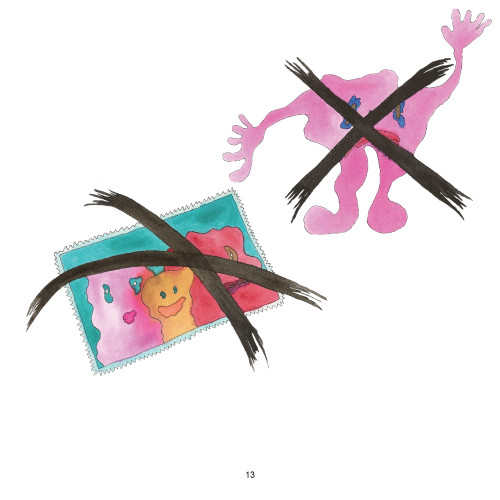
לַחַיְדַּק אֵין פָּנִים
כְּדֵי לְחַיֵּךְ,
גַּם זְרוֹעוֹת אֵין לוֹ –
הוּא לֹא מְנַפְנֵף.
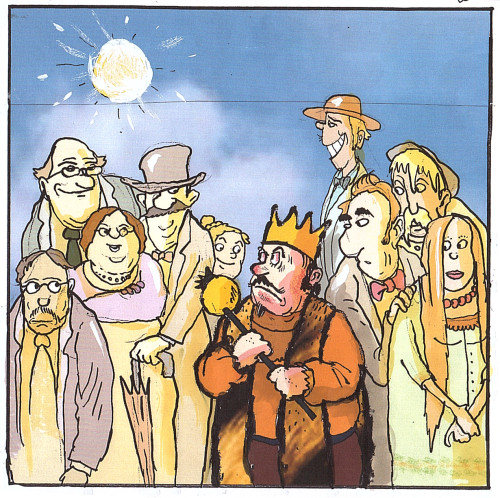
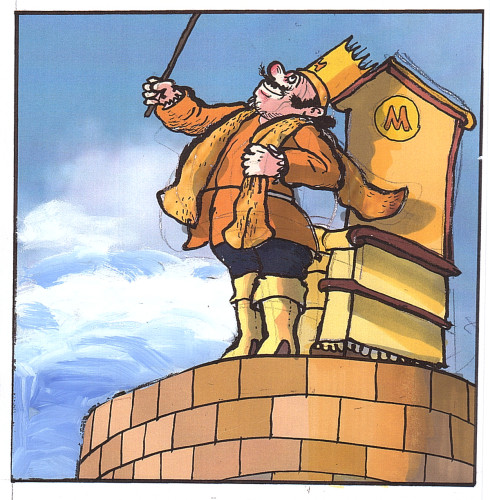
Scientists might deny that witches exist. And of course, flying on a kitchen broom defies the laws of gravity.
Storytellers have no problems with either. But they might ask whether witches get decent dental care.
Illustrations: Tali Niv-Dolinsky, from “Witch Wizelda and the Talking Toothbrush“
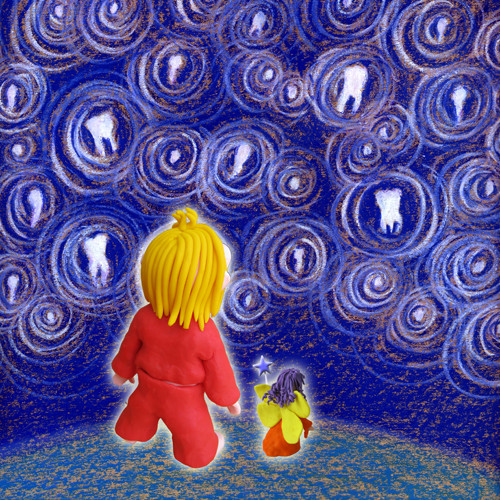
Scientists might argue that there is no planet at the end of the universe.
But for a storyteller, it makes perfect sense that the planet at the end of the universe is where the tooth fairies hang children’s teeth to shine and glow bright.
Illustration: Rotem Omri, From “Where the Teeth Go“
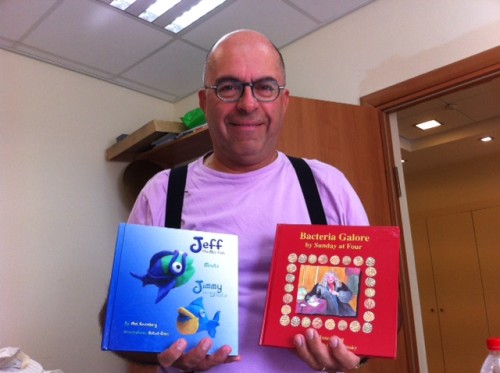
As an academic I was sensitive to the possibility of peer ridicule in my storytelling career. My first published book for children was an objective account of what bacteria are. It was published by an arm of Tel Aviv University. I was forty-five years old.
Illustrations: Tali Niv-Dolinsky, from “Bacteria Galore by Sunday at Four”
And when I subsequently began to write whimsical stories about witches and fairies, they were tooth witches and tooth fairies. The books thus had some connection with my scientific career at the Dental Faculty. Was I a chicken? You bet.
Illustration: Tali Niv-Dolinsky, from “Witch Wizelda and the Talking Toothbrush“
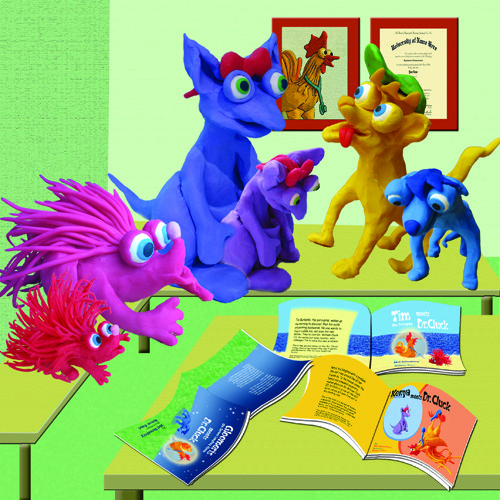
“אני הדוקטור תרנגול
רופא אדיר, הכול יכול.
אבי היה רופא בכיר,
שמעו יצא בכל העיר.
סבי היה רופא מוכר
שמעו יצא בכל הכפר.
אני הולך לי בדרכם
מושיט כנפיים לכולם
נותן מזור לכל מוזר –
על כן אני רוקד ושר.
אז אם אתה גמל גיבן
ג’ירף נמוך, דוב לא-ישן –
אל תתייאש, אל תתבושש
קרא בקול לתרנגול!
קרא בקול לתרנגול!
קד הדוקטור קידה עמוקה
תופף במקור על הרצפה
לגם לגימה מבקבוק השתייה
וקרא למטופל הבא.
Nowadays, I write about whatever I feel like. I write about performing mice and zebras, hungry lions, clever skunks, tiny singing whales, dragons and ice cream, kangaroos, porcupines, hyenas and their upside-down rooster doctor…
Illustration: Harriett Goitein, from “Why I Love Yogurt“
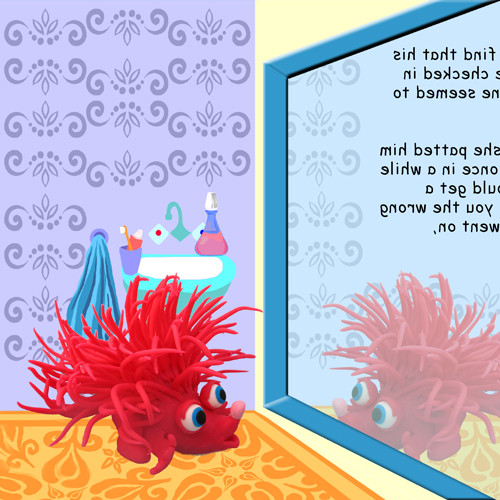
…fish with glasses and goggles, fraidy bears, mean businessmen, strict principals and frustrated kings, kind elevator men, and bananas with an attitude.
Heck, it only took me 64 years.
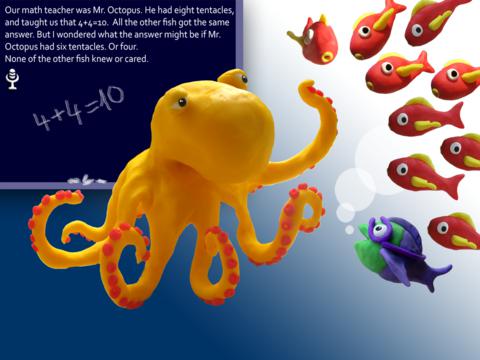
Illustration by Rotem Omri, from “Jeff the Mis-fish Meets Jimmy the Whale“.
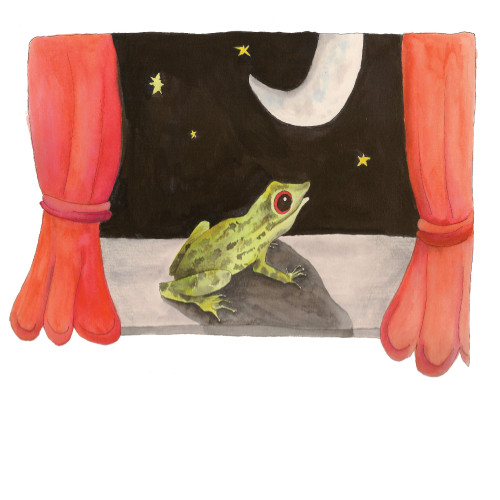
Finally, I should add that it’s much harder to be a children’s book writer than a scientist. The chance of having a story published by a bona fide publisher is about one in 1000 or less, much less than the possibility of publishing a scientific article.
You are completely dependent on the skills of your illustrator partner.
And you are at the mercy of several difficult audiences: kids (who demand a good story), parents (who demand a story with a moral) and the child within you (who is always critical of the adult you’ve grown to be).
On the other hand, you get to invent as many wrong answers to any question as you dare. You can create a new animal in minutes (takes evolution forever), make up a new planet or even an entire universe. Or, like Lewis Carroll, concoct a new word that never existed before. A nevereverinventedbeforeweirdwerd. Or gnot.
So, after being a scientist for so many years, trying to figure out the way we are, and worrying about being wrong, I’d rather be a storyteller, thinking up ways that we aren’t worrying about not getting things ‘wrong’ enough.
Published: Mar 26, 2024
Latest Revision: Mar 26, 2024
Ourboox Unique Identifier: OB-116538
Copyright © 2024