






by emma taieb
Copyright © 2021
La Mer – Charles Trenet

Copyright © 2021
How it began
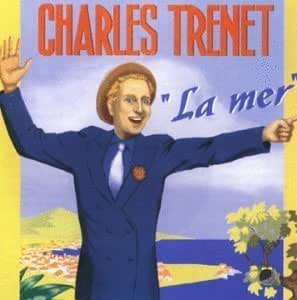
La Mer is a song composed and performed by Charles Trenet officially in 1946. Actually this song has a story. Charles Trenet, was travelling with his friends Roland Gerbeau and Leo Chauliac, respectively singer and pianist abord a train. Observing the landscape, and especially the Thau’s pond through his window, Charles Trenet wrote the song La Mer in about 20 minutes. The music was inspired by the song Heart and Soul and arranged with the help of Leo Chauliac.
Charles Trenet didn’t believe his song worth a lot, he tried to sell it to the singer Suzy Sollidor which refused the offer pretexting the theme of the sea is redundant. In 1945 Roland Gerbeau recorded the song and in 1946 Charles Trenet himself recorded it, pushed by his friends.
Link to the song video: https://youtu.be/PXQh9jTwwoA
The song’s big succes
The same year Charles Trenet recorded the song, he travelled to the USA where the american version of the song “Beyond the sea” was written by Jack Lawrence. The american version allowed the song to achieve an enormous succes.
From the seventies, the song frequently appeared in cinema, in french and american films such as A safe Place (1971), Edith et Marcel(1983), L.A. Story (1991) and many others. Even recent films as Beyond The Sea (2004),Mr. Bean’s Holiday (2007), Automata (2013) or Dansata (2014) used the song.
Moreover, it appears in lots of famous series like Derrick, X-files, Lost, White Collar and even in The Simpsons, in the episode The Squirt and the Whale where it replaced the ending theme song.
1.The emotionnal connection:
Charles Trenet was known as the “chanteur fou” (“the crazy singer”),was famous until then for the puzzling fantasy of his texts referring directly to the most contemporary avant-garde poetry and his american jazz style. However, in 1945, according to the general context, he changed his style for a more melancholic one. With the 2nd world war and during the nazi occupation, Charles Trenet expressed his hope for a return to the quiet times of recklessness through the song of La Mer. This hope was shared by the majority of the people at this time, allowing them to identify with the song.
Moreover, the theme of the sea used by Charles Trenet is universal and timeless, therefore allowing a wide public to identify with the song even today.
The song fits for a calm and relaxed mood, and is endowed with a lulling melody making it very pleasant and soothing.
2. The song’s components:
The song is composed on the simple principle of an orchestral crescendo, a ample melody and a typical jazz structure.
It is paced with rhymes and repetitions such as the “La mer..” at the beggining of each verse and the same verses are reapeated along the song making it very easy to sing along.
Furthermore, the tune is very catchy.
There is a tight fit between the words and the music, for example, the term of the sea lasts several times, and is sung with deepness, thus concording with the strenght and the infinity of the sea.
There is also some puns between the words “mer” and “mere” (sea and mother) since there is a humanization of the sea that “cradles our heart for life”.
Beside the song’s lyrics:
La mer
Qu’on voit danser le long des golfes clairs
A des reflets d’argent
La mer
Des reflets changeants
Sous la pluie
La mer
Au ciel d’été confond
Ses blancs moutons
Avec les anges si purs
La mer bergère d’azur
Infinie
Voyez
Près des étangs
Ces grands roseaux mouillés
Voyez
Ces oiseaux blancs
Et ces maisons rouillées
La mer
Les a bercés
Le long des golfes clairs
Et d’une chanson d’amour
La mer
A bercé mon coeur pour la vie.
La mer
Qu’on voit danser le long des golfes clairs
A des reflets d’argent
La mer
Des reflets changeants
Sous la pluie
La mer, La mer
Au ciel d’été confond
Ses blancs moutons
Avec les anges si purs
La mer bergère d’azur
Infinie
Voyez, Voyez
Près des étangs
Ces grands roseaux mouillés
Voyez, Voyez
Ces oiseaux blancs
Et ces maisons rouillées
La mer, La mer
Les a bercés
Le long des golfes clairs
Et d’une chanson d’amour
La mer
A bercé mon coeur pour la vie.
3. The song’s covers:
The song has many covers, both in french and in english.
In 1946, while Charles Trenet lived in America for a few years, the american version of the song “Beyond The Sea” is created by Jack Lawrence. The U.S version marked a turning point in the song history. If until then it hadn’t any strong impact, the translation into “Beyond the sea” propelled the song popularity to the universal rank and developed it into a chanson classic and jazz standard.
Popular singers such as Bobby Darin, George Benson, Rogers Williams and others covered the american version of the song. Similarly, in France, famous singers as Dalida or Patricia Kaas sang the song.
La Mer was also translated into Russian, Italian and Dutsch.
By 1966 there was over 100 recordings of the song and by 2001 there was more than 4000 recordings and 70 millions copies selled.
Beyond the Sea Lyrics :
Somewhere waiting for me
My lover stands on golden sands
And watches the ships that go sailin’
She’s there watching for me
If I could fly like birds on high
Then straight to her arms
I’d go sailing
It’s near beyond the moon
I know beyond a doubt
My heart will lead me there soon
We’ll kiss just as before
Happy we’ll be beyond the sea
And never again I’ll go sailing
My heart will lead me there soon
We’ll meet (I know we’ll meet) beyond the shore
We’ll kiss just as before
Happy we’ll be beyond the sea
And never again I’ll go sailing
So long sailing
Bye bye sailing
Conclusion
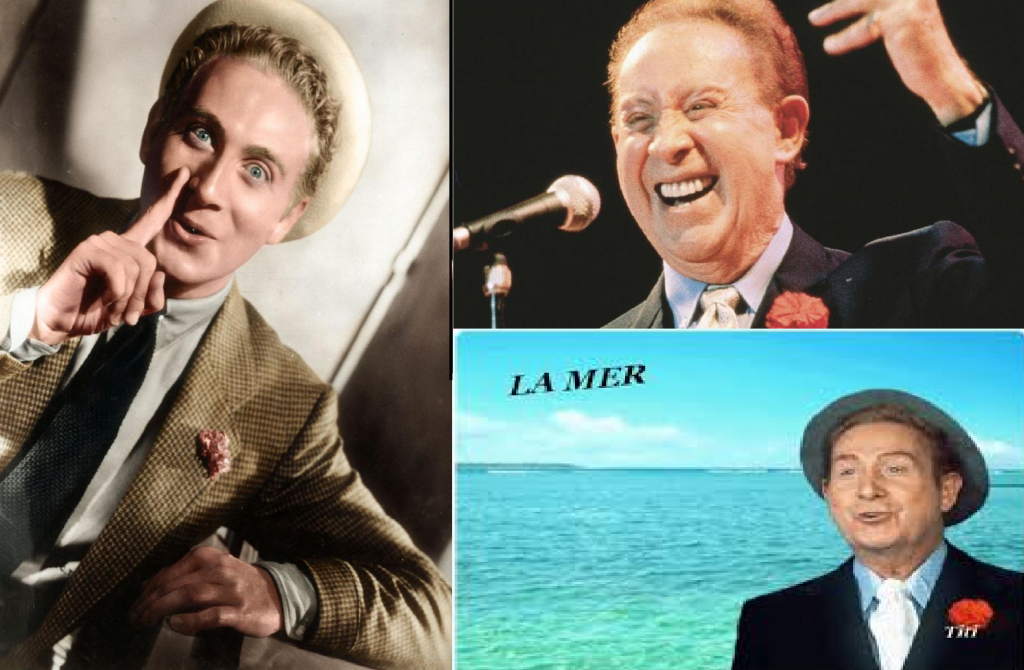
Charles Trenet wrote more than 1000 songs and was one of the most popular french singers from 1935 to 1965. His famous song La mer, transmits to the audience a feeling of cheerfulness, serenity through a vision of a world full of beauty, punctuated by a catchy rythm and melody.
The translation “Beyond the sea” made the song a jazz standard, which embodies a liberal and popular french poesy capable of turning the reality into something better.
Charles Trenet was one of the most admired singers of his generation and remains a french song’s model. Serge Gainsbourg called him as ” passeur de reves” (dream catcher) and many singers such as Georges Bassens, Charles Aznavour, Michel Polnareff or Jacques Brel were part of his big admirers.
Finally, when the singer passed away in 2001, the song has been recorded more than 4000 times in diverse languages.
Published: Dec 18, 2021
Latest Revision: Dec 26, 2021
Ourboox Unique Identifier: OB-1249192
Copyright © 2021

 Skip to content