






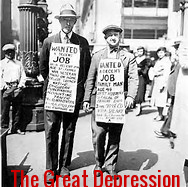
The Great Depression

Copyright © 2016
Americans thought everything was going good, until the Stock Market Crash which resulted in the Great Depression. We were shocked, and we thought we would never recover. So here’s how it went..
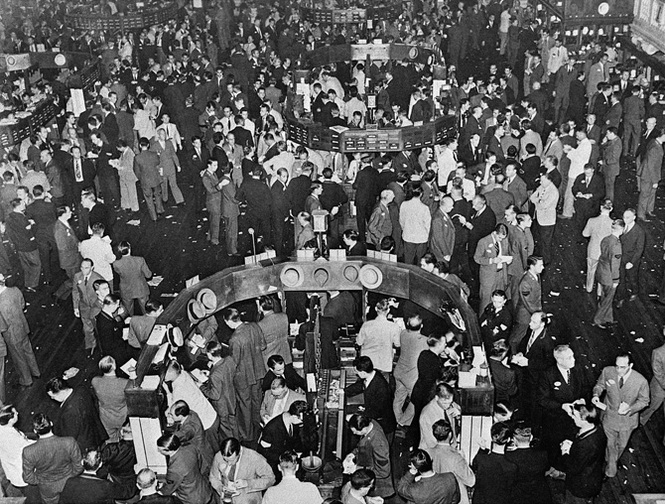
Despite the signs of trouble, us Americans still had confidence in the economy. But by the 1920’s, stock prices rose to an all-time high. Many people invested in the stock market in hopes they would get rich, and I just so happened to be one of these people.
The Stock Market started showing signs of real big trouble in September 1929. And then on October 24, the market took a plunge for the worst. On this day, the bottom fell out of the market. We called that day Black Tuesday and it just kind of stuck. Investors like me tried to sell of their shares as prices plummeted.
After the crash, banks ran out of money because they invested it all in the stock market and they shut down. Businesses were failing and unemployment rates rose highly.
Everybody had lost hope in the economy. Nobody knew what to do anymore because everybody was losing everything. It was one of the saddest, hopeless times us Americans have ever been through.
Although the Stock Market Crash didn’t cause the Great Depression, it was the trigger for the start of the Great Depression.. A time where we never thought we would catch a break.
We blame this time on high tariffs and war debts that cut the foreign market for U.S. goods, a crisis in farming, easy credit, and unequal distribution of income. Although we thought the economy would recover, the worst depression had began for us.
http://www.history.com/topics/great-depression/videos/1929-stock-market-crash
After the crash, banks were failing day by day. More and more each and every day. We couldn’t figure out if the Great Depression was causing the banks to fail, or if the banks failing was causing the Great Depression. Immediately after the stock market crashed, banks were on a run for their money. They had no chance to stay open. They were running out of money. After the crash, that night, hundreds of thousands of customers began to withdraw their deposits. With no money to lend and loans going bad as businesses and farmers were losing their way of life, American banking was at a crisis. Our only hope was when Franklin Roosevelt took office in March 1933. He did his very best to build up the banking system again. He announced a three day bank holiday to stop the run on banks by putting a halt on all financial transactions. When the banks reopened, nearly 1,000 banks were saved. On January 1, 1934, the FDIC was established. Ever since this time, no depositor has lost their funds. This was a step up for us because it gave us a little ounce of hope. I no longer had to hide my money under the mattress, I could take it back to the bank.
http://www.livinghistoryfarm.org/farminginthe30s/movies/dougherty_money_08.html
http://www.livinghistoryfarm.org/farminginthe30s/movies/farr_money_08.html
http://www.livinghistoryfarm.org/farminginthe30s/movies/schmitt_money_08.html

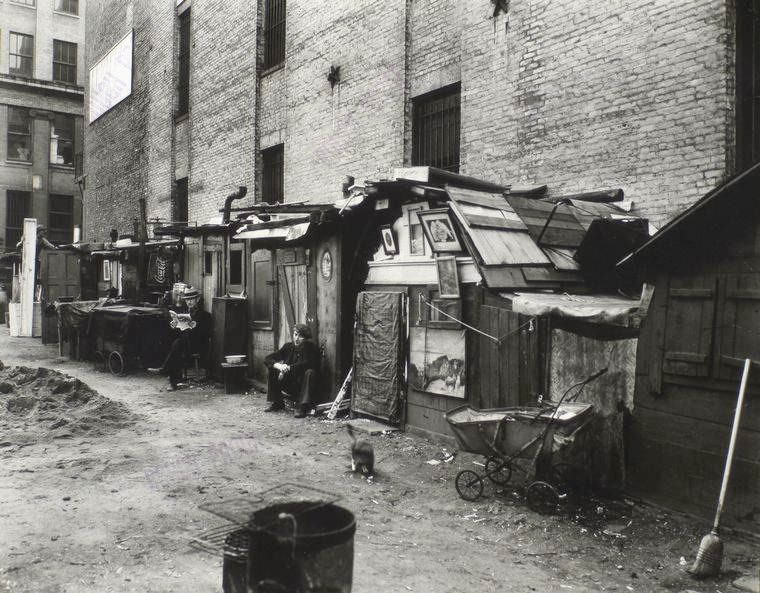
The depression was hitting us at rapid speed. Nearly a third of Americans were unemployed, and nearly two million of us were homeless. Entire families, including mine, found themselves on the streets. We decided to build makeshift shacks in public places. These shanty towns were called “Hoovervilles” after President Herbert Hoover. These Hoovervilles were located in several large cities across the nation, mostly near factories incase they needed work. We would be right there if they stepped out and needed workers that day. We built our shacks out of scrap wood, metal, stone, or whatever materials were available. We took items that the rich threw out and used them to our benefit. A lot of other Hoovervilles were built near rivers so we could have a water source. Ours was built near a river for this reason. We also had a vegetable garden, and we had managed to carry some of our furniture from our old house when we got evicted. These Hoovervilles were our only option even though they were typically grim and unsanitary. They posed health risks for everyone living in them and everyone that lived near them. There was no other form of living for these people who were kicked out of their home so we had to make due with what we had. It was difficult and unusual for us but we had to just work through it because it was all we had.
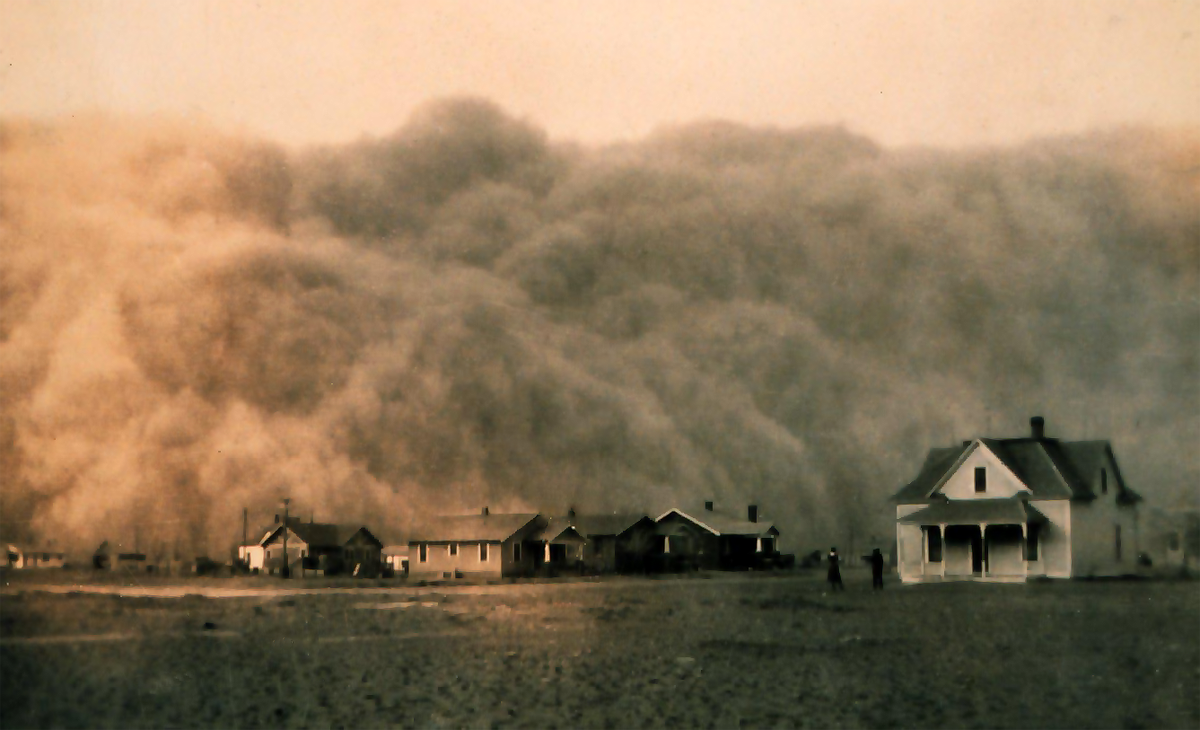
The depression was really hitting us hard. If the banks failing, and people losing their homes and jobs wasn’t enough, the dust bowl hit. The drought that we went through was one of the worst in history. It stretched all the way from the Mississippi Valley to the Great Plains. Crop production dropped by 75% in some areas. My family and I were living in the Great Plains at this time, and we were getting hit by massive dust storms. We knew that years of overgrazing, drought, and high winds created these huge dust storms. It became known as the Dust Bowl. The Dust Bowl covered parts of Kansas, Texas, and Oklahoma. 100 million acres of land were affected by these storms. I remember one day we had, it was April 14, 1935. We called it “Black Sunday” because twenty of the worst dust storms hit the region. It started out as a beautiful, sunny, clear day which was a surprise to us all. We all were outside just enjoying the weather when big black clouds starting to appear out of nowhere. 2.5 million people were forced to move from the Great Plains. It was awful for families such as mine during this time. The dust storms became a common occurrence on the Plains. They destroyed crops, livestock, and pasture land. We couldn’t keep anything clean even if we washed it off a thousand times. All the storms left the homes, fields, and property covered with dirt and sand. Farmers couldn’t grow anything, and the dust was causing health problems. The dust starting to fill up the lungs of many adults and children. The doctor diagnosed this as dust pneumonia. It killed many kids because we couldn’t afford to pay doctors to visit. This dust was just adding on to the depression and we didn’t know how much we could take.
http://www.history.com/topics/dust-bowl/videos
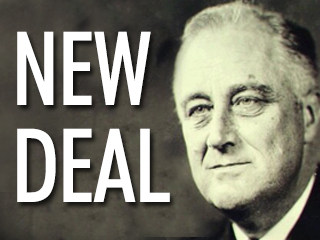
We couldn’t live on anything but hope for tomorrow. That’s the only thing we had going for us. We had hope that we would wake up and all the dust would be gone, and the depression would be over. When we heard that Franklin D. Roosevelt was running for president, we knew things could change. He was promising a “new deal” for America. We knew this was our chance of hope. He felt like the government should step in to help us American people. Roosevelt won the election and we were all excited. We all supported Roosevelt’s idea that the government should support Americans during the hard times instead of the other way around. It’s the government’s duty to help the American people in times of despair was his mindset. As soon as Franklin got into office, he put the new deal into place. During the first 100 days of his presidency, a long list of bills were passed to relieve poverty, reduce employment, and speed economic recovery. His first act was to declare a four-day bank holiday, during which Congress passed the Emergency Banking Bill. This stabilized the banking system and restored the American’s faith in the banking industry. Three months later, he created the FDIC, which federally insured deposits. He passed many more bills all to benefit the American people. Although they didn’t end the depression, the New Deal helped us Americans by taking care of our basic needs and giving us dignity of work and hope.
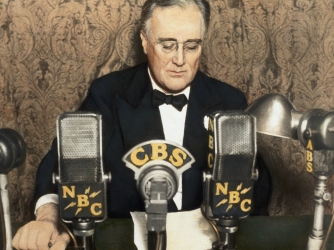
Roosevelt encouraged us in many ways. He was the best thing that had happened to this country during the depression. He cared so much for us that he started these things called Fireside Chats. Roosevelt addressed what was going on in the world, and informed us of new bills over the radio. The radio broadcasts became known as Fireside Chats. He didn’t only inform us through these chats, though. He also encouraged us. He gave us words that made us felt like he cared. He kept us up, and he gave us hope that the depression would end. He made us believe that things would change and we knew he would do everything to make this happen. He made sure we knew he was on our side. The Great Depression was the hardest thing I have ever been through, but I’m glad we had FDR on our side to help us every minute of the way.
The Depression was hard, but it ended. When things are going bad, always remember that they will get better and it will end. You just have to hope for tomorrow because it’s a new day and anything could happen.
Published: Apr 18, 2016
Latest Revision: Apr 18, 2016
Ourboox Unique Identifier: OB-126044
Copyright © 2016