






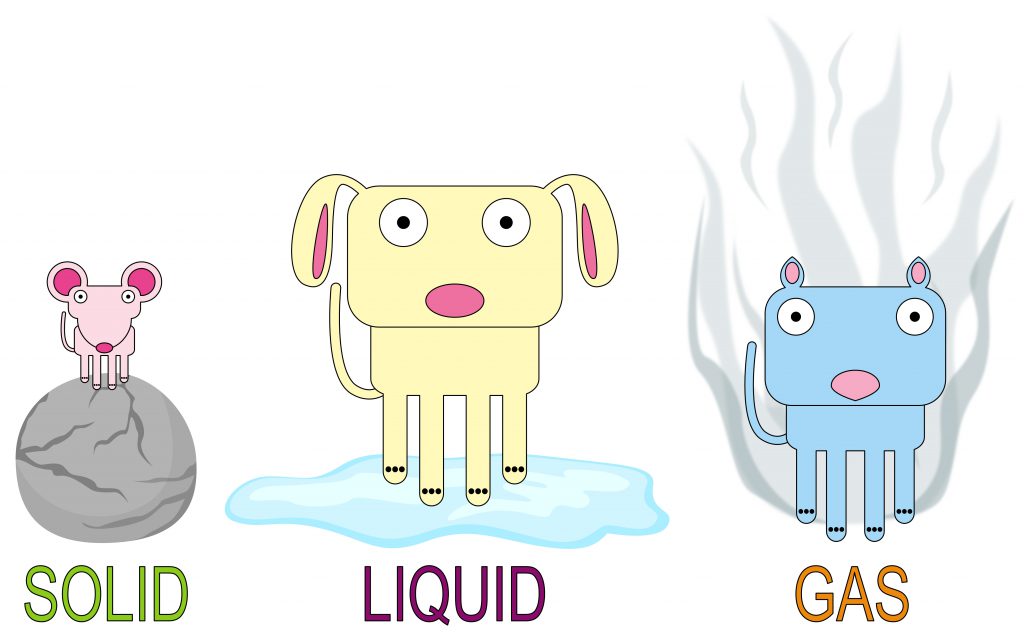
Solid, Liquid, and Gas

Copyright © 2022
Lesson Objectives
First Grade
-
The students will know the three phases of matter
-
They will be able to distinguish between the three phases of matter
Matter
Matter is everything around us, it is anything that occupies space and has mass. Matter is made up of tiny particles. They can be atoms or groups of atoms called molecules. The physical characteristics of atoms and molecules decide the form or state the matter is in.
Solid
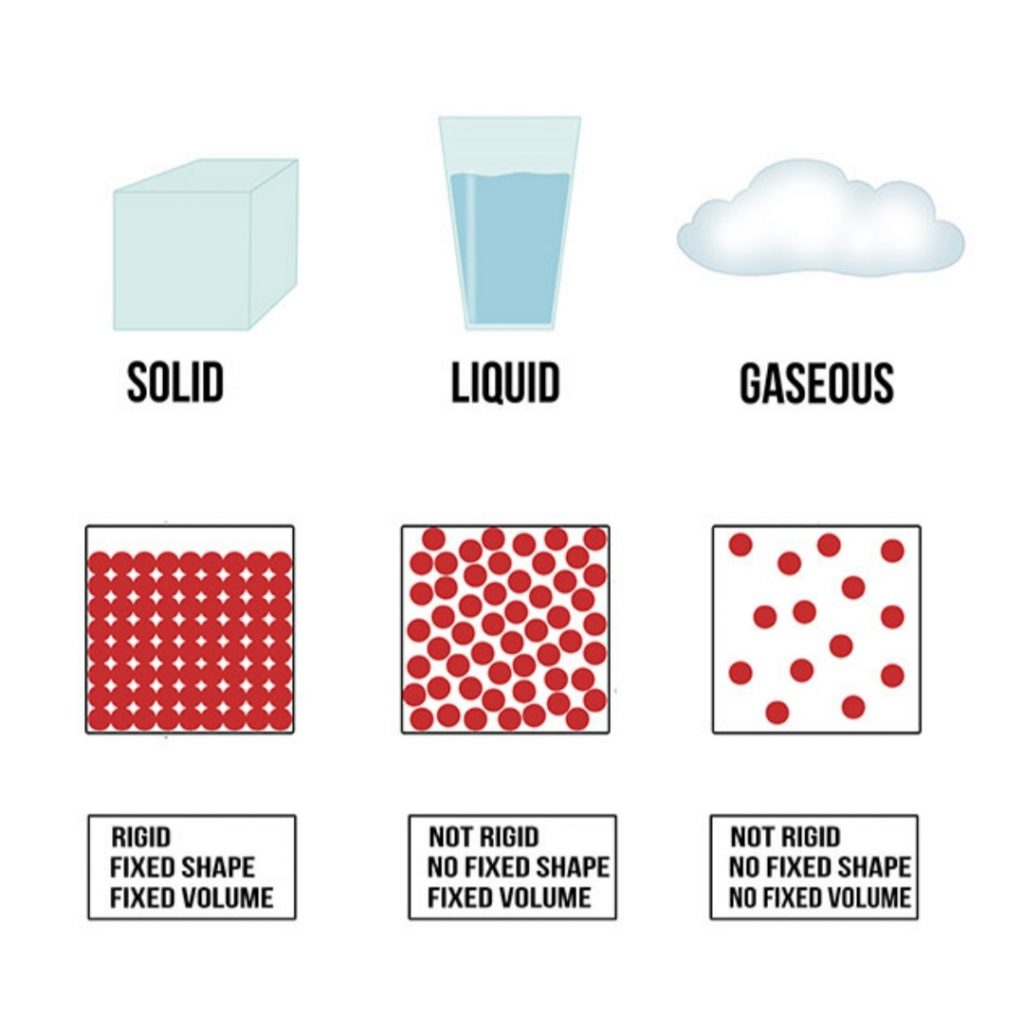
A solid can hold its own shape and it is hard to compress. A solid is the desk you are sitting on or the pencil you are holding! The particles in a solid are closely packed. It has a definite shape and volume. Solids are sometimes formed when liquids or gases are cooled.
What are more examples of a solid that we have in this classroom?

Liquid
Particles are not as packed and together as we saw in a solid. The particles are able to move around much more and they can slide past each other. A liquid will take the shape of a container that it is in. An example of a liquid is water, milk, and anything you can drink!
Is water just a liquid? Or can it be a liquid and solid? Or can it be all three? Discuss with the person sitting next to you.

Gas
The atoms and molecules in gasses are much more spread out than in solids or liquids. It does not have a definite volume or shape. Some gases can be seen or felt but others are intangible for human beings. Examples of gases are oxygen, air, and helium.
Out of solid, liquid, and gas which particles have the most energy?

Name_______
Directions: Choose either a solid, liquid, or gas to identify what the words are
-
Brick = _____
-
Coffee = _____
-
Table = ______
-
Helium = _____
-
Pencil = _____
-
Water = _____
-
Paint = ______
-
Oxygen = _____
-
Chair = ______
-
Ice = ____
Published: Feb 23, 2022
Latest Revision: Feb 23, 2022
Ourboox Unique Identifier: OB-1285440
Copyright © 2022

 Skip to content