






by Tetiana
Copyright © 2022
Modern American Writers

Copyright © 2022

A short two-minute video that briefly introduces the main points of the modern era in American literature.
The Main Characteristics of Modernist Literature
Literature scholars differ over the years that encompass the Modernist period, however most generally agree that modernist authors published as early as the 1880s and into the mid-1940s. During this period, society at every level underwent profound changes. War and industrialization seemed to devalue the individual. Global communication made the world a smaller place. The pace of change was dizzying. Writers responded to this new world in a variety of ways.
Individualism
In Modernist literature, the individual is more interesting than society. Specifically, modernist writers were fascinated with how the individual adapted to the changing world. In some cases, the individual triumphed over obstacles. For the most part, Modernist literature featured characters who just kept their heads above water. Writers presented the world or society as a challenge to the integrity of their characters. Ernest Hemingway is especially remembered for vivid characters who accepted their circumstances at face value and persevered.
Experimentation
Modernist writers broke free of old forms and techniques. Poets abandoned traditional rhyme schemes and wrote in free verse. Novelists defied all expectations. Writers mixed images from the past with modern languages and themes, creating a collage of styles. The inner workings of consciousness were a common subject for modernists. This preoccupation led to a form of narration called stream of consciousness, where the point of view of the novel meanders in a pattern resembling human thought. Authors James Joyce and Virginia Woolf, along with poets T.S. Eliot and Ezra Pound, are well known for their experimental Modernist works.
Absurdity
The carnage of two World Wars profoundly affected writers of the period. Several great English poets died or were wounded in WWI. At the same time, global capitalism was reorganizing society at every level. For many writers, the world was becoming a more absurd place every day. The mysteriousness of life was being lost in the rush of daily life. The senseless violence of WWII was yet more evidence that humanity had lost its way. Modernist authors depicted this absurdity in their works. Franz Kafka’s “The Metamorphosis,” in which a traveling salesman is transformed into an insect-like creature, is an example of modern absurdism.
Symbolism
The Modernist writers infused objects, people, places and events with significant meanings. They imagined a reality with multiple layers, many of them hidden or in a sort of code. The idea of a poem as a riddle to be cracked had its beginnings in the Modernist period. Symbolism was not a new concept in literature, but the Modernists’ particular use of symbols was an innovation. They left much more to the reader’s imagination than earlier writers, leading to open-ended narratives with multiple interpretations. For example, James Joyce’s “Ulysses” incorporates distinctive, open-ended symbols in each chapter.
Formalism
Writers of the Modernist period saw literature more as a craft than a flowering of creativity. They believed that poems and novels were constructed from smaller parts instead of the organic, internal process that earlier generations had described. The idea of literature as craft fed the Modernists’ desire for creativity and originality. Modernist poetry often includes foreign languages, dense vocabulary and invented words. The poet e.e. cummings abandoned all structure and spread his words all across the page.

The Defining Ideas of Romanticism
What Was the Romantic Movement in History?
The Romantic period of history, lasting from the late-18th to mid-19th century, affected the perceptions of Europeans and Americans in the areas of English music, literature, art and philosophy.
Romantic movement ideas emphasized a strong perception of self, reliance upon one’s imaginative faculties and the investment of Nature with symbolic and quasi-religious significance.
The Romantic movement also opposed the Industrial Revolution’s mechanistic influence on society.
What Were Aspects of the Romantic Movement?
Imagination
The Romantics believed that man’s highest, most spiritual attribute was his imagination.
For the English Romantics, it is through the imagination that man can access not only his most creative thoughts, but also his connection to the divine.
Poetry and other literature of the time encouraged the reader to use the words as a way to access his own imaginative faculties, thereby connecting with his own personal sense of the divine.
Artists and musicians of the Romantic period also used the visual and aural aspects of their works as an inducement to the viewer or listener to access his personal imaginative powers.
Nature
For the romantic writers, nature was imbued with the divine.
English romantic writers used everyday natural elements such as flowers, stones, sunlight and the weather to be described as though they carried a bit of God within them.
In keeping with the move away from rational thinking towards reliance upon the imagination, Romanticism and the romantic movement encouraged a view of nature that encouraged artists of the time to use their own subjective perception when rendering the sights and sounds they found in the natural world.
Art, in this way, moved away from the rational compositions of the Classical and Baroque and towards the subjective qualities found in the paintings of the Impressionists and symphonies of 19th-century composers.

View of Self
Romantic writers venerated self-directed action and stepped to the beat of one’s personal drummer.
The Romantic human ideal was the artist, creator or thinker who took a stand for personal opinion and belief at the risk of social ostracism.
For English Romantics, the needs of the one outweigh the needs of the many.
The notions of self-esteem and self-expression, revered today as two of our most valuable human birthrights, are handed down to us from the ideals of the Romantic period.
Romantics saw the human being as born pure and divine — a direct contrast to the “born in sin” concept of many previous Christian teachings.
Rejection of Modern LIfe
As the world moved into the Industrial age of factory labor and machines, the Romantic writers reacted by resolving to live more simply, more closely connected with the natural world.
As the Industrial Revolution of the early 19th century took hold, Romantics clung more strongly to their reverence of the importance of the individual’s creative life and dignity.
The American thinker and writer Henry David Thoreau provides an example of the Romantic rejection of modern society’s industrialism through his commitment to simple living (and recording his perceptions) at Walden Pond.
Thoreau was also one of many English Romantics to reject modern society’s laws through acts of civil disobedience that emphasized the rights of the individual over the laws of the government.
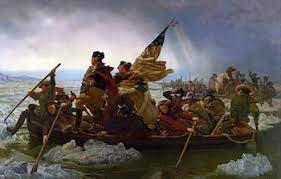
25 contemporary american novels you should read
https://qwiklit.com/2013/10/31/25-contemporary-american-novels-you-should-read-right-now/
Published: May 1, 2022
Latest Revision: May 1, 2022
Ourboox Unique Identifier: OB-1322419
Copyright © 2022