






by Amazon HR
Copyright © 2022
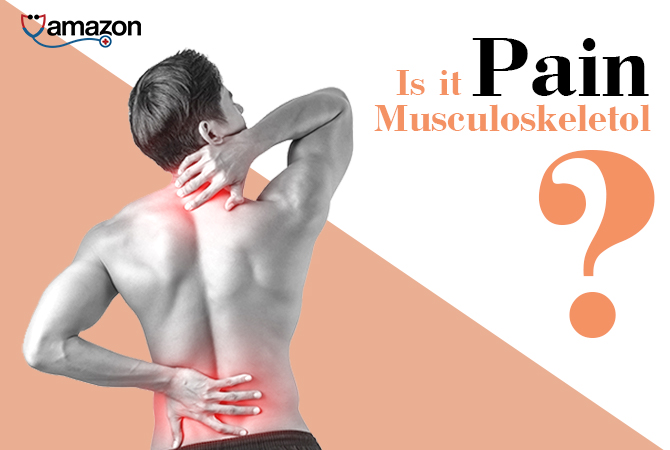
Is it Musculoskeletal Pain?

Copyright © 2022
Types
Low back pain is the most common type musculoskeletal pain. But there are many other types with a range of potential causes.
Muscle pain (myalgia)
Myalgia is pain or aches in soft tissues that connect muscles, bones, and organs. Causes include injury, infection, cramp or spasm, loss of blood flow to the muscle, illness, some medications, or tumor. Many parts of the body can feel the effects, including ligaments, tendons, soft tissues, organs, and bones.
Bone pain
Trauma from a fracture or injury is a common cause of bone pain. It can also come from an infection, osteoporosis, tumor spread into a bone, or another systemic illness. Signs include tenderness or ache at the bone site.
Tendon and ligament pain
Tendon and ligament pain is often from a sprain, strain, or inflammation caused by tendinitis or tenosynovitis. Ligaments provide a connection
between bones and tendons connect muscles to bone. Pain in these areas can arise from overuse or an unnatural or sudden movement that causes ligaments or tendons to stretch or tear.
Joint pain
Pain in the joints can occur along with swelling, stiffness, and limited range of motion. These are all symptoms of arthritis. People with arthritis sometimes develop chronic pain, which may present challenges in day-to-day living.
Fibromyalgia
Fibromyalgia causes pain in tendons, muscles, and joints throughout the body. This condition may start with localized pain in the neck and shoulders but become widespread. People with fibromyalgia often experience. Different kinds of pain in addition to musculoskeletal pain, such as migraine episodes.
Nerve compression pain
Nerve compression pain may occur from conditions that put pressure on nerves, such as carpal tunnel syndrome, cubital tunnel syndrome, and tarsal tunnel syndrome. Pressure can be the result of repetitive use
Back pain
Back pain may have no specific cause, or it may be the result of injury or illness. Muscle strain, disc fracture, and inflammation may all result in back pain. It may also come from osteoarthritis or other degenerative conditions, infection, or spinal lesions.
Chest pain
Pain in your chest may come from angina, which is caused by the heart muscle not getting enough oxygen. Digestive issues like acid reflux, inflammation, blood clots in the lungs, and panic attacks might also result in chest pain. But these are unrelated to musculoskeletal pain.
Costochondritis, or inflammation of the cartilage in the rib cage, is one example of musculoskeletal pain in the chest.
Signs and symptoms
The quality of the pain can vary based on where it’s located.
Bone pain may be dull, sharp, stabbing, or deep. It’s typically more uncomfortable than muscle or tendon pain.
Muscle pain can be intense and short-lived if it’s caused by a cramp or powerful muscle contraction, commonly called a charley horse. The muscle may twitch or contract uncomfortably.
Tendon pain may feel sharp if an injury caused it. It usually worsens when you move or stretch the affected tendon and improves with rest.
Joint pain feels like an aching. It may be accompanied by stiffness and swelling.
Fibromyalgia causes multiple tender spots throughout the body.
Nerve compression pain may feel like tingling, pins and needles, or burning. Other symptoms depend on the cause of the pain, and can include:
- stiffness
- soreness
- swelling
- redness
- cracking or popping sound in the joint
- trouble moving the affected area
- weakness
- fatigue
- difficulty sleeping
- muscle spasms or twitches
- bruising
Diagnosis
Because musculoskeletal pain can have a variety of causes, your doctor will first take a detailed medical history and ask about your symptoms. Expect to answer questions like these:
- When did the pain start?
- What were you doing at the time (for example, working out or playing sports)?
- What does it feel like — stabbing, burning, aching, tingling?
- Where does it hurt?
- What other symptoms do you have (trouble sleeping, fatigue, etc.)?
- What makes it worse or better?
Your doctor might press on or move the affected area into different positions to find the exact location of your pain. A number of tests can help pinpoint the cause of your pain, including:
- blood tests to look for signs of inflammation that might suggest arthritis.
- X-rays or CT scans to find problems with the bones.
- MRI scans to find problems with soft tissues such as muscles, ligaments, and tendons.
- joint fluid testing to look for infections or the crystals that cause gout.
Treatment
Primary care doctors most often treat musculoskeletal pain. Physical therapists, rheumatologists, osteopaths, orthopedic specialists, and other specialists may also be involved in your care.
The treatment you receive is based on what’s causing your pain. Treatment options are broken down into several types. Always speak with your doctor before starting any treatments.
Medications
- acetaminophen (Tylenol)
- nonsteroidal anti-inflammatory drugs (NSAIDs) such as aspirin, ibuprofen (Advil, Motrin), or naproxen (Aleve)
- corticosteroid injections into the painful area (depending on the area)
- opioids (only for more severe pain because of the risk of dependency and side effects)
Hands-on therapy
- therapeutic massage
- chiropractic/osteopathic manipulation
- physical therapy
Published: May 2, 2022
Latest Revision: May 2, 2022
Ourboox Unique Identifier: OB-1322909
Copyright © 2022