







Christmas in Bulgaria

Copyright © 2022
What you will see in my book
In my book you will see a recipe for traditional Bulgarian Pitka and what to eat and drink at Christmas
1-What is the traditional food in Bulgaria at Christmas
1-Pitka
Pitka is a bread made with baking soda that contains no dairy products. Before baking, the cook puts a coin in the dough, a symbol of health and prosperity whoever finds it.Traditionally, the eldest person at the table breaks the bread, leaving the

first two pieces aside, one for the house and one for Mary, mother of Jesus.
2-Sarmi
Sarmi is a traditional Bulgarian meal made with rice, sometimes meat, and spices stuffed in grape or cabbage leaves. It is an essential dish on the table for both Christmas Eve and Christmas Day.On December 24th, sarmi are made with grape leaves and without meat while on the 25th, sarmi are made with rice and meat and typically with cabbage leaves. Some people add crushed walnuts to the mixture.

3-Stuffed Peppers
Another favorite Bulgarian dish is stuffed peppers. Usually, they are stuffed with rice, which is cooked separately, then baked. But on Christmas Eve, many people stuff the red peppers with beans, again cooked separately, then bake them in the oven.

4-Bob
There is another way beans find themselves on the Christmas Eve table. Bob chorba, a bean soup, is a very popular dish.
Usually, this is cooked in a traditional Bulgarian clay pot, together with djodjen, or mint, which gives bob chorba its unique taste.

5-Sauerkraut
Sauerkraut is a main ingredient for a lot of dishes consumed during autumn and winter. This vegetarian dish is made with rice and baked.In some parts of the country, sauerkraut is slow-cooked with beans in a clay pot. Sauerkraut is often used in salads.

6-Salads
Boiled or mashed potatoes with onion is one of the most popular winter salads. It is easy to make and tastes really good. Lettuce with cucumber, tomatoes, and olives is another option for a fasting dish for when shopska salad can’t be served because it contains cheese. Grated carrots, celery, and beets, also know as vitamin salad, is another favorite. The options are limitless.

7-Turshia
Bulgarian Turshia is a favorite appetizer. It is also known as Tsarska turshia and consists of pickled vegetables, such as carrots, cauliflower, peppers, and garlic.The vegetables are put in a jar and pressed down then a marinade of vinegar, vegetable oil, salt, and sugar is added.

8-Tikvenik
Tikvenik, the cousin of banitsa, is one of the most popular meals in Bulgaria. While the banitsa includes sirene (Bulgarian white brine cheese) and eggs, tikvenik is an alternative option for Christmas Eve. It is made of pumpkin, sugar, nuts and phyllo dough. It is the perfect holiday dessert.

9-Banitsa with Apples
Banitsa with apples involved no dairy products so is the perfect addition to the Christmas Eve’s table. It is made in a similar way to tikvenik and is a great option for people who are not keen on pumpkin. Banista with apples is sweet and tasty.

10-Oshav
Another popular dessert for Christmas Eve is oshav. This compote of dried fruits is very easy to make. The dried fruits are put in boiling water and cooked until they soften.

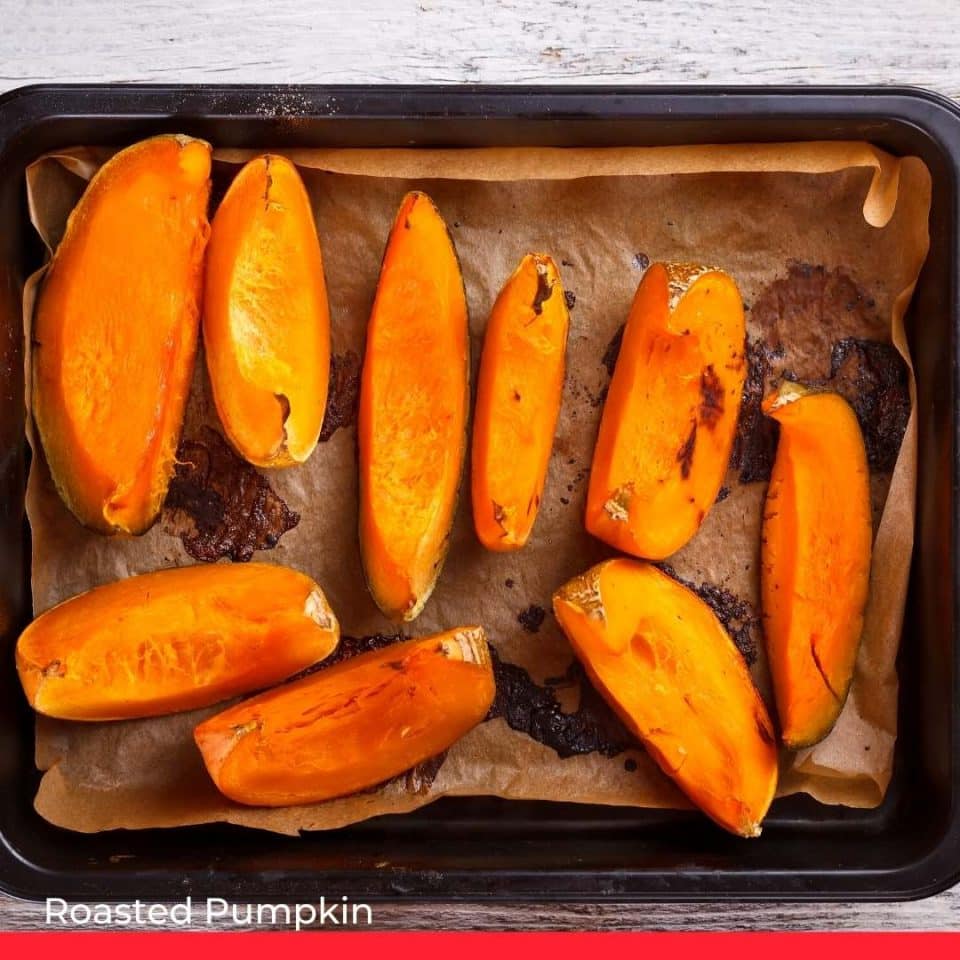
11-Roasted Pumpkin
Yes, Bulgarian Christmas Eve can consist of more than one dessert. This is very easy to make and is also very delicious.
Slices of pumpkin, or pumpkin stuffed with nuts and raisins, are baked in the oven for hours. Whichever you choose, it smells heavenly and is incredibly tasty.
12-Honey and Nuts
Honey is a must-have on the Christmas Eve’s table. It symbolizes wisdom while the nuts symbolize fertility and abundance. Pitka is torn into pieces and they are dipped in honey and sprinkled with nuts. It is believed that the quality of the walnuts is a sign of what the New Year will be like. If the nuts are whole and nicely shaped, the year will be good, but if the nut is rotten, the year will not bring much happiness.

13-Wheat
Boiled wheat is another dish that should be on the table on Christmas Eve. Boiled wheat with nuts, which are a symbol of abundance and fertility is very popular and in some parts of the country, pitka is put on the boiled wheat to ensure a fruitful year.

14-Kapama
Kapama is a traditional and very popular meal for Christmas Day. It consists of different types of meat, mainly pork and veal, sauerkraut, rice, red wine, and spices including cumin, black pepper, and bay leaves, giving the dish its distinct taste.
Kapama is slow-cooked in a traditional Bulgarian clay pot. While, it does take a while to prepare, it is pretty easy as everything cooks together in one pot.

15-Pork Steak
After the 40 day fast, many people are really hungry for some meat. Pork steaks are a popular main dish prepared on the stove or baked. They are usually served with mashed potatoes or salad.Another popular recipe is pork steaks stuffed in cabbage leaves. The steaks are seasoned with black pepper, salt, and cumin and wrapped in cabbage leaves. Then they are put in a clay pot and cooked slowly in the oven.

16-Sauerkraut with Pork
Awe have seen, sauerkraut is the star of Christmas Eve and Christmas Day. For kapama, different kinds of meat and ingredients are used. But sauerkraut is cooked only with pork, bay leaves and black pepper, and no rice. It can be cooked in a pan or a clay pot.

17-Christmas Cookies
What is a holiday feast without cookies? Ingredients and frosting vary, but cinnamon, ginger, and honey are popular choices.The dough is rolled out and cut into shapes, such as Christmas trees, stars, deer, snowmen and more. The frosting also varies in color and design.

18-Banitsa
We already know that banitsa is one of the most beloved meals in the country. On Christmas Day, once the fast is over, banitsa makes a comeback.Usually, it is served with lucky charms on New Year’s Eve, and in many parts of the country the same tradition applies to Christmas Day. Some of the lucky charms consist of a note of just one word, such as Health, Wealth, Luck, etc., while others are jokes or anecdotes.

19-Baklava
Baklava is not traditionally Bulgarian. But the country has a very rich history and the cuisine is influenced by the many nationalities that have lived here through time.
Bulgarian baklava is made with phyllo dough and filled with crushed nuts, usually walnuts, and sugar. It is cut in diamond shapes and, once cooked, is topped with a cold sugar syrup.

20-Roasted Chicken
Another popular dish, particularly those who don’t like pork or veal, is roasted chicken. It is usually stuffed with rice and walnuts, baked in the oven, and served with a side of baked or mashed potatoes and salad. Every part of the country has their own and distinct recipes. But, most often than not, beans, sauerkraut, honey, and fruits make their way to every table in Bulgaria during Christmas. Bulgarians love their holidays and traditions and take pride in the preparation of the meals.

Most popular drink in Bulgaria on Christmas is rakia (Bulgarian brandy) are also part of the festive dinner. We prepare hot rakia with black pepper and honey. You should try it! Drink it hot.
More info about Christmas Eve (Budni vecher)
We celebrate Christmas on 25th December in Bulgaria, differently from most Orthodox Christians. This is because we use the Gregorian calendar, while many Orthodox countries in Eastern Europe use the old Julian Calendar and celebrate Christmas on 7th January. For some Bulgarians,the preparations for Christmas start with Advent, which lasts 40 days in the Orthodox Church and begins on 15th November. According to tradition, you should fast the whole day on 24th December if you are not so religious and haven’t fasted for the 40 days before. Christmas Eve (24.12-Budni Vecher) is an important day, and the main Christmas meal is eaten in the evening. It is usually a rich vegan table with different dishes that have to be an odd number. The traditional Bulgarian
dinner on Christmas Eve contains at least seven dishes. We prepare 9, 11, or in some parts of the country 12 because of the twelve months of the year. It encourages abundance in the coming year. We also put foods that swell – to increase the luck of those sitting around the table (beans, corn, wheat, and others.)
Recipe for Traditional Bulgarian Pitka for Christmas Eve dinner Celebration
1.Recipe for Pitka
flour – 1 kg
water – 150 ml
yeast – 1/2 pack
salt – 1 tbsp
sugar – 2 tbsp
oil – 3 tbsp
water – 400 ml
Steps
Put the yeast in little water and let it dissolve. Meanwhile, mix the flour with salt, sugar, and oil. Add the yeast and the water at room temperature. Knead the dough and leave it to rise in the heat until it doubles in volume. If the kitchen is not warm enough, you can use the oven at about 100°C. Leave the dough there for about 15 minutes, then take it out and divide it into equal parts, form buns and decorate them. Place them evenly apart in an oiled pan. Put the pan back in a warm place for about 15 minutes. Then pierce the dough with a fork and place it in an oven at 180°C to bake. It’s ready in about an hour. Wrap it in a towel to keep it soft and tasty. The Pitka is ready!
Merry Christmas and Happy New Year
Published: Dec 9, 2022
Latest Revision: Dec 9, 2022
Ourboox Unique Identifier: OB-1394632
Copyright © 2022

 Skip to content