






by Syd
Copyright © 2016
Serpents with Wings

Copyright © 2016
Serpents with Wings
The Serpent Contents
Questions —————————————- pg. 1-3
Dragon Info —————————————– pg. 4-17
(Regal Copper, Yellow Reaper, Grey Widowmaker, Longwing, Shen Lung, Feral, Incan, and Jade,)
Dragon Sightings ———————————pg. 18-21
Predators and Prey ——————————pg. 22-23
Fun Facts ———————————–pg. 24
Glossary ——————————-pg. 25
Questions
Q-Are people able to create dragon eggs?A- No. If dragons are a myth, then that is definite. Maybe dragons don’t even come out of eggs.
Q- Do dragons exist? A-There are many opinions on this but no one can say for sure. Although there is of course creatures that have dragon in the name like the Komodo Dragon.
Q-If dragons exist, how many species are there and what are their names?A-There are 24 species of dragons. The names are- British, Grey Widowmaker, Winchester, Greyling, Longwing, Regal Copper,
1
Yellow Reaper, other breeds, Chinese, Jade dragon, imperial, celestial, Shen Lung, other breeds, French, Japanese, prussian, Spanish, Turkish, Incan, Feral, African, Breeds from other areas, American, Russian and Northern and more!!
Q- If dragons exist, where do they live? A- They live in wet, and damp places away from people and where humans live. In isolated places and sometimes even abandoned castles which they think are caves. They didn’t know they were in a man-made building and that is how the legend of them in castles started.
Q- If dragons exist do they breath fire? And what type do? A- Not all of the dragon species do.
2
Q – Can dragons fly? (If they have wings) A-Big, heavy dragons can’t fly, but smaller, skinnier dragons probably can, because they are lighter. Even some dragons fly without wings
Q- What are dragon scales made of? A- They are made heavily with minerals which determine what color the scales will be.
Q- If dragons exist, do they all have wings? A-Not all of them do. Chinese dragons do not have wings while European dragons usually do.
Q- If dragons are real how big are their teeth? A- We guess it just depends on the dragon. In greek mythology, once dragon teeth are planted, they would grow into full grown warriors.
3
Dragon Info
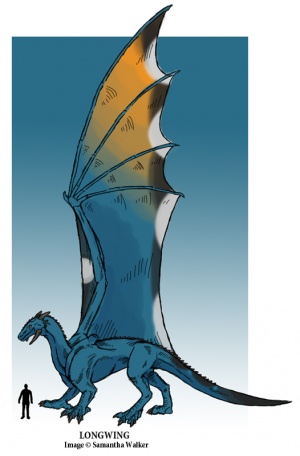
Longwing
The national loyalty is British. It has HUGE wings. Its abilities are only acid spit. They can’t breath fire and we have no idea if it can fly. The members of the Longwing species are the Lily, Gentius, Excidium, and the Mortiferus dragons. Their wings are around 120 feet long, and their bodies are around 60 feet. The Longwing dragons prefer female companions to males but could not command. So, in battle, men mounted the dragons along with the female companions.
4
Regal Copper
Regal Copper dragons are very large, and are red to yellow in color. The members of the Regal Copper species are Maximus, Candeoris, Requiescat, and Laetificat. Full grown Regal Copper dragons can weight up to 50 tons and can grow up to 120 feet long. Females tend to be slightly bigger than males. All of the Regal Copper dragons are really farsighted. They are reluctant to fight smaller dragons. The Regal Copper species are rare and especially big, they rarely meet another dragon their own size. All of Regal Copper dragons have a spiny strip down their backs and males have horns that grow on their foreheads.
6

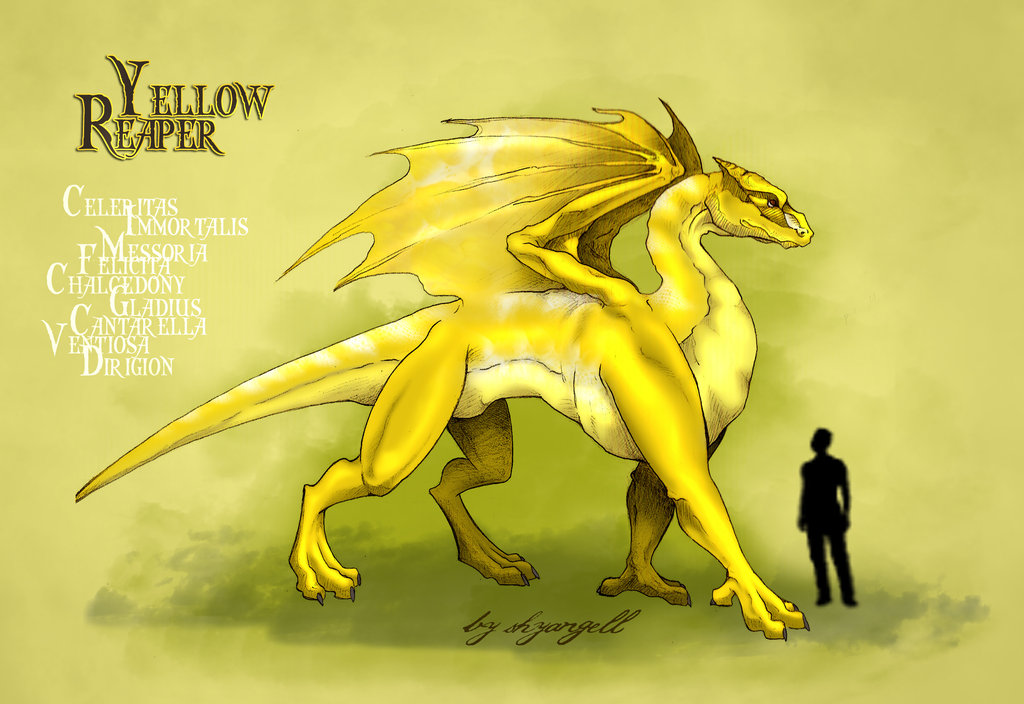
Yellow Reaper
The national loyalty is British. It has yellowish golden middleweights and white stripes on
the side. They are not bothered by extreme heat. They are also not picky eaters. They averagely weigh between 12 and 15 tons. Known members of this species are Immortalis, Messoria, Felicita, Chalcedony, Gladius, Cantarella, Ventiosa, Dirigion, Tharunka. They have a 50 feet length and 80 feet wingspan.
8
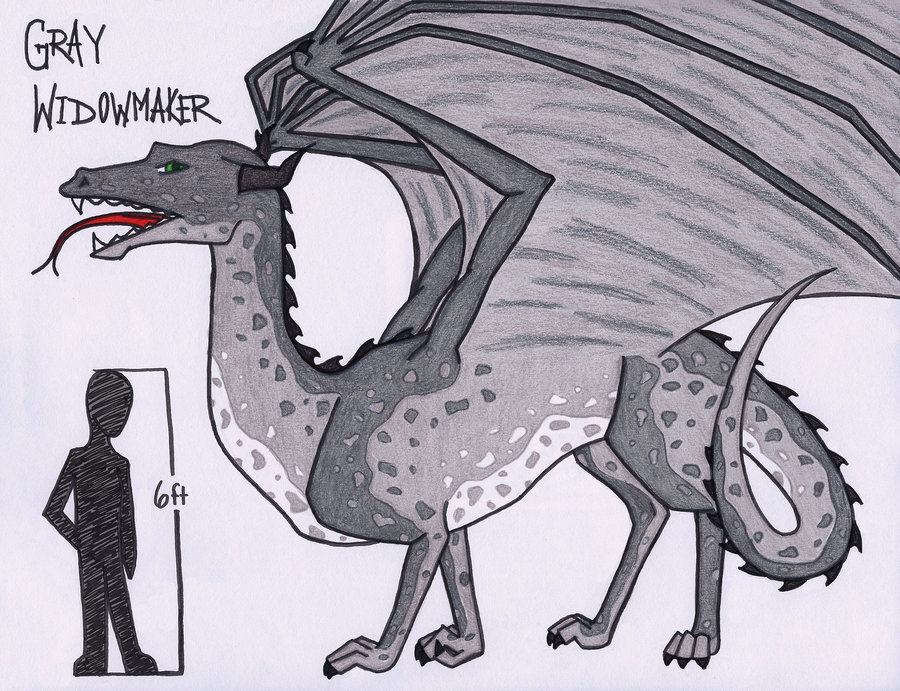
Gray Widowmaker
The Grey Widowmaker dragon was once popular in Britain but is now very rare.They were considered poorly tempered and super aggressive. The Grey Widowmaker almost died out completely, but can be located in scotland and other areas dragons would live. The Grey Widowmaker is also related to two other breeds of dragons the Pecheur-Couronne and the Pecheur-Raye and they are in the same family. There are no known species in the Grey Widowmaker family. They are all unknown.
10
Feral
The national loyalty is none. Its name is the Feral. Its special characteristics vary. And it has no abilities of any kind like flying, firebreathing, or anything like that, that we know of, of course. Really, Feral dragons are mixtures of all dragon breeds. People that hatched dragon eggs didn’t want their eggs to become Feral, but come out how they were supposed to come out. This happened quite a few times when men hatched Longwing dragons. We could not find a picture of the Feral dragon on the internet.
12
Incan
Just like the Longwing it has an ability of acid spitting. Its national loyalty is French. Not much information has been collected on this dragon species. We could not find a picture of the Incan dragon on the internet.
13
Shen Lung
The national loyalty for Shen Lung dragons is China. The members of the Shen Lung species are Len Shung Li, Lung Shen Gai, Lung Shen Lao, Lung Shen Mei, Lung Shen Shi, and Lung Shen Chi. Many great Chinese dragons evolved from this breed. Just like people, some of the Shen Lung breed are clever or lazy. These dragons are all different sizes, sometimes have a spiked back, and range from a blue to grey in color. In some cases, the wises Shen Lung dragons were granted the ability to mate with an Imperial dragon.
14

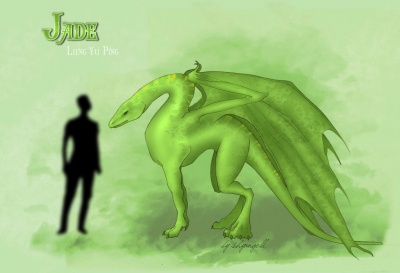
Jade |
|
It’s national loyalty is Chinese. It is a pale green to dark green with small gold bands. It can fly and is speedy. Known members of this species are Lung Yu Ping, Lung Yu Fei Lung Yu Li. They are a small species but they are very fast. Jade dragons are so small they are smaller than a horse. They can fly up to a speed of 120 mph now that is fast!16 |
|
Dragon Sightings
March 27, 2013, Island of St. Mrs. Kitts– People on the island in the eastern Caribbean have reported dragon sightings in and around the inactive volcano, Mt. Liamuiga. This is not the first time visitors to the mountain’s crater have reported weird things happening at the top. A group of tourists in October of 2012 reported seeing flames bursting and barely hearing roaring sounds from the bottom of the volcano. These sighting kind of explain why St.Kitt’s fields are always on fire.
18

1860, Atlantic Ocean– Some sailors saw a gigantic reptile that was bright blue and silver. He swam around the ship before the sailors’ eyes, and went underwater without a splash. His eyes were gigantic, with high pupils and a smart look on his face. His head was covered with bright blue and green skin. Even though he went under water and did not come back, he looked like he was seven meters long and on his back they could see something that resembled fins. It was serpent-like, but the sailor thought they saw legs and claw. The sailors named him Megophia.
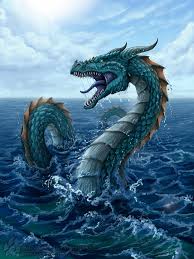
Predators and Prey
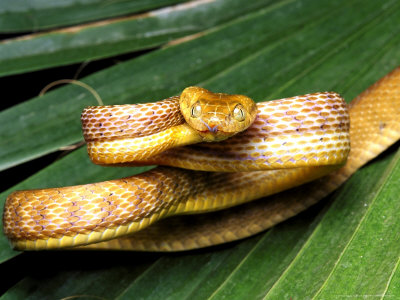
Predators: Snakes as in the Brown Tree Snakes, the Common Death Adder, the Lowlands Copperhead, the Red-bellied Black Snake, and the Eastern Brown Snake. Another threat to the water dragon is being run over, and humans. Here is a picture of the Brown Tree Snake.
Prey: Unknown
Here is a picture of the Brown Tree Snake.
22
Fun Facts
-
Dragons have red eyes that are slanted.
-
The word dragon came from the Latin word Draco. + Draco is a dragon and a constellation.
-
Dragon is actually a family term that includes other mythological creatures, such as , gargoyles, wyverns, phoenix, hydras, and even some hybrid man-dragon creatures. You might seen some of these in movies or books.
24
Glossary
C
Constellation: An imaginary picture in the night sky made of stars.
P
Predator: An animal that eats another animal.
Prey: Animals another animal eats.
25
Here are some of the sites that helped us get the information to put this book together.
http://www.naominovik.com/wiki/Main_Page
http://lair2000.net/Dragon_Lair/Dragon_Scales/
https://en.wikipedia.org/wiki/Dragon%27s_teeth_(mythology)
http://theworldofdragons14.weebly.com/where-do-they-live.html
This book is by:
Leah Helmick
Sydney Adler
Francis Johns V
Erica Diep
Published: May 27, 2016
Latest Revision: May 27, 2016
Ourboox Unique Identifier: OB-140187
Copyright © 2016