






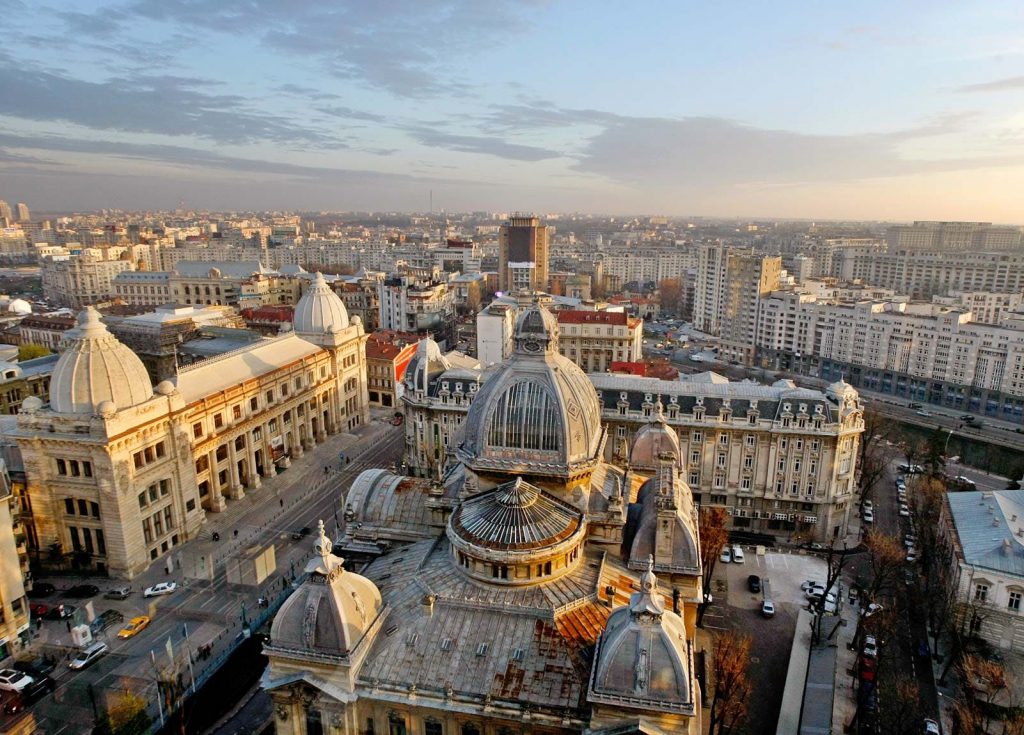
Bucharest

Copyright © 2023
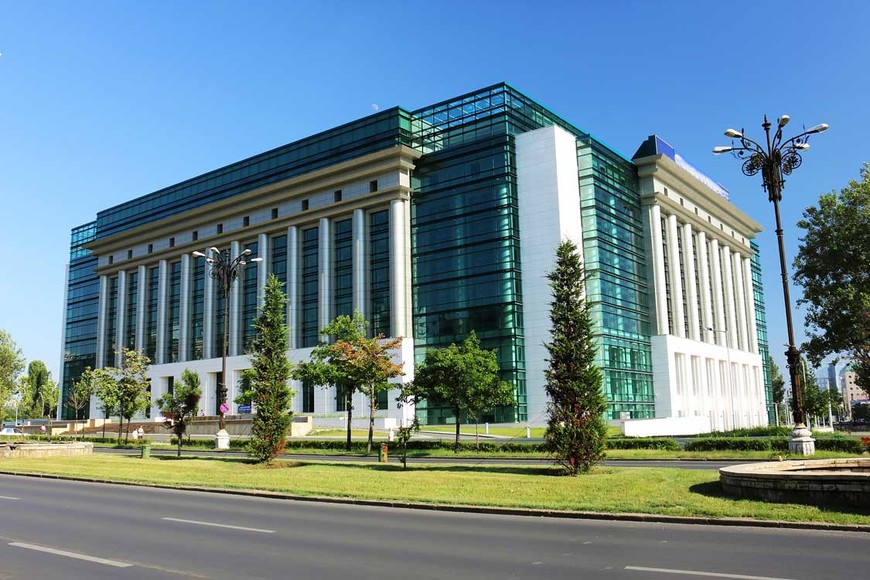
National Library of Romania
The roots of the library can be found in Saint Sava College library. Saint Sava College library was opened in 1859 when 1000 French volumes were archived. After the 1859 Union, the library was officially made the national library (Biblioteca Națională, later Biblioteca Centrală – National and Central library, respectively). In 1864 the library was renamed Central Library of the State (Biblioteca Centrală a Statului).
In 1901 all the collections were ceded to the Romanian Academy Library. As a result, from 1901 to 1955, the Romanian Academy Library was the national library. In 1955, the State Central library was organised, having the attributes of a national library. In 1989, after the collapse of the communist regime, the State Central Library was once again renamed to Biblioteca Națională a României.
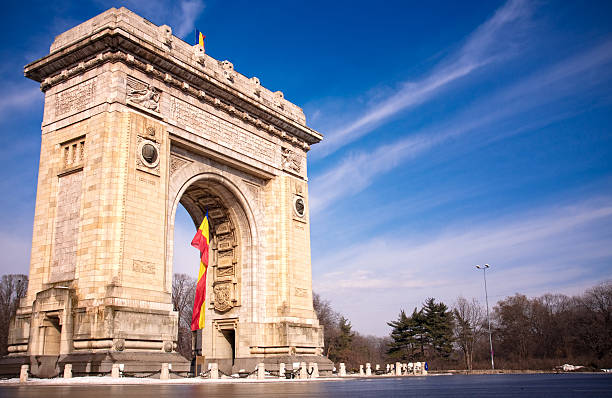
Arcul de Triumf
(Romanian; “The Triumphal Arch”) is a triumphal arch located on the Kiseleff Road, in the northern part of Bucharest, Romania. The monument, designed by Petre Antonescu, was built in 1921–22, renovated in 1935–36, and renovated again starting in 2014. It commemorates Romania’s victory in the First World War and the coronation of King Ferdinand and his wife Marie.
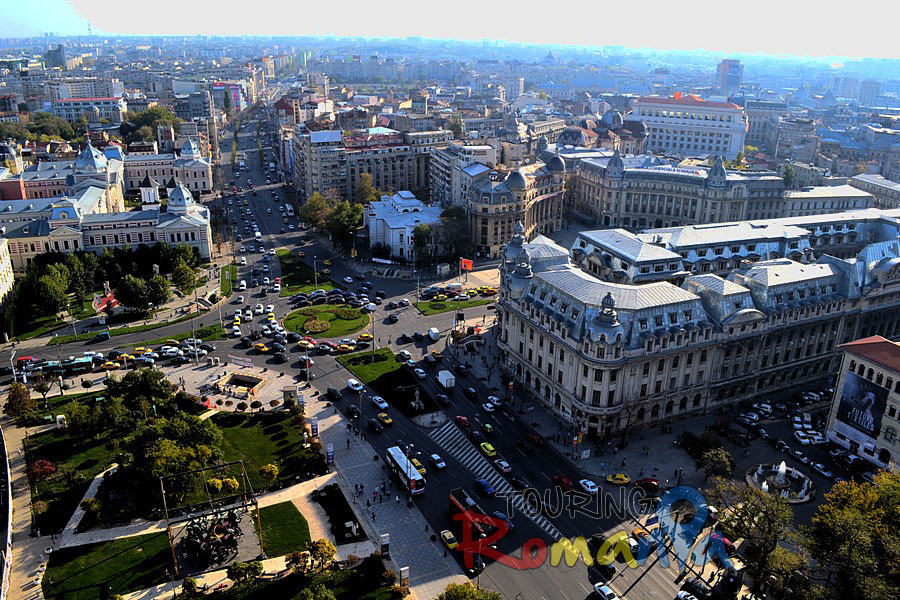
University Square
(Romanian: Piața Universității) is located in downtown Bucharest, near the University of Bucharest. It is served by Universitate metro station.
Four statues can be found in the University Square, in front of the university; they depict Ion Heliade Rădulescu (1879), Michael the Brave (1874), Gheorghe Lazăr (1889) and Spiru Haret (1932).
The Ion Luca Caragiale Bucharest National Theatre and the Intercontinental Hotel (one of the tallest buildings in Bucharest) are also located near University Square.
University Square marks the northeastern boundary of the Old Center of Bucharest.
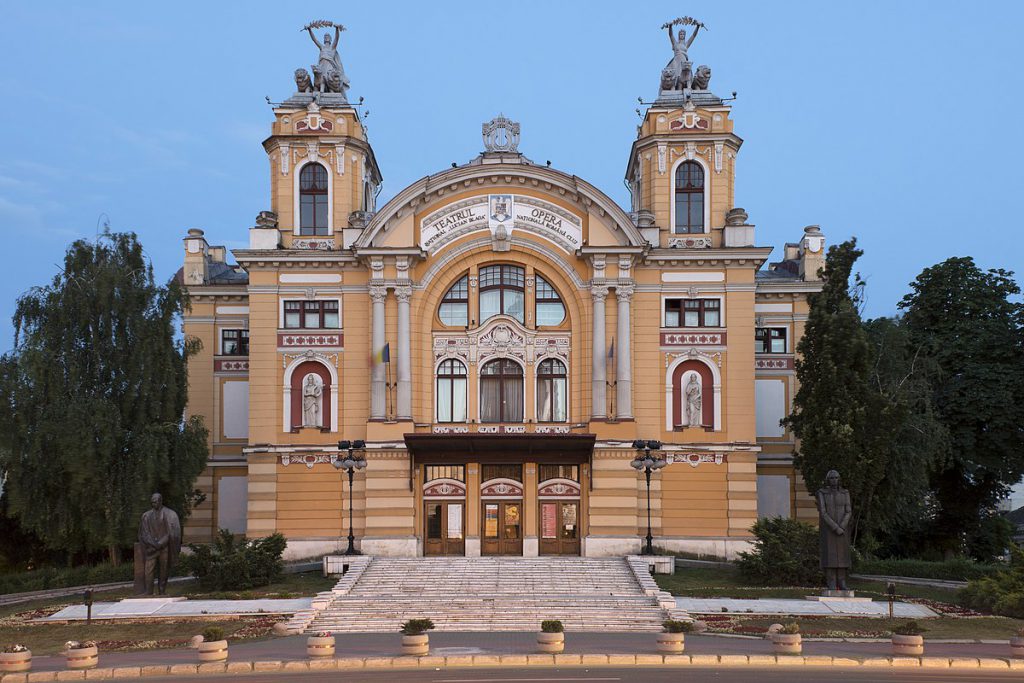
Since the end of 2014, after a project costing up to 65 million euros, the National Theatre has a new face, dominated by futuristic elements.
National Theatre Bucharest
(Romanian: Teatrul Naţional “Ion Luca Caragiale” București) is one of the national theatres of Romania, located in the capital city of Bucharest.
It was founded as the Teatrul cel Mare din București (“Grand Theatre of Bucharest”) in 1852, its first director being Costache Caragiale. It became a national institution in 1864 by a decree of Prime Minister Mihail Kogălniceanu, and was officially named as the National Theatre in 1875; it is now administered by the Romanian Ministry of Culture.
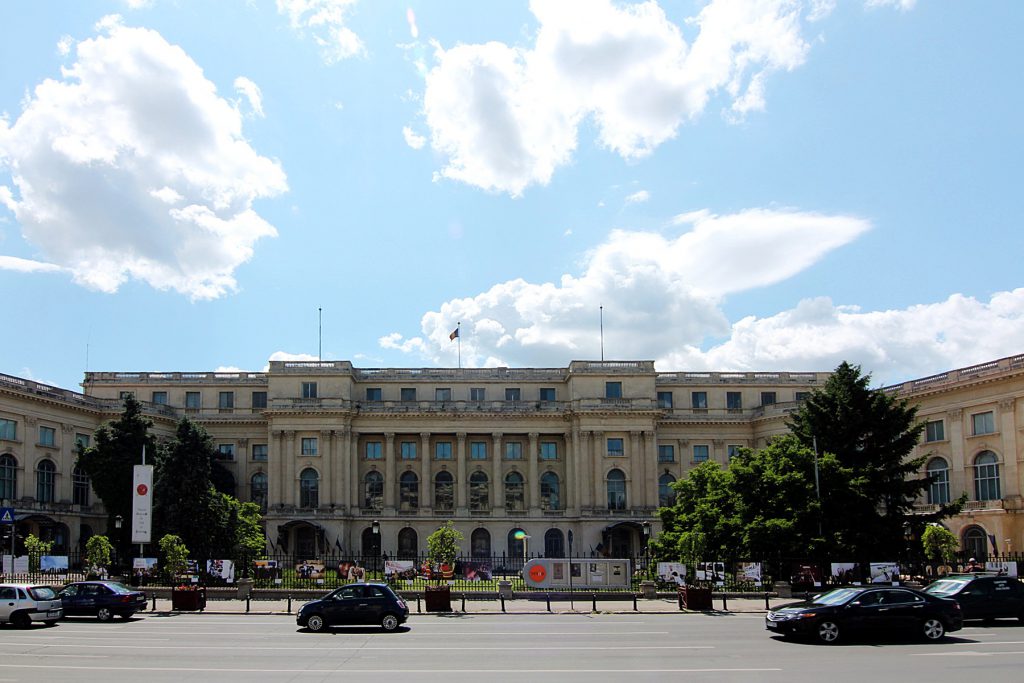
Royal Palace
(Romanian: Palatul Regal) of Bucharest, known as Palace of the Republic (Romanian: Palatul Republicii) between 1948 and 1990, is a monumental building situated in the capital of Romania, on Calea Victoriei. The palace in its various incarnations served as official residence for the kings of Romania until 1947, when the communist regime was installed after Michael I of Romania’s forced abdication. Since 1950, the palace hosts the National Museum of Art of Romania. The Romanian royal family currently uses Elisabeta Palace as its official residence in Bucharest. In addition, the Romanian government allows the royal family to use the Royal Palace different occasions.
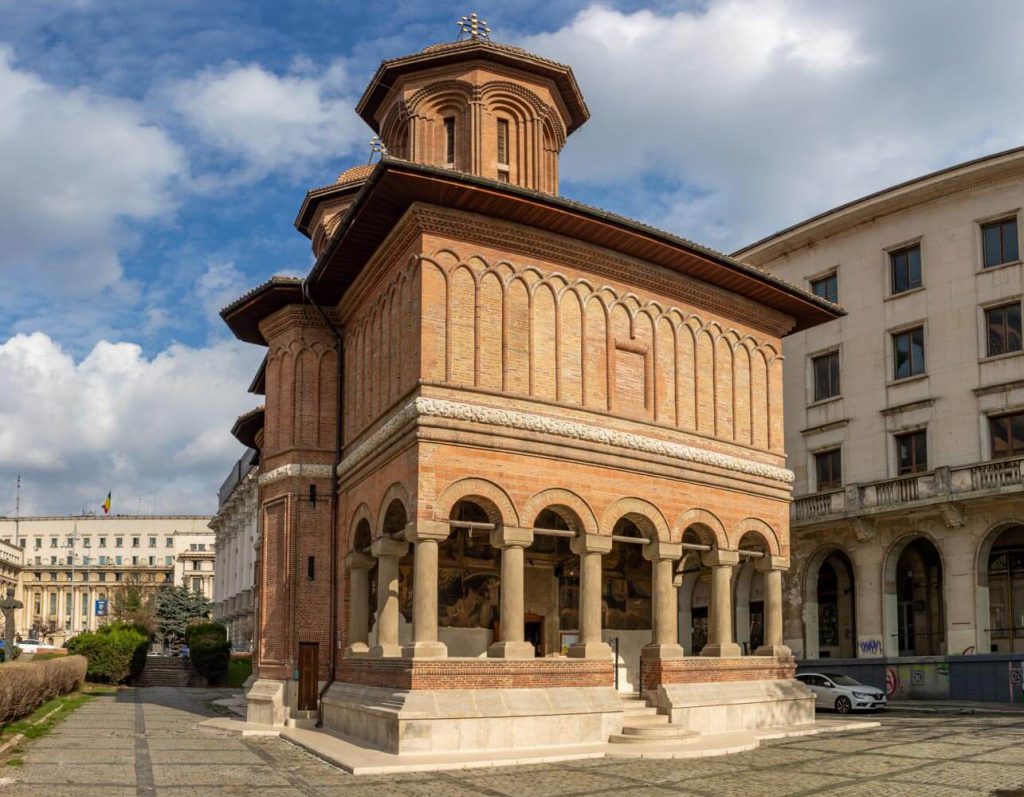
Kretzulescu Church
(Romanian: Biserica Kretzulescu or Crețulescu) is an Eastern Orthodox church in central Bucharest, Romania. Built in the Brâncovenesc style, it is located on Calea Victoriei, nr. 45A, at one of the corners of Revolution Square, next to the former Royal Palace.
The church was commissioned in 1720–1722 by the boyar Iordache Crețulescu and his wife Safta, a daughter of prince Constantin Brâncoveanu. Originally, the exterior was painted, but since the restoration work done in 1935–1936 (under the supervision of architect Ștefan Balș), the façade is made of brick. The frescoes on the porch date from the original structure, while the interior frescoes were painted by Gheorghe Tattarescu in 1859–1860.
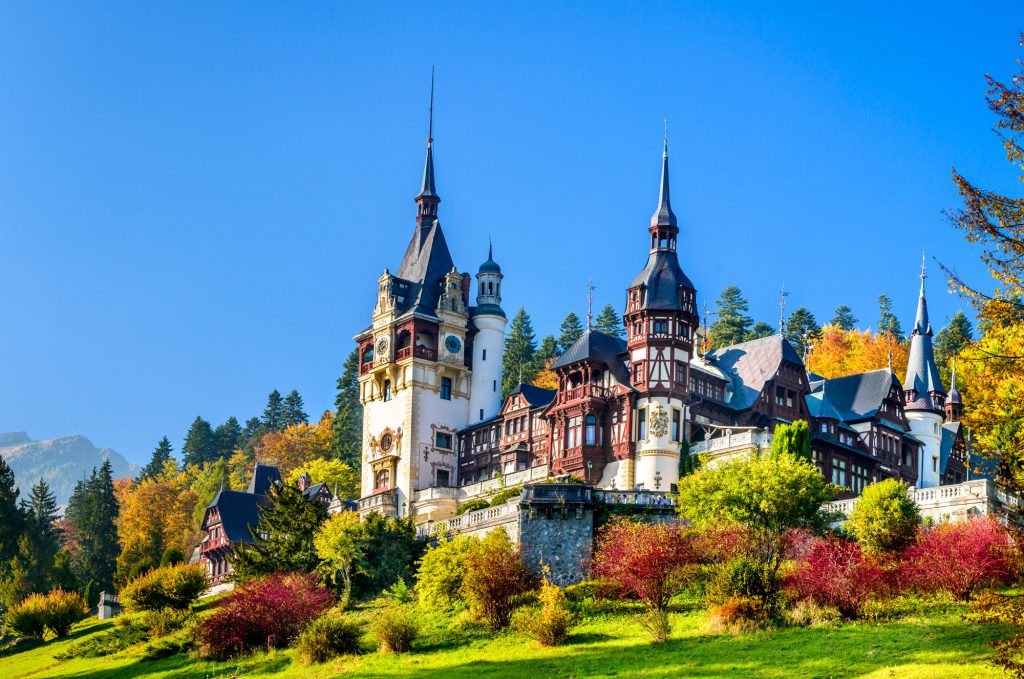
Peleș Castle
(Romanian: Castelul Peleș) is a Neo-Renaissance palace in the Royal Domain of Sinaia in the Carpathian Mountains, near Sinaia, in Prahova County, Romania, on an existing medieval route linking Transylvania and Wallachia, built between 1873 and 1914. Its inauguration was held in 1883. It was constructed for King Carol I of Romania.
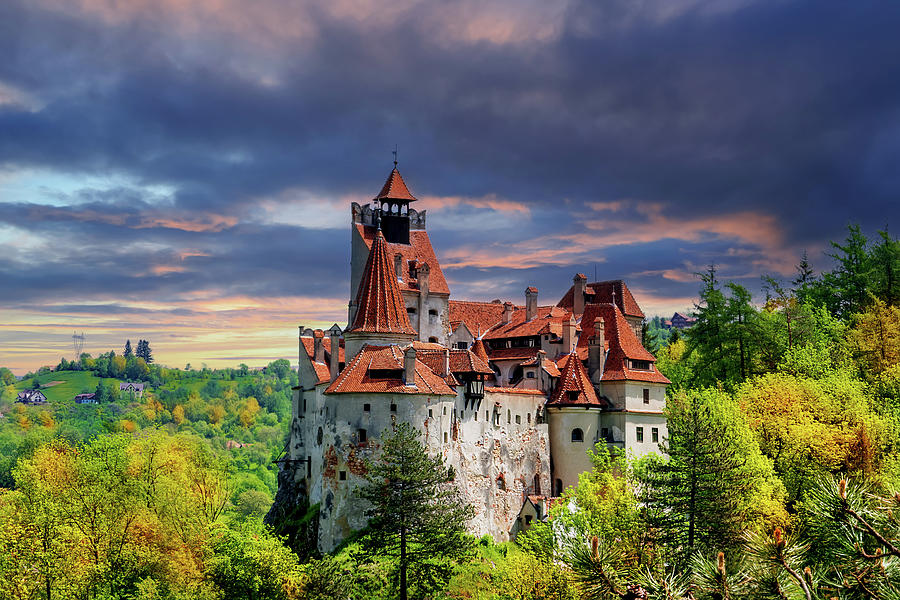
Bran Castle
(Romanian: Castelul Bran); a castle in Bran, 25 kilometres (16 mi) southwest of Brașov. It is a national monument and landmark in Transylvania. The fortress is on the Transylvanian side of the historical border with Wallachia, on road DN73.
Commonly known outside Transylvania as Dracula’s Castle, it is marketed as the home of the title character in Bram Stoker’s Dracula. There is no evidence that Stoker knew anything about this castle, which has only tangential associations with Vlad the Impaler, voivode of Wallachia, who shares his name with Dracula. Stoker’s description of Dracula’s crumbling fictional castle also bears no resemblance to Bran Castle.
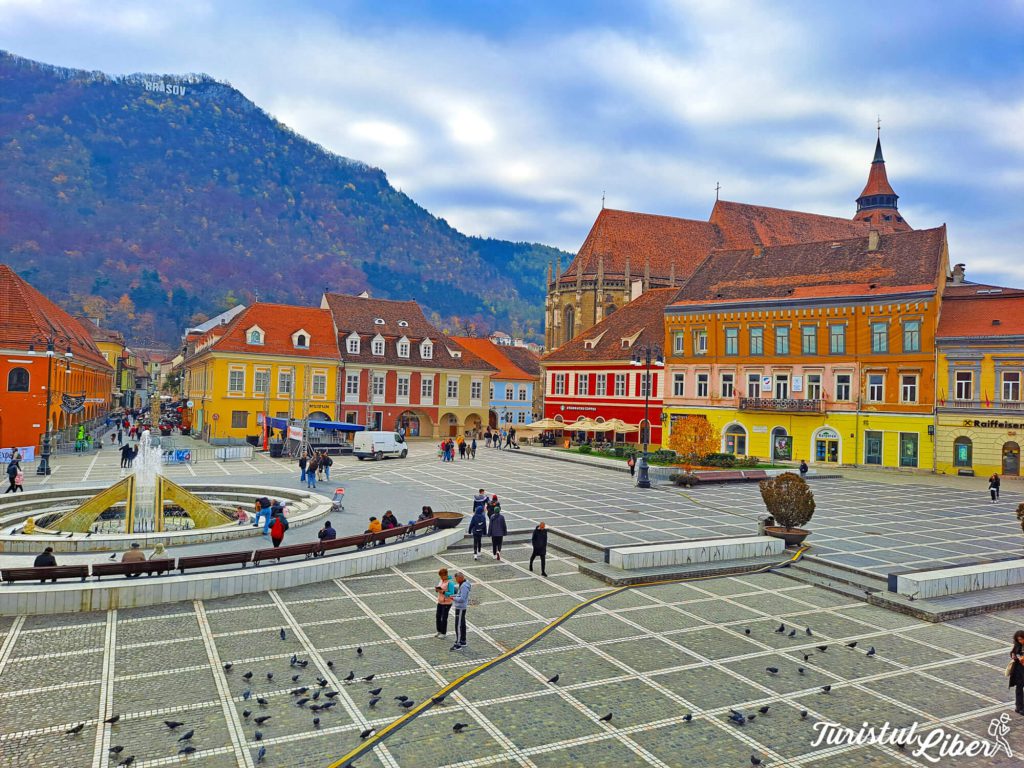
Piața Sfatului
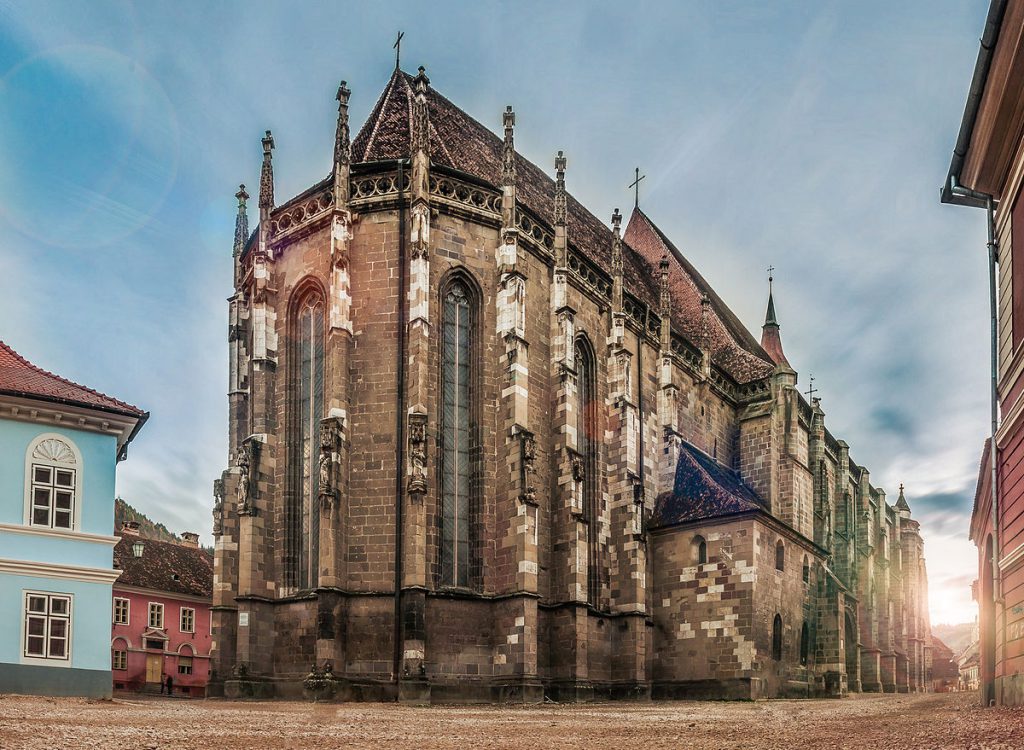
Black Church
(Romanian: Biserica Neagră), stands in the city of Brașov in south-eastern Transylvania, Romania. It was built by the local Transylvanian Saxon (German) community of the city during medieval times and represents the main Gothic-style monument in the country, as well as being the largest and one of the most important houses of worship in the region which belong to the Lutheran, i.e., Evangelical Church of Augustan Confession in Romania.
Author Judit Petki contends that, contrary to a widely held view, the Black Church did not receive its dark appearance as a result of the fire which affected much of the city in 1689, but only in recent times due to pollution. The current popular name is apparently a 19th-century creation.
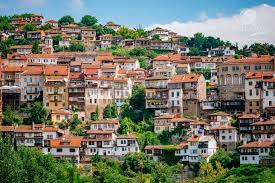
Veliko Tarnovo
(Bulgarian: Велико Търново, romanized: Veliko Tyrnovo); “Great Tarnovo”) is a city in north central Bulgaria and the administrative centre of Veliko Tarnovo Province. It is the historical and cultural capital of Bulgaria.
Often referred as the “City of the Tsars“, Veliko Tarnovo is located on the Yantra River and is famously known as the historical capital of the Second Bulgarian Empire, attracting many tourists with its unique architecture. The old part of the town is situated on three hills, Tsarevets, Trapezitsa, and Sveta Gora, rising amidst the meanders of the Yantra. On Tsarevets are the palaces of the Bulgarian emperors and the Patriarchate, the Patriarchal Cathedral, and also a number of administrative and residential edifices surrounded by thick walls.
Published: Nov 4, 2023
Latest Revision: Nov 4, 2023
Ourboox Unique Identifier: OB-1512177
Copyright © 2023

 Skip to content