






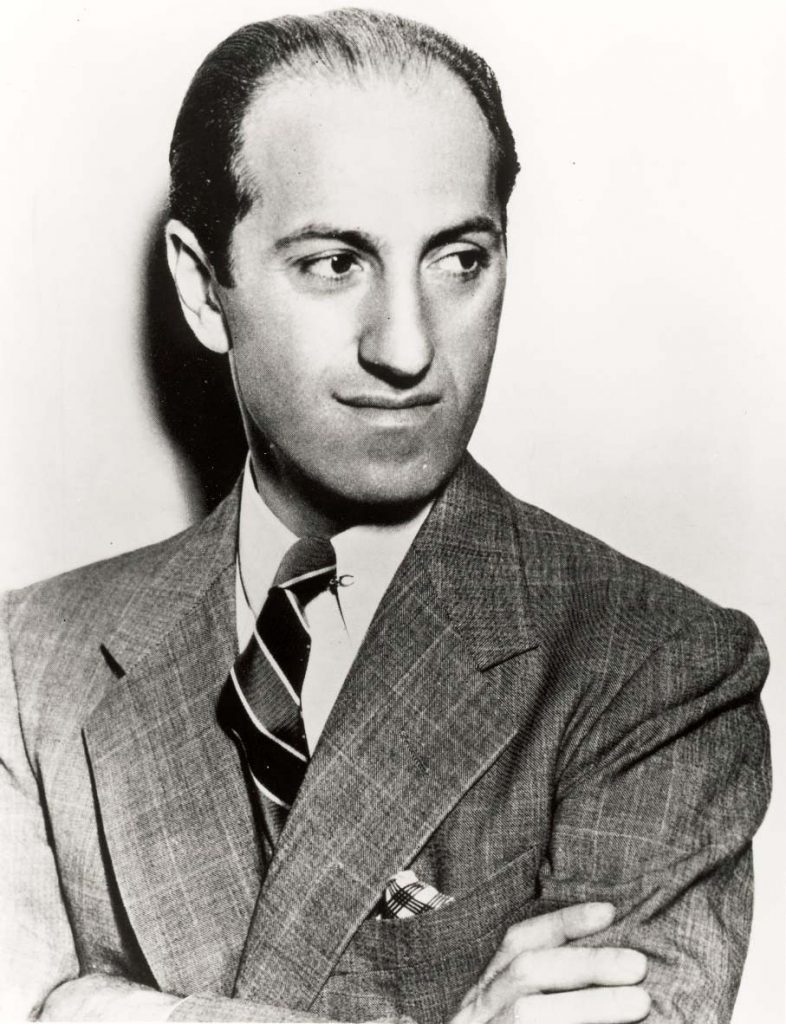
George Gershwin’s influence on popular songs.

Copyright © 2024
George Gershwin, born in 1898 in Brooklyn, New York, was an influential composer and pianist. His music mixes classical, popular, and jazz styles, capturing the lively feel of the Jazz Age and the elegance of Broadway.
George’s first encounter with a musical instrument was in 1910 when his family bought a piano, initially intended for his brother Ira. His talent was recognized by a neighborhood teacher and later by Charles Hambitzer, who mentored him and exposed him to classical composers. Gershwin left school at 15 to work for a music publishing firm, where he developed his skills as a pianist and a composer.
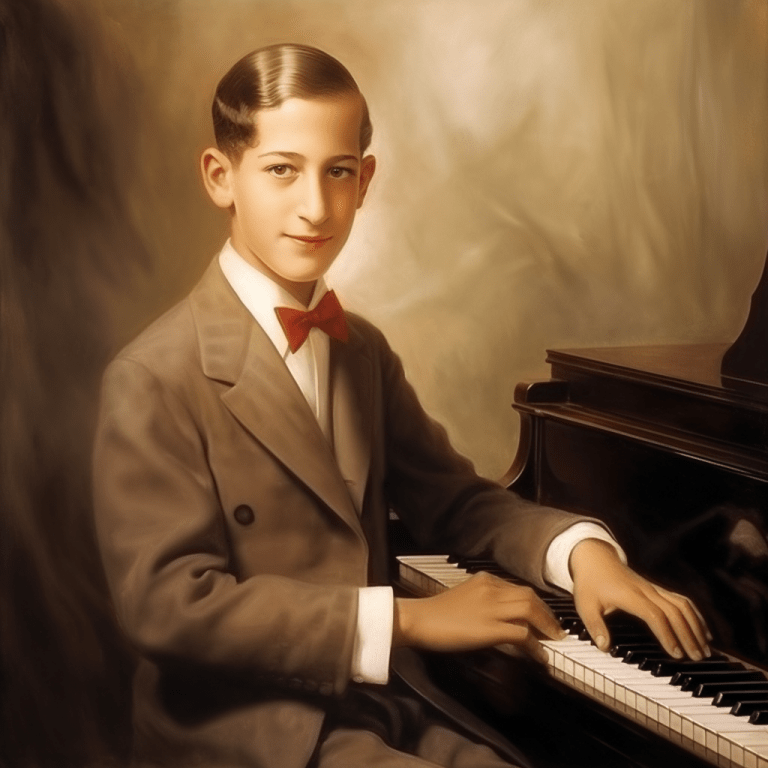
In March 1917, George Gershwin found himself working as a rehearsal pianist for “Miss 1917,” (a musical scored by composers Jerome Kern and Victor Herbert). This opportunity led to him becoming the organizer and accompanist for popular concerts at the Century Theater in New York. In February 1918, Max Dreyfus of T.B. Harms music publishing company recognized Gershwin’s talent and signed him to a contract, offering a weekly salary and royalties for any future compositions. By the end of the year, Gershwin had songs featured in three Broadway shows.
In 1924, his career reached new heights with the debut of “Lady, Be Good!” on Broadway, featuring hit songs like “Fascinating Rhythm.”
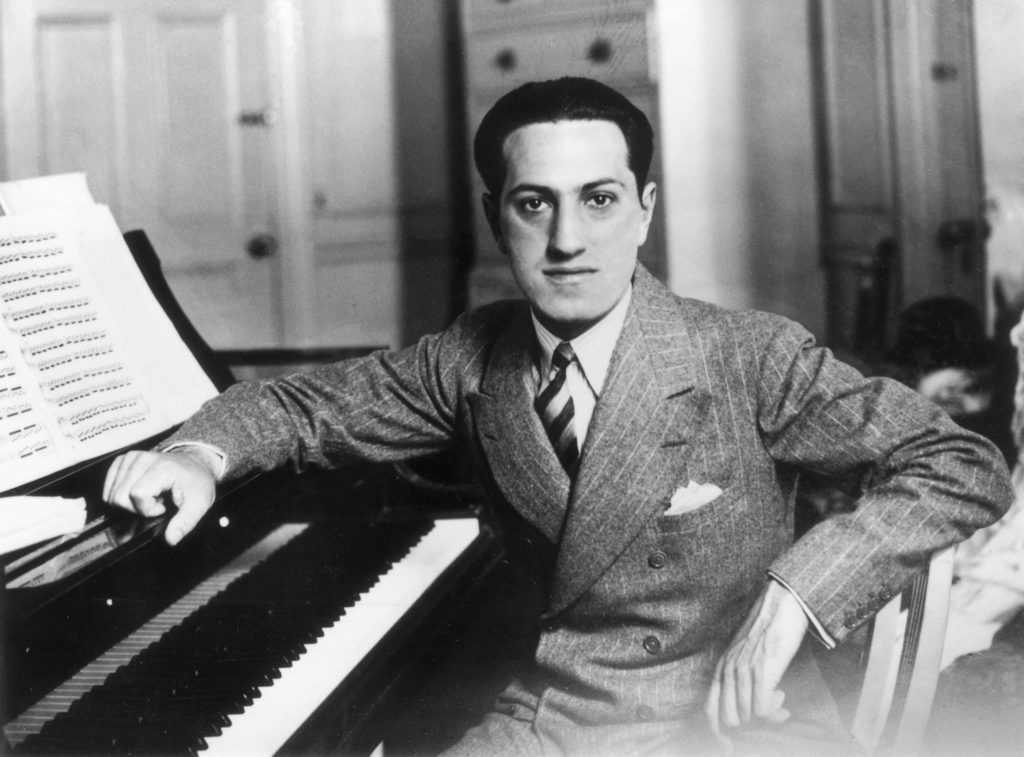
Listen to “Lady, Be Good!”:
Listen to “Fascinating Rhythm”:
Rhapsody in Blue, composed by George Gershwin in 1924, is a musical piece for solo piano and jazz ensemble that blends elements of classical music with jazz influences. Originally commissioned by bandleader Paul Whiteman, the piece debuted in a concert titled “An Experiment in Modern Music” on February 12, 1924, at Aeolian Hall in New York City. Gershwin himself performed the piano part while Whiteman’s band played. Over the years, Whiteman’s arranger Ferde Grofé created multiple orchestrations of the rhapsody, including the original 1924 version, a 1926 pit orchestra arrangement, and a symphonic scoring in 1942.
Rhapsody in Blue is considered one of the most significant works of George Gershwin’s career.
Listen to “Rhapsody in Blue”:
George Gershwin experienced a surge in fame and wealth with the success of “Rhapsody in Blue,” which earned him over a quarter of a million dollars in royalties alone.
George was a master at blending different musical styles, and used this method to compose his songs which made them extremely unique in his genre.
Incorporating Classical Forms, Using complex harmonies, using classical orchestrations and classical and jazz themes. these are all methods Gershwin has used to make his music richer and stand out.
In the next couple of pages, I’m going to share a couple of my favorite songs by Gershwin which use these techniques.
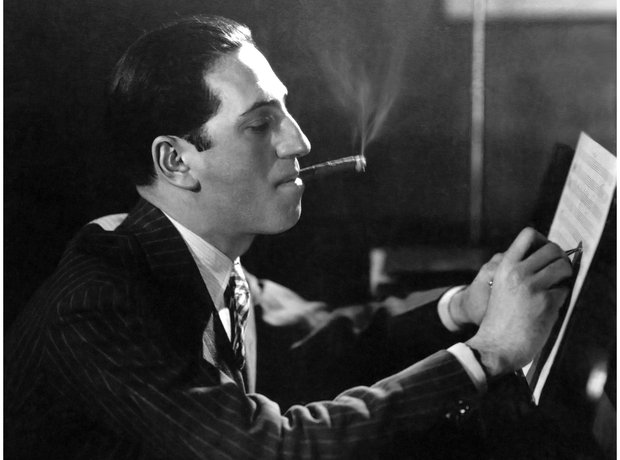
My Favorite Gershwin songs:
1. “Someone to Watch Over Me”: Written in 1926, the lyrics were written by his brother Ira, “Someone to Watch Over Me” is a heartfelt ballad. It has many magical musical lines and Harmonies. The song has been covered by numerous artists over the years and remains a timeless classic of the Great American Songbook.
Listen to “Someone to Watch Over Me”:
2. “Embraceable You”: Another collaboration between George and Ira Gershwin, “Embraceable You” was written for the Broadway musical “Girl Crazy” in 1930. With its romantic lyrics and beautiful music, the song captures the essence of love. It has since been recorded by countless artists and has become a beloved standard in jazz and popular music.
Listen to “Embraceable You”:
3. “Summertime”: Originally written as an aria for the opera “Porgy and Bess,” with lyrics by DuBose Heyward, “Summertime” has become one of Gershwin’s most enduring and widely recorded songs. It captures the languid beauty of a summer evening and has been interpreted by countless artists across various genres, from jazz to pop to classical.
Listen to “Summertime”:
George Gershwin’s legacy extends far beyond his lifetime, influencing American music and inspiring countless musicians and artists across genres. His innovative blending of classical, jazz, and popular elements revolutionized the music industry and earned him a place among the greatest composers of the 20th century.
Published: Mar 5, 2024
Latest Revision: Mar 5, 2024
Ourboox Unique Identifier: OB-1559572
Copyright © 2024

 Skip to content