








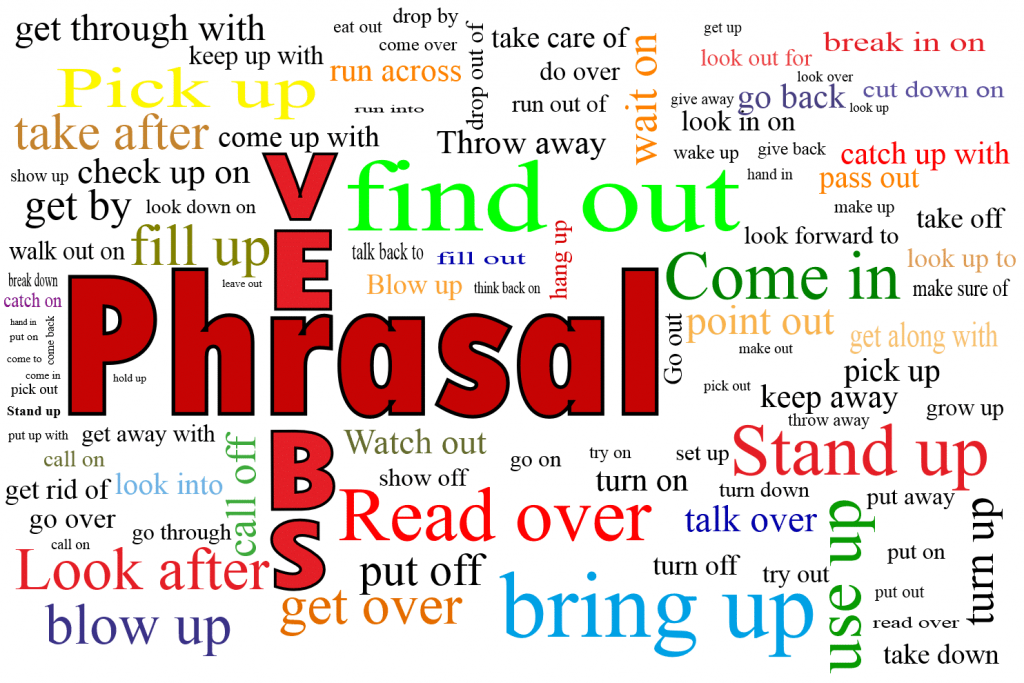
Phrasal verbs in English

by Dzhura Iryna

This free e-book was created with
Ourboox.com

Create your own amazing e-book!
It's simple and free.

Start now

Phrasal verbs in English

Вживання фразових дієслів в англійській мові.
  • Joined Jan 2025
  • Published Books 1
Phrasal verbs in English by Dzhura Iryna - Ourboox.com

Contents/Зміст

1. Вступ……………………………………………………………3

2. Відеоматеріал ”Фразові дієслова”…………………..5

3. Граматичний матеріал ”Фразові дієслова”………6

4. Фразові дієслова з дієсловом to be…………………15

5. Фразові дієслова з дієсловом to come…………….23

6. Фразові дієслова з дієсловом to do………………..30

7. Фразові дієслова з дієсловом to get ………………34

8. Фразові дієслова з дієсловом to go………………..40

9. Фразові дієслова з дієсловом to look………………48

10. Фразові дієслова з дієсловом to make…………..55

11. Фразові дієслова з дієсловом to run……………..59

12. Фразові дієслова з дієсловом to see …………….65

13. Фразові дієслова з дієсловом to take…………….69

14. Keys/ключі………………………………………………..76

15. Список використаної  літератури………………….86

3

 Вступ

Мета підручника – забезпечити вироблення стійких навичок використання найбільш вживаних фразових дієслів в усному і писемному мовленні при вивчені англійської мови. Різноманітні вправи, які супроводжують тлумачення дієслів, забезпечують швидке та ефективне засвоєння матеріалу. Підручник призначений для учнів та студентів, а також для широкого кола осіб, що бажають вдосконалити свої знання з англійської мови. У процесі навчання кожен з нас рано чи пізно починає зустрічати фразові дієслова в англійській мові. Це важлива та цікава тема, але водночас здається складною для розуміння. Ми детально розглянемо загальні правила вживання phrasal verbs, розберемося, для чого вони нам потрібні, а також навчимося використовувати їх на практиці. 

4
Phrasal verbs in English by Dzhura Iryna - Ourboox.com

6

Фразові дієслова – це дієслова з прийменником, наприклад ask for, break down, get on, look for, take after etc. Чим більше фразових дієслів ми знаємо, тим легше нам розуміти англійську мову. Фразові дієслова часто вживаються в розмовній мові носіями мови, які люблять вибирати з двох існуючих в мові синонімів саме фразове дієслово. Наприклад, слово продовжувати можна перекласти, як ‘continue’ і як go on’. Носій мови віддасть перевагу другому варіанту.

Часто значення фразового дієслова дуже відрізняється від значення самого дієслова, що бере участь в побудові фразового дієслова. Наприклад, дієслово look перекладається як дивитися. А ось декілька прикладів фразових дієслів з look.

look for – шукати
look after – піклуватися, доглядати
look down – не поважати

7
look forward to – чекати з нетерпінням

На цих прикладах ми можемо побачити, що фразове дієслово має абсолютно інше значення і тому кожне фразове дієслово треба завчити, як нове слово. Зрозуміти значення фразового дієслова за значенням основного дієслова не вийде.

Окрім перекладу, треба звернути особливу увагу на те, як поводять себе фразові дієслова в реченні. І це питання ми зараз розглянемо.

Що таке фразові дієслова англійської мови

Фразові дієслова складаються з основного дієслова, такого як go, make, take, та допоміжної частинки у вигляді прислівника чи прийменника. Наприклад, у фразі put off, put – основне дієслово, а off – прийменник, який змінює його значення.

Типи фразових дієслів

  • Прості фразові дієслова: Це фразові дієслова, які складаються з одного дієслова та одного додаткового елемента. Наприклад: “look after”, “take off”, “give up”.
  • Складні фразові дієслова: Ці фразові дієслова мають більше, ніж один додатковий елемент. Наприклад: “put up with”, “get along with”, “come up against”. Тобто, в них присутній і прийменник, і прислівник
8

Усі фразові дієслова можна поділити на дві великі групи: transitive (перехідні) та  intransitive (неперехідні).

Перехідні фразові дієслова

Фразові дієслова з невідокремлюваним прийменником

Перехідні фразові дієслова вимагають об’єкт після себе. Наприклад, ми не можемо просто сказати try on (приміряти), треба додати об’єкт, тобто вказати, що саме треба приміряти, щоб речення мало сенс. Try on a shirt – Приміряй сорочку.

В свою чергу, перехідні фразові дієслова можуть бути як відокремлюваними, так і невідокремлюванимиНевідокремлювані фразові дієслова це дієслова, у яких прийменник завжди йде після

дієслова.

9

ask for – запитувати, замовляти
get on (the bus) – сідати (на автобус)
carry on – продовжувати
run out of – закінчуватися
look for – шукати
look after – піклуватися, доглядати
look down – не поважати
look forward to – чекати з нетерпінням

  • I am looking after my little brother today. (Я сидітиму з моїм маленьким братом сьогодні.)
  • He needs to look for a job(Йому треба шукати роботу.)
  • We are looking forward to a weekend(Ми чекаємо з нетерпінням вихідних.
  • Фразові дієслова з відокремлюваним прийменником

У таких дієслів прийменник може стояти після об’єкту. Наприклад Try this shirt on. – Приміряй цю сорочку.

10

До цієїгрупи відносяться наступні дієслова.

switch off – вимикати
turn off – вимикати
bring up – виховувати
check in – реєструвати
call back – передзвонювати
find out – дізнатися, з’ясувати
give up – кидати
give back – віддавати
give away – роздавати
look up – подивитися в словнику/довіднику
pick up – забирати
put on – надягати
put out – гасити
pay back – повертати гроші
put off – відкладати
take off – знімати

11

try on – приміряти
turn up – робити голосніше
turn down – робити тихіше
turn on – включати
throw away – викидати
take up – зайнятися (хобі, спортом)
take back – відносити назад/повертати
wake up – будити
write down – записувати

  • I will write down the name of the hotel. Я запишу назву готелю.
  • Can I try on this dressМожу я приміряти цю сукню?
  • Take off your jacket. It’s hot in here. Зніми куртку. Тут жарко.

Треба відокремлювати прийменник чи ні?

Якщо ми вживаємо іменник, ми можемо як відокремлювати прийменник від дієслова, так і не відокремлювати. Обидва варіанти правильні.

12
Put on this dress.
Надягни цю сукню.
Put this dress on.
Надягни цю сукню.
Throw away those papers.
Викинь ці папери.
Throw those papers away.
Викинь ці папери.
Write down this word.
Запишіть це слово.
Write this word down.
Запишіть це слово.
Take off those dirty boots.
Зніми ці брудні чоботи.
Take those dirty boots off.
Зніми ці брудні чоботи.
Let’s put off the meeting.
Давайте відкладемо зустріч.
Let’s put the meeting off.
Давайте відкладемо зустріч.

Але, коли ми замінюємо іменник займенником (him, her, it, them etc), нам обов’язково треба відокремити прийменник від дієслова.

Put on this dress.
Надягни цю сукню.
Put it on.
Надягни цю сукню.
Throw away those papers.
Викинь ці папери.
Throw them away.
Викинь ці папери.
Write down this word.
Запишіть це слово.
Write it down.
Запишіть це слово.
Take off those dirty boots.
Зніми ці брудні чоботи.
Take them off.
Зніми ці брудні чоботи.
Let’s put off the meeting.
Давайте відкладемо зустріч.
Let’s put it off.
Давайте відкладемо зустріч.
13

Неперехідні фразові дієслова

Неперехідні фразові дієслова, навпаки, не вимагають об’єкта після себе. Вони виражають дію, яка відбувається безпосередньо, без спрямування на якийсь об’єкт. Ось кілька прикладів:

  • Go on: Продовжуватися, відбуватися. Наприклад: “The party went on late into the night.

Після фразового дієслова не треба додавати об’єкт, щоб речення мало сенс. До цієї групи дієслів також відносяться наступні фразові дієслова.

 Приклади Переклад
get up вставати
hurry up поспішати
come on йдемо, давай
take off злітати (літак)
go away від’їжджати, йти
come back повертатися
sit down сідати
stand up вставати
  • Wake up! It’s 7.30. Прокидайся. Вже 7.30.
  • Sit down. I need to talk to you. Сідайте. Мені треба поговорити з вами.
  • Don’t hurry up. You will make a mistakeНе квапся. Ти зробиш помилку.
14

15

Практика усного та писемного мовлення : 

ФРАЗОВІ ДІЄСЛОВА ТА СИНОНІМИ.

Phrasal verbs and synonyms.

TO BE – бути

Дієслово to be є неправильним тому має 3 форми: be – was/were – been.

Існує не так багато фразових дієслів з be, до того ж дуже часто не зрозуміло що це саме фразове дієслово. Адже be – часто перекладається як бути.

1. to be aboutбути поблизу – to be near (by, from), to be not far from.

 I am about your house. Я є поблизу твого будинку.

2. to be afterдобиватися чогось, намагатися отримати.  to aim at, to try to get, to obtain, to achieve.

I wonder what he is after. Цікаво, що він задумав.


16

3. to be away – бути відсутнім, у від’їзді, бути далеко. –  to be far away ( wide), to be absent.

The director ia away on business. Директор поїхав у відрядження.

4. to be against – бути проти.

I am against doing anythig till police arrive. Я проти того, щоб щось робити до приїзду поліції.

5.to be behind – мати заборгованість, відставати, запізнюватись.- to have a debt, to remain behind, to be late.

Ira is always top of her class, but Igor is often behind.

6. to be down – знижуватися, зменшуватися. – to fall, to go down, to decrease.   

The prise of vegetables should be down next week. Ціна на фрукти повинна знизитися наступного тижня.

7. to be in – бути вдома, на роботі, у приміщенні. – to be at home, to be inside.


17

Is Petro in? Петро вдома? 

8. to be in forочікувати щось, накликати щось. – to wait for, to expect.

We are in for a cold winter. Буде холодна зима.

9. to be offвиходити, бути скасованим, бути вимкненим

(light, electricity) – to go out, to cancel, to switch off. 

 He is off. Він пішов.

 The light was off two days ago. Два дні тому не було світла.

10. to be on (light, electricity) – бути ввімкненим, (film, performance, exhibition) – відбуватися, йти.- to switch on,  to take place, to play.                                                     

The light has been on since 2 o’clock.  Світло горить з 2 год.   

The film will be on tomorrow. Фільм буде йти завтра.        

18

11. to be out – не бути вдома, на роботі, бути відсутнім (про гроші) – to absent, to default.                                       

I am sorry, she is out. Вибачте, її нема дома.

The money is out. Грошей нема.                                   

12. to be over – закінчуватися – to finish.

The lesson is over. – Урок закінчився.

13. to be up – встати (бути на ногах), піднятися, закінчуватися (про час), відбуватися. – to wake up, to rise, to happen.

I am up early every day. Я прокидаюся рано кожного дня.

You can go, time is up. Ви можете йти, час вийшов.          

1. Fill in the correct particle or preposition in the following sentences.

1. Don’t worry. The temperature is ……… now. Everything will be good.

2. Hand in your papers. Time is …… .


19

3. He must be somewhere ……… .

4. She is ……. career.

5. You may go! The lesson is ……. .

6. He is ……. at the moment. Come a little later.

7. The exhibition will be ……. tomorrow.

8. The electricity was ….. two days ago.

9. He won’t be backuntil next month, he is ……. in Kyiv at the moment.

10. Igor must study harder to catch up with the group. He is ……. the group with his classes.

11. It’s ……. nature to wear high shoes.

12. Are you ….. ? Can I come to you ?

13.I am …….. holidays to relax.

2. Choose the correct answer.

1. The police …… …….. the bank robbers.

a) are about;                 b) are after;

c) are over;                   d) are against.

20

2. Look at the sky it seems to me that we ………. bad weather.

a) are on;                    b) are off;

c). are up;                   d) are in for.

3. There ……. a new play ……. at the IvanFranko Theatre.

a) is on;                      b) is down;

c) is off;                      d) is about.

4. Can you give me some sugar? – I am  sorry, but  I ……… of sugar.

a) am over;                   b) am out;

c) am in ;                      d) am after.

5. I see that you ……… smething. I will back you in any case.

a) are about:               b) are behind:

c) are away:                d) are after.

6. What …….. ? Is something wrong?

a) is out;                     b) is in;

c) is up;                      d) is against.


21

7. I used to like fried potatoes, but now I ……… unhealthy food.

a) am against;               b) am behind;

b) am in for;                  d) am about.

8. Excuse me,but I must …….. , I will come back later.

a) be down;                   b) be in;

c) be off;                       d) be on.

9. When I was writing an article about the director, I knew that I ………. trouble.

a) was over;                 b) was in for;

c) was on:                    d) was down.

10. The doctor ……. now, he is making his rounds.

a) is away;                   b) is down;

c) is out;                      d) is off.

11. She ……… the group, but she hoped to catch up with it in a few months.

a) was about;               b) was out;

c) was down;                d) was behind.

22

12. ….. Maks ….. yet? – Yes, he is an early riser.

a) is up;                      b) is off;

c) is in;                       d) is away.

13. He must …. somewhere ……. , look for him in the garden.

a) be after;                 b) be about;

c) be in;                     d) be up.

14. The dollar was down in rellation to euro.

a) was on;                  b) was in;

c) was down;              d) was against.

15. People think that the price of air travel will ……..  this year.

a)  be up;                   b) be in;

c) be out;                   d) be on.

16. The storm …….. , it has stopped raining and the sun is shining.

a) is down;                 b) is after;

c) is off;                     d) is over.


23

To come – приходити

1. to come aboutставатися, відбуватися. – to arise, to happen. 

How did it come about that they lost the game? Як це сталося, що вони програли гру.

2. to come acrossзустрітися (випадково), натрапити на. – to meet, to find.

How did you come across this beautiful bracelet? Як ти натрапила на такий гарний браслет?

3. to come alongпоспішати, іти разом – to hurry, to pass.

Dan came along with us to the cinema. Ден прийшов з нами в кінотеатр.

4. to come backповертатися. – to return.

I is coming back on Monday.  Я повертаюся в понеділок.

5. to come byпроходити повз, досягати. – to obtain.

A good boss is not easy to come by. Хороший керівник не пройде мимо.

24

6. to come downпадати ( про дощ, сніг), спускатися. – to fall, to drop, to descend.

The child , running too fast, came down and hurt knee. 

Дитина, біжучи швидко, впала і побила коліна.

7. to come down onнакидатися на когось, сваритися. – to attack, to throw oneself, to quarrel.

The school came down on any students who were caught drinking. Школа сварилася з студентами, яких спіймали напідпитку.

8. to come down withзахворіти. – to fall ill, to be ill.

Ira has come down with a bad сold. Іра сильно застудилася.

9. to come forзаходити за. – to fetch.

He is coming for us at 5 o’clock. Він зайде за нами в 5 годині.

10. to come fromбути родом з. – to arrive from, to have one’s origin.

She comes from Ukraine.  Він з України.

25

11. to come into (property, inheritance)вступати у, отримати ( у спадщину) – to begin to be in.

Igor came into the property when his uncle died. Ігор отримав спадщину після смерті дядька.

12. to come out (books, newspapers)виходити, виступати(висип), розпускатися (квіти), виходити (на картині), з’ясовувати(стосунки). to publish, to appear, to blossom, to clear up.

Anna always comes out well in the photoes. Анна завжди гарно виходить на фотографіях .

13. to come offвідриватися (гудзик), випадати (волосся), відбуватися (зустріч).

The button has come off. Гудзик відірвався.

14. to come round – заглянути до когось -look at, to visit.

Do your friends  come round to you when you are ill?  Твої друзі заглядають до тебе, коли ти хворий.

26

1. Fill in the correct particle or preposition in the following sentences.

1. Let me explain how the situation came …… .

2. He had never come ….. a person quite like Igor.

3. The roof came …… during the night.

4. We’d like to come  ….. next year.

5. The truth came ….. at the enquiry.

6. Come ……, the bus is leaving in 5 minutes.

7. When he came ……. a new word, he would look it up.

8. Fred came …….. the flue  yesterday.

9. The director came ……. on Ivan for being late again.

10. She comes ….. England.

11. I am much richer now, than when I came …. the property.

12. All his hair has come …..

13. We are coming …… you at 2 o’clock.


27

2. Choose the correct answer.

1. I  …… an old picture in my desk drawer.

a)  came across;                  b)came about;

c) came back;                     d) came for.

2. I’ll  ….. to yours later, ok?

a) come down with;              b) come along;

c) come round;                    d) come out.

3. What country do you ………. ?

a) come across;                   b) come from;

c) come off;                        d) come by.

4. A buss should …….. any minute now.

a) come about;                   b) come down;

c) come from;                    d) come along.

5. The two brothers ……… blows during their quarrel.

a) came down;                   b) came across;

c) came into;                     d) came to.


28

6. What have you …………?

a) come from;                     b) come for;

c) come off;                        d) come into.

7. He is in bed, he has …………. the flu.

a) come down with;             b) come about;

c) come down on;               d) comealong.

8. I congratulate you. You presentation …….. successfully.

a) came by;                        b) came for;

c)came into;                       d) came off.

9. How did this situation ……… ?

a) come about;                    b) come by;

c) come along;                    d) come across.

10. …….. my office later.

a) come down;                    b) come for;

c) come by;                        d) come into.

11. She ……..  a lot of money when her aunt died.

a) came off;                        b) came into;

c) came about;                    d) came out.

c) came from;                     d) came for.

29

12. His new album ……. next month.

a) comes by;                     b) comes for;

c) comes off;                     d) comes out.

13. He left and never …….. .

a) came back;                    b) came about;

c) came across;                  d) from.

14. Good jobs hard to ……..

a) come off;                       b) come from;

c) come by;                       d) come dwm.

15. The plan ……. perfectly.

a) came into;                      b) came off;

c) came out;                       d) came back.

16. The teacher ………. the students for not doing their homework.

a) came down on;                b) came across;

c) came into;                       d) came from.

30

To do – робити

1. to do away with – позбутися, скасувати.- to get rid of, to cancel.

They should do away with outlated laws. Їм слід позбутися застарілих законів.

2. to do up – ремонтувати, прикрашати, застібати. coat(зав’язати belt, lace,hair). – to repair, to decorate, to button( to tie).

The house needs doing up. Будинок треба відремонтувати.

3. to do in– знищити, вбити.- to destroy, to kill, to murder.

He was done in by his enemies. Його знищили вороги.

4. to do with – мати щось спільне , задовольнитися чимось.- to have smth to do with smth, to setle for smth.

I have nothing to do with these people. Я не маю нічого спільного з цими людьми.


31

5. to do without – обходитися без чогось.- to treat.

I can’t do without my morning coffee. Я не можу обійтися без своєї ранкової кави.

6. to do over – переробляти, грабувати. – to remodel, to rob.

You should do the home work over, it’s full of mistakes. Тобі слід переробити домашню роботу, у ній багато помилок.

7. to do for –  пошкодити, доглядати.- to hurt, to care.

She does for herr elderly neigbor. Вона доглядає за своїм літнім сусідом.


1. Fill in the correct particle or preposition in the following sentences.

1. What’s your book about? It’s to do ….. human behaviour.

2. The school decided to do ……. uniforms.

3. The say Bates  did …… his wife.

4. The storm did …. the old bridge.


32

5. You need t do …. the kitchen.

6. They did …… the living room with new wallpaper.

7. Can you do ………  your phone numberfor a day?

8. She did …. her hair in a ponytail

9. He could do…. a bit more sleep.


2. Choose the correct answer.

1. There is no sugar, so you will have to …… .

a) do up;                  b) do away with;

c) do withot;             d) do for

2. It was a very cold day, so Brien ……. all the buttons on his overcoat.

a) did up;                 b) did for;

c) did over;               d) did with.

3. We should …………. old rules.

a) do in;                   b) do for;

c) do up;                  d) do away with.

33

4. What does this have to ……..  the project?

a) do in;                    b) do with;

c) do up;                   c) do away with.

5. What have you …….. to the poor boy?

a) done in;                 b) done out;

c) done for:                d) done up.

6. The director can’t …….. a secretary.

a) do with;                  b) do up;

c) do without;              d) do for.

7. We decided to ……… the living room with new wallpaper and furniture.

a) do without;               b) do over;

c) do in;                       d) do for.

8. Can you help me ……. my dress?

a) do in;                       b) do with;

c) do over;                    d) do up.


34

To get –  одержувати, ставити.

1. to get away – втекти. – to escape.

The thief managed to get away. Злочинцю вдалося втекти.

2. to get back – to return. повертатися.

When did you get back from vacation? Коли ти повернувся з відпустки.

3. to get by – виживати, справлятися, зводити кінці з кінцями. – to survive, to make ends meet.

We can get by without you help. Ми не можемо спрaвитися без твоєї допомоги.

4. to get on/along ( with) – розумітися, ладнати з кимось. – to understand.

I get along well with my colleagues.  Я добре ладнаю з колегами.

5. to get over – подолати, пережити. – to overcome, to survive.

She finally got over her illness. Вона нарешті подолала хворобу.


35

6. to get up – вставати. – to wake up.

I get upat 7 o’clock. Я встаю о 7 годині.

7. to get off/ to get out off – виходити ( з транспорту), уникнути покарання, зійти. – to exit, to leave(приміщення), to avoid.

I get off work at 6 o’clock. Я виходжу з роботи в 6 годині.

8. to get rid off – позбутися. –

I need to get rid off  all these old clothes. Мені потрібно позбутися цих старих речей.

9. to get together – зустрічатися. – to meet.

Let’s get together this weekend. Давай зустрінимось цими вихідними.

10. to get on – сідати. –  to sit.

I get on the bus at 8 o’clock in the morning. Я сідаю на автобус в 8 годині ранку.

11. to get in (to get into– сідати в авто) – увійти, потрапити в. – to enter, to come in, (to sit).

He got in the team. Він потрапив в команду.


36

12. to get down to – перeйти до справи, займатися чимось. – to do smth.

It’s time we got down to work. Час зайнятися роботою.

13. to get ahead of – випереджати, бути кращим за. –

She’s trying to get ahead of the competition. Вона наагається випередити конкурентів.

1. Fill in the correct particle or preposition in the following sentences.

1. She got ….. the bike and rode off.\

2. They got ….. their car and drove.

3. It’s hard to get ……. on my salary.

4. It took me a lot of time to get ….. the flue.

5. Max had a dream that a very fat woman was attacking him and he couldn’t get …….

6. Igor got ……his bicycle to tie his shoe.

7. How can  I get ……. a headache.

8. She works hard  to get …… in her career.

37

9. Let’s get ….. after work.

10. When will you get ….. from Canada?

11. I got …… early today to study for an exam.

12. I find it really hard to get …. to work.

13. He always tries to get ….. out of doing housework.

14. They get ….. very well.

15. What time does the train get …..?

2. Choose the correct answer.

1. We need to …… at the next stop.

a) get off;                   b) get out of;

b) get by;                   d) get back.

2. I usually ……. at 7 am.

a) get over;                 b) get away;

c) get up;                    d) get by.

3. Shall we ……. for a drink at the weekend?

a) get along with;                b) get together;

c) get rid off;                       d) get up.


38

4. We must be …….. now.

a) getting over;                    b) getting by;

c) getting in;                        d) getting back.

5. She …… yoga last year.

a) got away;                        b) got into;

c) got by;                            d) got back.

6. We …… of the car and paid the driver.

a) got out;                           b) got rid of;

c) got over;                          d) got away.

7. Now if you don’t mind we will …… to bussiness.

a) get off;                            b) get by;

c) get down to;                     d) get into.

8. ……  the taxi now because we are here.

a) get rid of;                         b) get away;

c) get together;                     d) get out of.

9. I don’t earn much, but I …….

a) get by;                              b) get over;

c) get into;                            d) get away.

39

9. We need to ……. all these old books.

a) get by;                      b) get rid off;

c) get ahead;                 d) get into.

10. The thief managed to …….

a) get away;                   b) get in;

c) get on;                       d) get over.

11. I lost my keys and so I couldn’t …… the house.

a) get over;                    b) get up;

c) get ahead;                  d) get in.

12. Let’s ……. on this bus.

a) get by;                        b) get along with;

c) get on;                        d) get rid off.

13. I just …… the flu and now my sister has it.

a) got over;                     b) got back;

c) got along with;             d) got into.

14. They work hard to …… in their work.

a) get up;                         b) get ahead;

c) get over;                       c) get out off.

40

To go – іти

1. to go about/around – гуляти, ходити. – to walk, to go for a walk.

They usually go about together. Вони зазвичай гуляють разом.

2. to go ahead – рухатися вперед. –  to move.

Go ahead, what are you waitinf for? Давай рухайся, чого чекаєш?

3. to go away – від’їхати, зникнути. – to leave, to disappear, to exit.

The pain will go away soon. Біль скоро мине.

4. to go back – повертатися. – to return, to come back.

I have to go back home. Мені треба повернутися додому.

5. to go back on – порушувати обіцянку, відмовлятися від слів. – to break a promise, to do not keep your word.

He never goes back on his word. Він ніколи не порушує своє слово.


41

6. to go down – зменшуватися, падати, тонути. – to decrease, to fall, to sink.

The prices went down. Ціни зменшилися.

7. to go down with – захворіти. – to ill, to fall ill.

He went down with the flue. Він захворів на грипу.

8. to go in for – займатися. – to engage in.

I go in for sports. Я займаюся спортом.

9. to go against – йти проти, суперечити. -to conflict, to disagree, to contradict.

I can’t go against my principies. Я не можу йти проти своїх принципів.

10. to go off – задзвонити (alarm), вибухнути ( bomb), збігти ( milk), псуватися (food). – to call, to burst, to break down, to flow down, to spoil.

My alarm went odd at 6 am.  Мій будильник спрацював о 6 ранку.

42

11. to go out with –  зустрічатися з. – to meet with.

I went out with my friends last night. Я зутрічався з друзями минулої ночі.

12. to go on – продовжувати (діяти чи говорити).

She went on talking for hours. Вона продовжила говорити кілька годин.

13. to go through — проходити через, переживати (важку ситуацію). –  to experience a difficult situation.

She went through a lot last year. Вона пережила багато минулого року.

14. to go up — підніматися, зростати (про ціну, рівень, температуру). – to rise, to grow.

The price of gas went up again. Ціна на газ знову зросла.

15. to go over — переглядати, обговорювати, вивчати. – to review, to discuss, to study.

We went over the details of the project. Ми переглянули деталі проєкту.


43

16. to go for — вибирати щось, прагнути до чогось, намагатися досягти чогось. – to choose, to to strive, to try to achive.

I’ll go for the pizza tonight. Сьогодні я виберу піцу.

17. to go without — обходитися без чогось. – to to spare.

We had to go without food for two days. Ми мусили обходитися без їжі два дні.

18. to go in — входити, залучатися до чогось. – to enter, to come in, to implicate, to enlist.

She went in for the interview. Вона пішла на співбесіду.

1. Fill in the correct particle or preposition in the following sentences.

1. His mood went  …. after the argument.

2. The tourists went ….. Kyiv.

3. Go ….. and take an early lunch.

4. He went …. swimming when he was young.

5. They went …… a lot last winter.

44

6. I wish I could go ….. to my childhood.

7. This is how the incident went …….

8. They’ve been going ……. each other for two years.

9. Let’s go …… the homework together.

10. She went ….. the gold medal.

11. I am afraid there’s no coffee, so we’ll just have to go ……

12. He went ….. to see the doctor.

13. She went ….. talking for hours.

14. The prices are going ….. again.

15. Max and Mary went …… for the summer.

16. I went ……. a severe attack of malaria.

17. You can’t go …… your word.

18. The team went …….. the odds and won the game.

19. We need to go …. before the rain starts.

2. Choose the correct answer.

1. I need to ……. to the office.

a) go away;                   b) go for;

c) go over;                    d) go back.

45

2. Let’s ……. the details again.

a) go over;                   b) go in for;

c) go without;               d) go in.

3. You can go ahead and start without me.

a) go off;                      b) go against;

c) go ahead;                 d) go on.

4. The story ……. in history as a great achievement.

a) went against;            b) went down;

c) went without;            d) went away.

5. He ………  a difficult time after the loss.

a) went through;           b) went in for;

c) went about;              d) went ahead.

6. I’ve never really ……… extreme sports.

a) gone down with;       b) gone back on;

c) gone in for;              c) gone up.

7.  His actions ……..  the rules of the company.

a) went through;           b) went against;

c) went in;                    d) went on.


46

8. The bomb …… in the city center.

a) went in for;                  b) went down;

c) went  over;                  d) went off.

9. The show must …….

a) go on;                         b) go without;

c) go away;                     d) go back.

10. They went ……. all the documents carefully.

a) went  up;                    b) went against;

c) went through;              d) went for.

11. The kids …… to their grandparents’ house for the summer.

a) went out with;             b) went down with;

c) went away;                  d) went ahead.

12. How do you …… solving this problem?

a) go in;                          b) go for;

c) go up;                         d) go about.

13. He ………. his promise to help me.

a) went in for;                  b) went back on;

c) went against;                d) went for.


47

14. The headache …… after I took the medicine.

a) went away;                    b) went through;

c) went out with;                d) went back.

15. Several students ………  a cold after the trip.

a) went down;                   b) went down with;

c) went about;                   d) went for.

16. I’m …….. my colleagues after work.

a) going in for;                  b) going back on;

c) going out with;              d) going withouy.

17. We …… the stairs to the second floor.

a) went away;                   b) went over;

c) went off;                       d) went up.

18. She decided to ….. a career in medicine.

a) go for;                          b) go off;

c) go against;                   d) go in for.

19. He had to …… his favorite things when he moved abroad.

a) go in;                           b) go without;

c) go up;                          d) go off.

48

To look – дивитися

1. Look after – доглядати, піклуватися.- to care.

She looks after her younger brother. Вона піклується про свого молодшого брата.

2. Look at — дивитися на.- to watch.

Look at that beautiful painting!  Подивися на цю чудову картину!

3. Look for — шукати. – to search

I am looking for my keys. — Я шукаю свої ключі.

4. Look back — оглядатися назад, згадувати. – to turn around, to remember, to recall.

She often looks back at her childhood with fondness.  Вона часто згадує своє дитинство з теплом.

5. Look down on — зневажати, ставитися з  презирством. – to despice, to scorn, to contempt.

He looks down on people who don’t have a university degree.  Він дивиться на людей, які не мають вищої освіти, з презирством.

6. Look forward to — чекати з нетерпінням.

I am looking forward to the weekend. Я чекаю на вихідні з нетерпінням.

49

7. Look out – бути обережним, остерігатися. – to take care, to to watch out, to be carefull.

Look out! There’s a car coming. Остерігайся! Їде машина.

8. Look up – шукати інформацію, піднімати погляд. – to search for, to find, to raise one’s eyes, to lift one’s gaze.

I need to look up the address. Мені потрібно знайти адресу.

9. Look into – досліджувати, вивчати. – to research,  to  investigate, to study.

The police are looking into the case. Поліція вивчає справу.

10. Look over – переглядати, оглядати (a car,a house, a document, an applicant.) –

I’ll look over your report before the meeting. Я перегляну твій звіт перед нарадою.

11. Look through – переглядати, швидко ознайомлюватися з чимось. – to review, to scan.

I looked through the documents but didn’t find anything important. Я переглянув документи, але нічого важливого не знайшов.

12. Look around – озиратися, оглядати(a town,a shop, an exhibition). – to glance around, to see, to view.

We should look around for a new place to live. Нам слід озирнутися в пошуках нового місця для життя.


50

13. Look in – заглядати, навідувати. – to peek, to call on.

I’ll look in on you later to check how you’re doing. Я загляну до тебе пізніше, щоб перевірити, як ти.

14. Look to do smth – планувати щось зробити. – to plan to do smth.

I’m looking to start a new project next month. Я планую розпочати новий проект наступного місяця.

15. Look away – відвертати погляд. – to avert one’s gaze.

She looked away when the movie scene became too emotional.  Вона відвернула погляд, коли сцена в фільмі стала занадто емоційною.

16. to look like – бути схожим. – to be similar, to resemble.

17. It looks like it’s going to rain soon. Здається, скоро буде дощ.

1. Fill in the correct particle or preposition in the following sentences.

1. Can you look ….. the dog while I’m away ?

51

2. Look ….. for cars when you cross the street.

3. She’s looking …. a new job.

4. He looked …. at the stars.

5. He looked ….. as he walked down the street.

6. I need to look …… the report before the meeting.

7. She felt that her boss was looking …. her because of her accent.

8. We looked around the city and visited several museums.

9. I’m looking ……. my English skills this year.

10. She promised to look …. the matter and find a solution.

11. He looked …. the situation from a different perspective.

12. We look forward to your visit next month.

13. They looked ….. the house before deciding to buy it.

14. I’ll look ….. the dictionary for the meaning of that word.

15.  He looked ….. when they started arguing.

16. She looks like her mother.

52

2. Choose the correct answer.

1. The doctor will …… your test results.

a) look over;                 b) look in;

c) look dow on;             d) look back.

2. She …….. to see if anyone was following her.

a) looked after;               b) looked for;

c) looked back;               d) looked like.

3. I need to look up the definition of this word.

a) look in;                       b) look up;

c) look after;                   d) look out.

4. I have to look after my responsibilities.

a) look back;                   b) look down on;

c) look for;                      d) look after

5. Don’t ……. others just because they’re different from you.

a) look down on;              b) look forward to;

c) look up;                       c) look to do smth.

53

6. You should …… for slippery floors in winter.

a) look like;                      b) look for;

c) look out;                      d) look about.

7. We …… the missing cat all day.

a) looked out;                   b) looked for;

c) looked after;                 d) looked down on.

8.  …… you! The world is full of opportunities.

a) look around;                 b) look forward to;

c) look like;                      d) look to do smth.

9. She …….. the map to find the directions.

a) looked down on;           b) looked in on;

c) looked at;                    d) looked after

10. She …… the magazine to find an interesting article.

a) looked like;                 b) looked through;

c) looked down on;          c) looked to do smth.

11. The house ……. it could use a fresh coat of paint.

a) looks for;                    b) looks after;

c) looks away;                 d) looks like.


54

12. She’s ……. a new project after the holidays.

a) looking to start;             b) looking in;

c) looking down on             d) looking back.

13. The police are looking into the robbery.

a) looking for;                    b) looking after;

c) looking into;                   d) looking away.

14. He couldn’t …… from the beautiful view.

a) look down on;                b) look away;

c) look like;                       d) look out.

15.  We ……. through the window to see the party inside.

a) looked back;                  b) looked out;

c) looked forward to;          d) looked in.

16.Sometimes, it’s good to …… at your achievements.

a) look away;                     b) look back;

c) look like;                        d) look fo.

17. She is very beatiful. She …… her mother.

a) looks like;                      b) looks out;

c) looks away;                    d) looks in.

55

To make – робити

1. Make up –вигадувати,придумувати,(історію, вибачення),миритися.

She made up an excuse for being late. Вона вигадала виправдання за запізнення.

2. Make out – розібрати, зрозуміти, поцілувати.

I can’t make out what he’s saying. Я не можу зрозуміти, що він каже. They were making out at the party.

3. Make up for – компенсувати, виправити

He bought me flowers to make up for being rude. Він купив мені квіти, щоб компенсувати свою грубість.

4. Make into – перетворювати на

They made the old factory into a museum. Вони перетворили стару фабрику на музей.

5. Make of – мати думку або ставлення щодо чогось

What do you make of his decision? Що ти думаєш про його рішення?

56

6. Make off with – вкрасти, втекти з чимось

The thief made off with the money. Злодій втік з грошима.

7. Make do with – обходитись чимось

We had to make do with what we had. Нам довелося обходитись тим, що ми мали.

8. Make for – прямувати до, сприяти чомусь

This road makes for the city center. Ця дорога веде до центру міста.

His hard work will make for success. Його тяжка праця сприятиме успіху.

1. Fill in the correct particle or preposition in the following sentences. 

1. She made ….. an excuse for being late.

2. They made the old factory ….. a shopping mall.

3. Good communication makes ….. a happy relationship.

4. The thief made ….. my wallet.

5. She brought me coffee to make ….. being late.

57

6. We don’t have butter, so we’ll have to make ….. margarine.

7. I can’t make …. his handwriting.

8. What do you make …. this news?

2. Choose the correct answer.

1. Fresh air and exercise ……. a healthy life.

a) make for;                         b) make do with;

c) make off with;                   c) make up.

2. Nothing can …….. lost time.

a) make into;                        b) make out;

c) make up for;                     d) make of.

3. He ……. a story about being sick.

a) made out;                         b) made up;

c) made into;                        c) made for.

4. As soon as they saw the police, they …….. .

a) made up for;                    b) made do with;

c) made into;                       d)  made off.

5. The director….. the book ….. a movie.

58

a) made into;                        b) made out;

c) made up;                           d) made for.

6. They didn’t have enough chairs, so they ……. benches.

a) made of;                           b) made into;

c) made up;                          d) made do with.

7. They were …… in the car.

a) making into;                      b) making out;

c) making up;                        d) making for.

8. I don’t know what to …… his behavior.

a) make of;                           b) make off with;

c) make do with;                   d) make up.

9. He ….. an excuse to skip the meeting.

a) made for;                         b) made into;

c) made up;                          d) made of.

10. He worked harder to …….. his previous failures.

a) make up for;                     b) make do with;

c) make into;                        d) make up for.

59

To run – бігати

1. run across – випадково натрапити на щось/когось.

I ran across an interesting article online. – Я випадково натрапив на цікаву статтю в Інтернеті.

2. run after – переслідувати, гнатися за кимось.

The dog ran after the ball. – Собака побігла за м’ячем.

3. run away with – втекти з чимось, зазвичай у значенні крадіжки або перемоги.

He ran away with all the money. – Він втік з усіма грошима.

4. run down – втратити енергію або стан, погіршуватися; також може означати переїхати.

My phone’s battery is running down. – Батарея мого телефону розряджається.

5. run in – заходити (в автомобілі), зустрічатися з кимось.

I’ll just run in and get the tickets. – Я швидко зайду і заберу квитки.

6. run off – втекти, втікати; вивести (напр., воду з резервуару).

The thief ran off with the purse. – Злодій втік з сумочкою.

60

7. run on – тривати довго (особливо коли це втомлює), продовжувати.

The meeting ran on for hours. – Зустріч тривала кілька годин.

8. run through – швидко переглядати, пробігати (особливо в контексті підготовки або репетицій).

Let’s run through the speech before the presentation. – Давайте швидко переглянемо промову перед презентацією.

9. run into – випадково зустріти когось.

I ran into an old friend at the store yesterday. – Я випадково зустрів старого друга в магазині вчора.

10. run out of – закінчитися, не вистачити чогось.

We’ve run out of milk, so we need to buy more. – У нас закінчилося молоко, потрібно купити більше.

11. run over – переїхати, наїхати, перевищити (наприклад, час).

Be careful, the car almost ran over the dog. – Обережно, машина ледь не наїхала на собаку.

61

12. run for – балотуватися на якусь посаду.

She’s running for mayor in the next election. – Вона балотується на посаду мера на наступних виборах.

13. run up – накопичувати борг або витрати.

They ran up a huge bill during their vacation. – Вони накопичили великий рахунок під час відпустки.

1. Fill in the correct particle or preposition in the following sentences. 

1. We’ve run ….. sugar.

2. The car ran ….. the pedestrian.

3. I ran ….. Jane at the coffee shop.

4. She ran ….. the first prize.

5. Be careful, the car almost ran over the dog.

6. The rainwater runs …. the roof.

7. Let’s run through the checklist before we leave.

8. She is running ….. president.

9. The police ran him ….  for questioning.


62

10. The child ran …… the ice cream truck.

11. The engine runs …. electricity.

12. I ran ……. an interesting article online.

13. He ran ….. a huge debt.

2. Choose the correct answer.

1. Stop …… him, he doesn’t want to talk to you.

a) running after;                 b) running on;

c) running over;                  d) running up.

2. I don’t want to ……..  any more expenses this month.

a) run into;                        b) run in;

c) run up;                          d) run for.

3. This car …… electricity.

a) runs off;                         b) runs on;

c) runs down;                     d) runs across.

4. We ……. some technical difficulties during the presentation.

a) ran after;                         b) ran off;

c) ran out of;                       d) ran into.


63

5. We need to …….. the song one more time before the concert.

a) run through;                     b) run across;

c) run down;                         d) run off.

6. He ……. a great book at the library.

a) ran over;                          b) ran away with;

c) ran across;                       d)  ran on.

7. The thief ……. the stolen jewels.

a) ran down;                        b) ran away with;

c) ran through;                     d) ran out of.

8. She decided to ….. student council president.

a) run in;                             b) run off;

c) run after;                         d) run for.

9. I’ll just …… to grab some coffee.

a) run in;                             b) run over;

c) run across;                       d) run for.

10. I’ve …… time to finish this project.

64

a) run down;                        b) run off;

c) run out of;                        d) run for.

11. The car is ……. ; it needs a lot of repairs.

a) running into;                     b) running down;

c) running for;                       d) running off.

12. He ….. when he saw the police.

a) ran off;                             b) ran for;

c) ran up;                             d) ran over.

13. The meeting …… by 30 minutes.

a) ran out of;                         b) ran across;

c) ran through;                      d) ran over.

14. The old house has really …… over the years.

a) run away with;                   b) run over;

c) run into;                            d) run down.

15. The water in the sink ……

a) ran up;                             b) ran over.

c) ran down;                         d) ran after.

65

To see – бачити

1. see about – подбати про щось, зайнятися чимось.

I’ll see about getting us tickets for the concert. Я подбаю про те, щоб дістати нам квитки на концерт.

2. see after – доглядати, піклуватися.

Can you see after the children while I’m out? Ти можеш доглянути за дітьми, поки мене немає?

3. see into – розслідувати, досліджувати щось, з’ясовувати деталі.

 The police promised to see into the matter. Поліція пообіцяла розслідувати цю справу.

4. see through – бачити наскрізь (розпізнавати обман), доводити до кінця

I could see through his lies. Я бачив його брехню наскрізь.

5. see off – проводжати когось

 We went to the airport to see off our friends. Ми пішли в аеропорт, щоб провести наших друзів.

66

6. see out – 1) проводжати когось до виходу, 2) довести щось до кінця.

 I’ll see you out. Я проведу тебе до виходу.

7. see to – подбати про щось, вирішити проблему

 Can you see to the repairs of my car? Можеш подбати про ремонт моєї машини?

1. Fill in the correct particle or preposition in the following sentences. 

1. We need to see ….. booking a hotel for our trip.

2. He stood up to see ….. his visitors.

3. I need to see …. fixing the broken window.

4. She decided to see ….. the history of her family.

5. We started this project, and we have to see it ……..

6. She sees ….. her younger brother when their parents are at work.

7. He was sad when his best friend saw him ….. at the airport.

67

2. Choose the correct answer.

1. She asked the manager to …….. her complaint.

a) see into;                          b) see about;

c) see to;                             d) see off.

2. They ….. him …. at the train station before he left for London.

a) saw out;                          b) saw to;

c) saw off;                           d) saw into.

3. I’ll ……. your request and get back to you soon.

a) see out;                           b) see about;

c) see after;                         d) see to.

4. Could you …… fixing the broken window?

a) see through;                    b) see into;

c) see out;                           d) see to.

5. I’ll …… the dog while you’re away on holiday.

a) see about;                       b) see after;

c) see off;                            d) see into.


68

6. Don’t try to trick me, I can …… your plan.

a) see through;                       b) see after;

c) see to;                               d) see out.

7. She decided to ….. the difficult year and stay positive.

a) see to;                                b) see off;

c) see into;                              d) see out.

8. She promised to ……. booking a table for dinner.

a) see after;                            b) see into;

c) see about;                           d) see off.

9. She decided to ……. the difficult year and stay positive.

a) see out;                              b) see to;

c) see after;                            c) see off.

10. My family came to …. me …. when I left for university.

a) see to;                                b) see off;

c) see out;                               d) see into.

11. The police are still ……. the cause of the accident.

a) seeing about;                       b) seeing to;

c) seeing off;                            d) seeing into.

69

To take – брати

1. take after (успадковувати риси, бути схожим)

She takes after her mother in both appearance and character.
Вона схожа на свою маму як зовні, так і характером.

2. take apart (розбирати на частини)

He took apart the old radio to see how it works.
Він розібрав старе радіо, щоб подивитися, як воно працює.

3. take back (повертати, забирати назад слова)

I take back what I said about him. He is actually a great person. Я забираю назад свої слова про нього. Він насправді чудова людина.

4. take down (записувати, знімати, зносити)

The secretary took down the minutes of the meeting. Секретар записав протокол засідання.

5. take in (розуміти, приймати, обманювати, вбирати)

It was difficult to take in all the information at once. Було важко зрозуміти всю інформацію одразу.

70

6. take off (злітати, знімати одяг, ставати популярним)

The plane took off at 8 a.m. Літак злетів о 8 ранку.

7. take out (виносити, знімати гроші, виводити на прогулянку)

Can you take out the trash, please? Можеш винести сміття, будь ласка?

8. take on (брати на себе, приймати виклик, наймати)

She has taken on too much work lately. Останнім часом вона взяла на себе надто багато роботи.

9. take over (перебирати контроль, захоплювати)

The new manager took over the company last year. Новий менеджер перебрав на себе керівництво компанією минулого року.

10. take up (почати займатися, займати місце чи час)

She took up painting as a hobby. Вона почала займатися живописом як хобі.

71

11. take away (забирати, відбирати, виносити)

The waiter took away the dirty plates. Офіціант забрав брудні тарілки.

12. take back (повертати товар в магазин,визнавати свою неправоту).

If the shoes don’t fit, you can take them back to the store.
Якщо взуття не підходить, ти можеш повернути його в магазин.

13. take aside (відвести вбік для розмови)

The teacher took me aside to discuss my grades. Учитель відвів мене вбік, щоб обговорити мої оцінки.

14. take up with (заводити дружбу, спілкуватися з кимось)

She has recently taken up with a new group of friends. Вона нещодавно почала спілкуватися з новою компанією друзів.

15. take out on (зганяти злість на комусь)

Don’t take out your frustration on me! Не зганяй свою злість на мені!

72

1. Fill in the correct particle or preposition in the following sentences. 

1. They took ….. the old building last week.

2. She was taken ….. by his lies.

3. His career really took ….. after his first hit song.

4. He took her ….. for dinner last night.

5. The enemy tried to take …… the city.

6. This project takes ….. too much time.

7. He really takes ….. his father – they both love football.

8. The teacher took ….. his phone because he was texting in class.

9. I need to take ….. this shirt. It doesn’t fit me.

10. He took …… the old radio to see how it works.

11. The teacher took me ….. to discuss my grades.

12. She has taken ……. a new group of friends at school.

13. He took ….. the role of team leader.

14. Don’t take your stress ….. me! I’m not the cause of your problems.

73

2. Choose the correct answer.

1. She ….. her bad mood …… her coworkers.

a) took out on;                   b) took back;

c) took off;                         d) took over.

2. We’re looking to ……. two new interns this summer.

a) take down;                     b) take away;

c) take on;                          d) take up.

3. He …… his jacket because it was too hot.

a) took out;                        b) took off;

c) took after;                      d) took on.

4. Ever since he moved to the city, he has …….. a completely different crowd.

a) taken in;                        b) taken apart;

c) taken away;                    d) taken up with.

5. My boss ….. me ….. and told me about a new opportunity.

a) took up;                         b) took down;

c) took me aside;                d) took over.

74

6. I love ……. gadgets and putting them back together.

a) taking apart;                  b) taking out;

c) taking up with;                d) taking in.

7. Tom is very patient with kids. He ……. his grandfather, who was a great teacher.

a) takes apart;                    b) takes after;

c) takes over;                      d) takes back.

8. She ….. the book to the library.

a) took up;                          b) took away;

c) took aside;                      d) took back.

9. The storm …… the roof of our house.

a) took away;                      b) took aside;

c) took down;                      d) took out.

10. Can you …… my phone number, please?

a) take after;                      b) take over;

c) take down;                     d) take up.

11. It’s a lot of information to ….. at once.

75

a) take otook out ut on;                      b) take in;

c) take over;                         d) take back.

12. He ….. playing the guitar when he was a teenager.

a) took up;                           b) took up apart;

c) took aside;                        d) took out.

13. She …… the books from her bag and started reading.

a) took after;                        b) took up;

c) took away;                        d) took out.

14. They are planning to …… the business from their parents.

a) take over;                         b) take in;

c) take back;                         d) take up.

15. The new furniture ….. most of the space in the office.

a) took out;                         b) took up;

c) took after;                       d) took aside.

16. We need to ……. the decorations after the party.

a) take off;                          b) take apart;

c) take down;                      d) take over.

76

KEYS

To be.                     Exercise 1.

1. down.                  8. off.

2. up.                      9. away.

3. about.                 10. behind.

4. after.                   11. against.

5. over.                    12. in.

6. out.                     13. in for.

7. on.

                                      Exercise 2.

1. b. after.                      8. c. be off.               15. a. be up.

2. d. are in for.v              9. b. was in for.         16. d. is over.

3. a. is on.                     10. a. is away.

4. b. am out.                  11. d. was behind.

5. d. are after.                12. a. is up.

6. c. is up.                     13. b. be about.

7. a. am against.            14. c. was down.

77

To come                         Exercise 1.

1. about.                         8. down with.

2. by.                              9. down on.

3. down.                         10. from.

4. back.                          11. into.

5. out.                            12. off.

6. along.                         13. for.

7. across.

                                       Exercise 2.

1. a. came across.            9. a. come about.

2. c. come round.             10. c. come by.

3. b. come from.               11. b. came into.

4. d. come along.              12. d. comes out.

5. b. came across.             13. a. came back.

6. c. come for.                   14. c. come by.

7. a. come down with.        15. b. came off.

8. d. came off.                   16. a. came down on.

78

To do                             Exercise 1.

1. with.                           8. up.

2. away with.                   9. with.

3. in.

4. for.

5. up.

6. overe.

7. without.

                                       Exercise 2.

1. c. do without.

2. a. dsd up.

3. d. do away with.

4. b. do with.

5. a. done in.

6. c. do without.

7. b. do over.

8. d. do up.


79

To get.                           Exercise 1.

1. on.                              9. together.

2. into.                            10. back.

3. by.                              11. up.

4. over.                           12. down.

5. away.                          13. out off.

6. off.                              14. along.

7. rid of.                          15. in.

8. ahead.

                                      Exercise 2.

1. a. get off.                   8. d. get out.              15. a. get by.

2. c. get up.                   9. b. get rid off.

3. b. get together.          10. a. get away.

4. d. getting back.          11. d. get in.

5. b. got into.                 12. c. get on.

6. a. got out.                  13. a. got over.

7. c. get down to.           14. b. get ahead.

80

To go.                           Exercise 1.

1. off.                            8. out with.               15. away.

2. about.                       9. over.                     16. down with.

3. ahead.                      10. for.                      17. back on.

4. in for.                        11. without.               18. against.

5. through.                    12. in.                       19. in.

6. back.                        13. on.

7. down.                       14. up.

                                    Exercise 2.

1. d. go back.               9. a. go on.               17. d. went up.

2. a. go over.                10. c. went through.  18. a. go for.

3. c. go ahead.             11. c. went away.   19. b. go without

4. b. went down.           12. d. go about.

5. a. went through.       13. b. went back on.

6. c. gone in for.           14. a. went away.

7. b. went against.        15. b. went down with.

8. d. went off.               16. c. going out with.


81

To look.                        Exercise 1.

1. after.                        7. down on.               13. over.

2. out.                          8. around.                 14. in.

3. for.                           9. to improve.            15. away.

4. up.                           10. into.                    16. like.

5. back.                        11. at.

6. through.                   12. forward.

                                    Exercise 2.

1. a. over.                    11. d. looks like.

2. c. looked back.         12. a. looking to start.

3. b. look up.               13. c. looking into.

4. d. look after.            14. b. look away.

5. a. look down on.      15. d. looked in.

6. c. look out.              16. b. look back.

7. b. look for.               17. a. looks like.

8. a. look around.

9. c. looked at.

10. b. looked through.

82

To make.                     Exercise 1.

1. up.                           6. do with.

2. into.                         7. out.

3. for.                           8. of.

4. of with.

5. up for.

Exercise 2.      

1. a. make for.

2. c. make up for.

3. b. made up.

4. d. made off.

5. a. made into.

6. d. made do with.

7. b. making out.

8. a. make of.

9. c. made up.

10. a. made up for.


83

To run.                       Exercise 1.   

1. out of.                     8. for.

2.  down.                     9. in.

3. into.                        10. after.

4. away with.               11. on.

5. over.                       12. across.

6. off.                         13. up.

7. through.

                                   Exercise 2.   

1. a. running after.       9. a. run in.

2. c. run up.                10. c. run out of.

3. b. runs on.              11. b. running down.

4. d. run into.              12. a. ran off.

5. a. run through.        13. d. ran over.

6. c. ran across.           14. d. run down.

7. b. ran away with.     15. b.ran over.

8. d. run for.


84

To see.                        Exercise 1. 

1. about.                      6. after.

2. out.                          7. off.

3. to.

4. into.

5. through.

                                    Exercise 2. 

1. a. see into.               11. d. seeing into.

2. c. saw off.

3. b. see about.

4. d. see to.

5. b. see after.

6. a. see through.

7. d. see out.

8. c. see about.

9. a. see out.

10. b. see off.

85

To take.                      Exercise 1. 

1. down.                      8. away.

2. in.                           9. back.

3. off.                          10. apart.

4. out.                         11. aside.

5. over.                        12. up with.

6. up.                          13. on.

7. after.                       14. out on.

                                   Exercise 2. 

1. a. took out on.         9. a. took away.

2. c. take on.               10. c. take down.

3. b. took off.               11. b. take in.

4. d. taken up with.      12. a. took up.

5. c. took aside.           13. d. took out.

6. a. taking apart.        14. a. take over.

7. b. takes after.          15. b. took up.

8. d. took back.           16. c. take down.

86

 Список використаної  літератури.

1. N. Drab. Phrasal verbs. Nova Knyha publishers. Vinnytsya, 2009.

2. English Mini Thesaurus. Harper Collins publishers, 2005.

3. Oxford Dictionary of Phrasal verbs. Oxford University press, 2003.

4. М. І. Балла. Modern English – Ukrainian dictionary. Видавничий дім ”Чумацький шлях” КиївБ 2008.

5. Інтернет ресурси.

87
88
This free e-book was created with
Ourboox.com

Create your own amazing e-book!
It's simple and free.

Start now

Ad Remove Ads [X]
Skip to content