







Plate Boundaries

Copyright © 2016
Definitions for all boundaries
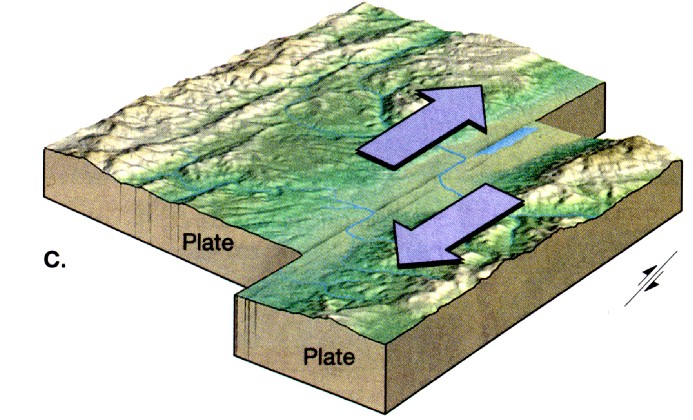
Transform boundaries: Two tectonic plates that are sliding against each other.
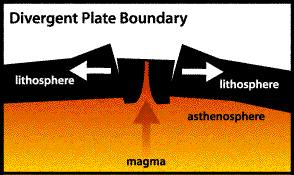
Divergent boundaries: Two tectonic plates that are moving away from each other.
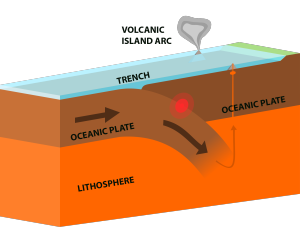
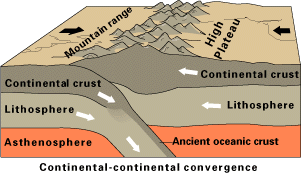
Convergent boundaries: Two tectonic plates that are pressing each other, then slide underneath or on top of each other.
Transform Boundaries
Transform boundaries are the types of boundaries that can create earthquakes. Examples of these boundaries are San Andreas Fault and Alpine Fault. The largest earthquakes that has happened due to these boundaries were the earthquakes of San Andreas Fault. The San Andreas Fault is in California, which explains why it is the most popular, and created the biggest earthquake. Alpine Fault is in New Zealand. These boundaries cannot make any other type of natural disasters or storms.
Divergent Boundaries
Divergent boundaries cause one type of seafloor problem. They cause mid-ocean ridges, which are where the seafloor opens up and magma from the mantle comes up. This can both cause trenches and mid-ocean ridges. Two examples of these are the Mid-Atlantic Ridge and the Great Rift Valley. Trenches destroy the seafloor, which is the Great Rift Valley, and mid-ocean ridges, like Mid-Atlantic Ridge, can create ocean floors. These types of boundaries can also create volcanoes and earthquakes.
Convergent Boundaries
Convergent boundaries create mountains. Examples of these boundaries are the Andes Mountains and Mount Everest. Convergent boundaries form mountains because the plates are on top and underneath each other. Mount Everest was the largest mountain in the world, so the convergent boundary plates must’ve had a ton of energy to create it.

Published: Nov 30, 2016
Latest Revision: Dec 2, 2016
Ourboox Unique Identifier: OB-202719
Copyright © 2016