






by Ana Castellin
Copyright © 2017
Ferdinand de Saussure

Copyright © 2017
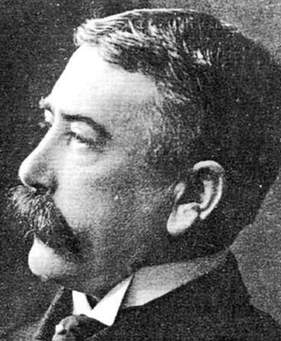
He was born in Geneva in 1857. His father was Henri Louis Frédéric de Saussure, a chemist, entomologist, and taxonomist. Saussure showed signs of considerable talent and intellectual ability as early as the age of fourteen. After a year of studying Latin, Ancient Greek and Sanskrit and taking a variety of courses at the University of Geneva, he commenced graduate work at the University of Leipzig in 1876.
Two years later, at 21, Saussure published a book entitled Mémoire sur le système primitif des voyelles dans les langues indo-européennes (Dissertation on the Primitive Vowel System in Indo-European Languages). After this he studied for a year at theUniversity of Berlin under the Privatdozenten Heinrich Zimmer, with whom he studied Celtic, and Hermann Oldenberg with whom he continued his studies of Sanskrit. He returned to Leipzig to defend his doctoral dissertation De l’emploi du génitif absolu en Sanscrit, and was awarded his doctorate in February 1880. Soon, he relocated to the University of Paris, where he lectured on Sanskrit, Gothic and Old High German and occasionally other subjects.
He taught at the École pratique des hautes études for eleven years during which he was named Chevalier de la Légion d’Honneur (Knight of the Legion of Honor). When offered a professorship in Geneva in 1892, he returned to Switzerland. Saussure lectured on Sanskrit and Indo-European at the University of Geneva for the remainder of his life. It was not until 1907 that Saussure began teaching the Course of General Linguistics, which he would offer three times, ending in the summer of 1911. He died in 1913 in Vufflens-le-Château, Vaud, Switzerland. His brother was the Esperantist René de Saussure, and his son was the psychoanalyst Raymond de Saussure.
Saussure attempted, at various times in the 1880s and 1890s, to write a book on general linguistic matters. His lectures about important principles of language description in Geneva between 1907 and 1911 were collected and published by his pupils posthumously in the famous Cours de linguistique générale in 1916. Some of his manuscripts, including an unfinished essay discovered in 1996, were published in Writings in General Linguistics, but most of the material in it had already been published in Engler’s critical edition of theCourse, in 1967 and 1974.
School of thought of the autor.
Structuralism is a linguistic approach, and says that, that language is fixed systems composed of many different units that connect each other. This school of thought maked a shift from linguistic analysis, worked for phonology and morphology, but the theory that he proposed did not make much sense as those proposed by new schools. Saussure knew that in his time he would not have a good understanding of the human brain, and for that reason he left it in the hands of the future linguistic, and he say that de system of language is always present in the brain and are not abstractions, and that language is present in all human being and needs the environmental stimuli for has a good development.

Theory publication year.
Saussure’s most influential work, Course in General Linguistics, was published posthumously in 1916 by former students Charles Bally and Albert Sechehaye, on the basis of notes taken from Saussure’s lectures in Geneva. The Course became one of the seminal linguistics works of the 20th century not primarily for the content, but for the innovative approach that Saussure applied in discussing linguistic phenomena.
Its central notion is that language may be analyzed as a formal system of differential elements, apart from the messy dialectics of real-time production and comprehension. Examples of these elements include his notion of the linguistic sign, which is composed of the signifier and the signified.
Throughout the book, he stated that a linguist can develop a diachronic analysis of a text or theory of language but must learn just as much or more about the language/text as it exists at any moment in time (“synchronically”): “Language is a system of signs that expresses ideas”. A science that studies the life of signs within society and is a part of social and general psychology. Saussure believed that semiotics is concerned with everything that can be taken as a sign, he called it semiology.

Main tenets or premises.
Two basic principles:
1) The arbitrary nature of the sign–The sign is arbitrary because “the bond between the signifier and the signified is arbitrary.” The idea of “sister” is not linked to the sound of the word “sister.” The link between the idea and the sound–or the signified and the signifier–is a matter of societal convention.
2) The linear nature of the signifier–The signifier is of a linear nature because “auditory signifiers have at their command only the dimension of time.” It “represents a span, and the span is measurable in a single dimension”–that of time.
Saussure rejects a theory of language as “a naming-process only–a list of words, each corresponding to the thing that it names.” He does so because such a theory “assumes that ready-made ideas exist before words; it does not tell us whether a name is vocal or psychological in nature . . . finally it lets us assume that the linking of a name and a thing is a very simple operation.” Saussure says that “the linguistic unit is a double entity, one formed by the associating of two terms.” Instead of uniting a thing with a name, the linguistic sign untes a concept with a sound-image. Saussure defines the sound-image, not as the physical sound but as the psychological imprint of the sound upon our senses.
The word “concept” is replace by the word “signified,” while the word “sound-image” is replaced by the word “signifier.” The signified and the signifier together make up the sign.
Saussure has two basic, and famous, principles:
1) The arbitrary nature of the sign.
2) The linear nature of the signifier. The sign is arbitrary because “the bond between the signifier and the signified is arbitrary.” The idea of “sister” is not linked to the sound of the word “sister.” The link between the idea and the sound–or the signified and the signifier–is a matter of societal convention. The German word Schwester and the Spanish word hermana each refer to the idea of “sister,” but the sounds of the respective signifiers are nothing alike. The signifier is of a linear nature because “auditory signifiers have at their command only the dimension of time.” It “represents a span, and the span is measurable in a single dimension”–that of time.
Saussure also distinguishes between what he calls langue–the system of a language, the language as a system of forms–and parole–actual speech, the speech acts that are made possible by the language.

Contributions to the study of language.
Ferndinand de Saussure contributed to the modernization of linguistics through his studies of structuralism. Ferdinand contributed with three important studies that are synchrony and diachrony, langue and parole and signified and signifier.
The first contribution of Ferdinand was to differentiate the aspects of synchrony and diachrony, in which diachrony is based on studying the history of the language and its evolution through time, According to Ferdinand, “Diachronic linguistics will study relations that bind together successive terms not perceived by the collective mind but substituted for each other without forming a system”. And synchrony focuses on studying the language at a certain point in history. According to Ferdinand, “Synchronic linguistics will be concerned with the logical and psychological relations that bind together co-existing terms and form a system in the collective mind of speakers.”
Ferdinand’s second contribution was on the langue which is a set of signs used by a community in a uniform way and parole that is the way an individual makes use of the language. Some examples on the differences between language and speech are these:
-
Langue is a language system shared by a community of speakers.
Parole is the in the individual realization of that system. -
Langue is a social phenomenon.
Parole is an individual phenomenon. -
Langue is what potential.
Parole is what is actual. -
Langue is a static situation.
Parole is a dynamic situation. -
Langue is concept.
Parole is the round image of that concept. -
Langue is a rule.
Parole is behavior. As we can see in the examples, the langue is social, abstract, conventional and linear, while parole is individual and concrete.
The third theory of Ferdinand made clear the definition of the aspects of signified and signifier. In what the signified is what we have as concept in our mind about some word or image, while the signifier refers to the production of the sound of words or it also can be an image.
For example:
-
Signifier: a black tie – signified: sign of mourning.
-
Signifier: a black and charged cloud – signified: a storm is approaching.
-
Signifier: a four-leaf clover – signified: bring good luck.
For Ferdinand the linguistic sign is the basic unit of communication.

Drawbacks of the theory.
Ferdinand de Saussure is generally regarded as “the father of linguistics”, and can be credited with being the first person to treat linguistics as an actual science. However, despite the prestige Saussure still holds in Cultural Studies departments and among Literary Theorists Saussure’s theories are not generally considered as central to modern linguistics.
The fact that Saussure himself did not publish a treatise that would have expounded his ideas on language and linguistics generated a host of ambiguities. While his writings on various aspects of Indo-European languages are clear and remain relevant to this scholarly branch of the study of languages, the substantial albeit necessarily incomplete notes his students took as he was teaching and the unfinished manuscripts he left are tentative, even sometimes confused and contradictory.

How do you see this theory reflected in your language acquisition experience.
Saussure’s theory of language is an exceptionally clear expression of the formal strategies by which a whole series of disciplines, from physics to painting, transformed themselves in the late nineteenth and early twentieth centuries and became modern.
Saussure’s linguistic inquiry analyzed the social and collective dimensions of language. He was interested in the infrastructure of language. He believed that the rules governing the use of it functioned on an unconscious level. His ideas not only gained hold on the imagination of linguists, but also had a profound impact on philosophy, art, literature, and the social sciences.
In fact, the differences we readily experience as independent of language are in fact constructed by it. This does not mean that language creates “actuality” (that is, trees, rocks, buildings, and people) but that language turns undifferentiated, meaningless nature into a differentiated, meaningful, cultural reality. The most significant feature of Saussure’s work is the argument that language precedes experience. We have no direct access to the world; our relationship to it is always mediated by, and dependent on, language.

Published: Feb 20, 2017
Latest Revision: Feb 22, 2017
Ourboox Unique Identifier: OB-251860
Copyright © 2017

 Skip to content