






Stephen Krashen
by Pedro Habanero
Copyright © 2017
Stephen Krashen

Copyright © 2017
Stephen Krashen (born in 1941) is an Emeritus Professor of Education at the University of Southern California known for his Theory of Second Language Acquisition. He is also the cofounder of the Natural Approach, as well as the creator of sheltered subject matter teaching. He is the author of books on the subject of Second Language acquisition. Second Language Acquisition is the process of learning a second language different from your native language. Stephen Krashen’s theory is used primarily in the United States across ESL (English as a second language) classrooms. Despite its influence across the country, it is regularly criticized for its lack of scientific research and de-emphasis on grammar.
2
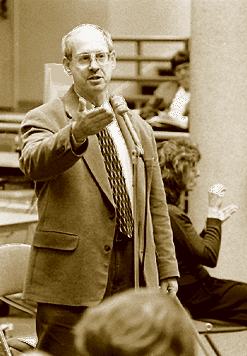
Krashen lives and works in California. Government plans for education there turned against bilingual education. Krashen said that this was a bad idea and responded with research that showed problems with he new policies. He also spoke publicly and wrote many letters to newspaper editors. In 1998, Krashen campaigned very hard against Proposition 227. Though he tried hard, the proposition passed and got rid of most bilingual education in California. Even though he lost, Krashen continues to work hard in support of bilingual education as other states try to get rid of it. His letters often appear in many newspapers. Krashen believes researchers should be more active to educate the public, especially about bilingual education.
As education policy in Krashen’s home state of California became increasingly hostile to bilingualism, he responded with research critical of the new policies, public speaking engagements, and with letters written to newspaper editors. During the campaign to enact an anti-bilingual education law in California in 1998, known as Proposition 227, Krashen campaigned aggressively in public forums, media talk shows, and conducted numerous interviews with journalists writing on the subject. After other anti-bilingual education campaigns and attempts to enact regressive language education policies surfaced around the country, by 2006 it was estimated that Krashen had submitted well over 1,000 letters to editors.
In a front-page New Times LA article published just a week before the vote on Proposition 227, Jill Stewart penned an aggressive article titled “Krashen Burn” in which she characterized Krashen as wedded to the monied interests of a “multi-million-dollar bilingual education industry.” Stewart critically spoke of Krashen’s bilingual education model.
Krashen has been an advocate for a more activist role by researchers in combating what he considers public’s misconceptions about bilingual education. Addressing the question of how to explain public opposition to bilingual education, Krashen queried, “Is it due to a stubborn disinformation campaign on the part of newspapers and other news media to deliberately destroy bilingual education? Or is it due to the failure of the profession to present its side of the story to reporters? There is a great deal of anecdotal evidence in support of the latter.” Continuing, Krashen wrote, “Without a serious, dedicated and organized campaign to explain and defend bilingual education at the national level, in a very short time we will have nothing left to defend.
4
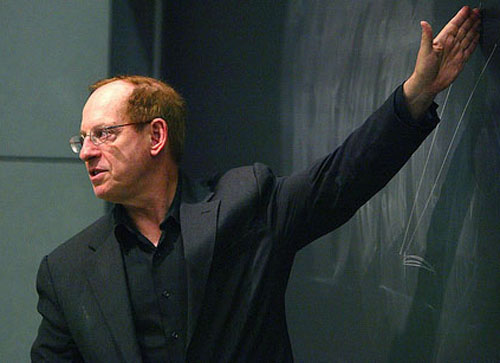
Second Language Acquisition (1981)
Krashen’s theory is comprised of five distinct theories. In order to properly understand this theory, we must first establish the difference between acquisition learning as a way to develop language skills. Acquisition is an organic method in which the learner develops language skills from immersion in it. Simple examples of acquisition would be a child learning its native tongue by simple immersion or a person who moves to a foreign country and ‘picks up’ the language without classes but from need and daily interaction. Learning by contrast is a deliberate process of developing language skills through structured activities with a conscious focus and emphasis on grammar and proper form.
Krashen’s theory of second language acquisition consists of five main hypotheses:
-
the Acquisition-Learning hypothesis;
-
the Monitor hypothesis;
-
the Natural Order hypothesis;
-
the Input hypothesis;
-
and the Affective Filter hypothesis.
The Acquisition-Learning distinction is the most fundamental of all the hypotheses in Krashen’s theory and the most widely known among linguists and language practitioners.
According to Krashen there are two independent systems of second language performance: ‘the acquired system’ and ‘the learned system’. The ‘acquired system’ or ‘acquisition‘ is the product of a subconscious process very similar to the process children undergo when they acquire their first language. It requires meaningful interaction in the target language – natural communication – in which speakers are concentrated not in the form of their utterances, but in the communicative act.
The “learned system” or “learning” is the product of formal instruction and it comprises a conscious process which results in conscious knowledge ‘about’ the language, for example knowledge of grammar rules. According to Krashen ‘learning’ is less important than ‘acquisition’. (Veja o texto ao lado e também outra página em português sobre Acquisition/Learning).
The Monitor hypothesis explains the relationship between acquisition and learning and defines the influence of the latter on the former. The monitoring function is the practical result of the learned grammar. According to Krashen, the acquisition system is the utterance initiator, while the learning system performs the role of the ‘monitor’ or the ‘editor’. The ‘monitor’ acts in a planning, editing and correcting function when three specific conditions are met: that is, the second language learner has sufficient time at his/her disposal, he/she focuses on form or thinks about correctness, and he/she knows the rule.
It appears that the role of conscious learning is somewhat limited in second language performance. According to Krashen, the role of the monitor is – or should be – minor, being used only to correct deviations from “normal” speech and to give speech a more ‘polished’ appearance.
Krashen also suggests that there is individual variation among language learners with regard to ‘monitor’ use. He distinguishes those learners that use the ‘monitor’ all the time (over-users); those learners who have not learned or who prefer not to use their conscious knowledge (under-users); and those learners that use the ‘monitor’ appropriately (optimal users). An evaluation of the person’s psychological profile can help to determine to what group they belong. Usually extroverts are under-users, while introverts and perfectionists are over-users. Lack of self-confidence is frequently related to the over-use of the “monitor”.
The Natural Order hypothesis is based on research findings (Dulay & Burt, 1974; Fathman, 1975; Makino, 1980 cited in Krashen, 1987) which suggested that the acquisition of grammatical structures follows a ‘natural order’ which is predictable. For a given language, some grammatical structures tend to be acquired early while others late. This order seemed to be independent of the learners’ age, L1 background, conditions of exposure, and although the agreement between individual acquirers was not always 100% in the studies, there were statistically significant similarities that reinforced the existence of a Natural Order of language acquisition. Krashen however points out that the implication of the natural order hypothesis is not that a language program syllabus should be based on the order found in the studies. In fact, he rejects grammatical sequencing when the goal is language acquisition.
The Input hypothesis is Krashen’s attempt to explain how the learner acquires a second language. In other words, this hypothesis is Krashen’s explanation of how second language acquisition takes place. So, the Input hypothesis is only concerned with ‘acquisition’, not ‘learning’. According to this hypothesis, the learner improves and progresses along the ‘natural order’ when he/she receives second language ‘input’ that is one step beyond his/her current stage of linguistic competence. For example, if a learner is at a stage ‘i’, then acquisition takes place when he/she is exposed to ‘Comprehensible Input’ that belongs to level ‘i + 1’. Since not all of the learners can be at the same level of linguistic competence at the same time, Krashen suggests that natural communicative input is the key to designing a syllabus, ensuring in this way that each learner will receive some ‘i + 1’ input that is appropriate for his/her current stage of linguistic competence.
Finally, the fifth hypothesis, the Affective Filter hypothesis, embodies Krashen’s view that a number of ‘affective variables’ play a facilitative, but non-causal, role in second language acquisition. These variables include: motivation, self-confidence and anxiety. Krashen claims that learners with high motivation, self-confidence, a good self-image, and a low level of anxiety are better equipped for success in second language acquisition. Low motivation, low self-esteem, and debilitating anxiety can combine to ‘raise’ the affective filter and form a ‘mental block’ that prevents comprehensible input from being used for acquisition. In other words, when the filter is ‘up’ it impedes language acquisition. On the other hand, positive affect is necessary, but not sufficient on its own, for acquisition to take place.
Acquisition takes time; it takes far more than five hours per week over nine months to acquire the subjunctive. It may, if fact, take years. Good linguists, on the other hand, can consciously learn a great deal in a very short time. Also, when we have acquired something, we are hardly aware of it. In a sense, it feels as if it was always there, and something anyone can do. Learning is different. Some people derive great pleasure from the learning and use of conscious rules, and I am one of them! “Mastering” the subjunctive in French was very satisfying for me, and I rekindle this sense of victory every time I plan and say sentences such as “Il faut que j’aille”. It is sometimes hard for people like us to understand that this sort of pleasurable activity is not real language acquisition.
6
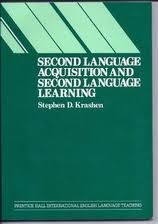
With the adquisition theory, there is a easy way to teach another language to kids, or persons of other nationality, in my case, I always found the languages very interesting and something that I find vert useful in daily life.
I hope you find this Ebook very interesting.
8

Published: Feb 21, 2017
Latest Revision: Feb 21, 2017
Ourboox Unique Identifier: OB-251901
Copyright © 2017

 Skip to content