







Purim 101

Copyright © 2015
Purim is the most flamboyant holiday of the Jewish people. If you want to know more about it, you’ve come to the right place!!
Welcome to Purim 101, made simple especially for you!
Purim usually begins at sunset on the fourteenth day of the Jewish month of Adar, unless there are two sequential months of Adar(this happens every two or three years), in which case it is on the fourteenth of the second month of the second Adar. Only in those years that have two months of Adar. And that’s only for cities that never had walls. In walled cities, it’s celebrated one day later. Simple? I told you so.
Purim is one of several Jewish holidays (Passover, Hanuka) that share a common theme:
“They tried to get rid of us, they didn’t succeed, now let’s eat”.
In the story of Purim, the evil antagonist is Haman, the evil wazir. He gets angry because the Mordechai the Jew refuses to bow down to him when he passes by. Haman receives permission from King Ahashverosh (perhaps Xerxes I) to destroy the Jewish people. The date for the annihilation of the Jews is chosen by lottery (pur, hence Purim). Mordechai now must attempt to set things right by persuading his adopted daughter, Esther who is also his cousin and maybe his wife, but in any event also the queen, to convince the king that Haman is the bad guy. The king is beguiled by Esther and changes his mind. In the end the Jews hang Haman and his ten sons on the gallows built for Mordechai.
The names of our heroes Mordechai and Esther are very common names among Jews worldwide. Ironically, they may have derived from the Babylonian gods Marduk and Ishtar.
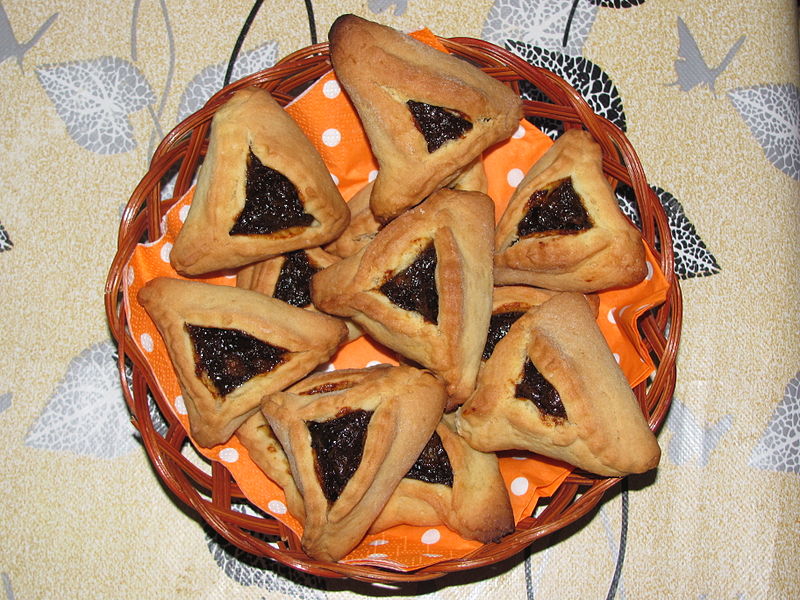
Every holiday in Judaism has its special food (except maybe Yom Kippur, unless you count ‘anything you can stuff into your pocket and eat when no one is watching). The special food on Purim is a triangular filled cookie called ‘hamentashen’ (plural for Haman’s pocket) in Yiddish or ‘oznay Haman’ in Hebrew (translates, both maliciously and deliciously, as Haman’s ears). No one knows where these delicious, malicious cookies came from. And no one cares. Some prefer prune, some prefer moon (poppyseed). But everyone loves them.
My late Mother used to send a box of homemade (the best) hamentashen to me each March from Canada to Israel. Talk about devotion!!
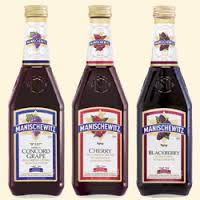
Purim is a holiday of rejoicing. It is the only holiday where according to religious teachings one is allowed to get drunk. Actually, supposed to get drunk. The very orthodox get drunk on Manischewitz, quite a feat in its own rite.
There are other laws and customs on Purim. Giving alms to the poor. Exchanging gifts with friends and family. Listening to the reading of the ‘meggilla’ (literally scroll, figuratively as in “You’re not going to read me the whole megillah now, are you?) and making noise (with a gragger, a special noisemaker) every time the name of Haman is mentioned.
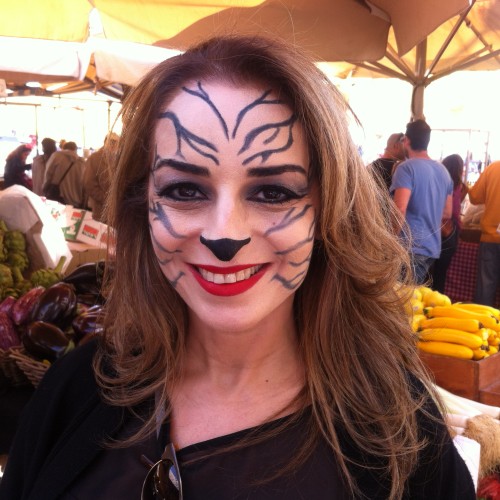
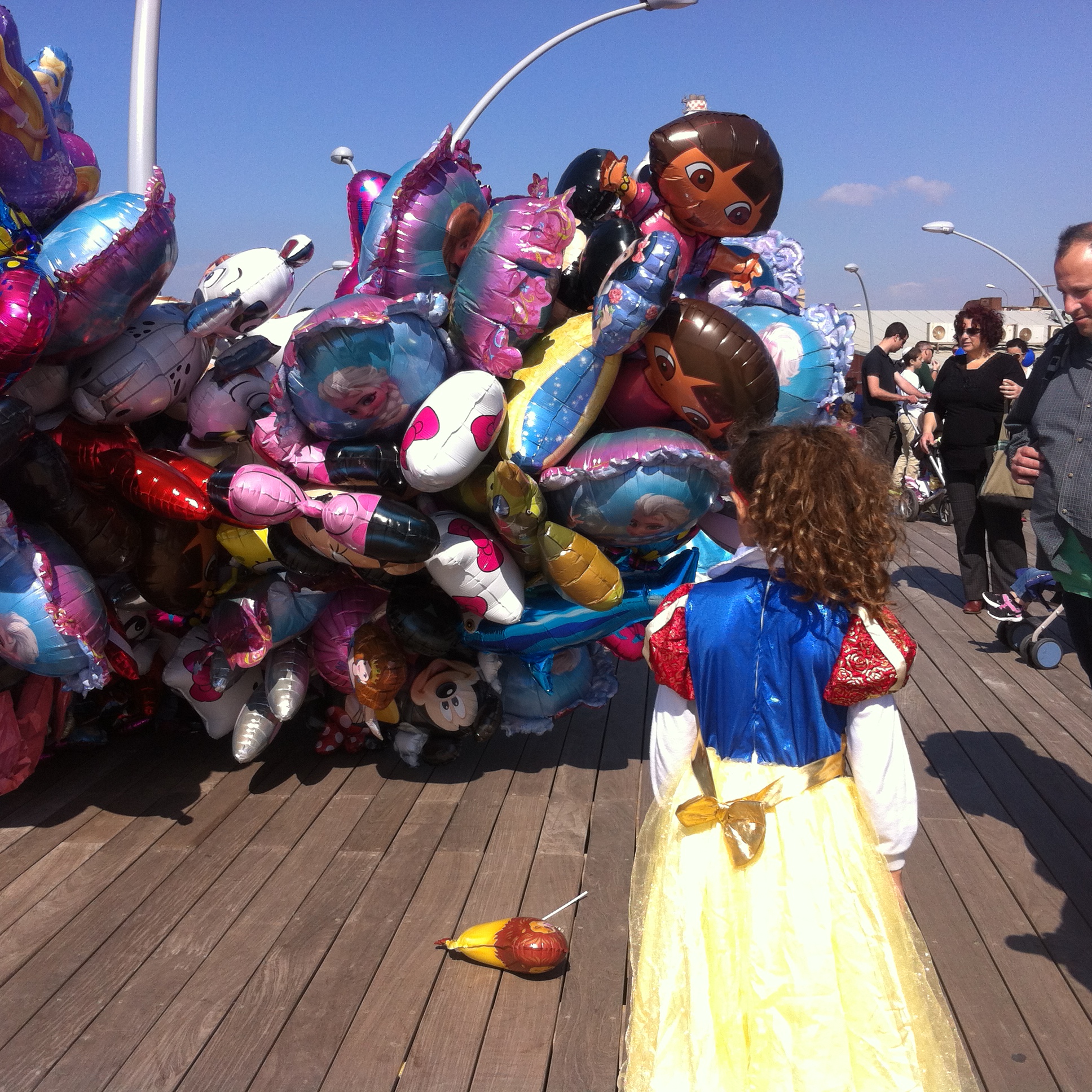
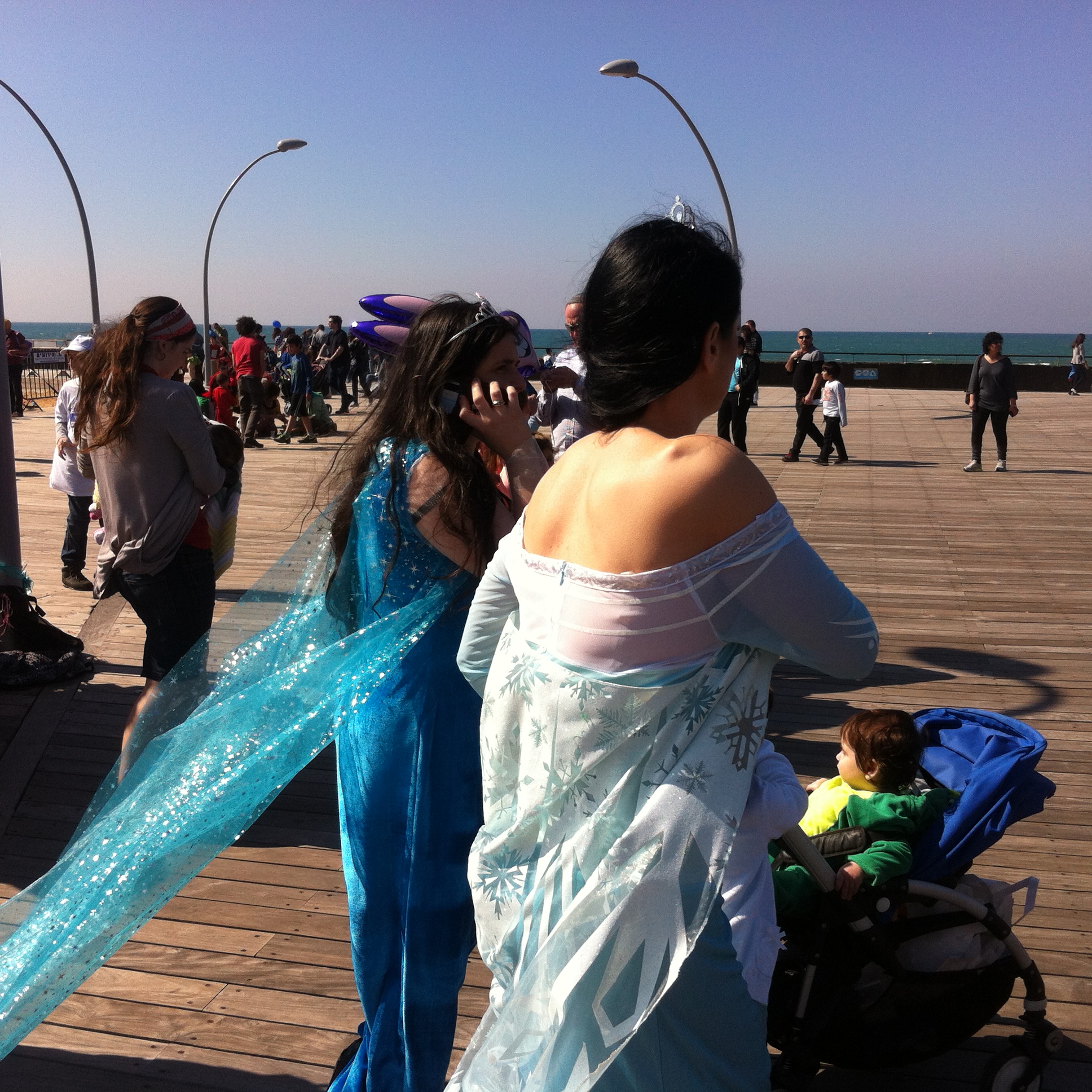
But it’s the costume masquerades that take the cake.
Very often it rains here in Israel on Purim. That is the fault of the religious Jews, who pray too arduously for rain during the winter months. This year the weather, though, was stupendous.
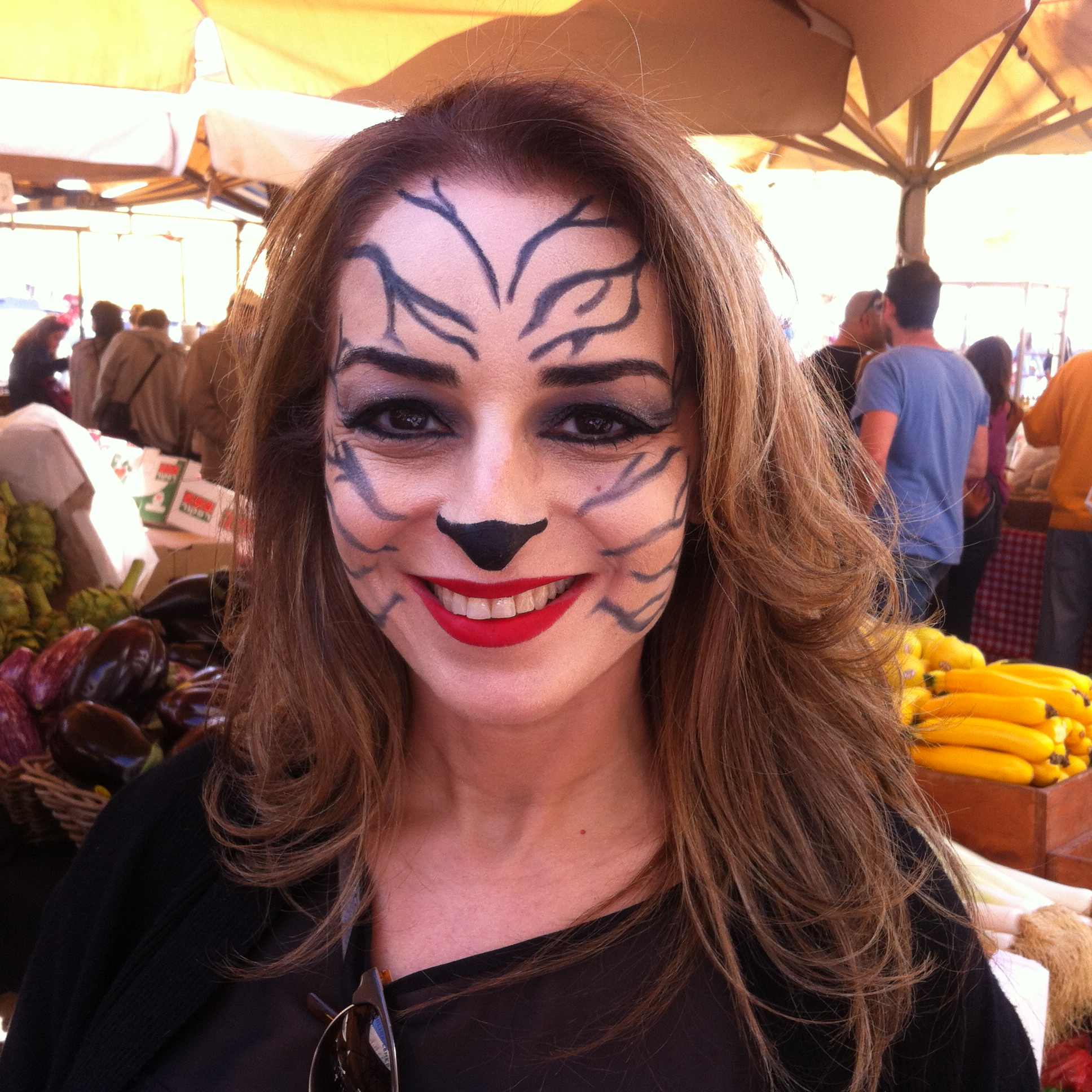
When I was a child growing up in Ottawa, we were ridiculed for masquerading in March. “Hey, you”, kids would yell, “Halloween was in October, not March”.
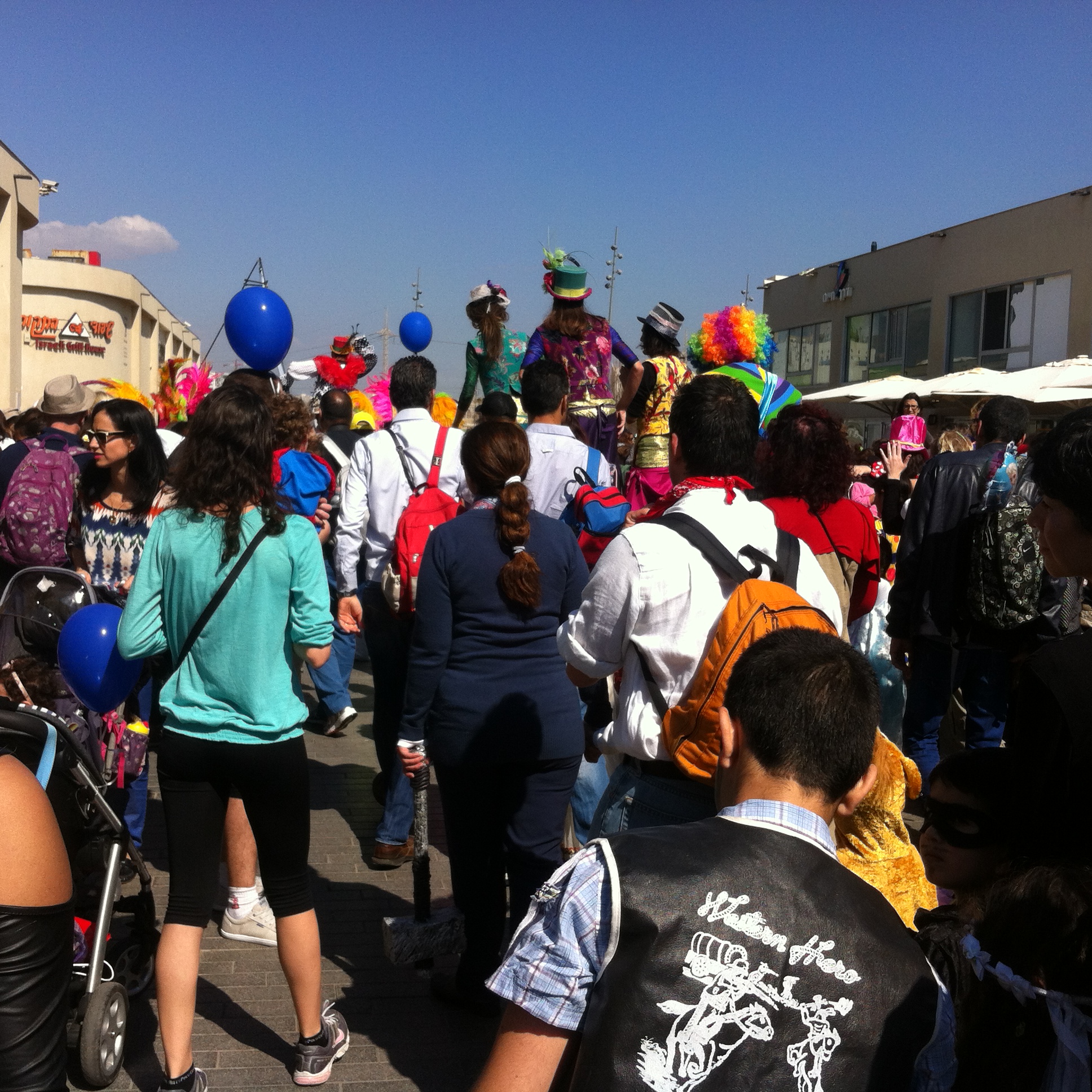
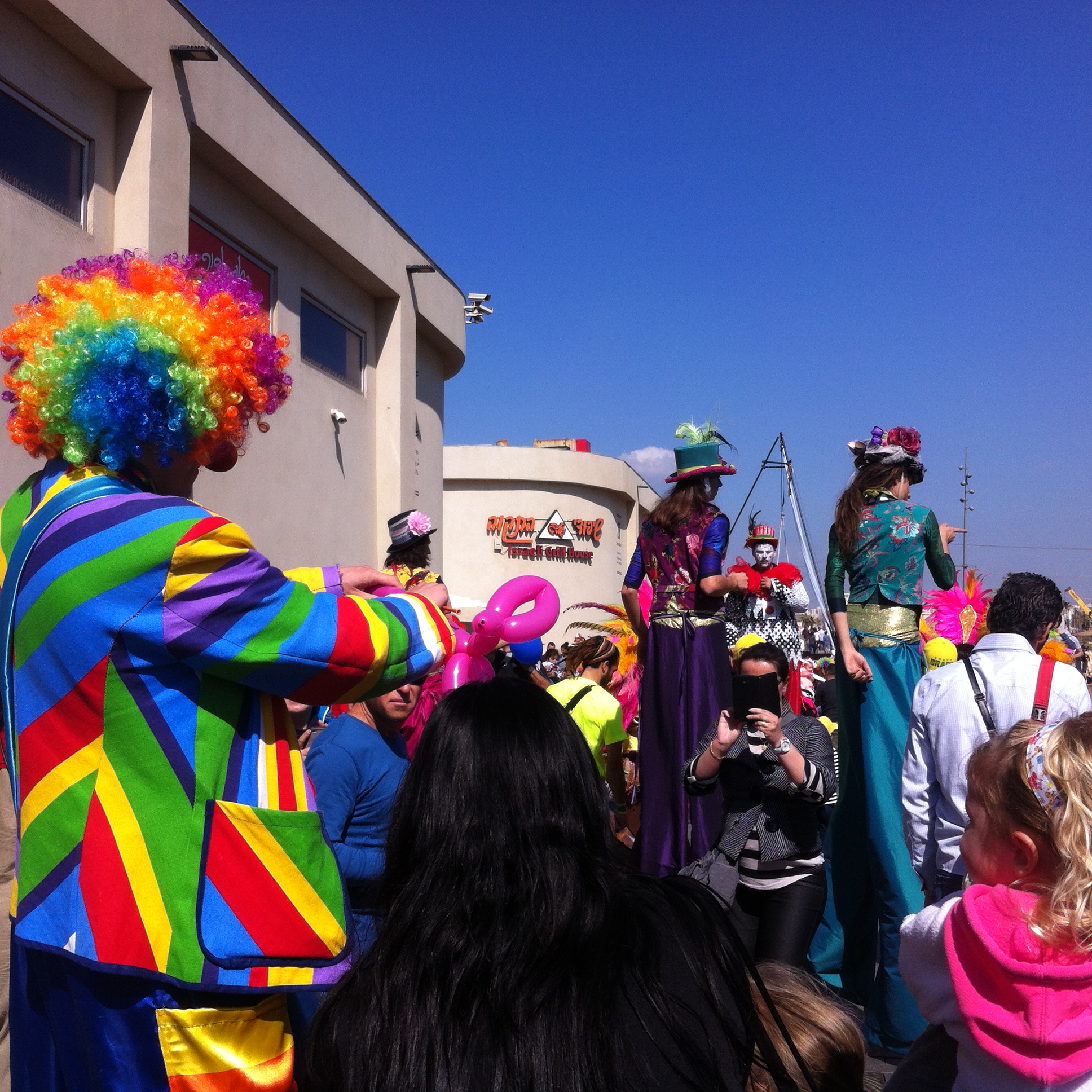
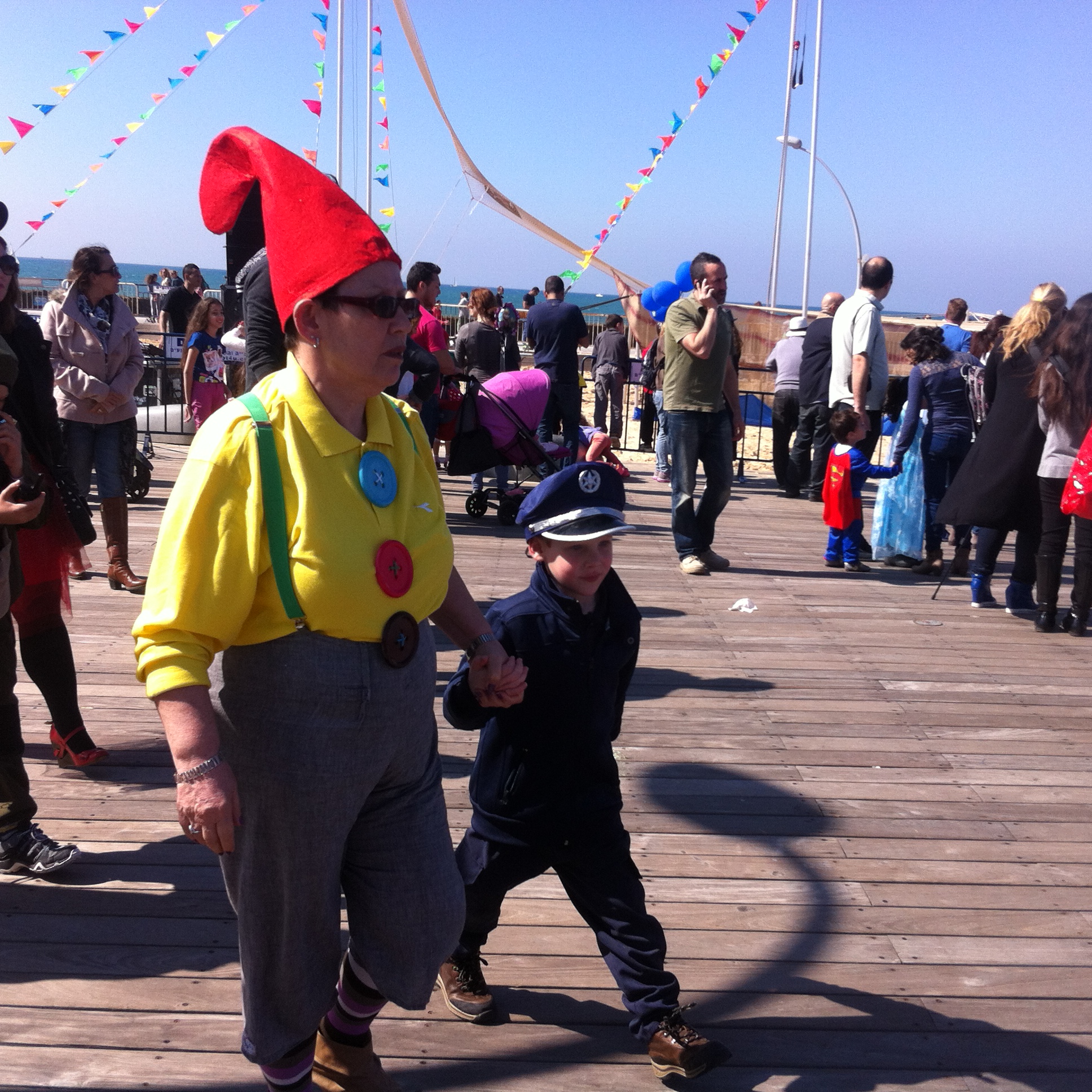
In Israel, the Jews are the large majority and the streets are filled with lots of children and adults wearing everything under the sun.
So there you have it. A fun holiday from start to finish. No wonder Israeli children sing “Too bad Purim lasts for only one day a year…”.
Published: Mar 5, 2015
Latest Revision: Mar 5, 2015
Ourboox Unique Identifier: OB-35105
Copyright © 2015