






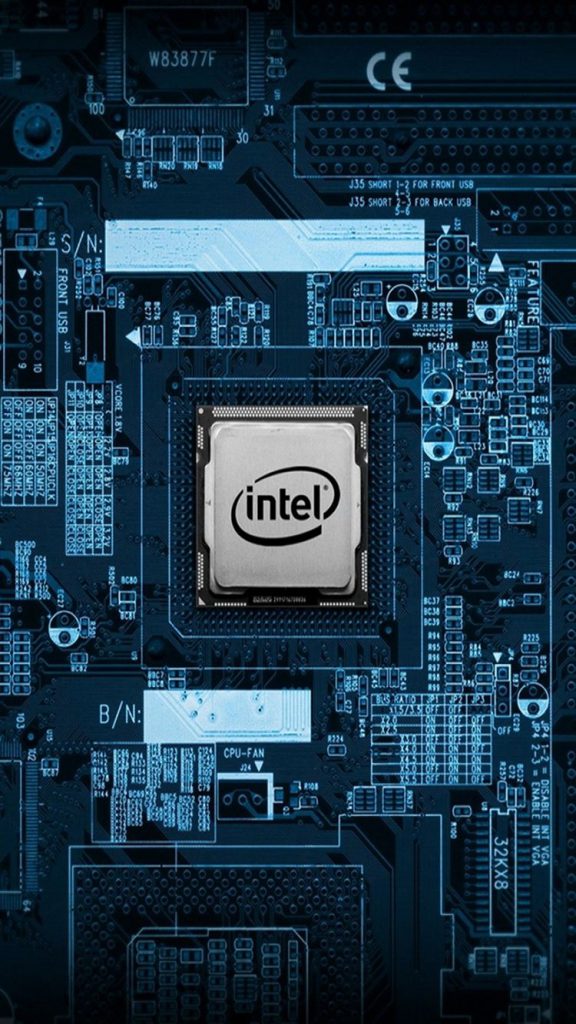
BC (computer) hardwhare for the Starts

Copyright © 2020
this book is teaching about the BC (computer)
mostly i will teaching more about the hardwhare.
CPU(Hw):
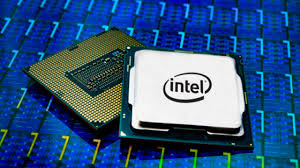
cpu Abbreviation for Central processing unit
The CPU Like the Nose
without cpu The computer Will not working
The cpu have :
cores
thread
Cache
Clock rate
and another Units
this Units Determined the power of cpu
in this time exist two Companies :
intel
amd
all this Companies are good
for all users in all fields you need
the i3 or reyzen 3 for the Simple people
the i5 or reyzen 5 for normal people or gamers
the i7 or reyzen 7 for stream and strong edit videa and games
the i9 or reyzen 9 for stream and extreme edit videa and games

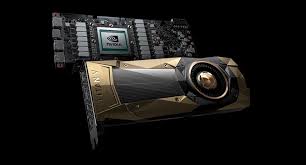
A video card (also called a display card, graphics card, display adapter, or graphics adapter) is an expansion card which generates a feed of output images to a display device (such as a computer monitor). Frequently, these are advertised as discrete or dedicated graphics cards, emphasizing the distinction between these and integrated graphics. At the core of both is the graphics processing unit (GPU), which is the main part that does the actual computations, but should not be confused with the video card as a whole, although “GPU” is often used to refer to video cards.
Most video cards are not limited to simple display output. Their integrated graphics processor can perform additional processing, removing this task from the central processor of the computer. For example, Nvidia and AMD (previously ATI) produced cards render the graphics pipeline OpenGL and DirectX on the hardware level. In the later 2010s, there has also been a tendency to use the computing capabilities of the graphics processor to solve non-graphic tasks.
Usually the graphics card is made in the form of a printed circuit board (expansion board) and inserted into an expansion slot, universal or specialized (AGP, PCI Express). Some have been made using dedicated enclosures, which are connected to the computer via a docking station or a cable.
video card mackers:
nividia
Amd
video card modules mackers:
- Asus
- AMD
- Biostar
- Chaintech
- Club 3D
- Colorful
- Diamond Multimedia
- ECS
- ELSA Technology
- EVGA Corporation
- Foxconn
- Gainward
- Gigabyte Technology
- HIS
- Hercules Computer Technology, Inc.
- Leadtek
- Matrox
- Nvidia
- MSI
- Palit
- PNY
- Point of View
- PowerColor
- S3 Graphics
- Sapphire Technology
- SPARKLE
- XFX
- Zotac
- BFG (defunct)
- EPoX (defunct)
- Oak Technology (defunct)
- 3dfx Interactive (defunct)
motherboard:
A motherboard (sometimes alternatively known as the mainboard, main circuit board, system board, baseboard, planar board or logic board, or colloquially, a mobo) is the main printed circuit board (PCB) found in general purpose computers and other expandable systems. It holds, and allows, communication between many of the crucial electronic components of a system, such as the central processing unit (CPU) and memory, and provides connectors for other peripherals. Unlike a backplane, a motherboard usually contains significant sub-systems such as the central processor, the chipset’s input/output and memory controllers, interface connectors, and other components integrated for general purpose use and applications.
Motherboard specifically refers to a PCB with expansion capability and as the name suggests, this board is often referred to as the “mother” of all components attached to it, which often include peripherals, interface cards, and daughtercards: sound cards, video cards, network cards, hard drives, or other forms of persistent storage; TV tuner cards, cards providing extra USB or FireWire slots and a variety of other custom components.
Similarly, the term mainboard is applied to devices with a single board and no additional expansions or capability, such as controlling boards in laser printers, televisions, washing machines, mobile phones and other embedded systems with limited expansion abilities.
motherboards mackers:
- ASRock
- Asus
- Biostar
- EVGA Corporation
- Gigabyte Technology
- MSI (Micro-Star International)

Ram(Random-access memory):
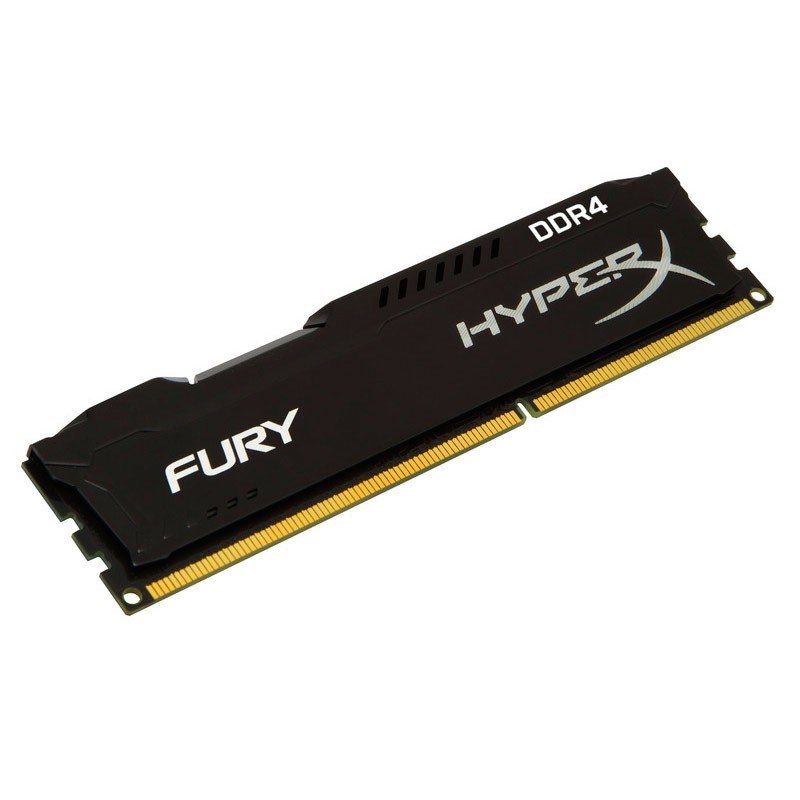
Random-access memory (RAM) is a form of computer memory that can be read and changed in any order, typically used to store working data and machine code.[1][2] A random-access memory device allows data items to be read or written in almost the same amount of time irrespective of the physical location of data inside the memory. In contrast, with other direct-access data storage media such as hard disks, CD-RWs, DVD-RWs and the older magnetic tapes and drum memory, the time required to read and write data items varies significantly depending on their physical locations on the recording medium, due to mechanical limitations such as media rotation speeds and arm movement.
RAM contains multiplexing and demultiplexing circuitry, to connect the data lines to the addressed storage for reading or writing the entry. Usually more than one bit of storage is accessed by the same address, and RAM devices often have multiple data lines and are said to be “8-bit” or “16-bit”, etc. devices.
In today’s technology, random-access memory takes the form of integrated circuit (IC) chips with MOS (metal-oxide-semiconductor) memory cells. RAM is normally associated with volatile types of memory (such as dynamic random-access memory (DRAM) modules), where stored information is lost if power is removed, although non-volatile RAM has also been developed.[3] Other types of non-volatile memories exist that allow random access for read operations, but either do not allow write operations or have other kinds of limitations on them. These include most types of ROM and a type of flash memory called NOR-Flash.
The two main types of volatile random-access semiconductor memory are static random-access memory (SRAM) and dynamic random-access memory (DRAM). Commercial uses of semiconductor RAM date back to 1965, when IBM introduced the SP95 SRAM chip for their System/360 Model 95 computer, and Toshiba used DRAM memory cells for its Toscal BC-1411 electronic calculator, both based on bipolar transistors. Commercial MOS memory, based on MOS transistors, was developed in the late 1960s, and has since been the basis for all commercial semiconductor memory. The first commercial DRAM IC chip, the Intel 1103, was introduced in October 1970. Synchronous dynamic random-access memory (SDRAM) later debuted with the Samsung KM48SL2000 chip in 1992.
Ram modules mackers:
- ADATA
- Apacer
- Asus
- Axiom
- Buffalo Technology
- Chaintech
- Corsair Memory
- Dataram
- Fujitsu
- G.Skill
- GeIL
- HyperX
- IBM
- Infineon
- Kingston Technology
- Lenovo
- Micron Technology
- Crucial
- Mushkin
- PNY
- Rambus
- Ramtron International
- Rendition
- Renesas Technology
- Samsung Semiconductor
- Sandisk
- Sea Sonic
- SK Hynix
- Silicon Power
- Super Talent
- Toshiba
- Transcend
- Virtium
- Wilk Elektronik
- Winbond
- Wintec Industries Inc.
Ram chips mackers:
- Nanya
- Micron Technology
- Samsung Semiconductor
- SK Hynix
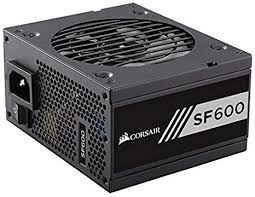
power supply:
A power supply is an electrical device that supplies electric power to an electrical load. The primary function of a power supply is to convert electric current from a source to the correct voltage, current, and frequency to power the load. As a result, power supplies are sometimes referred to as electric power converters. Some power supplies are separate standalone pieces of equipment, while others are built into the load appliances that they power. Examples of the latter include power supplies found in desktop computers and consumer electronics devices. Other functions that power supplies may perform include limiting the current drawn by the load to safe levels, shutting off the current in the event of an electrical fault, power conditioning to prevent electronic noise or voltage surges on the input from reaching the load, power-factor correction, and storing energy so it can continue to power the load in the event of a temporary interruption in the source power (uninterruptible power supply).
All power supplies have a power input connection, which receives energy in the form of electric current from a source, and one or more power output connections that deliver current to the load. The source power may come from the electric power grid, such as an electrical outlet, energy storage devices such as batteries or fuel cells, generators or alternators, solar power converters, or another power supply. The input and output are usually hardwired circuit connections, though some power supplies employ wireless energy transfer to power their loads without wired connections. Some power supplies have other types of inputs and outputs as well, for functions such as external
power supplay mackers:
- Adata
- Aerocool
- Antec
- APEVIA
- Arctic
- Be quiet!
- Cooler Master
- Corsair
- Cougar
- Deepcool
- Delta Electronics
- Dynex
- EVGA Corporation
- Fractal Design
- Foxconn
- FSP Group
- Gigabyte Technology
- Lian-Li
- LiteOn
- Maplin
- NZXT
- OCZ Technology
- PC Power and Cooling
- Seasonic
- Seventeam
- SilverStone
- StarTech.com
- Super Flower
- Thermaltake
- Trust
- XFX
- Xilence
- Zalman
Published: Feb 5, 2020
Latest Revision: Feb 19, 2020
Ourboox Unique Identifier: OB-727461
Copyright © 2020

 Skip to content