






London Sight (ЛИНб-2002а,б)

Copyright © 2021
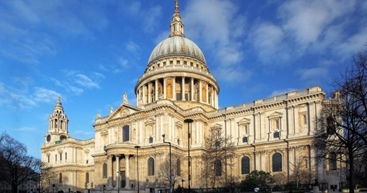
St Paul’s Cathedral
St Paul’s Cathedral is an Anglican cathedral in London that is the seat of the Bishop of London. The cathedral serves as the mother church of the Diocese of London. It is on Ludgate Hill at the highest point of the City of London and is a Grade I listed building. Its dedication to Paul the Apostle dates back to the original church on this site, founded in AD 604. The present structure, dating from the late 17th century, was designed in the English Baroque style by Sir Christopher Wren. Its construction, completed in Wren’s lifetime, was part of a major rebuilding programme in the city after the Great Fire of London. The earlier Gothic cathedral (Old St Paul’s Cathedral), largely destroyed in the Great Fire, was a central focus for medieval and early modern London, including Paul’s walk and St Paul’s Churchyard, being the site of St Paul’s Cross.
Maya Kurbanova
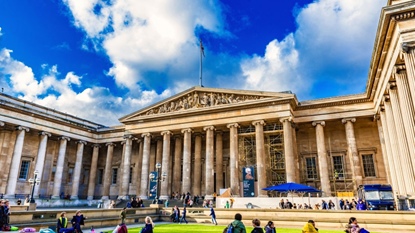
The British Museum
The British Museum is a public museum dedicated to human history, art and culture located in the Bloomsbury area of London. Its permanent collection of eight million works is among the largest and most comprehensive in existence. It documents the story of human culture from its beginnings to the present. The British Museum was the first public national museum in the world.The Museum was established in 1753, largely based on the collections of the Anglo-Irish physician and scientist Sir Hans Sloane.
Maya Kurbanova

The Victoria and Albert Museum
The Victoria and Albert Museum (often abbreviated as the V&A) in London is the world’s largest museum of applied arts, decorative arts, and design, housing a permanent collection of over 2.27 million objects. It was founded in 1852 and named after Queen Victoria and Prince Albert.
The V&A is located in the Royal Borough of Kensington and Chelsea, in an area known as “Albertopolis” because of its association with Prince Albert, the Albert Memorial and the major cultural institutions with which he was associated. These include the Natural History Museum, the Science Museum, the Royal Albert Hall and Imperial College London. The museum is a non-departmental public body sponsored by the Department for Digital, Culture, Media and Sport. As with other national British museums, entrance is free.
Maya Kurbanova
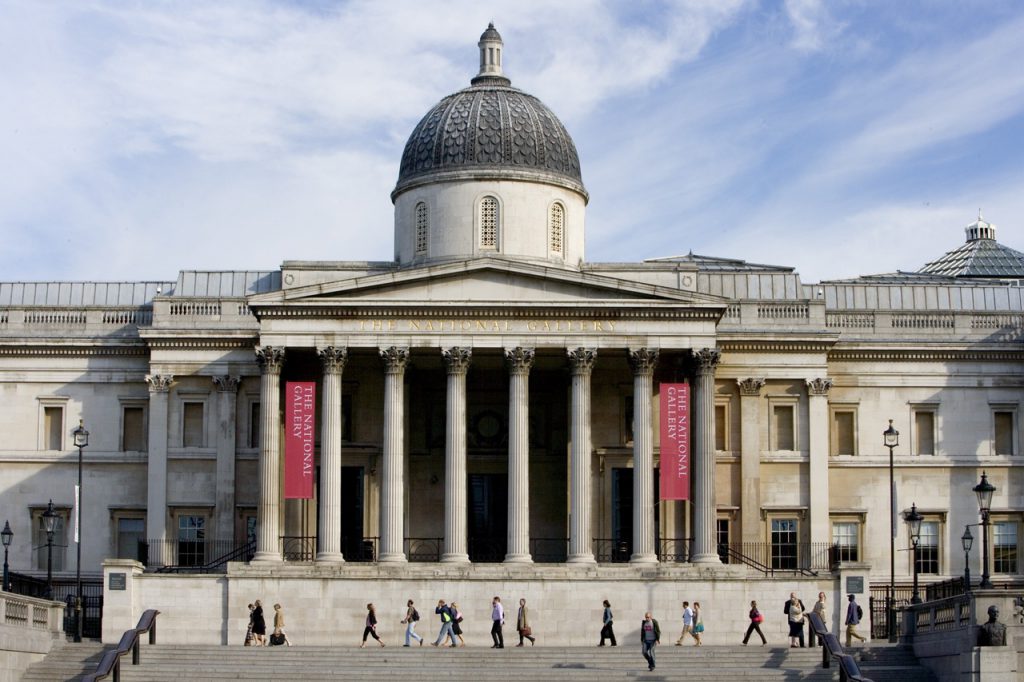
National Gallery
National Gallery, art museum in London that houses Great Britain’s national collection of European paintings. It is located on the north side of Trafalgar Square, Westminster.
The National Gallery was founded in 1824 when the British government bought a collection of 38 paintings from the estate of the merchant John Julius Angerstein. The collection was first exhibited on May 10 of that year in Angerstein’s house at 100 Pall Mall, but in 1838 it was reopened to the public in its current premises. This Neoclassical structure, designed by the Greek Revival architect William Wilkins, was enlarged in 1860, 1876, 1886, and 1975, and in 1991 it was expanded further with the addition of the Sainsbury Wing by the American architect Robert Venturi.
Syuzanna Aleksanyan

Oxford Street
Oxford Street is a major road in the City of Westminster in the West End of London, running from Tottenham Court Road to Marble Arch via Oxford Circus. It is Europe’s busiest shopping street, with around half a million daily visitors, and as of 2012 had approximately 300 shops. It is designated as part of the A40, a major road between London and Fishguard, though it is not signed as such, and traffic is regularly restricted to buses and taxis.
Syuzanna Aleksanyan

Tower Bridge
Tower Bridge is a combined bascule and suspension bridge in London, built between 1886 and 1894, designed by Horace Jones and engineered by John Wolfe Barry with the help of Henry Marc Brunel. It crosses the River Thames close to the Tower of London and is one of five London bridges owned and maintained by the Bridge House Estates, a charitable trust founded in 1282. The bridge was constructed to give better access to the East End of London, which had expanded its commercial potential in the 19th century. The bridge was opened by Edward, Prince of Wales and Alexandra, Princess of Wales in 1894.
Syuzanna Aleksanyan
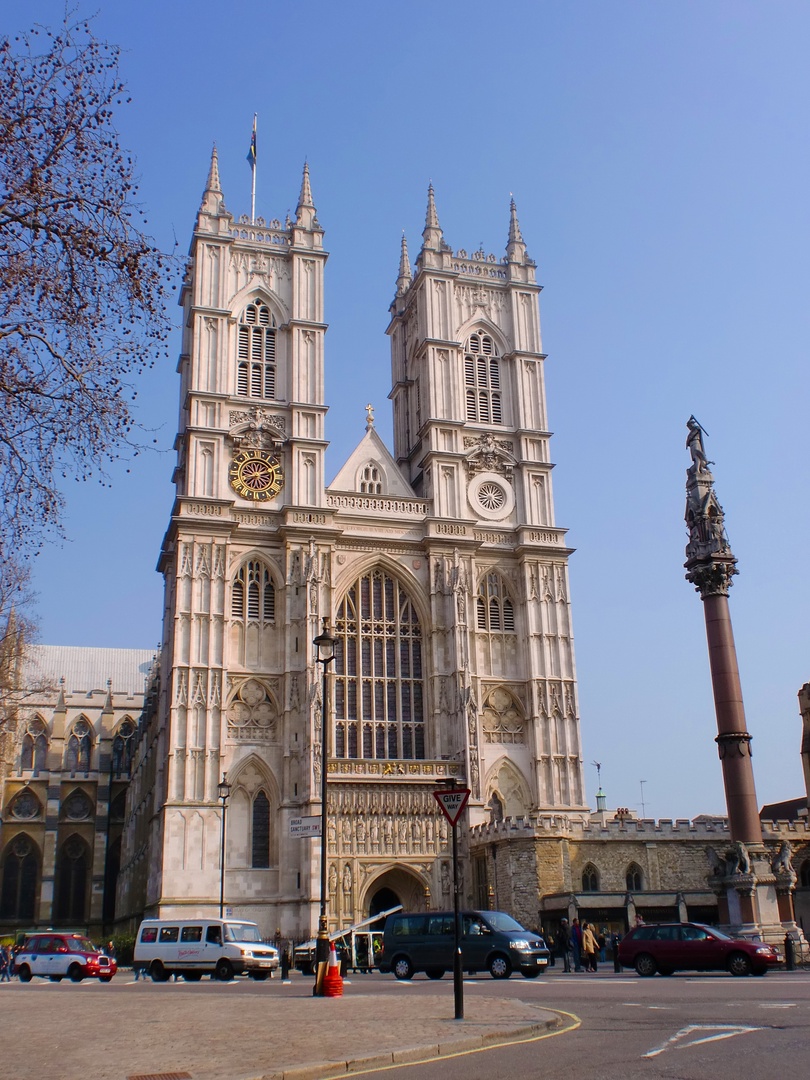
Westminster Abbey
Westminster Abbey, London church that is the site of coronations and other ceremonies of national significance. It stands just west of the Houses of Parliament in the Greater London borough of Westminster. Situated on the grounds of a former Benedictine monastery, it was refounded as the Collegiate Church of St. Peter in Westminster by Queen Elizabeth I in 1560. In 1987 Westminster Abbey, St. Margaret’s Church, and the Houses of Parliament were collectively designated a UNESCO World Heritage site.
Arina Armer
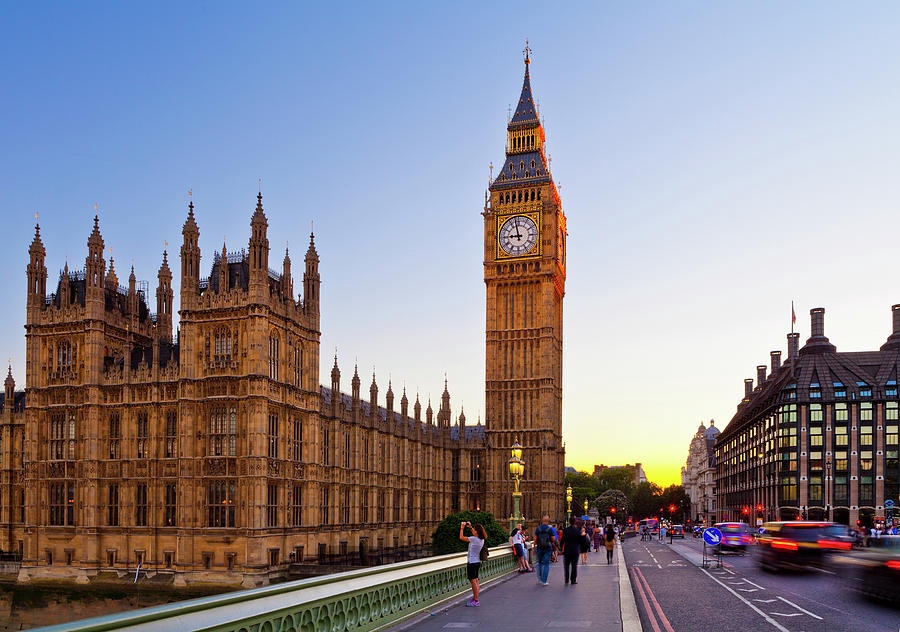
The Palace of Westminster
The Palace of Westminster is built on the site of a medieval palace, and possibly a Roman Temple dedicated to Apollo, the palace has been in continuous use since the first half of the 11th century.
Today the oldest existing part of the Houses of Parliament is Westminster Hall, dating back to the reign of King William II. Built in 1097, it is the oldest ceremonial hall in Britain and was the largest hall in Europe. Other historic parts include the 1297 Edward I Chapel of St Mary Undercroft and the Jewel Tower, built by Edward III in 1366.
Big Ben
The Elizabeth Tower at the Palace of Westminster houses probably the most famous clock in the world, a place from which time is measured. Big Ben is not the 100m tower, but the 13th ‘great’ bell in the tower which strikes the hour.
With each face nearly 7m wide, the minute hands over 4.2m long and the hour hands weighing 300kg each, it is the largest four faced chiming clock in the world.
Although the clock was started on 31st May 1859, Big Ben rang for the 1st time over London a month later on 11th July.
Arina Armer
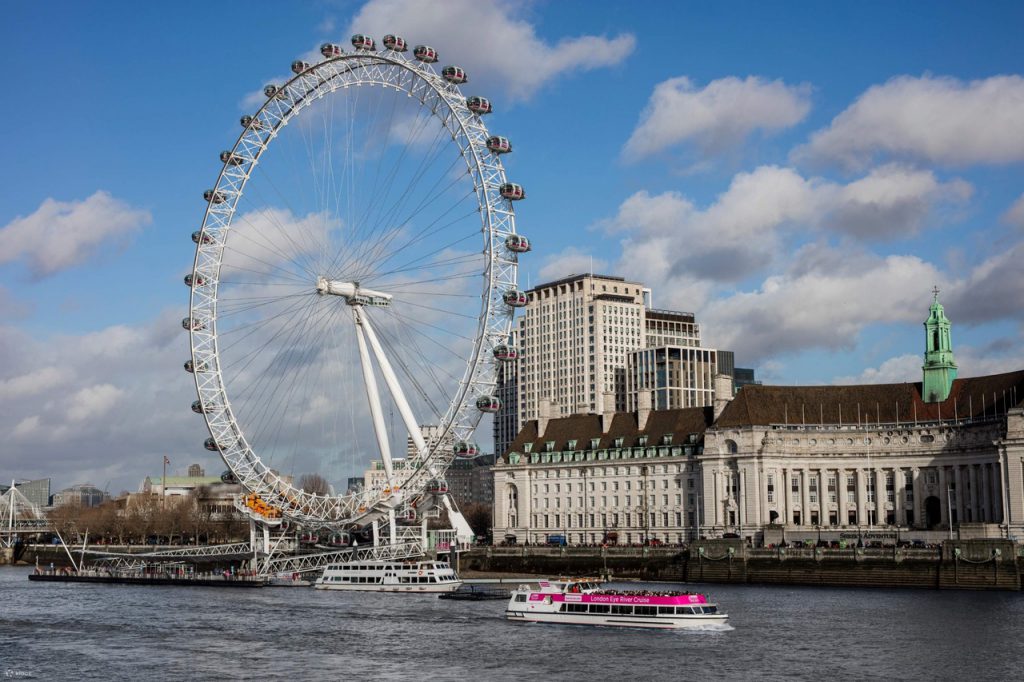
London Eye
London Eye, formerly Millennium Wheel, revolving observation wheel, or Ferris wheel, in London, on the South Bank of the River Thames in the borough of Lambeth. At an overall height of 443 feet (135 metres), the London Eye was the world’s tallest Ferris wheel from 1999, when it was built, until 2006, when it was surpassed by the Star of Nanchang, in Nanchang, China. It is one of London’s most popular tourist attractions for which an admission fee is charged and is sometimes credited with sparking a worldwide revival of Ferris wheel construction.
Arina Armer
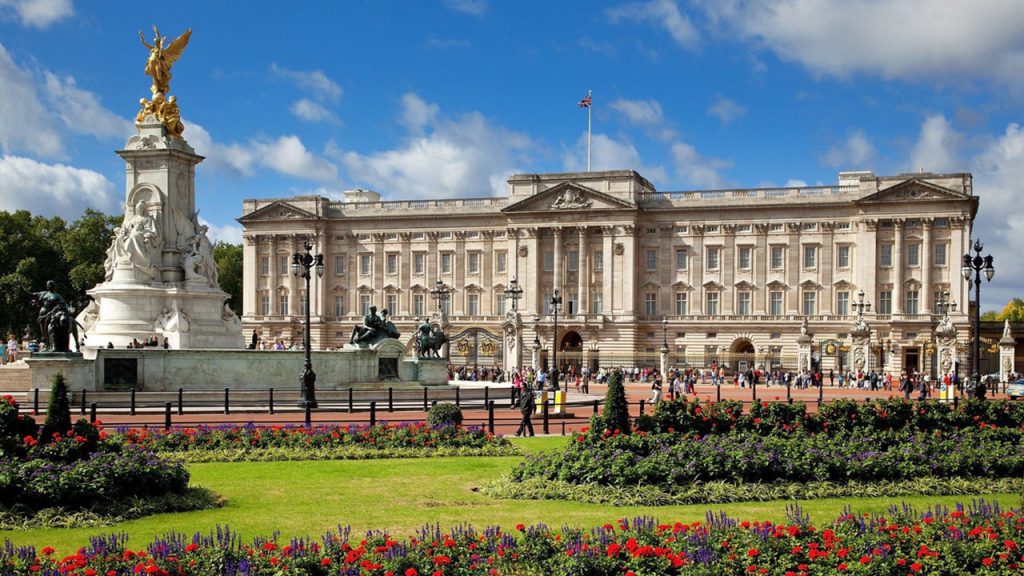
Buckingham Palace
Buckingham Palace, palace and London residence of the British sovereign. It is situated within the borough of Westminster. The palace takes its name from the house built (c. 1705) for John Sheffield, duke of Buckingham. It was bought in 1762 by George III for his wife, Queen Charlotte, and became known as the queen’s house. By order of George IV, John Nash initiated the conversion of the house into a palace in the 1820s. Nash also reshaped the Buckingham Palace Gardens and designed the Marble Arch entryway, which was later removed (1851) to the northeast corner of Hyde Park. The Mall front, or Fore Court (east side), was expanded in 1847 by Edward Blore and redesigned in 1913 by Sir Aston Webb as a background for the Queen Victoria Memorial statue. Nash’s garden front (west side) remains virtually unchanged. Victoria was the first sovereign to live there (from 1837).
Alina Gadjieva
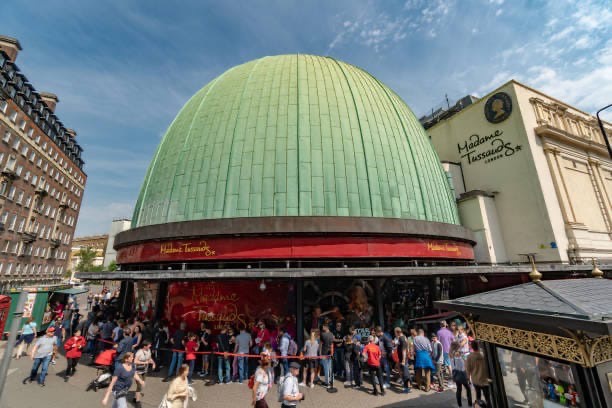
Madam Tussaud’s
Opened in 1835, Madame Tussauds London was founded by Marie Tussauds, a talented sculptor born in Strasbourg, France. Marie curated her first sculpture at the age of 16 after being mentored by her mother’s employer – Dr. Philippe Curtius, who used to make wax models to illustrate anatomy. Marie’s first model was the famed French Enlightenment Writer Francois Voltaire.
Her talent and expertise acquainted her with the Royal Family of France as an art tutor. During the French Revolution, Marie was thrown into jail on account of apparent allegiance with the monarchy. To prove her dissonance with the French Monarchy, she made death masks of the royalty. From there on she started touring Britain, where her art was recognized and appreciated. Her first permanent exhibition was showcased at Baker Street.
The Chamber of Horrors was specially made to display the gore of the French Revolution.
Marie Tussauds expanded her collection by creating figurines of prominent personalities. In 1884, the Museum carried Marie’s legacy to Marylebone Road, its current location.
Alina Gadjieva
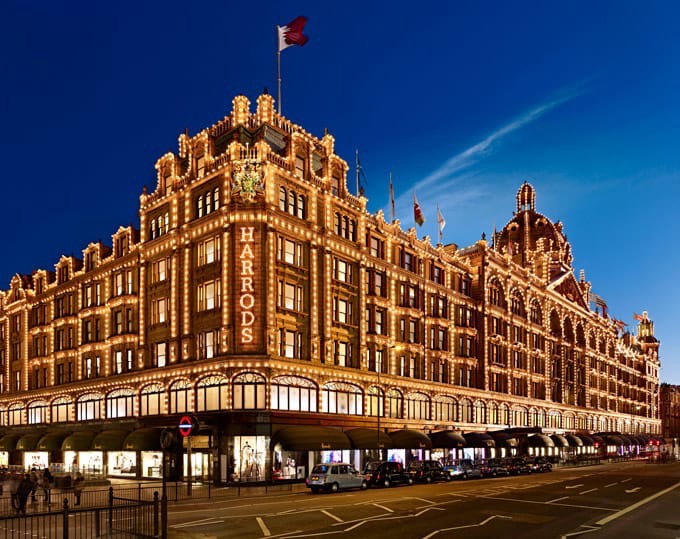
Harrods
Harrods is a renowned department store in London. It is located on Brompton Road, south of Hyde Park, in the borough of Kensington and Chelsea.
Henry Charles Harrod founded it as a grocery store in 1849. The enterprise expanded in the late 1800s, and many new departments were added. The store’s owners expanded customer service to provide for every need and once boasted that Harrods had “the best circulating library in London.” Using the store’s services, customers could buy theatre tickets, make travel reservations, and arrange funerals.
Over the years Harrods made innovations in many areas of store operation. In 1884 cash desks were placed at convenient points to take customers’ payments; up to that point most large retailers had used mechanical devices or runners to move customers’ money and change between counters and a central cash station. The next year the store extended limited credit to approved customers.
The present Harrods building, constructed in 1905, houses roughly 300 departments, 20 restaurants, a bank, and a beauty salon. Although the store still sells gourmet food items, its emphasis is on high-fashion clothing. Known for its zealous customer service, Harrods is considered the best department store in Britain. In 1985 it was bought by Mohamed al-Fayed, who sold Harrods to Qatar Holding in 2010.
Alina Gadjieva
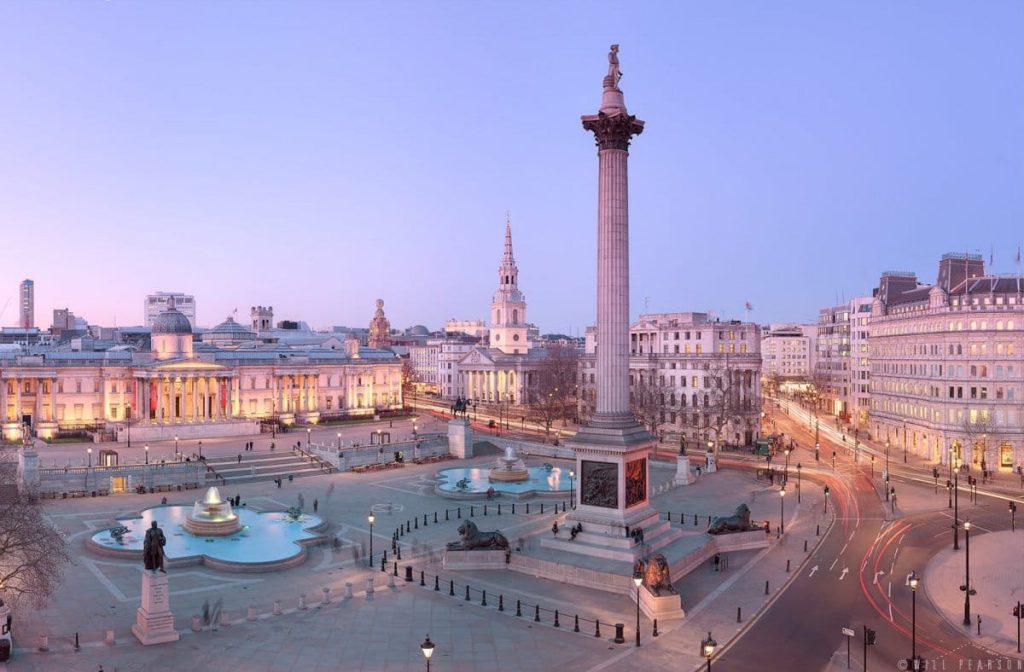
Trafalgar Square
Trafalgar Square sits at the heart of London and is one of the city’s most important landmarks. Here’s what you need to know before you go.
Trafalgar Square is a London icon. Plumped in central London – there’s a reason that it’s at the top of every tourist’s London sightseeing itinerary.
Nelson’s Column is Trafalgar Square’s most famous statue – sitting proudly at the centre of the square – an impressive structure to pay tribute to the UK’s famous naval hero.
Trafalgar Square itself is named after the Battle of Trafalgar. Famously, this naval battle between Britain and the Napoleon-led France and Spain would claim the life of Admiral Nelson, but become his most famous victory.
The column was commissioned to be designed by four of the top sculptors at the time. The design itself, however, was chosen from a design contest. The competition was not without controversy, but eventually the design of William Railton was chosen.
At over 169 feet (51 metres), it’s dizzyingly tall – although not quite as tall as the original plans which stood ten metres higher.
Over the years, Nelson’s Column has remained Trafalgar Square’s most famous sight. It’s also been the subject of plenty of stunts – from being turned into a lightsaber to celebrate the release of the new Star Wars film, to numerous political statements.
Darya Abramovich

The Globe
William Shakespeare is without doubt, one of the world’s most famous playwrights of all time and his successful career began right here in London, Shoreditch to be precise.
The theatre is only a short distance from the site of the original Globe Theatre built in 1599, where many of Shakespeare’s plays were first produced in the reign of Elizabeth I. However, The Globe was burnt down in 1613 during a performance of Henry VIII.
Shakespeare’s Globe Theatre was the inspiration of the actor and director Sam Wanamaker, who began his acting career performing in Shakespeare’s plays in a representative Globe, at the Great Lakes’ World Fair in Cleveland, Ohio.
A modern reconstruction of the Globe, named “Shakespeare’s Globe”, opened in 1997. It is an academic approximation of the original design, based on available evidence of the 1599 and 1614 buildings.
A visit to today’s reconstructed Globe Theatre (called Shakespeare’s Globe to distinguish it from the old Globe Theatre) allows you to step back in time, experience the most exciting immersive theatre and imagine how Shakespeare’s words would have entertained and enchanted the residents of Renaissance London.
Darya Abramovich
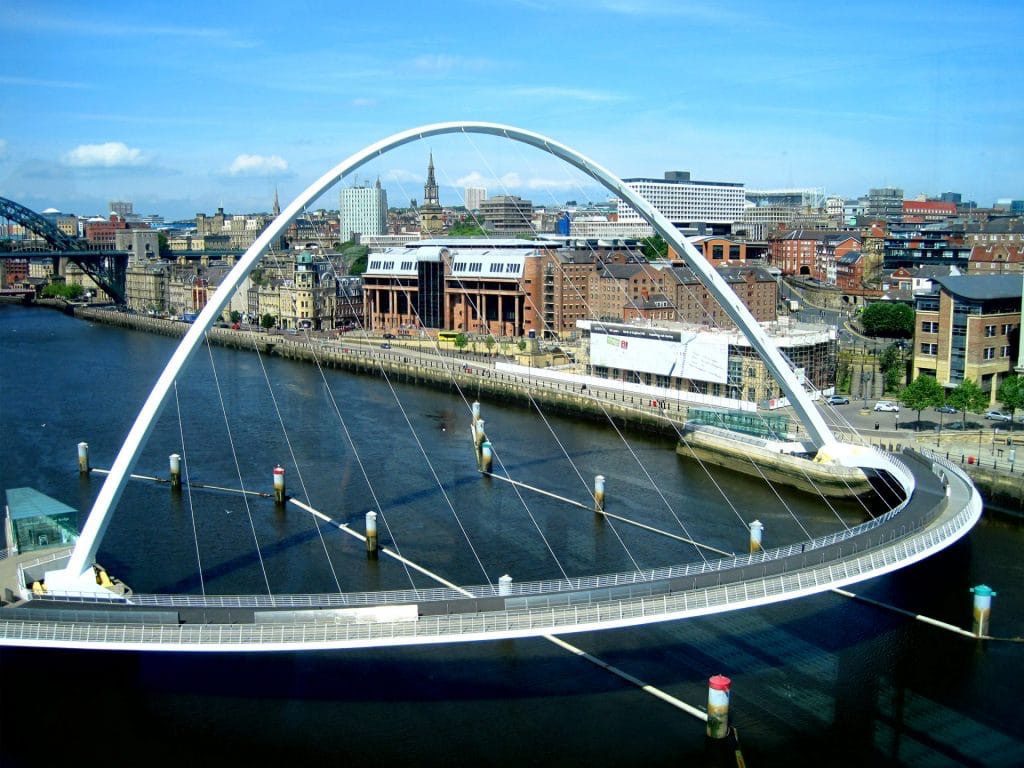
The Millennium Bridge
At only 21 years old, the Millennium Bridge stands proudly as one of London’s most iconic landmarks. Thousands of Londoners use it to travel across the Thames by foot every day whilst soaking up the views of the incredible skyline.
To the delight of the nation, the Queen initially opened the Millennium Bridge in June 2000. However, this grand opening was two months later than planned and £2 million over budget.
Undeterred, Londoners immediately headed out in their thousands to marvel at this beauty. It is estimated that a staggering 160,000 people visited the new landmark in the first two days of opening.
Two of the most popular landmarks in the city, St Paul’s Cathedral and the Tate Modern museum, are linked by this fantastic bridge.
Combine this with the vast amount of offices, schools and other workplaces in the area; it is no surprise that the designers created the bridge to withstand over 5000 people at once.
The length is built from three separate sections, totalling well over 300 meters. The width is an impressive four meters.
Chances to enjoy the wonderful London skyline without any vehicle fumes or noisy car horns are few and far between. So, be sure to take your walk along Millennium Bridge slowly and steady, soaking up the beautiful view along the Thames.
Darya Abramovich

The Cenotaph
Positioned on Whitehall in London, it has become the central focus for the remembrance and commemoration events in Britain since the First World War.
The Cenotaph, made entirely from Portland stone, is a pylon on a rectangular plan, with gradually diminishing tiers, culminating in a sculpted tomb chest (the empty tomb suggested by the name cenotaph) on which is placed a carved laurel wreath.
Cenotaph means ’empty tomb’. It symbolises the unprecedented losses suffered during the First World War and is dedicated to ‘The Glorious Dead’. There are no names inscribed on the Cenotaph, which allowed individuals to assign their own meaning to the memorial. It also provided a tangible place of mourning for those whose relations died during the war without a known grave. This symbolism also resonates through the introduction of the two minutes silence on Armistice Day and the interment of the Unknown Warrior.
After an official approach by Prime Minister David Lloyd George, british architect produced the design for a cenotaph that would be erected to coincide with the Peace Day celebrations in July 1919.
Since 1919, the Cenotaph has become the central focus for national commemoration, most notably during the National Service of Remembrance on Remembrance Sunday. Its meaning has developed and the Cenotaph now memorialises those who have given their lives in all conflicts since the First World War.
Sofya Egorova
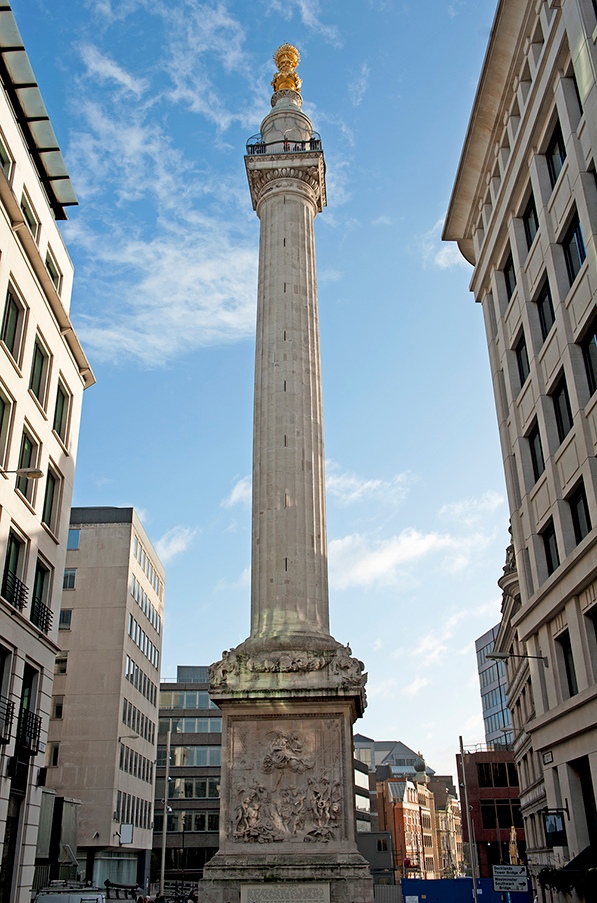
The Monument
The Monument, standing on the piazza between Fish Street Hill and Monument Street, the 202feet (61.5 metres) column designed by Robert Hooke in consultation with Sir Christopher Wren celebrates the City which rose from the ashes (the Great Fire in 1666). The Monument is a fluted doric column built of Portland Stone, topped with a golden orb. Its viewing platform is accessible via an internal spiral staircase.
The Monument was built with a second purpose: to also be the site for scientific experiments. Hidden beneath The Monument is a tiny laboratory from where the column was once used as a giant zenith telescope. This plan was soon abandoned as the surrounding area was too busy.
Hundreds of thousands of visitors climb The Monument’s 311 spiral steps each year, and are rewarded with one of the best views of London from the public viewing platform.
Sofya Egorova
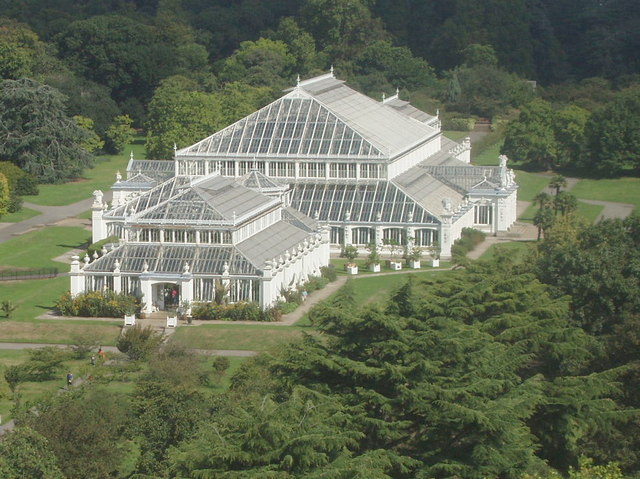
Royal Botanic Gardens
Royal Botanic Gardens is a state-supported botanical garden in Sydney, Australia. Officially established in 1816, it is the oldest such garden in the country. It is also the most spectacularly sited, occupying more than 27 hectares (66 acres) along the shores of Sydney Harbour. The garden has about 5,000 kinds of plants under cultivation. Much emphasis has been placed on planting the native species of Australia, particularly the woody ones, and hence, its collections of Australian trees are extensive. Many exotic varieties, however, have also been planted. Other specialties are palms, cycads, ferns, and orchids. The National Herbarium of New South Wales, situated at the garden, contains approximately one million reference specimens. Although the herbarium has worldwide representation, it specializes in the plants of New South Wales and other areas of Australia. Its principal publication is Telopea, formerly entitled Contributions from the New South Wales National Herbarium.
Royal Botanic Gardens, Kew is a non-departmental public body in the United Kingdom sponsored by the Department for Environment, Food and Rural Affairs. An internationally important botanical research and education institution, it employs 1,100 staff.
The organisation manages botanic gardens at Kew in Richmond upon Thames in south-west London, and at Wakehurst, a National Trust property in Sussex which is home to the internationally important Millennium Seed Bank, whose scientists work with partner organisations in more than 95 countries. Kew, jointly with the Forestry Commission, founded Bedgebury National Pinetum in Kent in 1923, specialising in growing conifers. In 1994 the Castle Howard Arboretum Trust, which runs the Yorkshire Arboretum, was formed as a partnership between Kew and the Castle Howard Estate.
In 2019, the organisation had 2,316,699 public visitors at Kew, and 312,813 at Wakehurst. Its 326-acre (132 ha) site at Kew has 40 historically important buildings; it became a UNESCO World Heritage Site in 2003. The collections at Kew and Wakehurst include over 27,000 taxa of living plants, 8.3 million plant and fungal herbarium specimens, and over 40,000 species in the seed bank.
Sofya Egorova
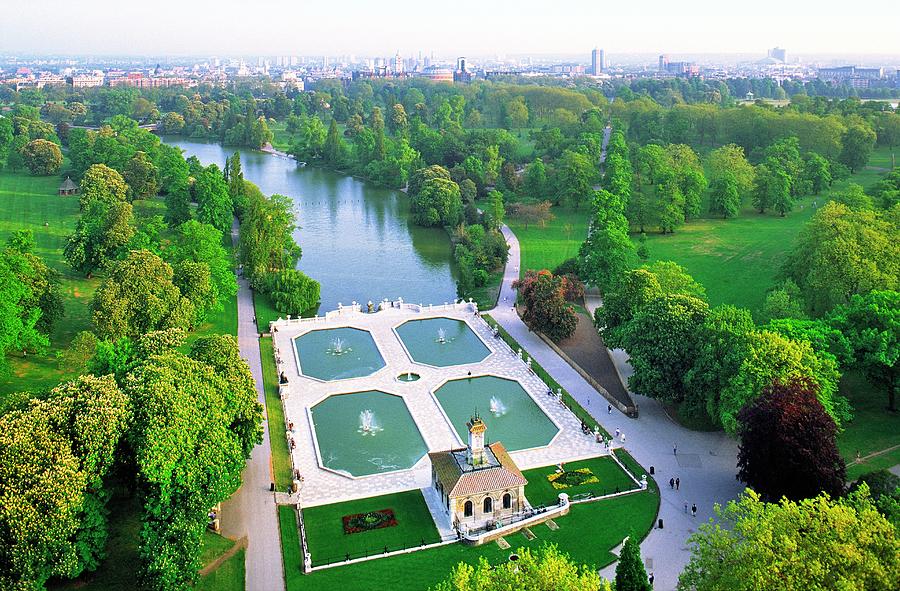
Kensington Gardens
Kensington Gardens is a park lying almost completely within the borough of Westminster, London; a small portion is in the borough of Kensington and Chelsea. It covers an area of 275 acres (111 hectares) and is bordered by the grounds of Kensington Palace (west), Bayswater (north), South Kensington (south), and Hyde Park (east). A winding band of roads between Victoria Gate in the north and Alexandra Gate in the south separates it from Hyde Park, with which it shares a large curved lake. The portion of the lake in Kensington Gardens is known as the Long Water, and the Hyde Park portion is called the Serpentine.
A former royal hunting ground, the park became a fashionable location for the promenades of wealthy citizens in the 18th century; however, it was not opened to the general public until the mid-19th century. The park accommodates one of London’s more remarkable monuments, the 19th-century Albert Memorial. In the western portion of the park is Round Pond (1728), where expensive model boats are often sailed while kites fly overhead. There are large fountains at the northern end of the Long Water, not far from the statue of Peter Pan and Speke’s Monument.
Kirill Barykov
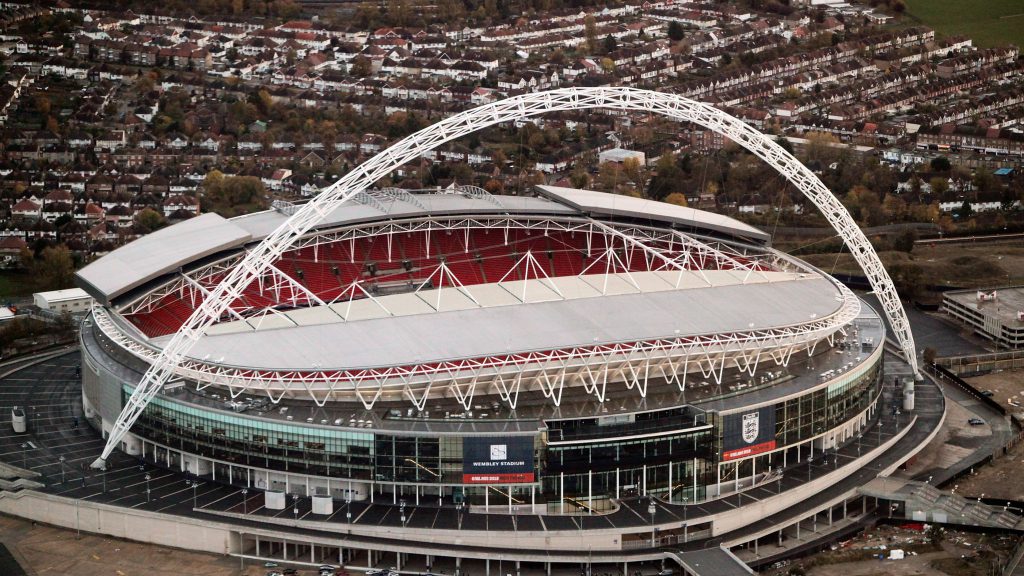
Wembley Stadium
Wembley Stadium is a stadium in the borough of Brent in northwestern London, England, built as a replacement for an older structure of the same name on the same site. The new Wembley was the largest stadium in Great Britain at the time of its opening in 2007, with a seating capacity of 90,000. It is owned by a subsidiary of the Football Association and is used for football (soccer), rugby, and other sports and also for musical events.
It is almost round in shape, with a circumference of 3,280 feet (1 km). The most striking architectural feature is a giant arch that is the principal support of the roof. The arch is 436 feet (133 metres) in height and is tilted 22° from the perpendicular. The movable stadium roof does not close completely but can shelter all the seats.
Wembley Stadium has hosted the Football Association Cup Final every year since the year of its completion. It is also the home of England’s national football team. During the London 2012 Olympic Games, the stadium was a venue for football, including the final (gold medal) match. American (gridiron) football is played at the stadium in the National Football League International Series.
Kirill Barykov
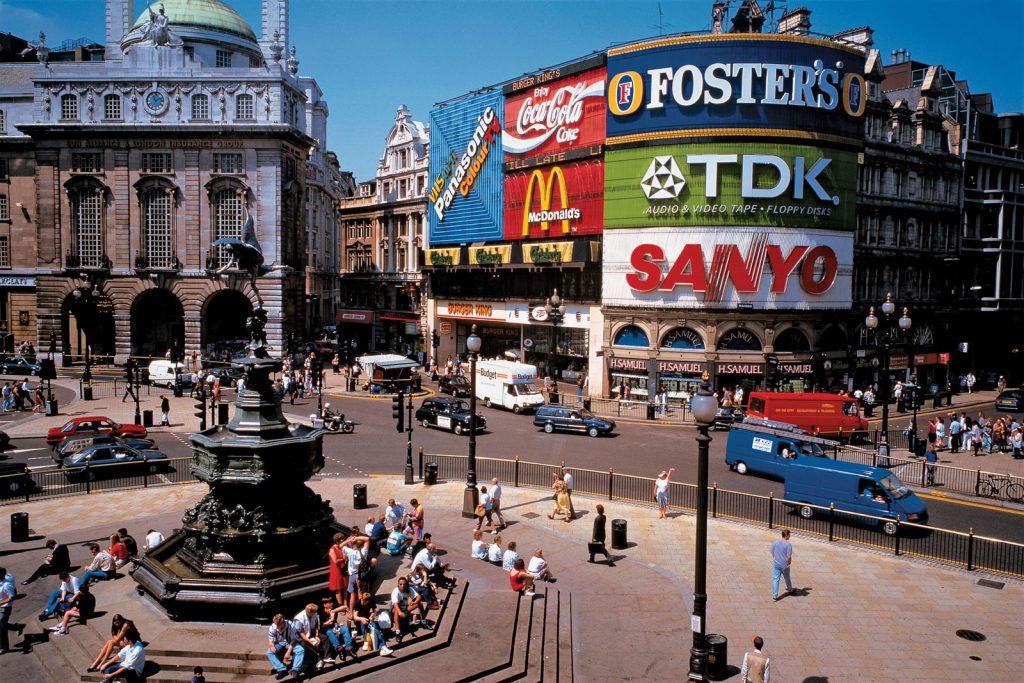
Picadilly Circus
Piccadilly Circus, busy London intersection and popular meeting place. Lying between the neighbourhoods of St. James (south) and Soho (north) in the borough of Westminster, it serves as the nexus of Coventry Street, Shaftesbury Avenue, Regent Street, and Piccadilly.
As a traffic hub and neon-lit gathering place, Piccadilly Circus attracts visitors from throughout the world, many of whom sprawl on the steps of its stone island, which is crowned by the 1893 aluminum statue of Eros (formally entitled the Angel of Christian Charity, it was built as a memorial to the 7th earl of Shaftesbury). The intersection’s first electric advertisements appeared in 1910, and from 1923 giant electric billboards were set up on the facade of the London Pavilion (then a theatre). Many of the surrounding buildings were redeveloped to house retail shops in the 1980s. The 19th-century Criterion building was restored in the early 1990s. Within easy walking distance of Piccadilly Circus are the shops of Regent Street and the theatres of the West End. The area is the location of well-known nightclubs.
Kirill Barykov
Published: Apr 19, 2021
Latest Revision: May 13, 2022
Ourboox Unique Identifier: OB-1110991
Copyright © 2021

 Skip to content