






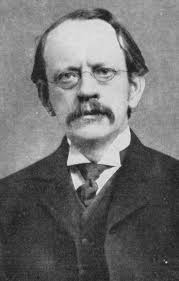
J.J. Thomson and Atomic Theory

Copyright © 2016
Background of J.J. Thomson
J.J. Thomson was born December 18, 1856 in Manchester, England. Thomson attended Trinity College at Cambridge, where became head of the Cavendish Laboratory. His research in cathode rays led to the discovery of the electron and pursued further innovations in atomic structure exploration. Thomson won the 1906 Nobel Prize in Physics among many accolades. J.J. Thomson passed away, August 30, 1940.
Special Dates
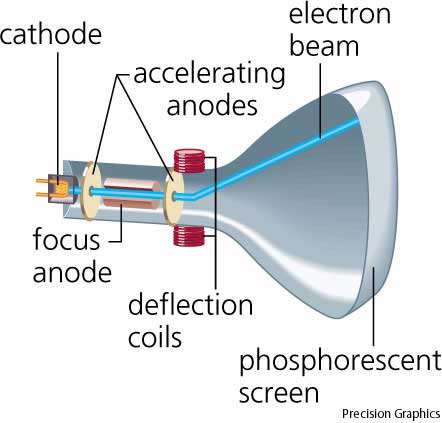
- 1897 Thomson discovered the electron in a series of experiments designed to study the nature of electric discharge in a high vacuum cathode ray tube.
- 1905 Thomson established using a variety of methods that atom of hydrogen has only one electron.
- 1908 Thomson was knighted by King Edwards.
- 1912 Thomson discovered that stable elements could exist as isotopes.
How J.J. came up with the idea
Thomson used a cathode ray tube to test and see the atom, and to prove it wasn’t the smallest particle on earth.
Thomson ideas of atom
“bodies much smaller than atoms” says Thomson and proved that to be true.
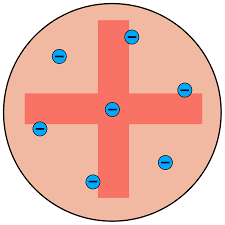
Thomson called the atom ” THE PLUM PUDDING MODEL”
Interesting Facts
- Thomson was the first person to prove Dalton wrong of his 4 theories.
- J.J. Thomson showed great academic promise at an early age and was admitted to Owens College at the young age of 14.
- Thomson discovered the atom in England.
Published: Mar 4, 2016
Latest Revision: Mar 4, 2016
Ourboox Unique Identifier: OB-115244
Copyright © 2016