







Castanets

Copyright © 2021
Origin
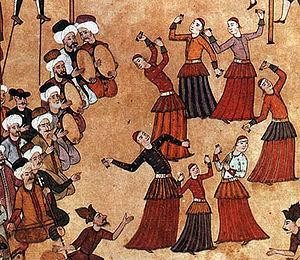
Musical instruments similar to castanets have been developed in many parts of the world. Ancient versions of small, wood or metal clappers were used by Egyptian, Greek, Roman, Arab, Moorish, and Chinese dancers, for example. It is not known whether such instruments were brought to Iberia (the region now known as Spain and Portugal), perhaps by the Greeks, or whether they developed independently in that region.
Archaeological evidence indicates that Iberians made small clappers from sticks, shells, flat stones, and bone.According to history, it is very probable that the Egyptians were the inventors of the castanets. Similar instruments—often boot-shaped—were played by the ancient Greeks, Romans, and Egyptians and may have been introduced to Spain through ancient Phoenician colonization or, in their pear-shaped form, by the Moors.
Material its made of
What material are the castanets made of?
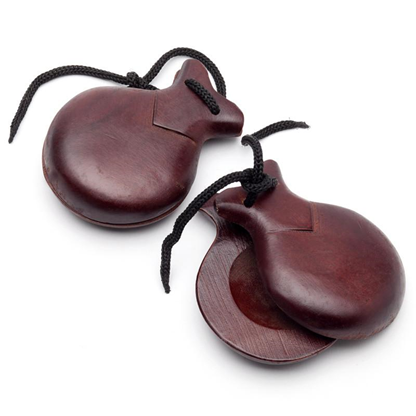
Novelty castanets have been made from ivory, marble, crystal, gold, silver, bronze, and aluminum, but few of these are musically useful. The traditional material used for good castanets has been very hard (but not brittle) wood such as granadillo, rosewood, ebony, pomegranate, or oak. The best hard-woods come from equatorial forests, and they are becoming quite expensive; some people prefer not to use them out of a sense of environmental consciousness.
Most professional-quality castanets are currently made from a synthetic, laminated material such as Micarta. Called tela de musica (cloth of music) by castanet makers, this material is made by applying heat and pressure to many layers of paper, cotton cloth, or glass-fiber cloth that have been impregnated with a phenolic resin. For the purposes of castanet making, this material is quite similar to high-quality ebony or granadillo.
Cotton strings are generally used to hinge together the two clappers of a pair of castanets. Nylon string can be used, especially by an orchestra musician; however, a dancer who keeps his or her arms up in the air while playing the castanets may find nylon strings too slippery.
How is it played
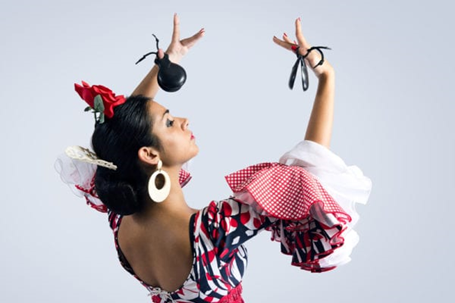
Practice a simple roll in the right hand. Start with your pinkie finger and tap the top of your castanet. Then follow your pinkie with your ring finger, and do the same for the rest of your fingers until you reach your pointer finger.This is a simple castanet roll in your hembra (right) castanet.

Add rhythm with your left hand. Your macho (left) castanet will punctuate the bassline of your castanet sound, creating the rhythm. Use your middle finger and ring finger to tap your macho castanet at the end of every right hand roll. This will create a slightly heavier, deeper toned rhythm.This sound is sometimes referred to by experts as “TA”.

Create the “PI” sound in your right hand. This move will be nearly identical to your approach to making the “TA” sound, only instead of using your left hand, you’ll use the ring and middle fingers of your right hand to make the sound. Alternate between this and your roll to acquaint yourself with the different sensations.

Drill the “PAM” sound using both castanets. This sound is also sometimes referred to as “CHIN”, for its clashing quality. This sound requires you to collide the castanets together while they are in front of your body.
While each pair of castanets are unique, semi-professional castanets and higher quality pairs are built to withstand this strike.
Perform this move sharply.

Learn the finishing sound “PAN”. This powerful sounding clap is often used to end a sequence, as it has a tone of finality to it. Use your pinkie, ring, and middle fingers to strike both castanets at the same time.
Be sure you strike your castanets at the same time, otherwise the powerful effect will be staggered and weak.

Practice different strikes in different patterns. While it is generally true that the complicated rhythms of the melody should remain in your hembra (right) castanet, you should experiment with different finger strikes used in different patterns. Alternate between trills and bassline “TA” strikes, clap back and forth with “TA” and “PI”, then finish strong with “PAN”.

Fun facts
The word ‘castanet’ is derived from the Spanish word ‘castaina’ which means ‘chestnut’.
The Spanish have other words for castanets as well including pulgaretes and platillos.
Castanets are referred to as pulgaretes when they are attached to the dancers’ thumbs.
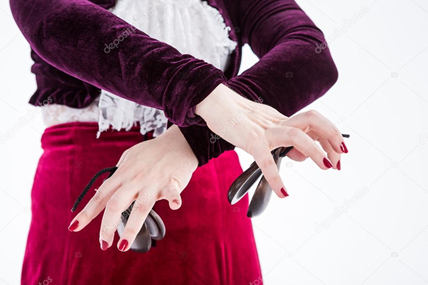
When playing the castanets the musician rests one clapper of the set in the palm of the hand, and links the string around their thumb. They use their fingertips to strike the other clapper of the set against the clapper resting in the palm to create sound.Some musicians use other techniques to create sound with castanets as well.
Women usually use the smaller castanets as the instrument should fit in the palm of the hand. Men usually use the larger castanets because their hands can accommodate the larger size.
Smaller castanets produce a crisp, higher tone, while larger castanets produce a rich, mellow, lower tone.
Cheaper wood or plastic castanets are inexpensive and can be found for as little as $10.
Castanets that are handcrafted for professional musicians are made of more expensive materials such as hardwood or composite and cost much more – as much as $400 a set.
Some castanets are made for novelty purposes from materials that are not suitable to produce the quality of sound desired by musicians. Novelty castanets are often made of bronze, silver, gold, marble, crystal, and even ivory.
Quality castanets are usually made of hardwoods such as oak, pomegranate, ebony, rosewood, and granadillo.
Many professional castanets today are made of synthetic materials such as Micarta – a laminated material made similar to the method of creating fiberglass. Layers of fiber cloth are bonded with resin and heat and pressure are applied to create a product similar to hardwoods.
Although traditionally castanets were made in the shape of a concave shell, today they are also made in other shapes such as rectangular, square, or even triangular.
The sounds made by castanets comes from their size, depth of hollow (or concave shape), and contact area at the tip of the castanet clappers.
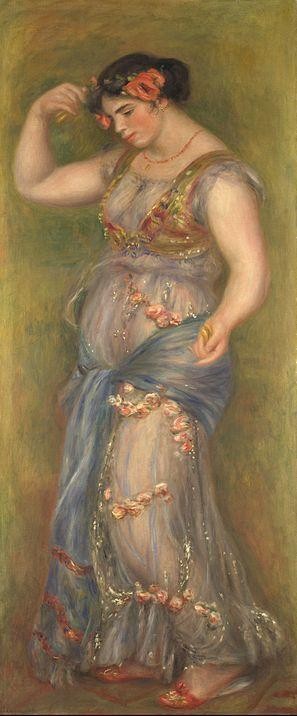
Dancers use castanets to accompany their dancing but they are being used in other music as well – even in orchestras today.
Some castanets are mounted on wooden handles, freeing up the musicians hands from the strings. Instead of strings they clappers are attached by elastic cords. This makes it easy for the musician to pick up the wooden handle and clap the castanets and set them back down quickly when not being played.
Sources:
origin: google
material its made of: google
how to play: https://www.wikihow.com/Play-Castanets
funfacts: https://www.softschools.com/facts/music_instruments/castanets_facts/3000/#:~:text=Castanets%20are%20a%20musical%20instrument,has%20existed%20since%20ancient%20times.
images: https://www.google.com/search?q=castanets&sxsrf=AOaemvJQb3KBbGLqlx8bAMk5WnOeGLioqQ:1637571220465&source=lnms&tbm=isch&sa=X&ved=2ahUKEwjv-I6XzKv0AhUFRuUKHRVMDggQ_AUoAXoECAEQAw&biw=1366&bih=625&dpr=1
video: https://youtu.be/TuHHUDnFSO0
Published: Nov 22, 2021
Latest Revision: Nov 22, 2021
Ourboox Unique Identifier: OB-1232627
Copyright © 2021

 Skip to content