







Save Our Planet by rina nakhleh - Illustrated by Rina nakhleh - Ourboox.com
This free e-book was created with
Ourboox.com

Create your own amazing e-book!
It's simple and free.

Start now

Save Our Planet

by

Artwork: Rina nakhleh

  • Joined Feb 2016
  • Published Books 1

Earth Poem

  1. Can earth be Earth when all its trees are gone,
    And sudsy waters have become unfit,
    And poisoned life no longer greets the dawn
    With raucous sounds that death has caused to quit?
    Will trees no longer wave, with limbs unfurled,
    On hapless earth, that ever in orbit roams?
    Will human ego sacrifice the world
    To satiate its lust for pompous homes?
    Will distant space look down on orb that’s bald.
    I now can hear the mother say,
    “I was once called Earth.
    But now, bereft of mirth, I weep.
    That treeless orb’s no longer Earth”.


2

OUR MOUNTAIN OF RUBBISH

Har Hiriya is Israeli’s “mountain”. It is really a mountain of rubbish ! The mountain is made of 25 million tons of rubbish . It is as tall as a 20-storey building and is 2.5kilometres long . Sometimes ,parts of the mountain break off and fall into the rivers and the land with dangerous poison .

Last winter , twenty artists from around the world came to israel to see Har Hiriya.They were invited by Martin Weyl  to make art from the rubbish .Weyl , who worked at the Israel Museum for 17 years , said that he wanted to make something beautiful from Israel’s biggest rubish dump. He also wanted Israelis to understand that pollution in Israelis a terrible problem and that w allhave to do our part to clean up the country. the new “art from rubbish “was taken to the Tel Aviv Museum of Art for visitorsto see .

3

4

5

When is my rubbish and recycling collected?

Use the search below to find:

  • your rubbish and recycling collection dates
  • what to put your rubbish in
  • where to leave your rubbish bin/bags on collection day
  • your downloadable collection calendar for future collections.

If you think your rubbish or recycling has been missed, see late or missed collections.

Auckland Council rubbish and recycling collections, with some exceptions, happen one day later than usual after a public holiday. See public holiday collections to find out when it will be collected.

7

8

Difinition of “Recycling”

Recycling is the practice of reusing items that would otherwise be discarded as waste. Variations of recycling include upcycling, which involves adding value to an item for reuse, and downcycling, which involves breaking down an item or substance into its component elements to reuse anything that can be salvaged. Precycling, an alternative approach, involves avoiding the acquisition of unnecessary items that would have eventually have to be recycled or dealt with as waste.

E-cycling is the practice of reusing, or distributing for reuse, electronic equipment and components rather than discarding them at the end of their life cycle. Discarded electronics and electronic components (e-waste) are creating a serious problem because of toxic elements involved in their manufacture. Usually, discarded computers and other electronic devices, such as cell phones, are functional and could be passed on to another individual or organization. Often, even non-functioning devices can be refurbished and resold or donated.

9


Use It Again!

The Challenge: Try to reuse three things this week. For example, bring paper or plastic bags to the grocery store. (Or reuse cloth bags—you can usually buy them at the store for about a dollar!) Other ideas: Make a pad out of used writing paper; store food in a plastic yogurt container; or just take out a book at the library—that’s reusing something, too!

Two videos about reusing things, made by kids for kids:

The Green Kids Take Over

If Kids Ruled the World

Bonus: If you already have a reusable grocery bag, try decorating it here. (Hint: click on the other links on the left side to learn more about Reuse and Recycling!)

10
Save Our Planet by rina nakhleh - Illustrated by Rina nakhleh - Ourboox.com

10 Ways Kids Can Help Save Our Planet


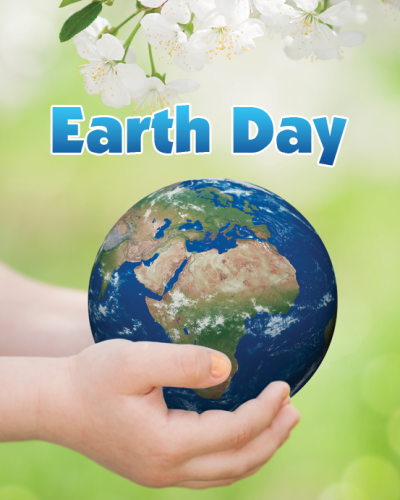
Earth Day is April 22! That means now is a great time to talk to kids about the importance of helping to save our planet. Luckily, there are so many little things even the youngest kids can do to help, from conserving water and energy to recycling and reusing. Here are 10 ideas:

12

Turn off the lights. Remind kids to turn lights off when they leave a room, as well as the TV or radio when they’re finished watching or listening.

Don’t waste water. Place a measuring cup in the sink while your child is brushing her teeth, then show her how much water she used. Next time, have her turn off the water while she brushes so that she can compare her water usage. That will give her a visual idea of how much water she wastes when she leaves the sink running unnecessarily, which will encourage her to turn the water off in the future!

Reuse. Pack your child’s sandwiches and other lunch items in reusable plastic containers instead of baggies. Have him carry them in a fun lunch box or bag instead of a paper or plastic bag. Set a good example by bringing reusable bags to the grocery store. You can also buy your child a reusable water bottle instead of giving him plastic bottles

13

Recycle. At the end of each meal or activity, discuss with your child which waste items—bottles, cans, magazines, newspapers, pizza boxes, etc—can be recycled. Then have her place them in the appropriate recycling bin.

Borrow. Get your child a library card! Instead of buying him loads of books he’ll only read a few times, have him borrow them. Then buy him copies of only his favorites. It’ll save money—and trees!

Refuse. Have your child say “No, thank you” to plastic straws at restaurants, extra napkins at concession stands, plastic bags at shops, etc.

14

Get creative. Got a little artist? Use toilet paper tubes, egg cartons, and other waste items for fun art projects! Kids can cut pictures and words out of old magazines to make collages, build houses out of popsicle sticks, and more. The possibilities are endless!

Have a green thumb. Help your child plant and grow fruits, vegetables, and herbs in your backyard. Look for fun recipes to make with them when they’re ready, and have your child help cook them. He’ll be more likely to eat them—an added bonus!

Don’t be a litterbug. Teach your child to never throw trash on the floor. Instead, she should hold onto it until she finds the nearest trash can or recycle bin.

Get out in nature! Take your child to the park and point out various birds and animals. Hike a local trail and teach him about the plants or trees along the way. Go out in your backyard to catch butterflies, ladybugs, or fireflies (before setting them free, of course). The more your child learns about nature, the more he’ll grow to appreciate all living things—and the more he’ll want to help protect them.

15

                         I hope you enjoyed reading my book.


                                                                                      Thank you 

16
This free e-book was created with
Ourboox.com

Create your own amazing e-book!
It's simple and free.

Start now

Ad Remove Ads [X]