






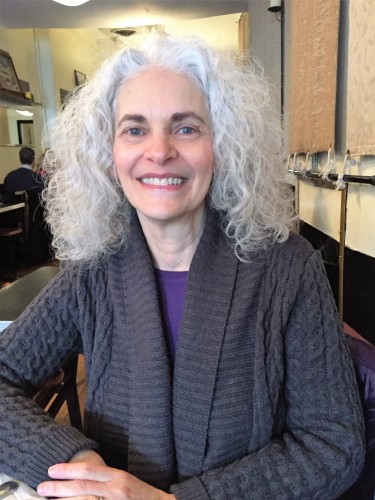
Singing in the Key of Chi, with Dvora Krevat

Copyright © 2016
How does my method differ from other voice training?
I don’t teach “singing” per se, and I don’t teach performance. What a person learns from me is how to access their OWN inner voice.
Do potential students need a certain prerequisite level of skill/training?
No one needs any prerequisite training. The only skill a person needs is to have patience, be willing to learn to relax, to listen . . . and also to learn proper breathing.
2

3
How did I develop my unique approach?
My major in University was Music education with voice as my primary instrument. That was in the late 1960s. My own voice lessons were straight classical approach. When I left University, I found teachers throughout the world who gave me more pieces to the puzzle of how I should “teach” voice. Finally, in 1982, I met someone in California (Nancy Marie) who taught me that “singing” and “toning” are two separate ideas. We all probably began by “toning” – making sounds that develop into some kind of melody. Singing is usually when we combine tones that make a clear melody. Toning doesn’t always have a definite, recognizable “tune”.
4
I realized somewhere along the way that my method is about recognizing that the “instrument” of the voice is the HUMAN BEING. When we squeeze our throat in order to reach a tone, we keep the vocal chords from vibrating to their fullest, and the tone becomes “flat”. Like a stringed instrument, if we don’t allow the strings to vibrate fully, we get a muted sound.
And when we begin to relax and open the throat, powerful things happen on many levels. We are then able to access an energy that is bigger than just singing. It’s like yoga for the throat. An inner harmony takes place, and the person can become more balanced and less stressed.
5
Should potential singers take “regular” voice training at the same time as my lessons – before? After? Not necessary?
People who want to learn how to sing don’t need separate lessons. The kind of work I do assists someone to find THEIR voice instead of just mimicking someone else. I call my method “Fine Tuning the Voice”. We can always learn performance skills, but that comes after the true voice has been accessed.
6

7
What are the tips I would give someone who wants to sing?
1. Don’t listen to anyone who tells you that you can’t sing. In order to sing, a person needs to learn how to LISTEN . . . how to HEAR the sounds. If they HEAR the sounds, they can usually learn to recreate them.
2. JUST SING! Period. The more a person sings, the more they free up their opinions on how they sing. Most people become self conscious and then the throat closes. They need to treat it like “jumping into a cold swimming pool”. Just DO IT. (I believe that the reason is because singing comes from the “heart”, and exposing the heart is one of the most frightening things a person does in their life.)
8
9
3. Sing along with the radio or recordings. The more people sing along, the more they have to listen to the person they’re singing along with. The more they listen, the more they can begin to loosen up and really let it go!
4. Try doing movement with singing. Anything to get the body into a rhythm and not standing like a statue. It’s all about freeing up the throat, and to do that, sometimes we need to move the body, too. Remember, WE are the instrument that houses our vocal chords.
You can contact Dvora here! [email protected]
10
11
Published: Mar 25, 2016
Latest Revision: Mar 28, 2016
Ourboox Unique Identifier: OB-126265
Copyright © 2016