






exemple

Copyright © 2022
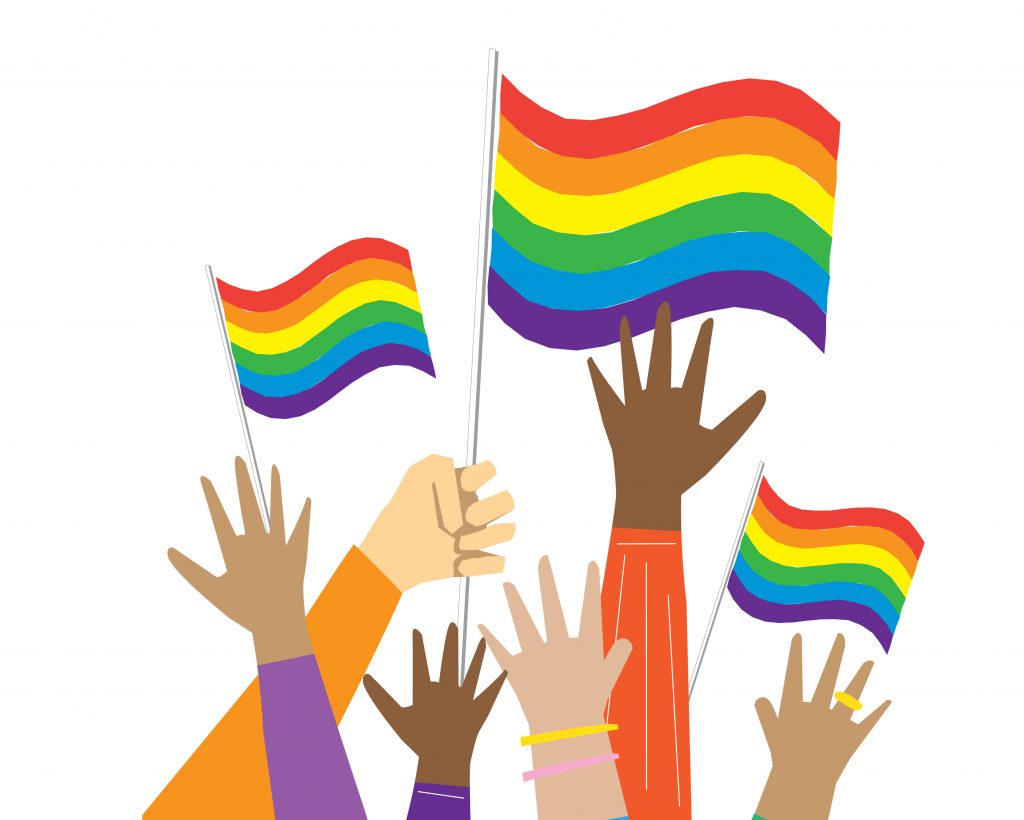
We believe that lesbian, gay, bisexual, and transgender people should be able to participate fully in American life free from discrimination based on sexual orientation and gender identity on the job; in housing; when shopping or getting services at restaurants, hotels, and other public places; and when accessing government programs and services. While there is widespread public support for making discrimination against LGBTQ people illegal, only a minority of states have laws that specifically protect LGBTQ people. The ACLU aims to change that. For information about religion-based discrimination against LGBTQ people, visit our issue page.
Transgender athletes want to participate in school sports for the same reason as anybody else: to find a sense of belonging and social engagement, to be a part of a team, and to challenge themselves. But states and schools across the country are trying to exclude trans people from enjoying the benefits of sports on equal terms with their cisgender peers. Not only do these proposed laws discriminate against trans youth in ways that compromise their health, social and emotional development, and safety, they also raise a host of privacy concerns.
The organizations leading these attacks on trans athletes’ rights are the same organizations that pushed false myths about trans people in restrooms. Just like it was never about restrooms, today’s fight is not about sports. It’s about erasing and excluding trans people from participation in all aspects of public life. It’s about creating “solutions” to “problems” that don’t exist and, in the process, harming some of the most vulnerable young people in the country. Meanwhile, leading advocates for women’s sports support inclusion of women and girls who are transgender and warn that these efforts will ultimately harm all athletes in women’s sports.
The ACLU works to ensure that lesbian, gay, bisexual, transgender and queer people can live openly without discrimination and enjoy equal rights, personal autonomy, and freedom of expression and association. Trans people’s right to live freely, people’s right to vote, abortion care for us all – our critical freedoms are at stake and we need you with us. Donate now and together, we can protect civil liberties in the courts, legislatures, and beyond.
The ACLU works in courts, legislatures, and communities to defend and preserve the individual rights and liberties that the Constitution and the laws of the United States guarantee everyone in this country.

As President Joe Biden and Vice President Kamala Harris took office one year ago this month, the ACLU published a civil rights and liberties wishlist for the new administration. The Biden-Harris White House had its work cut out for them: In the wake of the previous administration, the list of harms to repair was long. But simply undoing bad policy isn’t enough: We called on President Biden to proactively fortify and protect our rights across issues areas, from racial justice, to LGBTQ rights, to immigration.
The war on drugs has done nothing to reduce drug use rates. Instead, it has led to the over-surveillance and incarceration of millions, disproportionately Black, Latinx, and Indigenous people. Today, nearly half of the people in federal prison are there for drug offenses, and the federal prison population increased in 2021 for the first time in nearly 10 years. Despite overturning a Trump-era legal memo that would have forced thousands of people back to prison when the pandemic ends and improving implementation of the First Step Act’s earned time credit program, only a bold and transformational approach can tackle the enormity of our nation’s mass incarceration crisis.
We urge the Biden administration to use executive authority to grant categorical clemency to the thousands of incarcerated people serving unjustifiable sentences in federal prison, including under the failed war on drugs. We also urge Biden to push Congress to pass the MORE Act, the EQUAL Act — which would end sentencing disparities between crack and powder cocaine — and the First Step Implementation Act, which would make retroactive the reforms contained in the First Step Act of 2018. We urge President Biden to issue an executive order to implement policing reforms on the federal level. At minimum, reforms should include: funding community-based alternatives to policing; adopting a use of force standard for federal law enforcement based on the PEACE Act; curbing the militarization of state and local police by stopping the flow of weapons of war from the federal government; and creating strong, fair rules around body cameras.
“Freedom of expression is the matrix, the indispensable condition, of nearly every other form of freedom.”
—U.S. Supreme Court Justice Benjamin N. Cardozo in Palko v. Connecticut
Freedom of speech, the press, association, assembly, and petition: This set of guarantees, protected by the First Amendment, comprises what we refer to as freedom of expression. It is the foundation of a vibrant democracy, and without it, other fundamental rights, like the right to vote, would wither away.
The fight for freedom of speech has been a bedrock of the ACLU’s mission since the organization was founded in 1920, driven by the need to protect the constitutional rights of conscientious objectors and anti-war protesters. The organization’s work quickly spread to combating censorship, securing the right to assembly, and promoting free speech in schools.
Almost a century later, these battles have taken on new forms, but they persist. The ACLU’s Speech, Privacy, and Technology Project continues to champion freedom of expression in its myriad forms — whether through protest, media, online speech, or the arts — in the face of new threats. For example, new avenues for censorship have arisen alongside the wealth of opportunities for speech afforded by the Internet. The threat of mass government surveillance chills the free expression of ordinary citizens, legislators routinely attempt to place new restrictions on online activity, and journalism is criminalized in the name of national security. The ACLU is always on guard to ensure that the First Amendment’s protections remain robust — in times of war or peace, for bloggers or the institutional press, online or off.
Over the years, the ACLU has represented or defended individuals engaged in some truly offensive speech. We have defended the speech rights of communists, Nazis, Ku Klux Klan members, accused terrorists, pornographers, anti-LGBT activists, and flag burners. That’s because the defense of freedom of speech is most necessary when the message is one most people find repulsive. Constitutional rights must apply to even the most unpopular groups if they’re going to be preserved for everyone.
Some examples of our free speech work from recent years include:
- In 2019, we filed a petition of certiorari on behalf of DeRay Mckesson, a prominent civil rights activist and Black Lives Matter movement organizer, urging the Supreme Court to overturn a lower court ruling that, if left standing, would dismantle civil rights era speech protections safeguarding the First Amendment right to protest.
- In 2019, we successfully challenged a spate of state anti-protest laws aimed at Indigenous and climate activists opposing pipeline construction.
- We’ve called on big social media companies to resist calls for censorship.
- We’re representing five former intelligence agency employees and military personnel in a lawsuit challenging the government’s pre-publication review system, which prohibits millions of former intelligence agency employees and military personnel from writing or speaking about topics related to their government service without first obtaining government approval.
- In 2018, we filed a friend-of-the-court brief arguing that the NRA’s lawsuit alleging that the state of New York violated its First Amendment rights should be allowed to proceed.
- In 2016, the we defended the First Amendment rights of environmental and racial justice activists in Uniontown, Alabama, who were sued for defamation after they organized against the town’s hazardous coal ash landfill.
- In 2014, the ACLU of Michigan filed an amicus brief arguing that the police violated the First Amendment by ejecting an anti-Muslim group called Bible Believers from a street festival based on others’ violent reactions to their speech.
Published: Mar 9, 2022
Latest Revision: Mar 9, 2022
Ourboox Unique Identifier: OB-1292241
Copyright © 2022

 Skip to content