






by Damla Arslan
Copyright © 2022
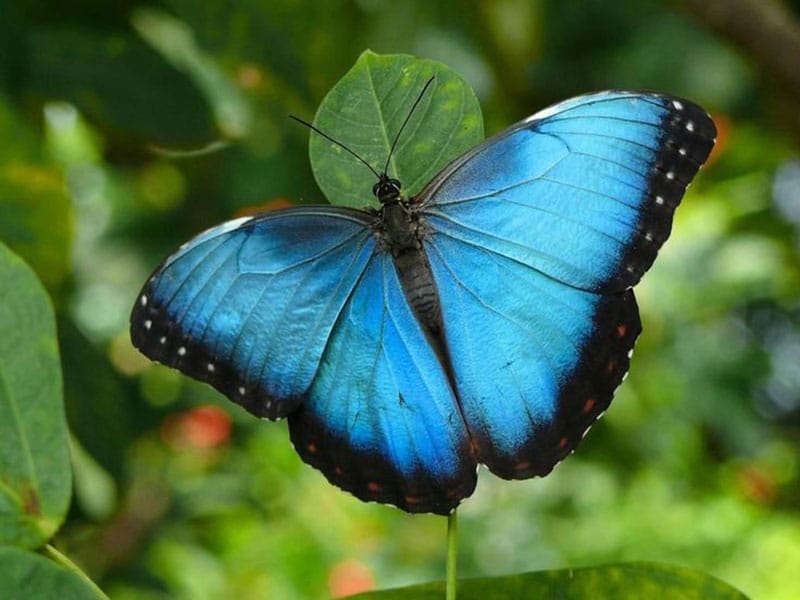
BLUE BUTTERFLY

Copyright © 2022
The underside of the morpho’s wings, on the other hand, is a dull brown color with many eyespots, providing camouflage against predators such as birds and insects when its wings are closed. When the blue morpho flies, the contrasting bright blue and dull brown colors flash, making it look like the morpho is appearing and disappearing. The males’ wings are broader than those of the females and appear to be brighter in color. Blue morphos, like other butterflies, also have two clubbed antennas, two fore wings and two hind wings, six legs, and three body segments—the head, thorax, and abdomen.
Blue morphos live in the tropical forests of Latin America from Mexico to Colombia. Adults spend most of their time on the forest floor and in the lower shrubs and trees of the understory with their wings folded. However, when looking for mates, the blue morpho will fly through all layers of the forest. Humans most commonly see morphos in clearings and along streams where their bright blue wings are most visible. Pilots flying over rainforests have even encountered large groups of blue morphos above the treetops, warming themselves in the sun. The blue morpho’s entire lifespan lasts only 115 days, which means most of their time is spent eating and reproducing.
Meaning of Blue Butterfly
Butterflies in general have many meanings within different cultures, with the most common being symbols for life, love, change or rebirth. Butterflies are also popularly thought to symbolize a person’s essence, or soul, either past, present or future. The color blue in a butterfly is often thought to symbolize joy, color or a change in luck. Sometimes a blue butterfly is viewed as a wish granter
Published: Nov 29, 2022
Latest Revision: Nov 29, 2022
Ourboox Unique Identifier: OB-1390355
Copyright © 2022

 Skip to content