






by ecem aşcı
Copyright © 2022
TOLSTOY

Copyright © 2022
TOLSTOY
|
Leo Tolstoy
|
|
|---|---|
| Native name |
Лев Николаевич Толстой
|
| Born | 9 September 1828 Yasnaya Polyana, Krapivensky Uyezd, Tula Governorate, Russian Empire |
| Died | 20 November 1910 (aged 82) Astapovo, Ranenburgsky Uyezd, Ryazan Governorate, Russian Empire |
| Resting place | Yasnaya Polyana, Tula |
| Occupation | Novelist, short story writer, playwright, essayist |
| Language | Russian |
| Period | 1847–1910 |
| Literary movement | Realism |
| Notable works | |
| Spouse | |
| Children | 13 |
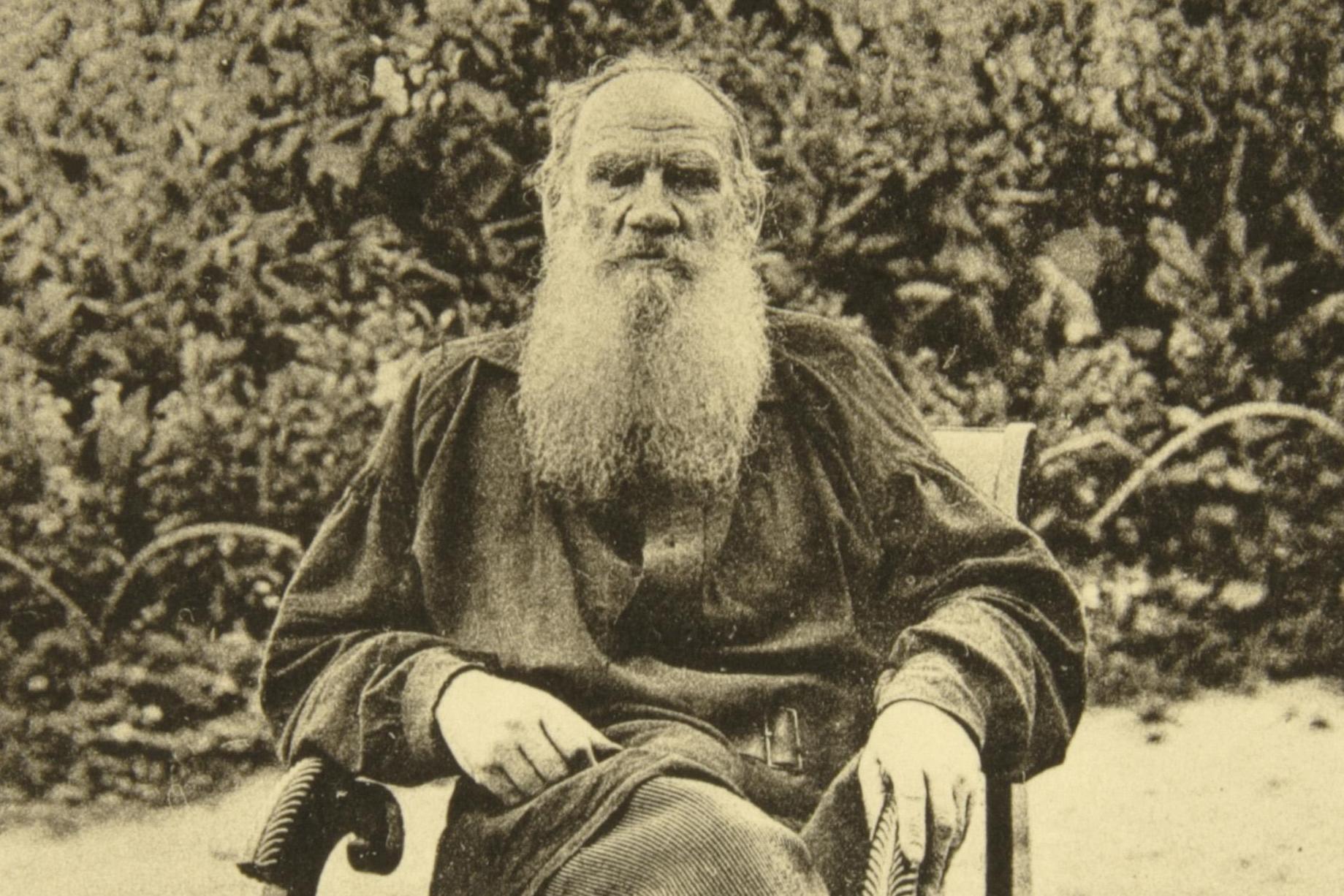
Born to an aristocratic Russian family in 1828,[3] Tolstoy’s notable works include the novels War and Peace (1869) and Anna Karenina (1878),[8] often cited as pinnacles of realist fiction.[3] He first achieved literary acclaim in his twenties with his semi-autobiographical trilogy, Childhood, Boyhood, and Youth (1852–1856), and Sevastopol Sketches (1855), based upon his experiences in the Crimean War. His fiction includes dozens of short stories and several novellas such as The Death of Ivan Ilyich (1886), Family Happiness (1859), “After the Ball” (1911), and Hadji Murad (1912). He also wrote plays and numerous philosophical essays.
In the 1870s, Tolstoy experienced a profound moral crisis, followed by what he regarded as an equally profound spiritual awakening, as outlined in his non-fiction work A Confession (1882). His literal interpretation of the ethical teachings of Jesus, centering on the Sermon on the Mount, caused him to become a fervent Christian anarchist and pacifist.[3] His ideas on nonviolent resistance, expressed in such works as The Kingdom of God Is Within You (1894), had a profound impact on such pivotal 20th-century figures as Mahatma Gandhi[9] and Martin Luther King Jr.[10] He also became a dedicated advocate of Georgism, the economic philosophy of Henry George, which he incorporated into his writing, particularly Resurrection (1899).
Life and career

Leo Tolstoy at age 20, c. 1848
Tolstoy was born at Yasnaya Polyana, a family estate 12 kilometres (7.5 mi) southwest of Tula, and 200 kilometres (120 mi) south of Moscow. He was the fourth of five children of Count Nikolai Ilyich Tolstoy (1794–1837), a veteran of the Patriotic War of 1812, and Princess Mariya Tolstaya (née Volkonskaya; 1790–1830). His mother died when he was two and his father when he was nine.[18] Tolstoy and his siblings were brought up by relatives.[3] In 1844, he began studying law and oriental languages at Kazan University, where teachers described him as “both unable and unwilling to learn”.[18] Tolstoy left the university in the middle of his studies,[18] returned to Yasnaya Polyana and then spent much time in Moscow, Tula and Saint Petersburg, leading a lax and leisurely lifestyle.[3] He began writing during this period,[18] including his first novel Childhood, a fictitious account of his own youth, which was published in 1852.[3] In 1851, after running up heavy gambling debts, he went with his older brother to the Caucasus and joined the army. Tolstoy served as a young artillery officer during the Crimean War and was in Sevastopol during the 11-month-long siege of Sevastopol in 1854–55,[19] including the Battle of the Chernaya. During the war he was recognised for his courage and promoted to lieutenant.[19] He was appalled by the number of deaths involved in warfare,[18] and left the army after the end of the Crimean War.[3]
Fired by enthusiasm, Tolstoy returned to Yasnaya Polyana and founded 13 schools for the children of Russia’s peasants, who had just been emancipated from serfdom in 1861. Tolstoy described the schools’ principles in his 1862 essay “The School at Yasnaya Polyana”.[25] His educational experiments were short-lived, partly due to harassment by the Tsarist secret police. However, as a direct forerunner to A.S. Neill‘s Summerhill School, the school at Yasnaya Polyana[26] can justifiably be claimed the first example of a coherent theory of democratic education.
Published: Nov 29, 2022
Latest Revision: Nov 29, 2022
Ourboox Unique Identifier: OB-1390375
Copyright © 2022

 Skip to content