






by Muhammed Said ALPSOY
Copyright © 2023
LAGOS STATE

Copyright © 2023
Lagos State
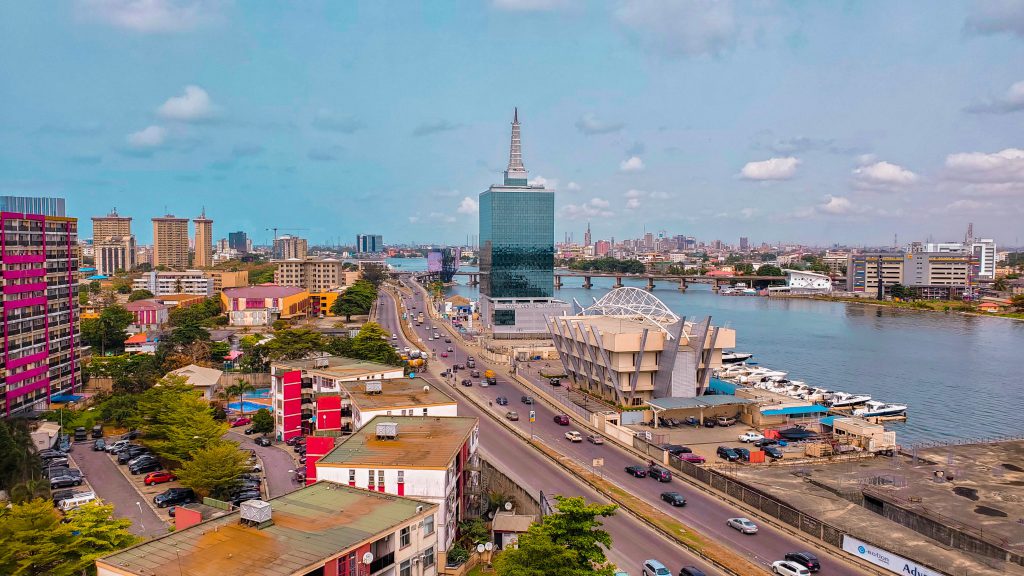
(Yoruba: Ìpínlẹ̀ Èkó) is a state in southwestern Nigeria. Of the 36 states, it is both the most populous and smallest in area. Bounded to the south by the Bight of Benin and to the west by the international border with Benin, Lagos State borders Ogun State to the northeast making it the only Nigerian state to border only one other state. Named for the city of Lagos—the most populous city in Africa—the state was formed from the Western Region and the former Federal Capital Territory on 27 May 1967.[8][9]
Geographically, Lagos State is dominated by bodies of water with nearly a quarter of the state’s area being bodies of water.[10] The largest of these bodies are the Lagos and Lekki lagoons in the state’s interior with the Ogun and Osun rivers flowing into them. Many other rivers and creeks flow throughout the state and serve as vital means of transportation for people and goods. On land, non-urbanized areas are within the tropical Nigerian lowland forests ecoregion with natural areas containing threatened populations of mona monkey, tree pangolin, and hooded vulture along with a transitory population of African bush elephants.[11][12][13][14] Offshore, the state is also biodiverse as there are large fish populations along with African manatees and crocodiles.[15][16]
Lagos State has been inhabited for years by various indigenous ethnic groups, primarily the majority Yoruba people that live throughout the state but also the Ewe and Ogu peoples in the far west. As a result of migration since the nineteenth century, Lagos State also has large populations of non-native Nigerian ethnic groups with Edo, Fulani, Hausa, Igbo, Ijaw, Ibibio, and Nupe peoples among other Nigerian groups. There are also groups from outside of Nigeria’s modern borders with the Saro (Sierra Leonean) and Amaro (Brazilian) groups being descendants of formerly enslaved people that returned to Africa in the 1800s with a longstanding Middle Eastern Nigerian community (mainly Syrian and Lebanese Nigerians)[17] also forming a significant part of Lagos’ population along with recent immigrants from Benin Republic, China, Ghana, India, Togo, and the United Kingdom.[18][19][20][21] Religiously, the state is also diverse, as there is a sizable number of Christian, Muslim and traditional ethnic religions.[22]
In the pre-colonial period, the area that is now Lagos State was mainly fishing villages[23][24][25][26] and ports that at various points were controlled by states including the Oyo Empire and Benin Empire until the early 1800s when the city of Lagos had developed into a major kingdom of its own right. In 1850, the British successfully attacked the kingdom in the Bombardment of Lagos before installing an ally as Oba and signing a treaty that established Lagos as being under British protection. Ten years later, the forced Lagos Treaty of Cession led to the formal establishment of the Lagos Colony. In 1906, the colony was incorporated into the new Southern Nigeria Protectorate which merged into British Nigeria in 1914 with the city of Lagos as its capital. Upon independence in 1960, Lagos remained as the capital with much of the city forming the Federal Capital Territory while the rest of modern-day Lagos State was a part of the Western Region until 1967 when the region was split and the area became Lagos State.[citation needed]
Economically, Lagos State is one of the most important states in the country as a major financial centre and has one of the largest economies in Africa[27] with a gross domestic product of $84 billion comparable with Ghana‘s $75 billion, Angola‘s $70 billion, and Ethiopia‘s $93 billion.[28] Lagos State is also a key culture, education, and transportation hub for Nigeria and Sub-Saharan Africa. Additionally, the state also has the highest literacy rate in Nigeria.[29] Despite overcrowding and chronic debilitating traffic, Lagos State has the highest Human Development Index in Nigeria and numerous developmental projects.[30][31]
Early history
Before the Portuguese name of Lagos had been adopted, Lagos’ initial name was Eko which referred mainly to the Island. The first to settle in Eko were the Aworis in the 15th century and the Binis in the 16th century. The Aworis were conquered by the Benin Empire.[32] The Awori hunters and fishermen had originally come from Ile-Ife to the coast.[33][34]
It was in 1760 that the name Lagos was adopted by the Portuguese. Naming it after a city in Southern Portugal which was used as port for slave trade.[35] In 1861, Oba Docemo was the one who signed the treaty making Lagos a British Colony.[36]

Post-colonial era
Lagos State was created on 27 May 1967 according to the State Creation and Transitional Provisions Decree No. 14 of 1967,[37] which restructured Nigeria into a federation of 12 states.[38][39] Before the issuance of this Decree, Lagos city, which was the country’s capital had been administered directly by the Federal Government through the Federal Ministry of Lagos Affairs.[38] However, Ikeja, Agege, Mushin, Ikorodu, Epe, surulere, and Badagry were administered by the then Western Region Government.[38] Lagos, the city, along with these other towns were captured to create the state of Lagos, with the state becoming fully recognized as a semi-autonomous[40] administrative division on 11 April 1968.[38] Lagos served the dual role of being the State and Federal Capital until 1976 when the capital of the state was moved to Ikeja.[38] After the full establishment of the Federal Capital Territory, based on the recommendation of a of the Akinola Àgùdà–led committee set up by General Murtala Muhammed to review the need for a new capital for Nigeria in 1975. The seat of the Federal Government was formally relocated to Abuja on 12 December 1991.[41] Nevertheless, Lagos remains the financial centre of the country, and even grew to become the most populous city in the state and the country.[38]
Published: May 18, 2023
Latest Revision: May 18, 2023
Ourboox Unique Identifier: OB-1455641
Copyright © 2023

 Skip to content