






by Austin O'Regan
Copyright © 2024
Water Cycle for Kids

Copyright © 2024
To educators,
This lesson is geared towards children of grade 3 and 4
As students continue to develop their understanding of the world around them and the scientific processes around them the water cycle will come up in conversation. This lesson is geared around the water cycle, and especially comprehension of the cause and effect relationship which is rooted in it.
SLO: Science findings are based on recognizing patterns. (3- PS2-2)
This book contains videos, photos, discussion questions as well as follow up assignments for completion.
Student learning objectives:
-Science findings are based on recognizing patterns. (3-PS2-2)
-Ask questions that can be investigated based on patterns such as cause and effect relationships. (3- PS2-3)
-Make observations and/or measurements to produce data to serve as the basis for evidence for an explanation of a phenomenon or test a design solution.
Introduction to the Water Cycle
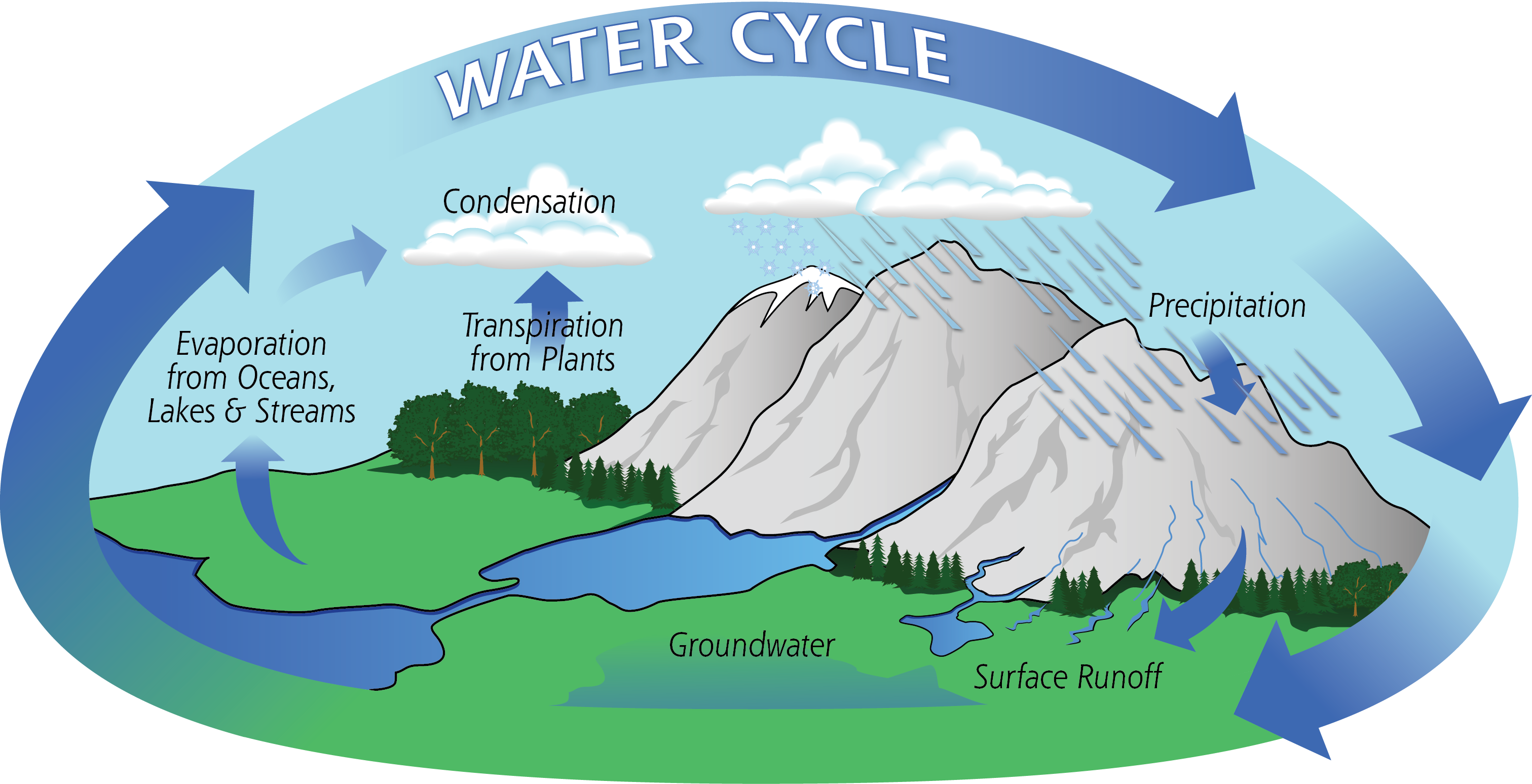 After watching the video, describe the simple steps in the water cycle process.
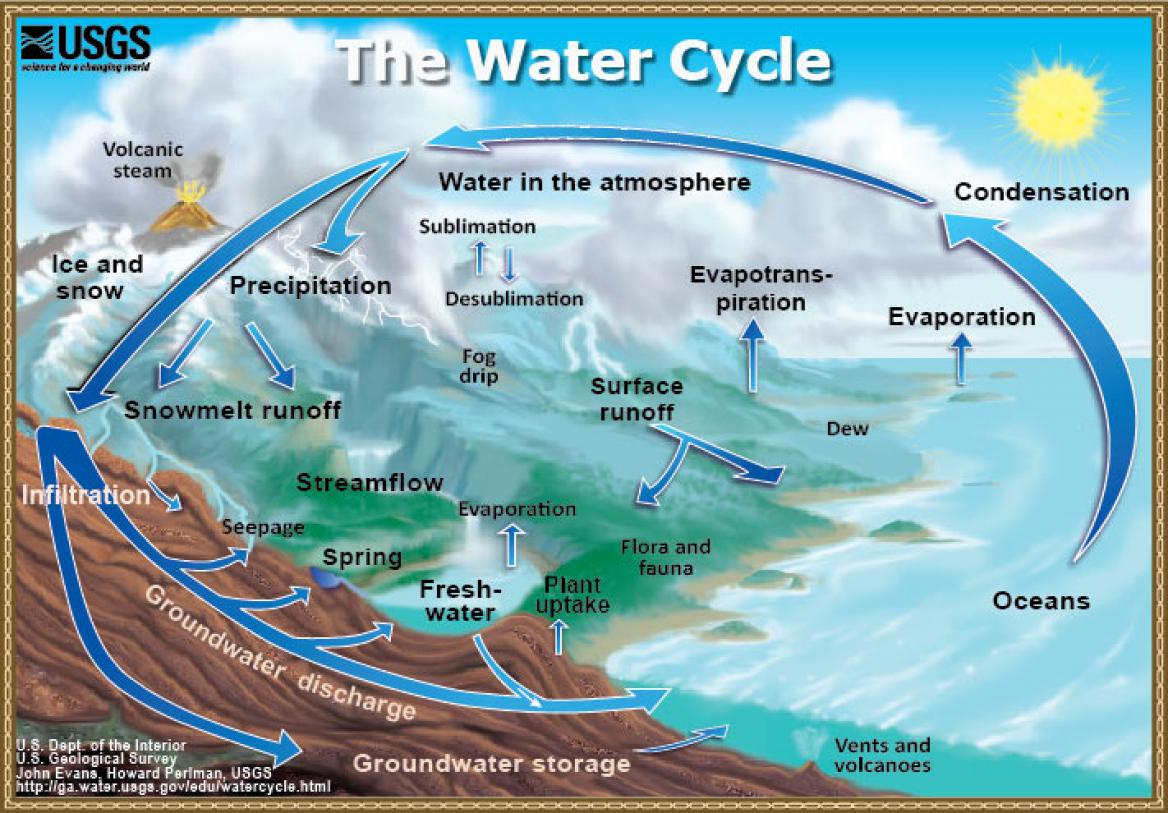 After our first discussion about the more simpler steps of the water cycle, can you identify some of the more complex parts of the cycle in this image?
Final discussion question: After the information we have learned about the water cycle, does the amount of water in our atmosphere change?
This is a follow up assignment in which can be completed after this lesson

Published: Mar 1, 2024
Latest Revision: Mar 1, 2024
Ourboox Unique Identifier: OB-1554708
Copyright © 2024

 Skip to content