







Milan, Italy

Copyright © 2024
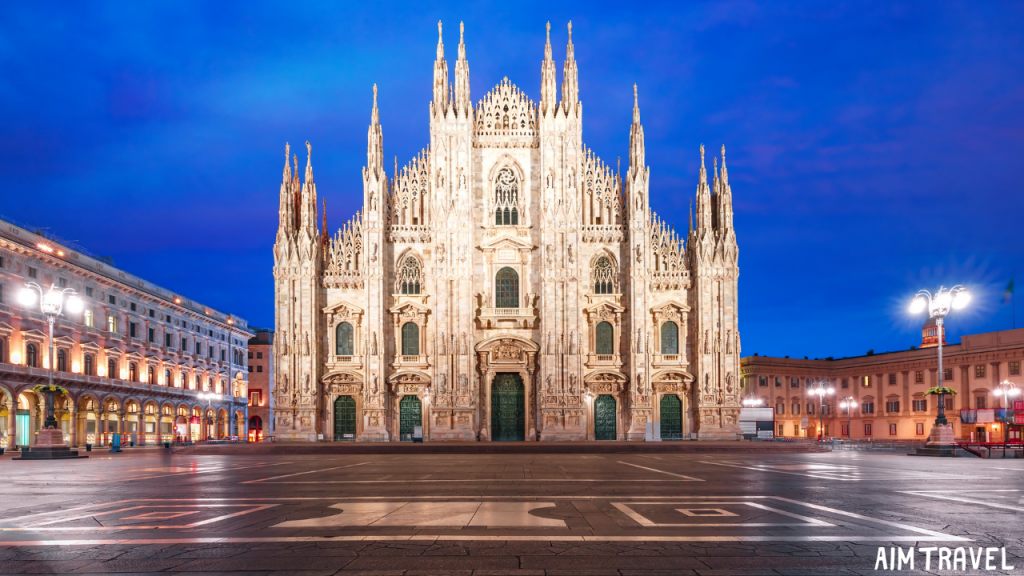
Piazza Del Duomo, Milan
Piazza del Duomo (Cathedral Square) is the main piazza (city square) of Milan, Italy. It is named after, and dominated by, Milan Cathedral (the Duomo). The piazza marks the center of the city, both in a geographic sense and because of its importance from an artistic, cultural, and social point of view. Rectangular in shape, with an overall area of 17,000 m2 (about 183,000 sq ft), the piazza includes some of the most important buildings of Milan (and Italy in general), as well some of the most prestigious commercial activities, and it is by far the foremost tourist attraction of the city.
The origins of Piazza del Duomo can be traced back to the vision of Azzone Visconti (lord of Milan from 1329 to 1339). In 1330, Azzone ordered the demolition of the taverns that circled the two central churches of Milan of the time, the Basilica di Santa Maria Maggiore and the Basilica of Santa Tecla, to create a market square, called “Piazza dell’Arengo”, which is the first incarnation of what is now Piazza del Duomo. The piazza was named after the arengario (also known as the “broletto”), i.e., the seat of the local government. None of the original buildings of Piazza dell’Arengario has survived. click to see more
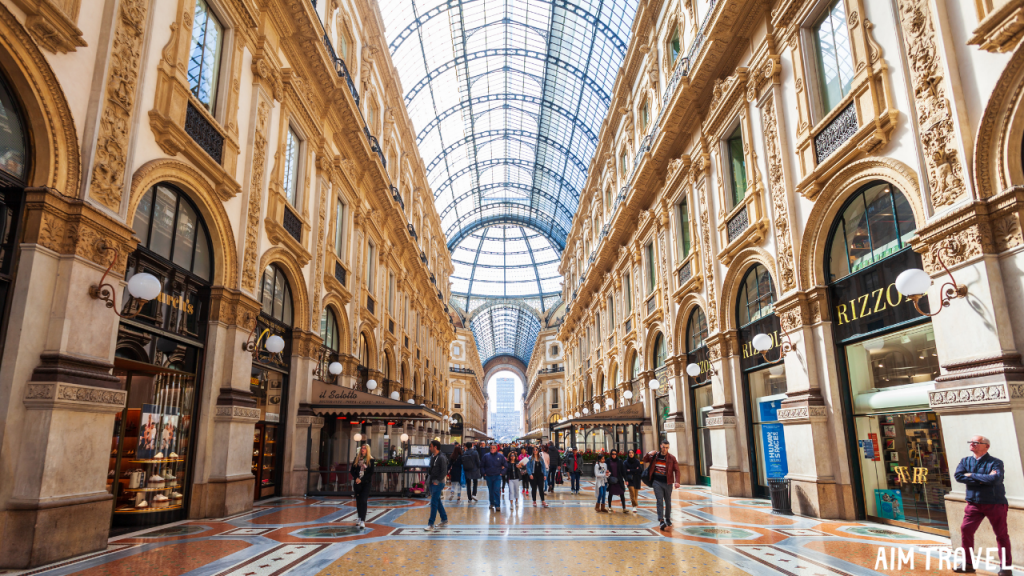
Galleria Vittorio Emanuele II
The Galleria Vittorio Emanuele II is Italy’s oldest active shopping gallery and a major landmark of Milan. Housed within a four-story double arcade in the centre of town, the Galleria is named after Victor Emmanuel II, the first king of the Kingdom of Italy. It was designed in 1861 and built by architect Giuseppe Mengoni between 1865 and 1877.
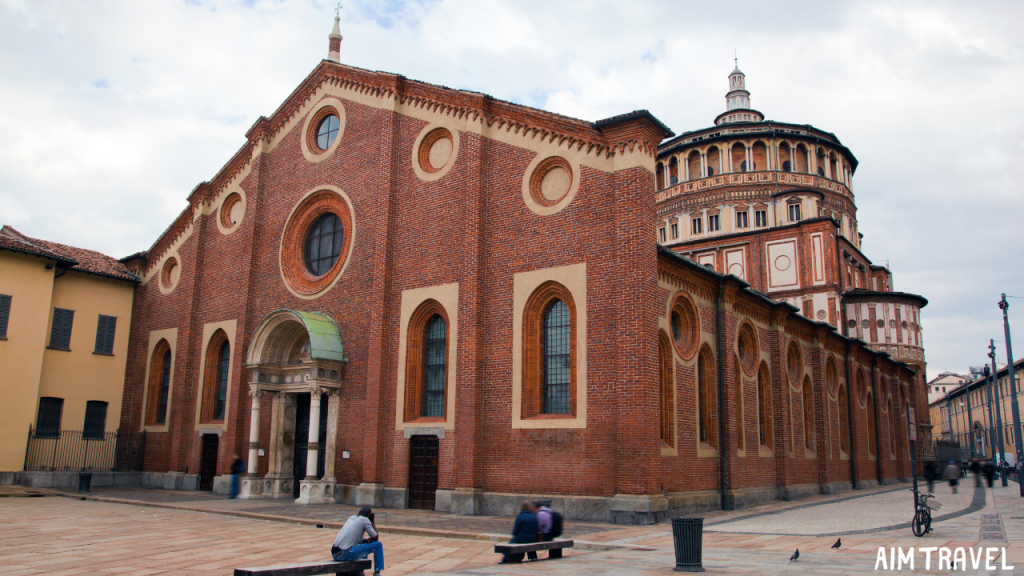
Santa Maria delle Grazie
Santa Maria delle Grazie (“Holy Mary of Grace”) is a church and Dominican convent in Milan, northern Italy, and a UNESCO World Heritage Site. The convent contains the mural of The Last Supper by Leonardo da Vinci, which is in the refectory.
Duke of Milan Francesco I Sforza ordered the construction of a Dominican convent and church at the site of a prior chapel dedicated to the Marian devotion of St Mary of the Graces. The main architect, Guiniforte Solari, designed the convent (the Gothic nave), which was completed by 1469. Construction of the church took decades. Duke Ludovico Sforza decided to have the church serve as the Sforza family burial site, and rebuilt the cloister and the apse, both completed after 1490. Ludovico’s wife Beatrice was buried in the church in 1497. click to see more
Published: Oct 28, 2024
Latest Revision: Oct 28, 2024
Ourboox Unique Identifier: OB-1622599
Copyright © 2024

 Skip to content