






Child Development

Copyright © 2024
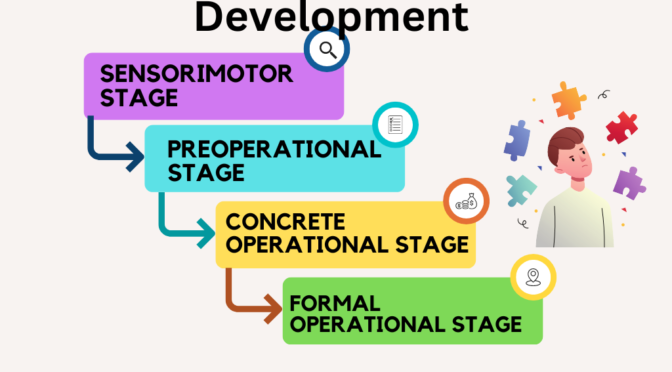
Jean Piaget’s theory of child development centers on cognitive development, which he describes as a progressive reorganization of mental processes resulting from biological maturation and environmental experience. Piaget identified four key stages:
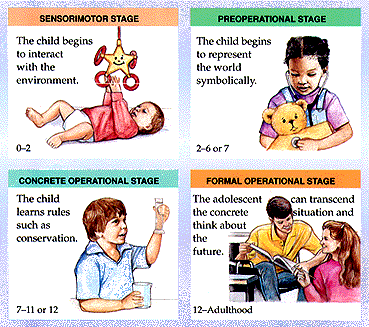
- Sensorimotor Stage (0-2 years): Infants explore the world through senses and actions, developing object permanence.
- Preoperational Stage (2-7 years): Children engage in symbolic play and learn to manipulate symbols, but struggle with logical reasoning and understanding other perspectives.
- Concrete Operational Stage (7-11 years): Children begin thinking logically about concrete events and grasp the concept of conservation (understanding that quantity doesn’t change when appearance does).
- Formal Operational Stage (12+ years): Adolescents develop abstract thinking, hypothetical reasoning, and moral reasoning.
Piaget’s theory emphasizes that children actively construct knowledge as they interact with their environment, moving through these stages as they mature.
Jean Piaget’s theory emphasizes that cognitive development involves children actively building knowledge by interacting with their environment. He introduced *assimilation* (fitting new experiences into existing ideas) and *accommodation* (adjusting ideas to incorporate new experiences). Piaget believed that learning happens through exploration and problem-solving, which fosters natural progression through key developmental stages.
Published: Oct 30, 2024
Latest Revision: Oct 30, 2024
Ourboox Unique Identifier: OB-1623547
Copyright © 2024

 Skip to content