






by Jack Bezos
Copyright © 2025
Two Faced Society

Copyright © 2025
Chapter 1: The Masks We Wear
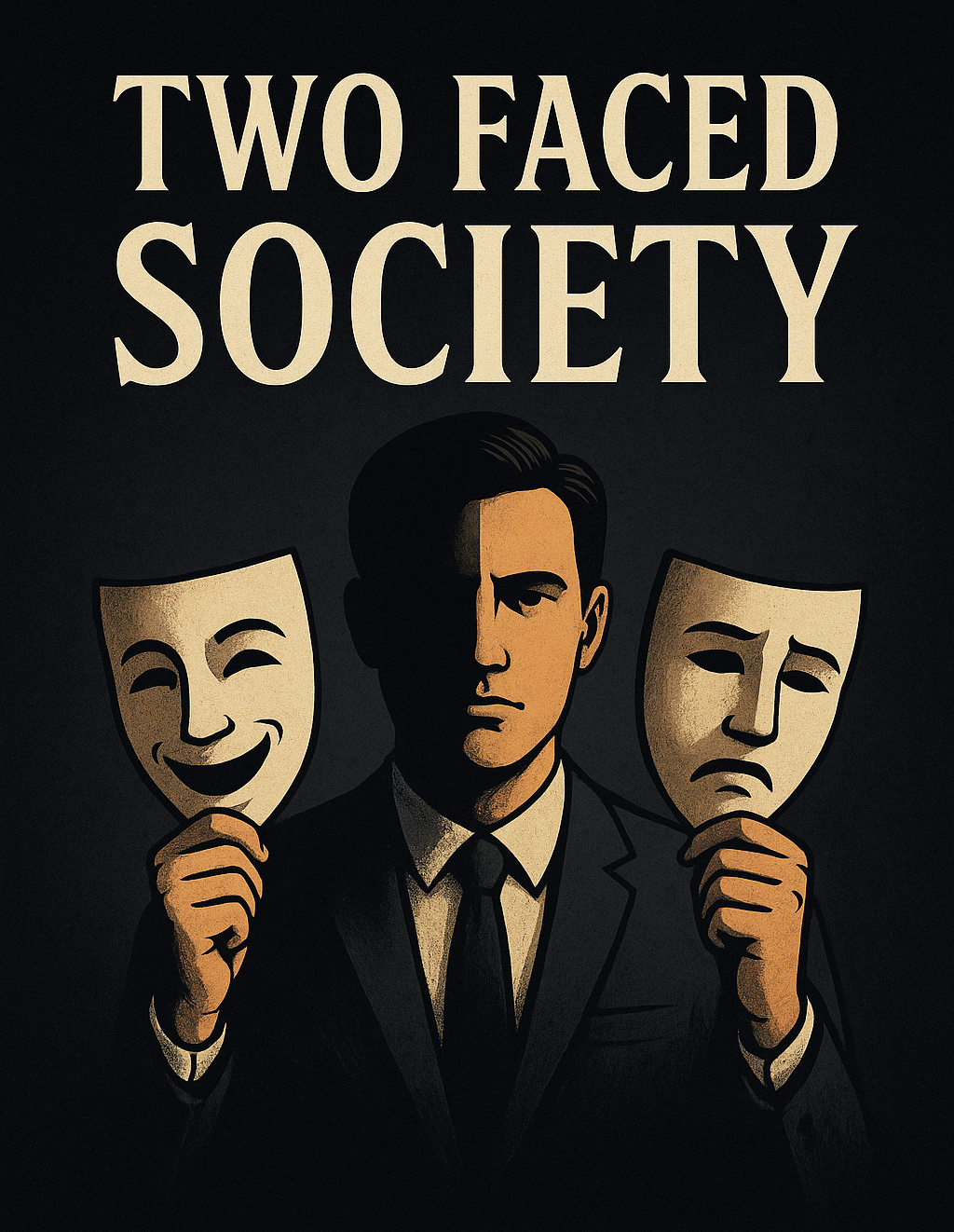
From the moment we wake up, society expects us to perform. The student puts on the mask of confidence before exams, the employee wears professionalism in meetings, the parent wears reassurance while hiding worry. Masks are everywhere, shaping the way we speak, act, and even think.
Everyday Pretenses
The phrase “I’m fine” has become the most common lie spoken across the world. People smile when their hearts ache. They say yes when they want to say no. They laugh at jokes they do not find funny. These small pretenses may seem harmless, but they accumulate until individuals no longer feel safe expressing the truth.
Public vs. Private Self
Most people live with two versions of themselves: the one they show the world, and the one they keep hidden. On social media, lives appear glamorous, successful, and full of joy. Behind the screen, many battle depression, insecurity, or emptiness. The gap between these two selves widens until reality feels like a performance stage.
The Blurred Identity
Over time, masks stick so tightly that people forget the face beneath them. The performer becomes the person. Strength hides vulnerability, humor hides pain, and composure hides anxiety. Eventually, many wonder: Am I living my truth, or just acting out society’s script?
Chapter 2: The Price of Pretending
Masks may help us fit in, but they come with a heavy cost. Pretending is exhausting. Approval earned through performance is fragile, and the loneliness of not being truly seen grows silently.
Emotional Exhaustion
Hiding emotions drains energy. People who suppress anger, sadness, or fear often experience stress, insomnia, and even health issues. Pretending to be fine day after day feels like carrying invisible weight.
Approval vs. Authenticity
Society rewards conformity, not authenticity. People who follow the script are praised, while those who show their true selves risk criticism. As a result, many trade authenticity for approval. Yet, the applause they receive never feels fulfilling, because deep down, they know it is not truly for them—it is for the mask they wear.
Loneliness in Crowds
Ironically, people are more connected than ever—thousands of friends online, constant interactions at work and school—yet loneliness has reached epidemic levels. Why? Because people are surrounded by masks, not genuine souls. One can be in a crowd and still feel invisible.
Chapter 3: Social Media — A Stage of Illusions
If the world is a stage, social media is its grand theater. Platforms designed for connection have become arenas of performance, where everyone plays a role in search of validation.
The Age of Filters
Filters do more than smooth skin or brighten smiles—they filter reality itself. Lives are edited, failures are hidden, and only highlight reels are shared. The result is a society where everyone appears happier, richer, and more successful than they truly are.
Validation Culture
Self-worth has become tied to likes, shares, and followers. A post that performs well boosts confidence; one that is ignored creates doubt. People begin to live for approval instead of authenticity, crafting content for applause rather than sharing genuine experiences.
The Disappearing Self
Over time, the curated online self begins to overshadow the real one. People chase digital perfection while neglecting personal growth, relationships, and inner peace. The cost is mental health—anxiety, insecurity, and constant comparison.
Chapter 4: Hypocrisy in Relationships
Relationships, built on trust, are often where masks hurt most. The two-faced nature of society seeps into friendships, love, and loyalty.
False Friendships
Some friends cheer in public but secretly compete in private. They smile at your success but gossip about your struggles. Such friendships reveal the duplicity of human nature—warmth on the surface, envy underneath.
Love Behind Masks
Romantic relationships are also vulnerable to pretenses. Partners pretend to be perfect matches while hiding flaws, fears, or insecurities. Some relationships last only as long as the mask is maintained. When truth surfaces, the foundation crumbles.
The Betrayal of Loyalty
Loyalty is tested when masks fall. People reveal their true faces during conflict, betrayal, or hardship. It is in those moments that one realizes who truly stands by them—and who only played a part.
Chapter 5: The Corporate Mask
The workplace is one of the most common arenas for wearing masks. Here, professionalism often means suppressing emotions, hiding individuality, and conforming to unspoken rules.
Professionalism vs. Humanity
Employees are expected to remain calm, composed, and efficient at all times. But behind the polished emails and confident meetings may be stress, insecurity, and burnout. Humanity is often sacrificed at the altar of professionalism.
Ambition & Office Politics
Corporate culture often rewards appearances over effort. Networking, flattery, and politics can overshadow hard work. Many wear masks of loyalty while secretly competing for power, promotions, or recognition.
Success vs. Self
The cost of climbing the corporate ladder is often authenticity. People silence their values, opinions, and creativity to fit the mold of “success.” In the end, many achieve material wealth but lose touch with who they are.
Chapter 6: Family Expectations and Hidden Struggles
Home is meant to be a place of truth, yet even within families, masks are common.
The Perfect Child Illusion
Children often hide their struggles to avoid disappointing parents. They pretend to be strong, obedient, and successful, while secretly battling fears, failures, or doubts. Parents, too, wear masks of confidence while hiding financial or emotional struggles.
Silent Sacrifices
Many families maintain the illusion of stability, even when fractured inside. To protect reputation, people hide abuse, addiction, or debt. In such households, silence is the mask that holds everything together.
Tradition vs. Individuality
Cultural and generational expectations often force individuals to live double lives—one that satisfies family traditions, and another that pursues personal freedom. This constant tug-of-war creates inner conflict and resentment.
Chapter 7: Double Standards in Society
The two-faced nature of society is most visible in its double standards. Rules change depending on who you are, what you have, or how you appear.
Unequal Rules
Men and women are judged differently for the same actions. Wealthy people are admired for behaviors that would be criticized in the poor. Society preaches equality but practices bias.
Justice with Two Faces
Laws are often bent for the privileged. Justice favors those with money, influence, or connections. The hypocrisy of fairness undermines trust in institutions.
Class & Status
Success is often measured by appearance rather than integrity. A wealthy person with poor character may be respected, while a poor person with values may be ignored. Society bows more easily to status than to truth.
Chapter 8: Breaking the Cycle
Though the two-faced nature of society is deeply ingrained, it is not unbreakable. Change begins with individuals who choose honesty over illusion.
Choosing Honesty
The first step is courage—speaking truth even when it risks judgment. Dropping the mask in small ways creates ripples of authenticity in relationships, workplaces, and communities.
Living Authentically
Authenticity does not mean oversharing or being reckless with words. It means aligning actions with values, admitting struggles without shame, and showing humanity without fear.
A Culture of Honesty
If more people choose truth, society itself can shift. When honesty is respected more than appearances, masks lose their power. A culture of honesty inspires freedom, connection, and trust.
Conclusion: The Courage to Be Real
The two-faced society thrives because people believe masks are necessary for survival. But survival without authenticity is not truly living. The world does not need more perfect performances; it needs real people—flawed, honest, and human.
To live authentically in a world of masks is an act of quiet rebellion. It takes courage to say “I’m not fine” when you are hurting, to admit mistakes when others hide them, to be genuine in a culture of performance. Yet, it is this courage that builds stronger connections, healthier minds, and a more honest world.
In the end, the choice lies with each of us: continue to wear the mask and be applauded for the performance, or drop it and live in truth. One path offers acceptance, the other offers freedom. Only one, however, leads to peace.
Published: Aug 31, 2025
Latest Revision: Aug 31, 2025
Ourboox Unique Identifier: OB-1685513
Copyright © 2025

 Skip to content