







CLEAN WORLD CLEAN LIFE – FOREST FIRES

Copyright © 2025
Schools that prepared the study
Aynur TATAROĞLU – Nur – Hayati Kurtcan Mesleki ve Teknik Anadolu Lisesi
Giorgiana Stoian – Liceul Tehnologic „Panait Istrati”, Braila
Vintilescu Mariana – Scoala Gimnaziala ,,Regina Maria”
1. Introduction
Forest fires, also known as wildfires, are uncontrolled fires that burn in forests, grasslands, or other natural areas.
They can start suddenly and spread rapidly, destroying ecosystems, wildlife habitats, and human property.
Raising awareness about forest fires is essential to prevent them and protect our planet’s natural resources.
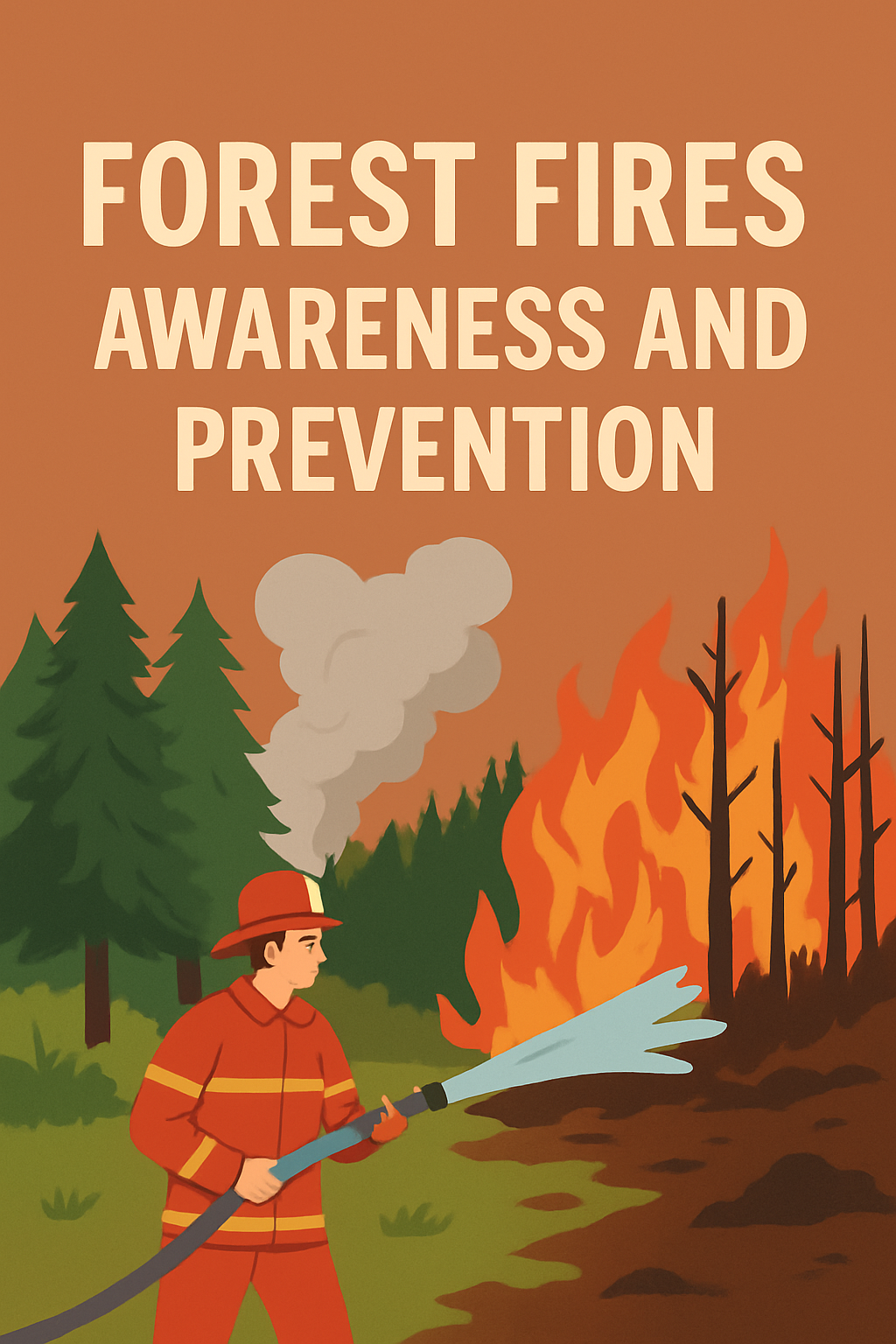
2. Causes of Forest Fires
Forest fires can be caused by natural factors or human activities.
2.1. Natural Causes
-
Lightning strikes: The most common natural cause; a single strike can ignite dry vegetation.
-
Volcanic eruptions: Lava flows or ash can ignite nearby forests.
-
Droughts and heatwaves: Extended periods of dryness increase the risk of ignition.
2.2. Human Causes
-
Campfires left unattended
-
Discarded cigarettes
-
Agricultural burning
-
Power lines and machinery sparks
-
Arson (intentional fires)
3. Effects of Forest Fires
3.1. Environmental Impact
-
Destruction of trees and vegetation
-
Soil erosion and loss of nutrients
-
Release of large amounts of CO₂, worsening climate change
3.2. Impact on Wildlife
-
Loss of habitat and food sources
-
Animal injuries or death
-
Long-term ecosystem imbalance
3.3. Human and Economic Impact
-
Destruction of homes and infrastructure
-
Air pollution and health issues
-
Economic losses in agriculture, tourism, and forestry
4. Prevention and Preparedness
4.1. Community Awareness
-
Educate the public about safe fire practices.
-
Promote fire bans during dry seasons.
-
Organize forest clean-up campaigns to reduce fuel materials.
4.2. Individual Responsibility
-
Never leave a campfire unattended.
-
Dispose of cigarettes properly.
-
Report smoke or fire immediately to local authorities.
4.3. Government and Technological Measures
-
Early warning systems and satellite monitoring.
-
Controlled burns to reduce excess dry vegetation.
-
Creation of firebreaks and forest management plans.
5. What to Do During a Forest Fire
-
Stay informed through official alerts.
-
Evacuate immediately if instructed.
-
Keep a mask or cloth to protect from smoke inhalation.
-
Avoid driving through smoke or fire zones.
6. Recovery and Reforestation
-
Replanting native trees to restore biodiversity.
-
Soil restoration through erosion control.
-
Support for local communities affected by fires.
7. Conclusion
Forest fires are a global challenge that require collective action.
By understanding their causes, impacts, and prevention strategies, we can protect our forests and ensure a sustainable future for generations to come.Call to Action:
“Be aware, stay prepared, and protect our forests — every action counts.”
Published: Oct 15, 2025
Latest Revision: Oct 15, 2025
Ourboox Unique Identifier: OB-1691982
Copyright © 2025

 Skip to content