






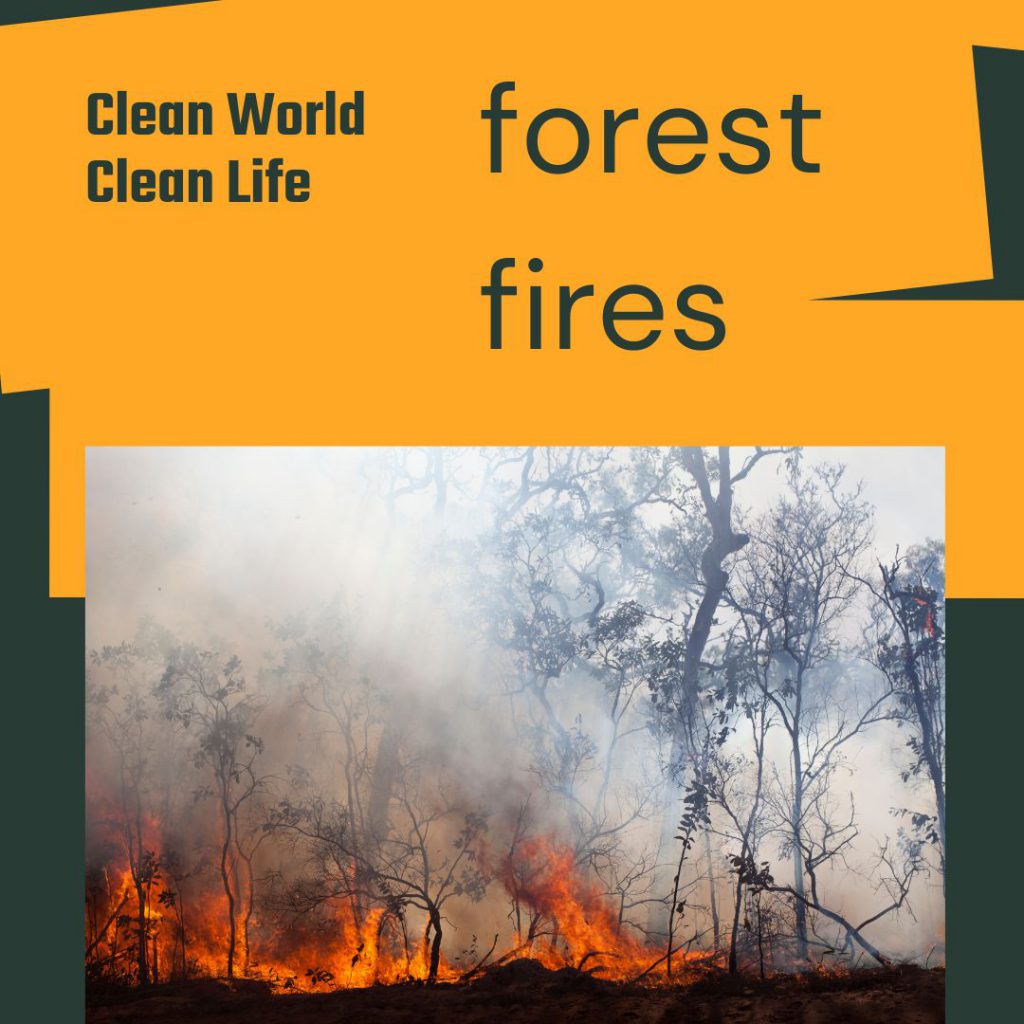
forest fires

Copyright © 2025

Measures
List of causes of forest fires caused by negligence, carelessness and natural causes
- Lighting a fire in the forest without taking safety precautions.
- Leaving a lit fire unextinguished.
- Leaving a fire, especially one lit for a barbecue, unextinguished.
- Throwing unextinguished cigarette butts and matches on the ground. Burning unwanted grass or stubble in the forest or adjacent fields.
- Wandering around the forest with a fire for illumination at night.
6. Leaving glass and broken glass in the forest, causing sunlight to reflect off the glass and burn the grass.
Children playing with fire in the forest.
7. Doing things with fire in the forest for entertainment or demonstration, such as lighting fires.
8. Planting tall trees like cypress trees on hilltops, which attract lightning and cause the fire to spread by leaps and bounds.
9. Caused by bullets fired into the air.
10. The effects of extreme heat and climate change
Intentional forest fires
- Fires set to conceal illegal activities within the forest.
- To drive away wild animals.
- To generate income.
- To burn down a forest to expand or clear land for farming, or to cause a fire to spread out of control when the forest is burned for this purpose.
Extinguishing
Wildfire suppression depends on the technologies available in the area where the wildfire occurs. Techniques used in less developed countries can be as simple as throwing sand or beating the fire with sticks or palm fronds. In more developed countries, suppression methods vary due to increased technological capabilities. Silver iodide can be used to induce snowfall, and fire retardants and water can be dropped on fires from drones, airplanes, and helicopters. Complete fire suppression is no longer the norm, but most wildfires are typically extinguished before they reach out of control. While more than 99% of the 10,000 new wildfires each year are contained, escaping wildfires in extreme weather conditions are difficult to suppress without a change in weather patterns.
Wildfires in Canada and the United States burn an average of 54,500 square kilometers (13,000,000 acres) annually. First of all, fighting wildfires can be deadly. A wildfire’s burning front can also change direction unexpectedly, and fire can spread between them. Intense heat and smoke can cause disorientation and loss of perception of the fire’s direction, making fires particularly dangerous. For example, during the 1949 Mann Gulch fire in Montana, United States, thirteen smokers were disoriented when they lost communication links, were overwhelmed by the fire, and died. In the February 2009 Victoria wildfires in Australia, at least 173 people died, and more than 2,029 homes and 3,500 structures were lost when the wildfire engulfed them.
Wildfire suppression costs
In California, the U.S. Forest Service spends approximately $200 million annually to suppress 98% of wildfires and up to $1 billion to suppress the other 2% of fires that persist and grow during initial response. While costs vary wildly from year to year depending on the severity of each fire season, in the United States, local, state, federal, and tribal agencies collectively spend tens of billions of dollars annually to suppress wildfires.
Wildland firefighting safety
Published: Oct 15, 2025
Latest Revision: Oct 15, 2025
Ourboox Unique Identifier: OB-1692028
Copyright © 2025

 Skip to content