






by nehir
Copyright © 2025
CYPRUS

Copyright © 2025
The Turkish Republic of Northern Cyprus (TRNC) is a self-declared state that occupies the northern part of the island of Cyprus in the Eastern Mediterranean. It was proclaimed in 1983, following a Turkish military intervention in 1974, which came in response to a Greek-backed coup aiming to unite the island with Greece. The TRNC is recognized only by Turkey, while the rest of the international community considers it part of the Republic of Cyprus.
Geographically, Northern Cyprus covers approximately one-third of the island, with Lefkoşa (Nicosia) serving as its capital. The city is also notable for being the last divided capital in Europe, with a UN-controlled buffer zone (the “Green Line”) separating the Turkish Cypriot north from the Greek Cypriot south.
The official language of Northern Cyprus is Turkish, and the Turkish Lira (TRY) is used as the official currency. The population is predominantly made up of Turkish Cypriots, along with settlers from mainland Turkey. The region enjoys a Mediterranean climate, characterized by hot, dry summers and mild, rainy winters.
The political system of the TRNC is a semi-presidential republic. It has a democratically elected president, a prime minister, and a multi-party parliament. Despite the lack of international recognition, the TRNC has developed its own administrative, legal, and educational institutions.
Economically, Northern Cyprus relies heavily on Turkey for financial aid, trade, and infrastructure development. Tourism, higher education, and agriculture are key sectors. The region is home to several universities, such as Near East University and Eastern Mediterranean University, which attract international students.
Culturally, Northern Cyprus maintains a unique identity that blends Turkish traditions with Cypriot heritage. The region features numerous historical sites, including ancient ruins, castles, and religious monuments from Byzantine, Lusignan, and Ottoman periods. Cities like Kyrenia (Girne) and Famagusta (Gazimağusa) are known for their rich history and scenic beauty.
In conclusion, while the political status of the Turkish Republic of Northern Cyprus remains a subject of international debate, the region continues to develop socially, culturally, and economically under its current structure. Its complex history and geopolitical significance make it a unique case in modern international relations.
Historical Architecture of Lefkoşa (Nicosia), Northern Cyprus
1. The Venetian Walls of Nicosia
One of the most prominent architectural features of Lefkoşa is its Venetian city walls, constructed in the 16th century by the Republic of Venice. The circular walls, approximately 4.5 kilometers in length, are fortified with eleven bastions and three gates. The Kyrenia Gate (Girne Kapısı) in the north and the Famagusta Gate (Mağusa Kapısı) in the east are particularly well-preserved and serve as symbols of the city’s strategic importance during the medieval period.
2. Selimiye Mosque (Former Cathedral of Saint Sophia)
The Selimiye Mosque stands as the most significant religious structure in Northern Nicosia. Originally constructed as the Cathedral of Saint Sophia during the Lusignan period in the 13th century, it was converted into a mosque following the Ottoman conquest in 1571. The architecture reflects Gothic elements, similar to French medieval cathedrals, with pointed arches, ribbed vaults, and large stained-glass windows, now replaced or covered due to its function as a mosque. The addition of minarets is a notable Ottoman contribution.
3. Büyük Han (The Great Inn)
The Büyük Han, built in 1572, is one of the finest examples of Ottoman-era architecture in Cyprus. Originally designed as a caravanserai (an inn for travelers and merchants), the structure features a central courtyard surrounded by two-story arcades with rooms. It was used both for lodging and as a commercial center. Today, it functions as a cultural and artistic hub, housing shops, cafés, and galleries.
4. Bedesten (Covered Market)
The Bedesten, located near Selimiye Mosque, was initially a Byzantine church and later transformed into a marketplace during Ottoman rule. It is an important example of adaptive reuse in architecture. The structure combines Gothic and Ottoman architectural features, and it has undergone restoration in recent years to serve as a venue for cultural events and exhibitions.
5. Mevlevi Tekke Museum
This building, which once served as a Sufi lodge (tekke) for the Mevlevi Order (also known as the Whirling Dervishes), is now a museum dedicated to the order’s spiritual and cultural heritage. The architecture of the Mevlevi Tekke reflects traditional Ottoman religious design, including a semahane (whirling ritual hall), tombs, and living quarters.

/filters:format(webp)/assets/blog/lefkosa_1424286914-28.05.2021111954.jpg)
Kyrenia (Girne): A Historical and Cultural Overview of a Coastal City in Northern Cyprus
Kyrenia (Turkish: Girne) is a historic coastal city located on the northern shore of Cyprus, within the Turkish Republic of Northern Cyprus (TRNC). Known for its picturesque harbor, rich history, and well-preserved medieval architecture, Kyrenia serves as one of the most important cultural and economic centers in the region. The city has been continuously inhabited since antiquity and has witnessed the rule of numerous civilizations including the Romans, Byzantines, Lusignans, Venetians, Ottomans, and the British.
1. Historical Background
The origins of Kyrenia date back to around the 10th century BCE, when it was founded as a small harbor town by Achaean settlers from mainland Greece. During the Roman and Byzantine periods, it developed into a strategic commercial and military port. Under Lusignan rule (1192–1489), Kyrenia gained prominence as a fortified town and remained important during the Venetian occupation that followed.
After the Ottoman conquest of Cyprus in 1571, Kyrenia’s role diminished slightly, although it remained a regional administrative center. The British administration (1878–1960) brought modernization efforts, and the city began to develop as a tourist destination. Following the political division of Cyprus in 1974, Kyrenia became part of the TRNC and is now a major cultural and economic hub in Northern Cyprus.
2. Kyrenia Castle
One of the city’s most iconic landmarks is Kyrenia Castle, a massive fortress located at the eastern end of the old harbor. The original structure dates back to the Byzantine era (7th century), but the current form was significantly expanded by the Lusignans and Venetians. The castle includes a 12th-century chapel, royal apartments, underground tunnels, and a cistern. Today, it houses the Shipwreck Museum, where visitors can see the remains of a 4th-century BCE Greek merchant ship, one of the oldest preserved shipwrecks in the world.


3. The Old Harbor
Kyrenia’s Old Harbor is renowned for its charm and historical value. Surrounded by Ottoman-era warehouses and Venetian buildings, it now serves as a marina filled with fishing boats, yachts, cafés, and restaurants. The harbor reflects the city’s maritime heritage and continues to be a central gathering place for both locals and tourists.
4. Religious and Cultural Heritage
Kyrenia is home to several historic religious sites, including Archangel Michael Church, which now functions as an icon museum, and various Ottoman mosques that reflect the city’s Islamic architectural legacy. The Bellarais Monastery, located in the nearby Kyrenia Mountains, is one of the most beautiful examples of Gothic monastic architecture on the island.
5. Modern Kyrenia
Today, Kyrenia plays a vital role in the economy and tourism industry of Northern Cyprus. The city hosts universities, cultural festivals, hotels, and art galleries, contributing to its cosmopolitan character. Despite ongoing political challenges, Kyrenia continues to develop while maintaining a strong commitment to preserving its historical and architectural heritage.
Famagusta (Gazimağusa): A Brief Historical and Architectural Overview
Famagusta (Turkish: Gazimağusa) is a historic port city on the eastern coast of Northern Cyprus. Known for its well-preserved medieval walls, Gothic cathedrals, and Ottoman mosques, the city has played a key role in Cypriot history.
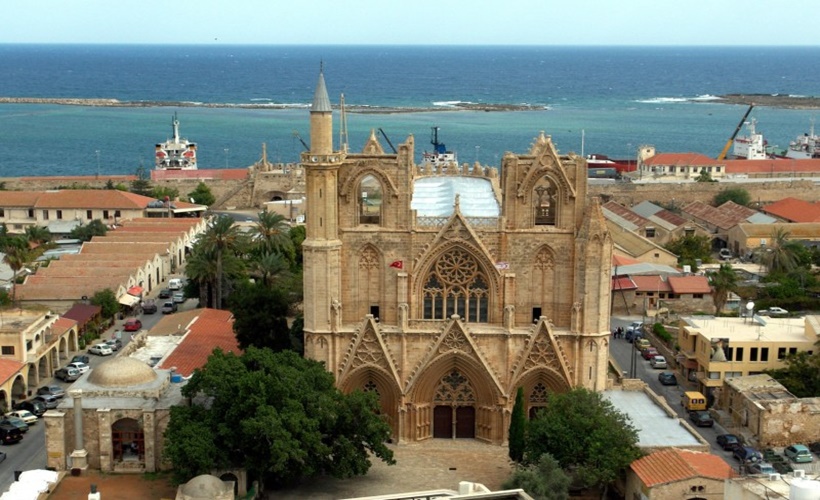
It flourished under Lusignan rule (1192–1489), becoming a major commercial hub in the Mediterranean. The Venetians later fortified the city with massive stone walls, which still stand today. Famagusta fell to the Ottomans in 1571, who converted many churches into mosques, including the famous Cathedral of Saint Nicholas, now known as the Lala Mustafa Pasha Mosque.
Important landmarks include the Walled City, Othello Castle, and the Varosha (Maraş) district, which was abandoned in 1974 and remains partially closed due to political tensions. Despite its divided status, Famagusta is home to Eastern Mediterranean University and remains a significant center for history, education, and culture in Northern Cyprus.
And to learn about more information about the cyprus, you can watch this video.
Published: Oct 28, 2025
Latest Revision: Oct 28, 2025
Ourboox Unique Identifier: OB-1693575
Copyright © 2025

 Skip to content