






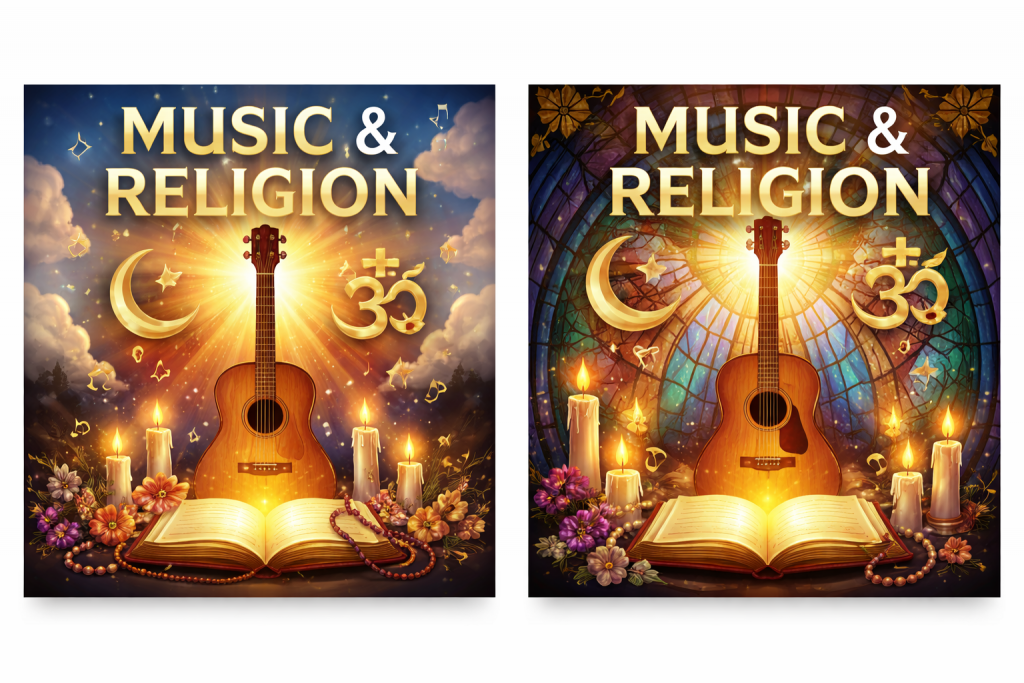
Religion, Music, Song

Copyright © 2025
Religion is the basis for ‘heavenly’ music.
Religion tries to control music.
Religious music ‘bleeds’ into popular music.
Popular music ‘discusses’ religion
We’ve looked at Bach,
At requiems,
The Torah,
Gregorian chants
Paul Simon’s ‘borrowed’ song
Leonard Cohen
Let’s look some more.
Chatgpt had this to say:
Religion has shaped music more than almost any other human institution, for two big reasons:
-
it creates regular, repeatable occasions (weekly services, fasts, festivals, life-cycle rituals) where music is needed
-
it cares intensely about how emotion, community, and the body are managed—so it both encourages music and polices it
Here are the main ways that influence shows up.
1) Religion as a “music factory”
Most religions generate an ongoing demand for music:
-
timekeeping: marking hours, seasons, sacred calendars (bells, calls, chants, hymns)
-
memory: helping people learn and retain long texts (psalms, sutras, Qur’anic recitation rules, liturgical poetry)
-
group cohesion: synchronizing breath, voice, and feeling—one of the fastest routes to “we-ness”
-
authority and identity: “this is how we sing” becomes a badge of tradition
That’s why you see huge repertoires tied to worship: Jewish piyyut and nusach, Christian hymnody and chant, Islamic recitation traditions, Hindu bhajans and kirtan, Sikh kirtan, Buddhist chant, etc.
2) Sacred text shapes musical form
When the words are sacred, the music adapts to serve them:
-
chant-like styles keep text intelligible and stable
-
formulaic melodic patterns let cantors/imams/chanters deliver long passages reliably
-
call-and-response helps participation and reinforces key lines
-
limited melodic ranges can make communal singing easier and reduce “performance” vibes
Even when the style changes over centuries, the “text-first” priority often remains.
3) Rules, debates, and the policing of pleasure
A lot of religious influence is about boundaries:
-
which contexts are appropriate (worship vs weddings vs taverns)
-
which instruments are permitted (or discouraged)
-
who may perform (gender roles, clergy vs laity)
-
what musical features are suspicious (dance rhythms, sensuality, theatricality)
This isn’t only “anti-music.” Often it’s “music is powerful—therefore it must be controlled.”
You can see a recurring pattern:
-
voice is safer than instruments
-
congregational participation is safer than virtuoso display
-
music that resembles secular entertainment is treated with more suspicion
Joseph Handel wrote this, you might recognize it: 1:59:50
Keeping the Faith – gospel to synagogue
From the Jews to the Cossacks
Gospel rom the church to the bedroom – Ray Charles
more from Ray….
from 2:25 scroll down
Joan Osborne
Leonard Cohen Hallelujah + lyrics
Ottawa bar mitzvah celebration from 1957. Our chazan Gurtler sings at 5:05 and 6:05
Who asked for Paul Robeson?
Published: Dec 26, 2025
Latest Revision: Dec 26, 2025
Ourboox Unique Identifier: OB-1706805
Copyright © 2025