






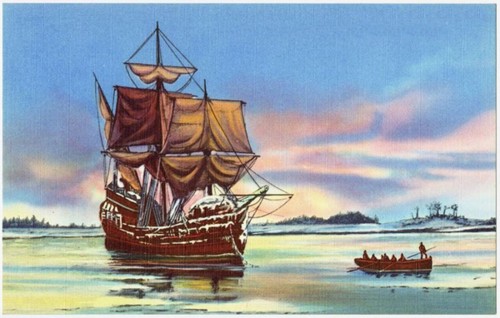
How Did we Discovered the World

Copyright © 2017
By prevailing over all obstacles and distractions, one may unfailingly arrive at his chosen goal or destination (Christopher Columbus)
What drove the men of Europe to go across unknown oceans and vast landlocked deserts to discover in uncertainty to ever return?
Exploration of Africa
European exploration of Sub-Saharan Africa begins with the Age of Discovery in the 15th century, pioneered by Portugal under Henry the Navigator. The Cape of Good Hope was first reached by Bartolomeu Dias on 12 March 1488, opening the important sea route to India and the Far East, but European exploration of Africa itself remained very limited during the 16th and 17th centuries. The European powers were content to establish trading posts along the coast while they were actively exploring and colonizing the New World. Exploration of the interior of Africa was thus mostly left to the Arab slave traders, who in tandem with the Muslim conquest of the Sudan established far-reaching networks and supported the economy of a number of Sahelian kingdoms during the 15th to 18th centuries.
Marco Polo and the official discovery of China
Born 1254 – January 8–9, 1324) was a Venetian merchant traveler. His travels are recorded in Livres des merveilles du monde (Book of the Marvels of the World, also known as The Travels of Marco Polo, c. 1300), a book that described to Europeans the wealth and great size of China, its capital Peking, and other Asian cities and countries. He learned the mercantile trade from his father and uncle, Niccolò and Maffeo, who traveled through Asia and met Kublai Khan. In 1269, they returned to Venice to meet Marco for the first time. The three of them embarked on an epic journey to Asia, returning after 24 years to find Venice at war with Genoa; Marco was imprisoned and dictated his stories to a cellmate. He was released in 1299, became a wealthy merchant, married, and had three children. He died in 1324 and was buried in the church of San Lorenzo in Venice. Marco Polo was not the first European to reach China but he was the first to leave a detailed chronicle of his experience. This book inspired Christopher Columbus and many other travelers. There is a substantial literature based on Polo’s writings; he also influenced European cartography, leading to the introduction of the Fra Mauro map.
The exploration of America
The exploration of North America by non-indigenous people was a continuing effort to map and explore the continent of North America. It spanned centuries, and consisted of efforts by numerous people and expeditions from various foreign countries to map the continent. The European colonization of the Americas followed.
On August 3, 1492, Christopher Columbus set sail from the newly los Reyes Católicos coordinated Kingdoms of Castile and Aragon, in present-day Spain, financed by Queen Isabella I of Castille. Columbus’s Letter on the First Voyage of his discovery of the Bahamas, Cuba, and Hispaniola spread the news across Europe quickly. Columbus rediscovered and explored much of the Lesser Antilles in his second voyage then discovered both Trinidad and Tobago on his third voyage whilst skirting the northern South American coast. His fourth voyage was spent scanning the Central American coast, searching for a strait to the Pacific Ocean. The Voyages of Christopher Columbus opened the New World.
Thank ya’ Wikipedia !!!!
Published: May 9, 2017
Latest Revision: May 9, 2017
Ourboox Unique Identifier: OB-306492
Copyright © 2017

 Skip to content