






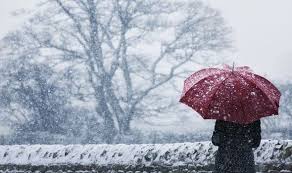
Winter

Copyright © 2017
Winter is the coldest season of the year in polar and temperate climates, between autumn and spring. Winter is caused by the axis of the Earth in that hemisphere being oriented away from the Sun. Different cultures define different dates as the start of winter, and some use a definition based on weather. When it is winter in the Northern Hemisphere, it is summer in the Southern Hemisphere, and vice versa. In many regions, winter is associated with snow and freezing temperatures. The moment of winter solstice is when the sun’s elevation with respect to the North or South Pole is at its most negative value (that is, the sun is at its farthest below the horizon as measured from the pole), meaning this day will have the shortest day and the longest night. The earliest sunset and latest sunrise dates outside the polar regions differ from the date of the winter solstice, however, and these depend on latitude, due to the variation in the solar day throughout the year caused by the Earth’s elliptical orbit (see earliest and latest sunrise and sunset).
2
During winter in either hemisphere, the lower altitude of the Sun causes the sunlight to hit that hemisphere at an oblique angle. In regions experiencing winter, the same amount of solar radiation is spread out over a larger area. This effect is compounded by the larger distance that the light must travel through the atmosphere, allowing the atmosphere to dissipate more heat. Compared with these effects, the changes in the distance of the earth from the sun are negligible
3

Published: Oct 10, 2017
Latest Revision: Oct 10, 2017
Ourboox Unique Identifier: OB-372882
Copyright © 2017

 Skip to content