






Yom Kippur War

Copyright © 2017
Golda Meir
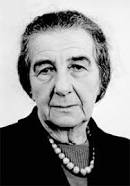
Golda Meir was a Zionist leader and a labour leader, diplomat and fourth Prime Minister of Israel. She was born in 1889 in Kiev, Ukraine. When she was eight years old, her family moved to the U.S.A. Golda Mabowitz joined a Zionist youth movement. She married Morris Meyerson. In 1924 Golda Meir and her husband moved to Jerusalem. In the next three decades Golda Meir worked in the Histadrut.
Golda Meir was elected Prime Minister of Israel on March 17, 1969 after serving as Minister of Labour and Foreign Minister. Golda Meir was described as the “iron Lady” of Israeli politics. Former Prime Minister David Ben-Gurion used to call Meir “the best man” in the government. Meir stopped being Prime Minister after the Yom Kippur.
There is no doubt, Golda Meir has been one of the best Prime Ministers of Israel.
YOM KIPPUR WAR
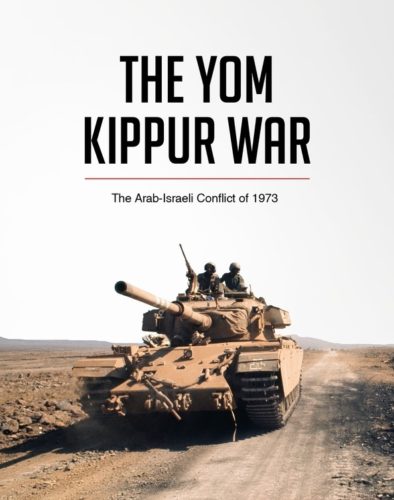
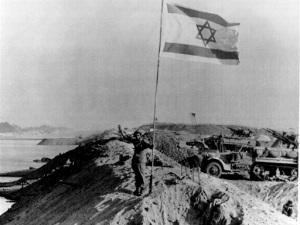
On October 6, 1973, hoping to win back territory lost to Israel during the third Arab-Israeli war, in 1967, Egyptian and Syrian forces launched a coordinated attack against Israel on Yom Kippur, the holiest day in the Jewish calendar. Taking the Israeli Defense Forces by surprise, Egyptian troops swept deep into the Sinai Peninsula, while Syria struggled to throw occupying Israeli troops out of the Golan Heights. Israel counterattacked and recaptured the Golan Heights. A cease-fire went into effect on October 25, 1973.
1973 YOM KIPPUR WAR: BACKGROUND
Israel’s stunning victory in the Six-Day War of 1967 left the Jewish nation in control of territory four times its previous size. Egypt lost the 23,500-square-mile Sinai Peninsula and the Gaza Strip, Jordan lost the West Bank and East Jerusalem, and Syria lost the strategic Golan Heights. When Anwar el-Sadat (1918-81) became president of Egypt in 1970, he found himself leader of an economically troubled nation that could ill afford to continue its endless crusade against Israel. He wanted to make peace and thereby achieve stability and recovery of the Sinai, but after Israel’s 1967 victory it was unlikely that Israel’s peace terms would be favorable to Egypt. So Sadat conceived of a daring plan to attack Israel again, which, even if unsuccessful, might convince the Israelis that peace with Egypt was necessary.
Did You Know?
On October 6, 1981, Anwar Sadat was assassinated by Muslim extremists in Cairo while viewing a military parade commemorating the anniversary of Egypt’s crossing of the Suez Canal at the start of the Yom Kippur War.
In 1972, Sadat expelled 20,000 Soviet advisers from Egypt and opened new diplomatic channels with Washington, D.C., which, as Israel’s key ally, would be an essential mediator in any future peace talks. He formed a new alliance with Syria, and a concerted attack on Israel was planned.
YOM KIPPUR WAR: OCTOBER 1973
When the fourth Arab-Israeli war began on October 6, 1973, many of Israel’s soldiers were away from their posts observing Yom Kippur (or Day of Atonement), and the Arab armies made impressive advances with their up-to-date Soviet weaponry. Iraqi forces soon joined the war, and Syria received support from Jordan. After several days, Israel was fully mobilized, and the Israel Defense Forces began beating back the Arab gains at a heavy cost to soldiers and equipment. A U.S. airlift of arms aided Israel’s cause, but President Richard Nixon (1913-94) delayed the emergency military aid for a week as a tacit signal of U.S. sympathy for Egypt. On October 25, an Egyptian-Israeli cease-fire was secured by the United Nations.
YOM KIPPUR WAR: AFTERMATH
Israel’s victory came at the cost of heavy casualties, and Israelis criticized the government’s lack of preparedness. In April 1974, the nation’s prime minister, Golda Meir (1898-1978), stepped down.
Although Egypt had again suffered military defeat at the hands of its Jewish neighbor, the initial Egyptian successes greatly enhanced Sadat’s prestige in the Middle East and gave him an opportunity to seek peace. In 1974, the first of two Egyptian-Israeli disengagement agreements providing for the return of portions of the Sinai to Egypt were signed, and in 1979 Sadat and Israeli Prime Minister Menachem Begin (1913-92) signed the first peace agreement between Israel and one of its Arab neighbors. In 1982, Israel fulfilled the 1979 peace treaty by returning the last segment of the Sinai Peninsula to Egypt.
For Syria, the Yom Kippur War was a disaster. The unexpected Egyptian-Israeli cease-fire exposed Syria to military defeat, and Israel seized even more territory in the Golan Heights. In 1979, Syria voted with other Arab states to expel Egypt from the Arab League.
Moshe Dayan
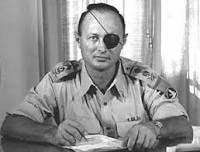
Moshe Dayan-Defense Minister of Israel 1967-1974
Moshe Dayan was born on 20 May 1915 in Kibbutz Degania Alef, near the Sea of Galilee in Palestine, in what was then Ottoman Syria within the Ottoman Empire. Dayan’s parents, Shmuel and Devorah Dayan, were Ukrainian Jewish immigrants from Zhashkiv. Kibbutz Degania Alef, with 11 members, was the first kibbutz, and would become part of the State of Israel.
At the age of 14, Dayan joined the Jewish defense force Haganah. In 1938, he joined the British-organised irregular Supernumerary Police and led a small motorized patrol (“MAN”). One of his military heroes was the British pro-Zionist intelligence officer Orde Wingate, under whom he served in several Special Night Squads operations.
On 7 June 1941, the night before the invasion of the Syria–Lebanon Campaign, Dayan’s unit crossed the border and secured two bridges over the Litani River. When they were not relieved as expected, at 04:00 on 8 June, the unit perceived that it was exposed to possible attack and—on its own initiative—assaulted a nearby Vichy police station, capturing it. A few hours later, as Dayan was on the roof of the building using binoculars to scan Vichy French positions on the other side of the river, the binoculars were struck by a French rifle bullet fired by a sniper from several hundred yards away, propelling metal and glass fragments into his left eye and causing severe damage. Six hours passed before he could be evacuated, and he would have died if not for Bernard Dov Protter, who took care of him until they were evacuated. Dayan lost the eye. In addition, the damage to the extraocular muscles was such that Dayan could not be fitted with a glass eye, and he was compelled to adopt the black eye patch that became his trademark.
In the years immediately following, the disability caused him some psychological pain. Dayan wrote in his autobiography: “I reflected with considerable misgivings on my future as a cripple without a skill, trade, or profession to provide for my family”.
In 1947, Dayan was appointed to the Haganah General Staff working on Arab affairs, in particular recruiting agents to gain information about irregular Arab forces in Palestine.
In June, he became the first commander of the 89th Battalion, part of Sadeh’s Armoured Brigade.
On 23 July 1948, on David Ben-Gurion’s insistence over General Staff opposition, Dayan was appointed military commander of Jewish-controlled areas of Jerusalem. In this post, he launched two military offensives. Both were night-time operations and both failed.
He was involved in negotiations with Abdullah el Tell, the JordanIn the autumn of 1948, Ian military commander of East Jerusalem, over a lasting cease-fire for the Jerusalem area.
On 29 June 1949, he was appointed head of all Israeli delegations to the Mixed Armistice Commission meetings, and more…
In 1959, a year after he retired from the IDF, Dayan joined Mapai, the Israeli leftist party, then led by David Ben-Gurion. Until 1964, he was the Minister of Agriculture.
In 1977, he accepted the offer to become Foreign Minister in the new Likud government led by Menachem Begin.
As foreign minister in Begin’s government, he was instrumental in drawing up the Camp David Accords, a peace agreement with Egypt.
Published: Dec 16, 2017
Latest Revision: Dec 16, 2017
Ourboox Unique Identifier: OB-395179
Copyright © 2017

 Skip to content