







HISTORICAL CITY OF TURKEY KONYA

Copyright © 2018
KONYA in 2018
Konya is major city in Central Anatolia,in Turkey. Konya’s population is 2,1 million. Konya is the largest city in Turkey in terms of area size which is around 38,873 km² squares. Konya has a total of 31 districts with 3 centers. Konya has an important figure, delicous cuısıne,which has a lot of visitours and tourists around Turkey.
THE NAME OF KONYA
Konya was divided into seven geographical regions by Romans during ancient period; Konya which was called “Iconium”in the past, was on Lykaonia region. Konya and the surrounding ,which was called Lykaonia by Romans was called Lukawania which means the land of Luwians by Hittites because of its being a settlement of Luwians. In AD 41 during the first years of Roman period, Konya region was called “Iconium” but during Emperor Cleaudius , the same region was started to call “Claud – ıconium”.During Byzantine period,the city was known as “Tokonion”. In later sources, the same place was called with small spelling differences,”Ykonium”.”Conium,Conia,Koniyeh,Konia.” Arabs called the city “Kuniye”,and the city has been called “KONYA”since Seljuk’s period.
HISTORY OF KONYA
Konya is one of the oldest settlements of Anatolia. Konya’s history goes back to prehistoric ages. It is understood with the researches that settlement was established in Konya in the years of 6000-5000 BC.
Throughout the history, it was under control of the Hittites, Phrygians, Roman and Byzantines Empires, Seljuk and Anatolian Seljuk States. At the end Ottoman Empire ruled Konya.
Konya was conquered by Suleyman Shah, the ruler of the Seljuk Empire. After the foundation of Anatolian Seljuk State, Konya came under the hegemony of this state.
At the year 1074, Anatolian Seljuk Empire is established and Iznik which is capital city of Anatolian Seljuk, at the end of first Crusade the capital city of this empire is moved to Konya.
After being capital, Konya is developed day by day and decorated by very much architectural work, in short time is becomed one of the most developed city.
The city being the capital of Anatolian Seljuk State for long years, entered the rule of Karamanids in 1277 and then entered the Ottoman rule with Fatih Sultan Mehmet’s putting an end to Karamanid Dynasty. Fatih Sultan Mehmet constituted Karaman State as 4th State at 1470, Konya is executed the center of this state. At 17th century Karaman state’s border is enlarged, by the change of name takes new name which is Konya State at Tanzimat Reform Era. During the Ottoman Empire, the tomb of Hz. Mevlana restored in the period of Yavuz Sultan Selim. Also during the time of Selim II, various investments were made in Konya. During the time of Abdulhamit II, railway connection was established.
Especially, in 1901, with the assignment of Ferit Pasha as the governor, the development of the city was accelerated. After the 1st World War, some parts of the city were invaded by Italy for a very short period of time. Apart from it was not exposed to any other occupation of a foreign country.
Having a developed trade sector since the old periods due to its geographical location, Konya was the scene of intense commercial activity during Seljuk and Ottoman periods as well, by being on the route of caravans which was known as silk road.Today, with its surface area of 38.873 km² and its population of over 2,1 million, Konya is one of the important cities of Turkish Republic.
ARCHITECTURAL-HISTORICAL-TOURISTIC BUILDINGS
The top was covered with semicircural dome. New architectural plans for houses,inns,Turkish bath,library and brigdes were applied. There are historical buildings taht give us an idea of Seljuks,Karamanogullari and Ottoman and Republican periods in Konya.
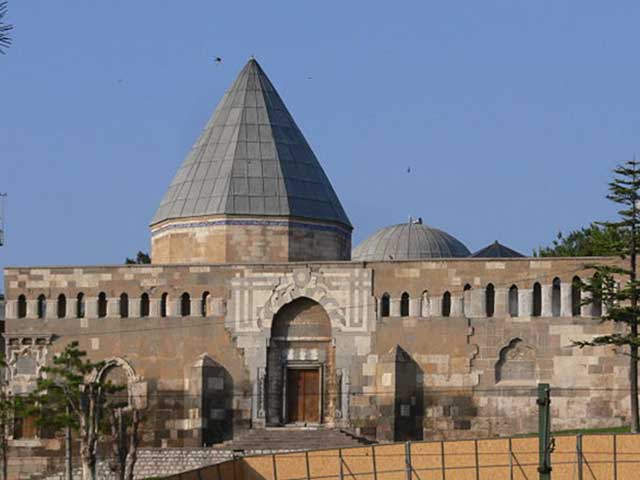
ALAEDDIN MOSQUE
It is on the top of Alaeddin Hill. It was started to building during the time of Rukneddin Mesud I ,one of the sultans of Seljuks. It was extended with new additions during Kilicarslan I and Izzeddin Keykavus I. The mosque was compled during Sultan Alaeddin Keykubat I reign in 1221 and got its last look. For the reason, the mosque was called “Alaeedin Mosque”And this magnificent mosque had four main parts. the first part is on the east and it is the part having forty columns,rectangular shape and flat roof. The secaond part is the part which is covered with a high dome at a square planned altar and pulpit.
The third part is on the western part and this one was added later. The fourth part is an open courtyard on the north.
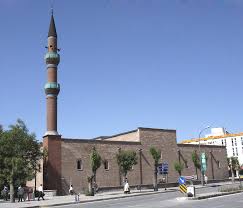
IPLIKCI MOSQUE
It is on Alaeedin Street. It attracts attention with its brick walls which look like cubic. It was built by Altinapa in 1201. There is also a madrasah on the south. The structure got its name”Iplikci Mosque” because of because of being managed by Nucubiddin Ayas.
MEVLANA MUSEUM
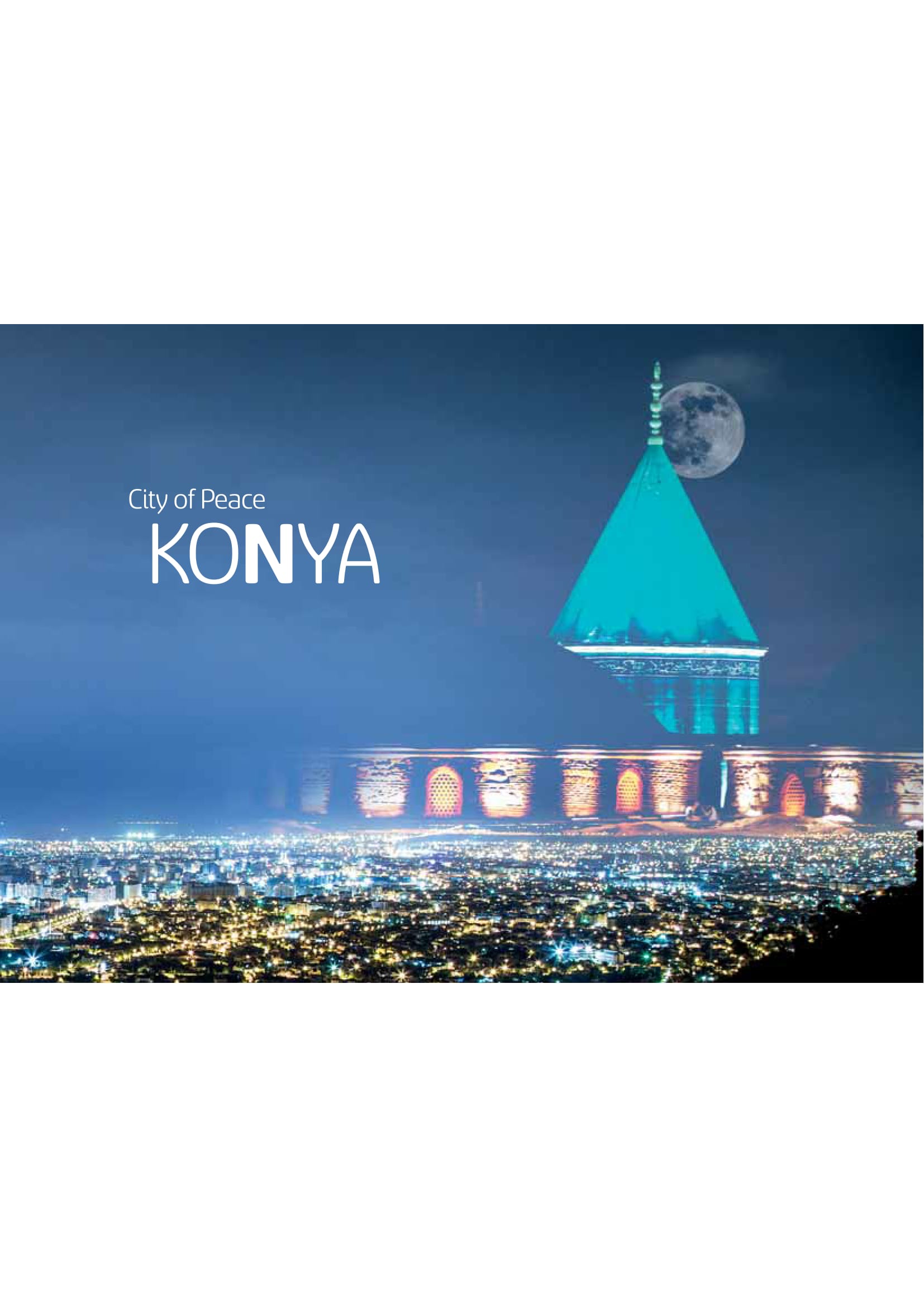
Mevlana Museum, incredible, social complex is located on Konya. It is famous for Mevlana Mausoleum belonging to well known great dervish, poet and pioneer of the Islamic mysticism, Mevlana Jelaleddin Rumi. Also, this magnificent structure includes many sections such as outdoors, Dervish Cells, Kitchen, Yard, Mosque, Library, Chant Room, Water-tank with a fountain, Semahane and Çerag Door . At the beginning, this splendid complex was a rose garden surrogated a dervish lodge which was given as a present to Sultânül-Ulemâ Bâhaeddin, the father of Mevlana, by Sultan Aladdin Keykubat in the Seljuk Period. Afterwards, there was added the mausoleum primarily including the graves of Mevlana’s father, Mevlana and his other family members here. Additionally, in 1926 the place was turned into a museum (today’s Mevlana Museum).
The brilliant and huge museum covers approximately 18.000 m2 area. Also, that miraculous mausoleum also called ‘’Kubbe-i Hadra’’ (Green Dome in English) was placed on four special pillars. Built by great architect Bedrettin Tebrizi, the tomb was furnished with the fascinating green tiles which is the main reason why it was named as ‘’Green’’.
Moreover, around dervish lodge and the mausoleum were used as a museum in 1926.It is entered to the yard of this place by using Dervisan Door. Within this yard, there is found Dervish Cells, Matbah, the tomb of Hürrem Pasha, Sinan Pasha,Hasan Pasha, Fatma Hatun, Uçler Graveyard and water-tank with a fountain called Seb-I Arus .
Today, Mevlana Museum set place various parts which grabs the visitors with its mystic and fantastic atmosphere.

SULTAN BATH
Sultan Turkish Bath has an important place. It is the oldest Turkish bath. It was given to folk as a present by Fahrettin Ali. It is in the style of “Double Turkish Bath” with its men and women sections.It serves for more than 700 years.
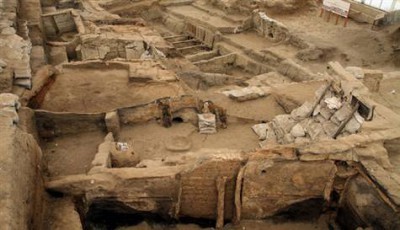
CATALHOYUK
It is locaded on 52 km southeast of Konya,11 km away to Cumra. It is a hill on Carsamba Brook. The excavations started in 1958 are still going on here. It has a history dating back to BC 10.000 years ago. Up to now, seven storeys of this hill has been identified. It is the oldest settlement of human beings in the world. people who lived here used advanced agriculture and livestock tecniques.
FAMOUS FOODS OF KONYA
KONYA KITCHEN
Konya cuisine is a magnificent composition which is progressed from the Seljuk Palaces and is kneaded by Malawi’s manners and ways. Konya cuisine should be leave out from the Turkish Folk Cuisine because of its spesifics which are holding the classical spesifics from the rules of the 13th century to these days and even having one of the main roots of the calssical Turkish cuisine.
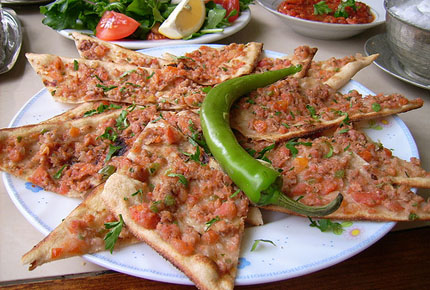
BREAD WITH MEAT
Bread with meat is loved in Konya very much and Konya’s restaurants or ovens make it better than the other cities. No other food can compete with bread with meat in Konya.
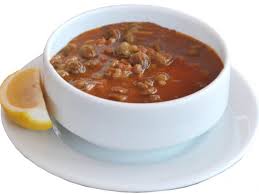
OKRA SOUP
Okra Soup,which is from central Anatolia, is an important meal on the classical menus of Konya. On the “cook team”and “black dinner team” it is given after the dessert because of its sour flavor with this way it makes people ready to eat the second part of the meal.
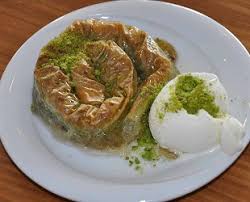
SACARASI
Again, there is a special dessert belonging to Konya. In the past the dessert tray was put on the round iron plate on it and they put fire cinder from the fire of oak on this plate. By this way, the dessert tray was getting ready between two round iron plates.
Published: Mar 18, 2018
Latest Revision: Mar 24, 2018
Ourboox Unique Identifier: OB-449845
Copyright © 2018

 Skip to content