






by sila
Copyright © 2018
I’m Introducing Bulgaria and Albania

Copyright © 2018
Albania is a Balkan country that has remained under Ottoman rule for 300 years. The country was also ruled by the Italians and Greeks for a while. This has helped to turn the culture and cuisine of this Balkan country into a cultural mosaic. In this country, Turkish, Greek, Serbian and Italian influences are seen in culture and cuisine. As a natural consequence, Albanians have a unique cuisine.
The Albanian cuisine is generally rooted and varied cuisine. In this diversity everyone can find a piece of himself. Desserts that may be the favorites of milk-sweet lovers are quite famous. For those who are fond of the vegetable, especially for leekers, the place of the pırasan is different in this kitchen. In recent years, traces of Italian, Austrian and American cuisine have started to be seen in Albania. Even fast food chains have been opened in the Albanian country that opened to the global world after the EU membership. Despite this, traces of Turkish cuisine are still found in the region.
For 435 years it is possible to find Turkish delicacies in the cuisine of the Albanian country which is Turkish land. Mantı, pie, coffee and meat dishes, such as many Turkish dishes are housed in the kitchen. The unique and unique tastes of the Ottoman and Turkish cuisine are enchanting this table. In this small Balkan country, breakfast is considered the most important meal of the day. Breakfast, cheese, tomatoes, cucumbers, as well as products such as meat or vegetables are available. The Albanians start their day with a high calorie breakfast. Albanian cuisine is generally known as meat dishes, pastries, and lungs.
In this Balkan country, the coastline is long and the fishermen and fish dishes in the country are developed and tasted as a result of the Sea of Marmara. In addition, the impact of Italy and Greece on fish cultures is very high.
The country is like a kitchen full of naturalness. In this country where daily milk use is widespread, milk is interestingly also found in turşard besides making sweet. This interesting pickle variety, called Soka or Lönk, is also often consumed in the country by filling the slices for pepper picking, also seen in Bulgaria.
Lamb, veal and fish meat are often used in meat dishes. Albanians have a lot of meat in their meals. As with every Balkan country, the use of spices is preliminary. Their meat is usually cooked in frying and baking. Olive oil is added to these dishes with Mediterranean influence. It gets its place in meals with boiled vegetables as garnish with Turkish influence. This diversity is evidence of the richness of the Albanian cuisine.
Albanians do not have a popular beverage known for being a country known for their drinks. Milk, Mineral Water, Soda and Boza are frequently consumed besides alcoholic drinks such as Turkish racial, Uzo, Mastika. They are also offering Turkish coffee beside their sweeties.
Albanians who use potatoes, beans, leeks and cabbage in their cakes offer Tarator, which is very similar to the food.

General Information about Albania
Albania, in Albanian name Shqipëria, is a Balkan and Mediterranean country with both cultural and geographical features, with a surface area of 28,748 square kilometers and its location. Located in southern Europe, Albania is home to the Adriatic and Ionian seas with a coastal shoreline of 611 km.
In the border neighbors; Montenegro and Kosovo in the north and north-east, Macedonia in the east, and Greece in the south.
Population and Cities
According to the 2012 census, 3,002,859 people live in Albania. Now, according to estimates, it’s just over 3 million. Approximately 36% of this population lives in cities. Ethnically, Albanians constitute 97 per cent of the population, unlike the countries in the region. In this respect, it has a homogeneous population structure.
In Tirana, the largest city and capital of the country, more than 765,000 people live together with the city’s metropolitan area.
Albania is administratively divided into 12 large ones. These 12 provinces:
Berat, Durrës (Leap) Elbasan, Fier, Gjirokastër (Ergiri) Korçë Görice, Kukës, Lezhë (Lech) Dibër (Debre) Shkodër (Shkodra) Tirana (Tirana) Vlorë
There are also 36 cities (districts) under these illicitities.
NAME OF THE ROOT
Albanian / Albania / Shqipëria / Albania
The name of the country is the Turkish version of Arvanit, whose name is Albanian and Albanian, a Tosca Albanian boy. According to the Albanian Ottoman intelligence Semsettin Sami, the Albanian farmer means.
Albania (Albania), which is used in international and world languages, means “standing high” because Latin is a mountainous country. Albania is called “Albania” and Albanians are called “Albanian”.
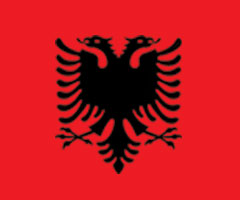
In Albanian, the name of the country and nation is derived from the eagle Shqiponja literally. Albania is called Shqipëria in the sense of the eagle country, while it is used in Albanian (Shqip) and Albanian (Shqiptar).
Language
The official language in Albania is Albanian. Albanian (gjuha shqipe) is a member of the Indo-European language family and is a native language in its own right. The Albanians, the oldest people of Europe, have been talking about the past of thousands of years since their ancestors, the Pelasgs and the Illyrians.
Albanian, of course, has been influenced by many syllables including Latin, Roman (Byzantine) and neighborly, Greek, Slavic, Ottoman, Turkish and Arabic in the course of these thousands of years and these words are also harboring words. But after thousands of years, it remained a pure language as an Albanian vocabulary.
Albanian is heavily spoken in Kosovo and Macedonia, where Albanians live, particularly Albania. Besides this, many countries in Europe and is also used extensively in Turkey.
Religion
Religion was forbidden by the Communist regime of Enver Hoxha (Hoxha), who had been in power for 46 years in Albania between 1944 and 1991, and Albania was declared the world’s first and only atheist state. In this respect, the vast majority of the population in Albania in those years lived entirely outside the religious issues.
After this regime and the collapse of the communist regimes in Eastern Europe in 1991, religious issues were again released in Albania.
This long after-the-mouth relation of Albanian citizens in the 2011 census is as follows;
56.7% Islam
10.03% Roman Catholic
6.75% Albanian Orthodox
5.49% is not tied to a particular dine
2.5% Atheist,
2.09% Bektashi
0.14% Protestant / Evangelical
Tirana in history
307.467 (2003) Tirana, who lived in the Ottoman State for many years, was founded in the early 17th century and is the economic and political center of the country and has many universities. During the Turkish sovereignty, Tirana, an accident center in the Draç Sanjak of the Shkodra province, It remained a village as small as a hundred years ago. The Governor of Shkodra began to develop during the time of Süleyman Pasha. During the Balkan Wars in 1912, the Ottomans came out of the hands of. In 1920, he took the title of the capital from Durres.
The name of the city means the ruler of absolute power in ancient Greek. Tirana is the most convenient way to reach Albania’s coastal zone, even though the Dalmatian Sea is not coastal.
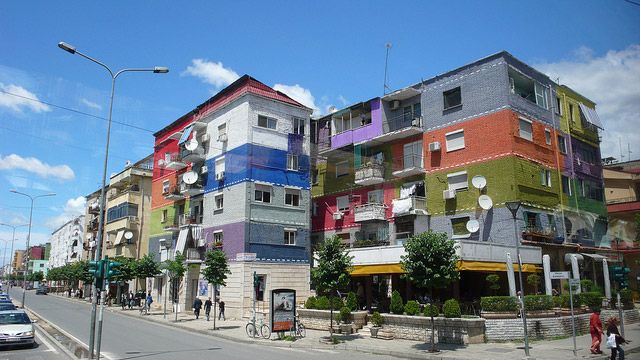
Despite being a new city, Tirana is home to a number of castles, sculptures and historic buildings that have to be seen.
My name is Tirana
Taiwan
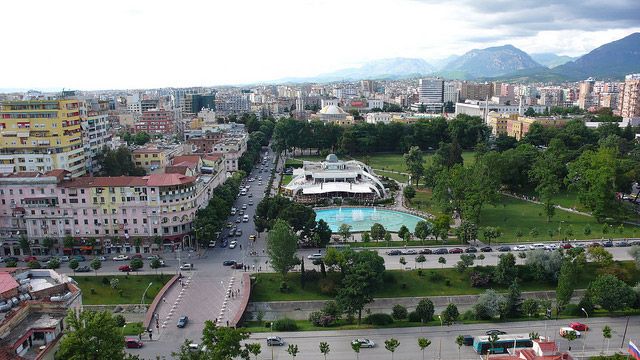
This white structure, which attracts attention with its interesting name and futuristic architecture, is also a very popular meeting place among Tiranaans at the same time. The large swimming pool right in front of the swimming pool is enjoying the rest. Rinia Park is also a great place to relax in the heart of the city, right next to Taiwan with a bakery, restaurant, club and even a bowling alley with great ice cream.
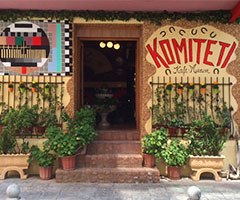
Tarihe Journey with “Museum-Café” in Albanian Capital Tirana
The “Museum-Café” in Tirana, the capital of Albania, is introducing Albanian history and Albanian culture to many historical sites dating back to the 18th and 20th centuries. Arber Café who had a bad dream about the idea of ”Museum-Cafe” ..
The Durrës center is Albania’s second largest city, about 33 km, west of the capital Tirana. It is one of the oldest and economically important cities of Albania. The port of Durres, which is the main port of the Lebanese Albania, was organized to ship to the Italian cities. two different festivals are held in summer in the historical city on this adriatic coast, which attracts 1 million tourists per year on average. Folk dances from different countries of Europe show their performances at international festivals by having 5 days of fun in this beautiful tourist city.

The most important national holiday of Albanians, “Flag and Independence Day”, was celebrated with ceremonies in Albania, as well as in other countries where the Albanian population lives.
The central ceremony attended by the state activist was held in the town of Avlon, south-west of Albania, while the citizens in the capital city of Iskenderbey Square in Tirana celebrated their interest.
Albania’s President Ilir Meta, Parliament Speaker Gramoz Ruçi and Prime Minister Edi Rama, along with Kosovo President Hashim Thaci and ministers of the two countries, attended the ceremony held at the Flag House, where Albania’s flag was sent in Avonya.
Albanian President Meta, speaking here, said, “Today is the brightest day in the history of our nation.” used expressions.
In the celebration program in Iskenderbey Square in Tirana, Erion Veliaj, the mayor of Tirana, sent the Albanian flag.
Veliaj noted that the November 28 Flag and Independence Day was “the most beautiful day” for all Albanians, and that it is “sacred” for them today.
The Albanian Parliament also opened for two days on the occasion of the Flag and Independence Day on November 28th and the anniversary of Albania’s liberation from fascism on November 29th.
Albanians living in Macedonia also held events due to the Flag and Independence Day.
The “Flag and Independence Day” celebrated for the declaration of independence of Albania on November 28, 1912 in the National Assembly of Avrynon is celebrated for 105 years with ceremonies both in Albania and in other countries where the Albanian population lives.
City City Population (2013) [1]
1 Tirana (Tiranë) Tirana 622,190
2 Leap (Durrës) Leap 203,917
3 Avlon (Vlorë) Avlån 135,032
4 Elbasan Elbasan 124.179
5 Shkodra (Shkodër) Shkodra 111,686
6 Görice (Korçë) Görice 86,994
7 Fior Fior 84.638
8 Kamza Tirana 81.688
9 63.132 Berat Berat
10 Lushnje Fior 53.507
Albania’s Outfits and Clothes in Ancient Times
The clothing of the Albanian people constitutes an important part of the cultural structure of the country. Folkloric clothing was also included in the works. Ekrem Bey’s remembrance includes details of costume and costume which can be shown among the folkloric values of Albania. While introducing his servants, the author provides information on traditional Albanians clothes:
“Zyver Bey was tall, coarse and blonde; a majestic traditional folk costume, a jeweled velvet vest, a velvet vest, a white coat on his thighs, a cyborg wool cape with red slip on his shoulders, and gold inlaid guns in his waist. It looks like a revamped Lorenzo il Magnifico from a Renaissance table! On the contrary, Hanza Aga was quite unimpressed: gray lovers, gray wool cardigans, mantle of sheep post, black rimmed edges, a simple belt unbuilt, silver inlaid on this belt, but two silabes of good quality in this belt, in the traditional folk dress of the small, and an altar-like a shepherd or a bandit head,
Yılmaz Çetiner, like Ekrem Bey, places a place for folkloric clothes of Albanians in Unknown Albania. Especially in the villages, the writer says that the old style and customs are protected in the clothing style as well. The author says that each region has its own different clothes:
“Every city, each village had a different color and distinctive clothing … It is even possible to understand that women are girls or widows. Albanian women were putting a number of signs on the shalvars … And they cut their hair to their foreheads, they were running a lot of vegetable oils for their shine.
When they were offered different clothing, the words of these women, who were attached to their pineapples, were as follows; We do not change the clothes our memories wear! .. ”
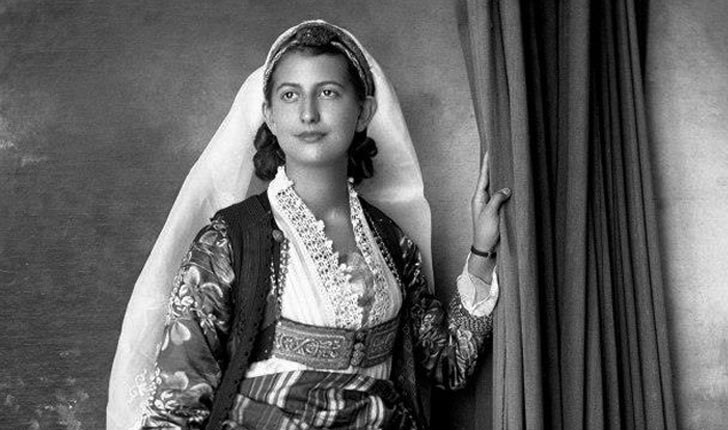
Albania / Capital City Tirana
BULGARIAN FOOD
The Bulgarian cuisine was mainly created by the Turks, as Bulgaria has been in the sovereignty of the Ottoman Empire for more than five hundred years. Bulgarian cuisine is especially diverse in terms of vegetables and fruits. With the rich cucumbers in the kitchen, both meat dishes, vegetable dishes and milk products are consumed in abundant quantities. The Bulgarian cuisine, which is often famous for home cooking, consists of casserole-style dishes cooked by boiling or baking. Bulgarian cheeses are very good quality. With all these characteristics, there is a similarity between the Bulgarian cuisine and the Turkish cuisine, both geographically and culturally. Detailed information on Bulgarian dishes and texts can be found in this category.

The last census made at Raporda 2011 is viewed with suspicion as to the number of the announced population. In 2011, the population of the country was announced as 7 million 364 thousand people. It was determined that 167 thousand people were not registered with social services and tax office registers after the statute, with the address of business and residence. I mean, koskoca was left out of a city count. As a result of the examinations made on the data, it was also determined that the number of households and houses are also incorrect. According to the present evaluations, the residential buildings are 64 thousand fewer than the population census made in 2001, although the construction boom was experienced in the mentioned period. According to the NSI report, there is no reliable information on ethnicity and religious beliefs. What religious beliefs do you share with 2 million 300 thousand people have not responded to the question.
There are also a large number of citizens who do not answer ethnicity and mother tongue questions. Another problem is immigrants. Experts say that exactly how many people have left the country and have been living abroad for over a year. The official figure announced in February 2011 is 306 thousand people, but the actual number of immigrants is much bigger. The exact number of Bulgarian citizens who have migrated to the EU countries will become clear after the data from all the states are processed.
Counting over the Internet for the first time in our country also poses a problem. In 2011, up to 3 million citizens preferred to respond from the computer to the questionnaires. Now it is determined that the programs are done without haste and logic control. Counting in the electronic environment has caused many mistakes and unanswered questions. Experts assure that census errors will not affect voter lists, and the list includes citizens with voting rights abroad. The main problem is the decline in confidence in the quality of national statistical data.
For Bulgarians, origin has been sought for more than 150 years, and Urals, Fin, Slavs, Tatars and so on. They are allegedly smart. Finally, the view put forward by Vambery that they came from the Turkic origin is certain with the archaeological and Gy.nemeth ‘s linguistic research of G. Feher. The word “Bulgarian” as the name of the tribe did not exist before the 2nd half of the 5th century; for the first time, in 482 BC, the Byzantine emperor Zenon came up with the name of a community in the north of the Black Sea where he applied for military aid to fight against the East-Got. The Bulgarian name was born from a historical tradition: after the death of Attila’s second son Dengizz in 469 in the outbreaks of the offspring of the European Hun ruler Attila, his subordinate brother, Irnek, the masses were confused with other Turkish peoples they had encountered on the Black Sea shores. The new group, born of this confusion, began to be called Turkish “Bulgarian”.Origin of Bulgarians – Beginning 765 years until showing the Bulgarian rulers’ names and the khanate period and today, but at later time without having we have a Russian crowns Kind Slav, translated “Bulgarian Haga who list” in İrnek interfering with the Bulgarian ruler görünmektedir.h mass are the ancestors of the family that the Turks from their original name “Ogur” du and from the mouth of the Danube to the Volga, in the northern steppes of the Black Sea, and later as Pechenegs and Kuman. Saraga is (Se-ri / White / Oger), Biştig the (five-Oger), ulting is ~ Altziag the (six-Oger), diameter of the-g-Kuturg’s ( “Tukurg is” = nine-Oger) Unger ~ Hunug is ~ Onug is (On-Oger ), Utigur ~ Uturgur (Thirty-Ogur). Byzantine historian Priscus (5th century) ‘s Black Sea removed from the Ural mountains east of the dormitory by Sabarlar they came to the plains (461-465 in) reported that Ogden Turks, according to the same historian then idyll constitutes three groups. Saragur, Urog (Ogur) and On-Ogur. They sent ambassadors to Byzantium in order to be able to stand against the Sabarans who were drawn to the west from the front of the Avar. According to recent research, they Ogden if they were three estates in the great migration from the previous residence: East coterie (Seyhan-Qu rivers and lakes in the vicinity Çalkan On-Ogurs); the middle class (today the Kazakh-Kyrgyz steppes and Emba river -ihtimal- Thirty-Oger are tall) and western clan (on the River Churn in the vicinity -herhalde- nine-Ogura). It is probable that the Sargur (Ak-Ogur) mass in this order and the others have formed the “Black Ogur” wing.
Great Bulgarian – In the first Bulgarian union in the state organization, it is understood that On-ogur is the majority. They have been shown in the North Caucasus from all sources since the 6th century. It was called “Patria Onoguria” (On-Ogurların Yurdu). In the first half of the 8th century they began to spread to the Azov sea. In 630, when the Gök Turkic state entered the fetish cycle, the Bulgarians, like the Khazars, took the administration into their own hands and founded the “Great Bulgarian” state. The founder of the state was a member of the sovereign delegation of “Kourt = Kurt” Doulo. The Bulgarian ruler’s dynasty is linked to the family of the Asian Hun warlords. The country where the Kurt brought the scattered Ogur tribes to the political organization was called “Great Bulgarian” (Magna Bulgaria). But this state did not last long. After the death of the Founder in 665, it was disintegrated by the printing of the neighboring Hazar khanate. A majority of the Thirty-Ogurs were pulled to the north (Bulgarians of the Hittites), in the Caucasus, at the head of the Hungarians and On-Ogur Bulgarians, subject to the Bat-Bayan Khazars from the sons of the Kurt. Today’s Balkans are their fathers. Bat-Bayan’s brother Asparuh headed to the Danube with crowded Bulgarian masses. In 668, he crossed into the Balkans and conquered the favorable lands and set up a new Bulgarian state in 679. This state was recognized by Byzantine in 681.Aspuh (679-702) by the resistance of the Emperor Constantinos IV was founded in the south of Dobruca’nın and shortly military and political aspects of the state, developing by the Ogur Turks is the longest political memorandum established. It can also be understood from the preservation of its existence among the two great powers, such as the Byzantine and Avar empires, on which the state is firmly founded. The Bulgarian Turks from abroad have connected themselves with the Slavic masses of the region with skill. The Bulgarian state idea alienated the Slavs living in the tribal order and protected them against the Byzantine. The most strict political relations of the Danube Bulgarians were with Byzantium. Emperor Justinianus II, married to the Hazar prince, came to the throne for the second time in 705 with the help of Bulgarian inn Tervel (702-718). The fall of the emperor Philippikos in 713 is also attributed to the advance of Bulgarians on the Byzantine soil. The strength of the Bulgarian state in the short term can be understood from this fact. The Bulgarians helped Byzantine during the siege of Istanbul in the years 717-718 of the Arabs. This cooperation has provided various economic benefits to the Bulgarian state. However, in the 8th century the Byzantine benefited from the mixed situation of the Bulgarian people and organized various expeditions to the Bulgarian territory. The “Krum Khan” (803-814), headed by the Bulgarians at the beginning of the 9th century, added Hungary and Transylvania to the boundaries of the khanate. Nikephoros I, the Byzantine emperor, who was afraid of the personality of Krum Han as a “talented man of war and intelligence agency”, acted to get rid of it (811). The khanate, which falls to the south of the present Shumen, has destroyed Pereyaslav. But at the end of the war, Nikephoros was defeated, his army dispersed and he died on the battlefield. For the first time in 450 years a Byzantine emperor had died in the hands of the enemy. Krum Khan, who defeated Mikhael II on the Bulgarians at the beginning of the crowded army, strengthened by the troops brought from the eastern provinces of the empire, lifted Byzantine from the middle and said, “The gold spear is bound to the gilt Kapu (Yedikule ceremonial gate)
hanging “and drinking. Sofia, Niche and Belgrade occupied the cityscapes and controlled the largest trade and military shipment route between Central Europe and the Middle East. In 813 he reached Edirne via the Plovdiv and continued to advance, leaving it under siege. In the spring of 814 he surrounded Istanbul. But at the most violent time of the attacks, on 13 April 814, blood came out of his mouth through his mouth and suddenly died. His son Omurtag Khan (814-831) signed a 30-year trade agreement with Byzantium. The Omurtagh Khan time, which has been silent in its attempt to compromise with the Frank empire but has succeeded in bringing the Danube-Sava-Drava basin and reopening the abandoned salvations since the Roman period and giving the state a great fortune, was the most brilliant period in the history of the Danube Bulgarians. The memorials of that era are the cities, palaces, extensive construction and reconstruction, waterways, abideler, developed cities and the tomb of Krum Han, which occupies 40 square meters on a high rock to the east of Shumen. However, the Bulgarian Turks, who had fewer populations than the Slavs, eventually began to come under the influence of the Slavic influence of the Byzantine influence. The number of Slavs assigned to the state is increasing, mixing with marriages is increasing, Slavic language is getting more and more powerful, and Turks are rapidly becoming Slaves. With the formal acceptance of Orthodoxy by the Boris Khan (852-889), the Bulgarian slavery process was also completed.
Murat UlutürkFor Bulgarians, origin has been sought for more than 150 years, and Urals, Fin, Slavs, Tatars and so on. They are allegedly smart. Finally, the view put forward by Vambery that they came from the Turkic origin is certain with the archaeological and Gy.nemeth ‘s linguistic research of G. Feher. The word “Bulgarian” as the name of the tribe did not exist before the 2nd half of the 5th century; for the first time, in 482 BC, the Byzantine emperor Zenon came up with the name of the community in the north of the Black Sea where he applied for military aid to fight against the East-Got. The Bulgarian name was born from a historical tradition: after the death of Attila’s second son Dengizz in 469 in the outbreaks of the offspring of the European Hun ruler Attila, his subordinate brother, Irnek, the masses were confused with other Turkish peoples they had encountered on the Black Sea shores. The new group, born of this confusion, began to be called Turkish “Bulgarian”.
Origin of Bulgarians – Beginning 765 years until showing the Bulgarian rulers’ names and the khanate period and today, but at later time without having we have a Russian crowns Kind Slav, translated “Bulgarian Haga who list” in İrnek interfering with the Bulgarian ruler görünmektedir.h mass are the ancestors of the family that the Turks from their original name “Ogur” du and from the mouth of the Danube to the Volga, in the northern steppes of the Black Sea, and later as Pechenegs and Kuman. Sargur (Sa-rı / Ak / Ogur), Bishtigur (Five-Ogur), Ultingur ~ Altziagir (Six-Ogur), Kutri-gur-Kuturghur (“Tukurgur” = Nine-Ogur) Ungur ~ Hunugur ~
Onugur (On-Ogur), Utigur ~ Uturgur (Thirty-Ogur). According to the same history, the Byzantine historian Priscos (5th century) reported by the Sabarans that they came to the Black Sea plains (461 – 465) by being removed from their eastern Ural mountains. Saragur, Urog (Ogur) and On-Ogur. They sent ambassadors to Byzantium in order to be able to stand against the Sabarans who were drawn to the west from the front of the Avar. According to recent researches, the Ogurs were also in three groups in their previous homelands: Dogu zümresi (On-Ogurlar in Seyhun-Çu rivers and Çalkar Lake fountains); the middle class (present Kazak-Kyrgyz steppe and the length of the Emba shore -with thirty-Ogurlar) and western zümresi (in the Yaylik river). It is probable that the Sargur (Ak-Ogur) mass in this order and the others have formed the “Black Ogur” wing.
Great Bulgarian – In the first Bulgarian union of state organization, On-ogur is the majority. They have been shown in the North Caucasus from all sources since the 6th century. It was called “Patria Onoguria” (On-Ogurların Yurdu). In the first half of the 8th century they began to spread to the Azov sea. In 630, when the Gök Turkic state entered the fetish cycle, the Bulgarians, like the Khazars, took the administration into their own hands and founded the “Great Bulgarian” state. The founder of the state was a member of the sovereign delegation of “Kourt = Kurt” Doulo. The Bulgarian ruler’s dynasty is linked to the family of the Asian Hun warlords. Kurt’s scattered Ogur tribes, bringing the political organization to the country where the “Great Bulgarian” (Magna Bulgaria)He was called. But this state did not last long. After the death of the Founder in 665, it was disintegrated by the printing of the neighboring Hazar khanate. A majority of the Thirty-Ogurs were pulled to the north (Bulgarians of the Hittites), in the Caucasus, at the head of the Hungarians and On-Ogur Bulgarians, subject to the Bat-Bayan Khazars from the sons of the Kurt. Today’s Balkans are their fathers. Bat-Bayan’s brother Asparuh headed to the Danube with crowded Bulgarian masses. In 668, he crossed into the Balkans and conquered the favorable lands and set up a new Bulgarian state in 679. This state was recognized by Byzantine in 681.
Aspuh (679-702) by the resistance of the Emperor Constantinos IV was founded in the south of Dobruca’nın and shortly military and political aspects of the state, developing by the Ogur Turks is the longest political memorandum established. It can also be understood from the preservation of its existence among the two great powers, such as the Byzantine and Avar empires, on which the state is firmly founded. The Bulgarian Turks from abroad have connected themselves with the Slavic masses of the region with skill. The Bulgarian state idea alienated the Slavs living in the tribal order and protected them against the Byzantine. The most strict political relations of the Danube Bulgarians were with Byzantium. Emperor Justinianus II, married to the Hazar prince, came to the throne for the second time in 705 with the help of Bulgarian inn Tervel (702-718). The fall of the emperor Philippikos in 713 is also attributed to the advance of Bulgarians on the Byzantine soil. The strength of the Bulgarian state in the short term can be understood from this fact. What the Arabs did in 717-718
The Bulgarians helped Byzantine during the siege of Istanbul. This cooperation has provided various economic benefits to the Bulgarian state. However, in the 8th century the Byzantine benefited from the mixed situation of the Bulgarian people and organized various expeditions to the Bulgarian territory. The “Krum Khan” (803-814), headed by the Bulgarians at the beginning of the 9th century, added Hungary and Transylvania to the boundaries of the khanate. Nikephoros I, the Byzantine emperor, who was afraid of the personality of Krum Han as a “talented man of war and intelligence agency”, acted to get rid of it (811). The khanate, which falls to the south of the present Shumen, has destroyed Pereyaslav. But at the end of the war, Nikephoros was defeated, his army dispersed and he died on the battlefield. For the first time in 450 years a Byzantine emperor had died in the hands of the enemy. Afterwards, Krum Khan defeated Mikhael II, who was walking on the Bulgarians at the head of the crowded army, strengthened by troops brought from the eastern provinces of the empire. He lifted Byzantine from the middle and “hanged his golden spear on the gilt Kapu” (Yedikule ceremonial gate). Sofia, Niche and Belgrade occupied the cityscapes and controlled the largest trade and military shipment route between Central Europe and the Middle East. In 813 he reached Edirne via the Plovdiv and continued to progress, leaving it under siege. In the spring of 814 he surrounded Istanbul. But at the most violent time of the attacks, on 13 April 814, blood came out of his mouth through his mouth and suddenly died. His son Omurtag Khan (814-831) signed a 30-year trade agreement with Byzantium. The Omurtag Khan time, who was silent when he failed to compete with the Frank empire but took the Danube-Sava-Drava basin and brought it back to operation and gave the state a great fortune, was the time of the Danube BulgariansIt was the brightest period in history. The memorials of that era are the cities, palaces, extensive construction and reconstruction, waterways, abideler, developed cities and the tomb of Krum Han, which occupies 40 square meters on a high rock to the east of Shumen. However, the Bulgarian Turks, who had a smaller population than the Slavs, eventually began to under the influence of Byzantine influenced Slavic cultures. The number of Slavs assigned to the state is increasing, mixing with marriages is increasing, Slavic language is getting more and more powerful, and Turks are rapidly becoming Slaves. With the formal acceptance of Orthodoxy by the Boris Khan (852-889), the Bulgarian slavery process was also completed.
bulgaria religion
Bulgaria has two theses about the entry of Islam. One belongs to Muhammad Hamidullah. According to the doctrine, Islam entered Bulgaria into the Xth century. [1]
According to the other thesis, the entrance of Islam is XIV. it rises in the century. According to Aleksandar Popovic, who advocated this, the appearance of Muslim communities in Bulgaria, as in Albania and other parts of Southeastern Europe, was the beginning of the appearance of the Ottoman Empire in XIV. the end of the century. [2]
The biggest role for the creation of a Muslim society in Bulgaria has played a role. Since the Bulgarian lands are very fertile, Turks, Anatolian Tatars and Circassians came and settled here in Anatolia. The Islamization policy in Bulgaria XV, XVI, XVII, XVIII. It continues until centuries. According to Antonina Jeliaskova, the activity of Islamization in Rhodopes was not in the form of difficult use of the Ottoman sultans, but rather of a political and economic team. They even entered Islam with the will of the people, the family or the villagers, and with the permission of the Sultan.The last official census in Bulgaria was made in 2001, and according to this count by the National Statistical Institute, the population of Bulgaria is 7 928 901 persons. The previous official census was made in 1992 and the population was identified as 8 487 317 people. One reason for this decline in influence is the low birth rate, especially in the Bulgarian population, but mainly due to external migration. Migration as the most intense in Turkey, then if it is to European countries. which consists of migration to Turkey, almost all of the Muslim population, while the European countries to migrate both Christian and Muslim populations in our hands, but there is no clear information about their numbers and rates. The most important reason why we do not have clear information here is that immigration is usually done by the family heads to do temporary work, the duration of the temporary work is not fixed, some of them take their informal families together while others do not. In addition, the use of Bulgarian names while some of the Muslim population goes to European countries also prevents healthy determinations about the migration of Christian and Muslim population.
Bulgaria is a pluralistic state (multi-ethnic minority) as it is stated in its constitution. According to this, the state is composed of two big religions and other small communities as religion, Gypsies, Tatars, Jews and Armenians, in addition to a smaller number of ethnic origins, mainly Bulgarians and Turks. The Gypsy population should be disputed in this ethnic distinction because although they may seem low in official sense, the number of Bulgarian and Turkish populations is low. According to official figures Bulgarians are 6 655 210 (83%), Turks 746 664 (9,5%) and Gypsies 370 908 (4,6%). [4]
In Bulgaria, the religious structure consists of Orthodox Christianity (82.6% – 6 552 751 persons) and Islam (12.2% – 966 978 persons), as well as a small Catholic and Protestant community. Catholics are in third place in Bulgaria with 43 811 people (0.6%) in terms of population density in 2001 census. At the end of 1992, the number of people who defined themselves as Protestant was 21 878 people, or 0.3%. In the last eight years the number of Protestants doubled to 42 308.
An important point to note is that the Gpsies constitute half of the Protestants in Bulgaria (24 651 people). In the last eight years Protestantism has spread among the Gypsies in response to some material interests.
According to official figures, 913 957 are Sunni and 53 021 are Shi’a. According to the number made in 1992, Sunnis 1 026 758 and Shi 83 837 people were found.
There are some suspicions about the official picture here. First of all, the ethnic discrimination of the Bulgarian authorities is based on their own understanding.Secondly, it is claimed that the Muslim population actually has a higher rate, but some Muslims living in cities are registered with Bulgarian names, so the Muslim population seems less. Moreover, the separation of Muslims into Sunnis and Shiites does not conform to the structure in Bulgaria. Because there is no Shiite population in this geographical sense, these are groups of people known as “Alawi” or “Kizilbash”. According to a survey conducted on Melikoff flame or Qizilb¯ashs in Bulgaria, the only difference between the Alevis in Turkey and Bulgaria that they give more importance to Haci Bektas Alevis in Bulgaria.
When the Bulgarian government went to such a separation and enumerated some people, some people had been caught up in some popular suggestions like “Shiite is martyrdom, martyrs go directly to heaven” and registered themselves as Shiites.
According to official figures, there is a decline in the Muslim population, especially in the general population of Bulgaria. As we have already mentioned, this is mainly due to external migration. Muslim population, religion, because of their national and historical ties to Turkey, also migrate to the West to work. There is still a distrust of the Bulgarians in the Muslim population, and there is concern that the democratic process is temporary and that the Muslim population will be persecuted and oppressed again.
XX. At the beginning of the century, the share of the Muslim population in the general population was 17.2%, but it is now 12.9%. The region where Muslims are most concentrated is Kardzhali. 69.6% (114 217 people) of the total population of this region are Muslims. However, compared to 1992, the numbers have decreased. The second region where Muslims are concentrated is Razgrat with 53,7% (81 835 people). Later, in turn, come from Shumen, Burgas, Plovdiv, Blagoevgrad, Targovishte, Smolan, Silistra. Muslims constitute 2/3 of the total population of these regions. However, a total of 831 Muslims live in Vidin, Montana, Köstendil and Pernik regions. Of the 262 counties of Bulgaria, 43 are Muslims. [9]
Above, it was seen that the number of Muslim population and ethnic groups did not match each other. It is assumed that there are Muslims from different ethnic groups in Bulgaria. The largest ethnic group in the Muslim population is the Turks. Muslim Gypsies, Pomaks and Tatars are seen as other Muslim ethnic groups.
Gypsies and Tatars in Turkey has a different structure in Bulgaria is not seen as an ethnic group other than the Turks. However, these two groups eventually speak Turkish.The main issue here is the debate on the origins of the Muslim group called “Pomak”. “Pomaks” is not an official ethnic group, so it is a group whose numbers are not quite clear. However, according to a survey conducted by the state, the estimated number is around 220 000-250 000 people.
However, since “Pomaks” do not rely on official figures on the one hand, they think on the other hand that their numbers are not officially factual, in particular because of the propaganda of the Movement for Rights and Freedom on the way to further demonstrate the Turkish population. According to them, the population of “Pomak” in Bulgaria is not less than 300 000. Pomaks live in small groups in Rhodope, Pirin and Vardar Macedonians in the Balkans, in the villages of Loeb in North Bulgaria, in Plovdiv, in Teteven, in Plovdiv in Central Bulgaria, in Old Thessalonica, Monastery, Kosovo and Shkodra.
In Bulgarian surces, the so-called “Bulgarian Muslims” or “Muhammadans” are considered to be Bulgarians who accept Islam. Most Bulgarian scholars defend this view. According to these, Pomaks accepted Islam in the Ottoman period because of the pressures and economic reasons. In the Ottoman period, people who wanted to get rid of this tax because they were taken from “Islam” from Muslims, they chose Islam.
According to Turkish sources, these are actually Turkish and they come from the Turkish “Kuman” tribe. Kuman Turks V-VI. They came to Balkan Peninsula for centuries and settled there, but they forgot Turkish because of their Bulgarianization activities.
According to some Greek scientists, the Pomaks come from the Trachy tribe, but the Turks assimilate the Pomaks because they belong to the same religion.
The majority of pomaks never accept that they are Bulgarians or Greeks because they have been constantly persecuted for more than a hundred years from the Bulgarians. Because, when the Ottomans withdrew from Bulgaria, Bulgarianization activities started from 1880-1882 by force and the names were tried to be changed immediately after the Balkan War. The Greeks likewise had an assimilation policy in their own geography. At the base of this common policy is the struggle to share the Rhodope region after the Ottoman Empire. Both states have pursued a policy of incorporating the locals into their own nations to prove that this region belongs to them. The meaning and source of “Pomak” is not certain but some speculations are made. According to some Orthodox Christians, the word “Pomak” was produced from the word “povliakil”. The word “povliakıl” means “to pursue foreign beliefs”, which means that the Christian Bulgarians enter the Ottoman religion, that is, the Pomaks are Muslims.
According to some reports, the word “Pomak” is derived from the word “pom”, which means “oppressed, oppressed”. According to this, the Pomaks are those who are oppressed by the Ottomans, oppressed and forced to accept the Islamic religion. This may also mean that the Bulgarians have been persecuted.
According to the most common name among “Pomaks”, “Pomak” is derived from the word “pomagac” (Turkish official opinion). “Pomagac” means help. According to this, when the Ottomans came to the Balkans, the Pomaks helped them to carry the same religion, and the word “Pomagac” meaning “helper” eventually became “Pomak”. According to this view, Muslims of the Pomaks go as far as the Ottomans. When we look at these people in their own way from now on, some Pomak Muslims see themselves as Turks.
Others claim that they are Bulgarians of Islamic religion. This view is the official state view. According to them, the word “Pomak” means “Bulgarian Muslim”.
There is also a small group claiming to be Arabs. These are more religious people who advocate worship.
The fourth group is content to say that they are Muslims only and that no ethnic group belongs to them.
Most Pomaks speak a Slavic dialect called Pomak. There are many words and phrases left from the Ottoman Empire. Especially the Islamic terms are used in Turkish and the prayers are mostly read in Turkish.
For example, prayer, fasting, worship, mosque is used in Turkic style. When the Pomak Muslims meet each other, they say “Hello” and they greet each other. They say “Come to Scola,” when they are eating. Some times during the Bayramlar “Bayram bumbarek olsun,” while in some places, “Bayramı sumbarola” is called. If the state says “Naabaysın” is used. Nearly all of the religious terms in the Turkic are used.
Some examples are: Allah is mercy, Allah is accepting, God is raising, Allah is knowing, Allah is blessing, Allah is blessing, Allah is forgiving, Allah verses, Inshallah, mashallah, prayer, ezan, kamek, fasting, zekât … These phrases and words ” main “and” father “words. Since these are accepted as sacred uses, it is unthinkable to exchange them into the Slavic dialect (in Bulgaria).
According to Pomak, the distinctive difference between themselves and Christians is that these words provide. Pomaks (Bulgarian) usually use the words “mayko” and “tatko” in Bulgarian, although they are normally reserved for each language and are not directly related to religion. Here, “Turkish” is synonymous with “Islam”, and “Turkish” words are accepted as religious words.
One of the Muslims of Pomak is said to be one of the “Being a Turk” when one of the bad habits like a drink is left to drink. Pomak Muslims express their amazement when they see the non-Islamic movements of some Turks in Bulgaria. Apart from the religious content words, the words used in everyday life are also few. As a matter of fact, it does not want to ask, free, kelesh, poor, slick, rich, goods, son, lady, woman, woman etc.
The gypsies who are Muslims accept themselves as Turks and speak Turkish. There are also Gypsies, which are Christian, but they accept themselves as Bulgarians and their languages are shown as Roman (Roman) or Bulgarian.
History of Bulgaria
To the present-day Bulgarian territory, In the 30s, a people called Traklar and after a while the Romans dominated. In the sixteenth century the Slavs burned down all over and gained sovereignty. A.D. Bulgarian history began with the arrival of Bulgarian Turks from the north of the Black Sea in 680 AD.
These Turks, known to be from the On-Oğuz group, also managed the Volga and Kama valleys along with the Upper Danube borders and continued to exist as the Great Bulgarian until the 14th century. In the meantime, the First Bulgarian Kingdom, which continued to the 11th century, was demolished and the Second Bulgarian Kingdom was established through Pecenek, Guz and Kumanlar (Kipchak), and it was subjected to the Mongol invasion in 1241.
During the reign of King Ivan Aleksandr in 1331-1371, when the Turks were supremacy over the Balkans, Milady was occupied by the Bulgarian lands during the First Murad Khan of the Ottoman Empire (1326-1389). After Ivan Aleksandr, after the Vidin and Dobrusa principalities and the opposition of the Kingdom of Tirnova to the Ottomans, the Bulgarian Kingdom was completely abolished in 1393 in Tirnova, in 1396 after Niğbolu Victories, in Vidin and in 1400 in Dubrovia.
In the sixteenth century, the Serbs and the Hungarians wanted to prevail over Bulgaria, but the Ottoman Empire, which came from the south, had regular control over Bulgaria. The Ottomans ruled Bulgaria for 500 years. During this period, the administration was provided by Rumeli Beylerbeyi, who lived in Sofia. Due to its proximity to the Ottoman Empire center and its location on the voyage route, its trade has improved considerably. Bulgarian traders were granted a wide range of concessions.
The Ottomans, as in other subjects, did not pursue the repressive policies of the Bulgarians. The Bulgarians are usually in the form of taxable farming classes bearing the name of the reais. In the middle of the 17th century, gangs, called gangsters, started to rebel against the enemy armies and united against the Ottomans at every opportunity, despite the existence of the class of fair administration and privileged merchants and similar Ottoman politics.
In the face of these ongoing revolts, the Ottoman government took some legal measures, such as the “Chorbant Nizamnamesi”, to try to protect public order in Bulgaria. Midhat Pasha, who was brought to the Danube province for these purposes with wide authority, took many services to Bulgaria. Midhat Pasha even added a cross to the Ayyildiz Turkish flag to help the Christians. The great rebellion initiated by the Bulgarian Revolution Central Committee on Koprivshtitsa and Panagyuviste on April 20, 1875 was also suppressed.
The large states gathered in Istanbul in December 1876 propose the formation of two mukhtar regions in Bulgaria. Russia did not accept it. Midhat Pasha insisted that we should fight against Russia. Eventually the war was opened against Russia (April 20, 1877). Like the Bulgarians who joined the Russian army, they also engaged in acts of terror against the Turks.
The Treaty of Ayastefanos was signed at the end of the Ottoman-Russian war (March 3, 1878). Although the establishment of a headman of the Bulgarian administration was accepted, it was changed to the establishment of a small Bulgarian Prince between the Balkans and the Danube, under the pressure of other great powers. Other territories were left to Romania and Serbia. After a while Russia’s struggle for influence of the great powers began, with the direct involvement of Russia in the administration and internal affairs of the present Bulgarian Principality, the Ottoman government and the Austrian and British governments, the Principality not wanting to conquer Russia.
After a while, Prince Aleksandr in the Principality of Bulgaria took over the administration and ensured the unity of Bulgaria and approached Russia completely. After several improvements, such as streamlining of internal and external relations manager came in later, in 1904, he signed a treaty with Serbia against Turkey. After the declaration of the Second Constitutional Monarchy in 1908, October 3, 1908 declared full independence.
After the September 8, 1944 Revolution, Bulgaria accepted the Communist regime and entered the Warsaw Pact. The widening movements to the west in Russia spread rapidly in Bulgaria. After a while, President Jivkov, who was in charge of 35 years, had to resign on November 10, 1989.
On 29 December 1989 the Turks in the country were granted the freedom to use their names and to worship freely. The Communist Party (the new name of the Bulgarian Socialist Party), ruling Bulgaria from 1943 to 1990, was in power during the multi-party elections held on June 10-17, 1990 and for the first time since 1932.
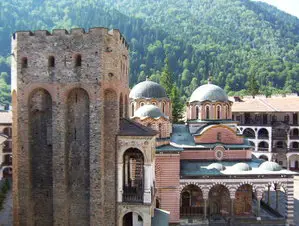
Bulgaria is a Balkan country on the Black Sea coast. The country, which is divided by the Balkan Mountains and the Rhodope Mountains, is located in the south-east of Europe. The oldest country in Europe, Bulgaria, dates back to AD 681. The country, which is among the rare countries whose name has not changed since its establishment, is known as the 16th largest country in Europe.
Tuna is one of the countries through which the river’s northern Romania, Bulgaria, Serbia and western Macedonia, Greece to the south, southeast and neighboring Turkey. Continuing to be a center of culture and economy for centuries, the country attracts tourists with its coastline of 380 kilometers.

3 thousand year festival in Bulgaria: Kukerlandia
The Yambol Mask Festival, in which the ritual of the evil spirits of Bulgaria’s Yambol was fired, was of interest. During the day-to-day tradition of Trakya, Bulgaria and Greece, as a tradition of antiquity, masqueraded and colorful clothing groups worked hard to remove the winter souls .Handmade “kuker” masks and groups offering their show with outnumber bells on them, Trak clothes they wear to represent the warrior and the interests they sound attention çekti.türki and also those from neighboring countries such as Greece, the festival attracts the attention, a series of concerts, continued with exhibitions and photo contests from ediyor.bulgaris’ 3 thousand year old festival in Kukerlandia


Bulgaria / Capital
Sophia
Published: Mar 22, 2018
Latest Revision: Mar 22, 2018
Ourboox Unique Identifier: OB-452391
Copyright © 2018

 Skip to content