






by tekashi
Copyright © 2018
Van Gog Art

Copyright © 2018
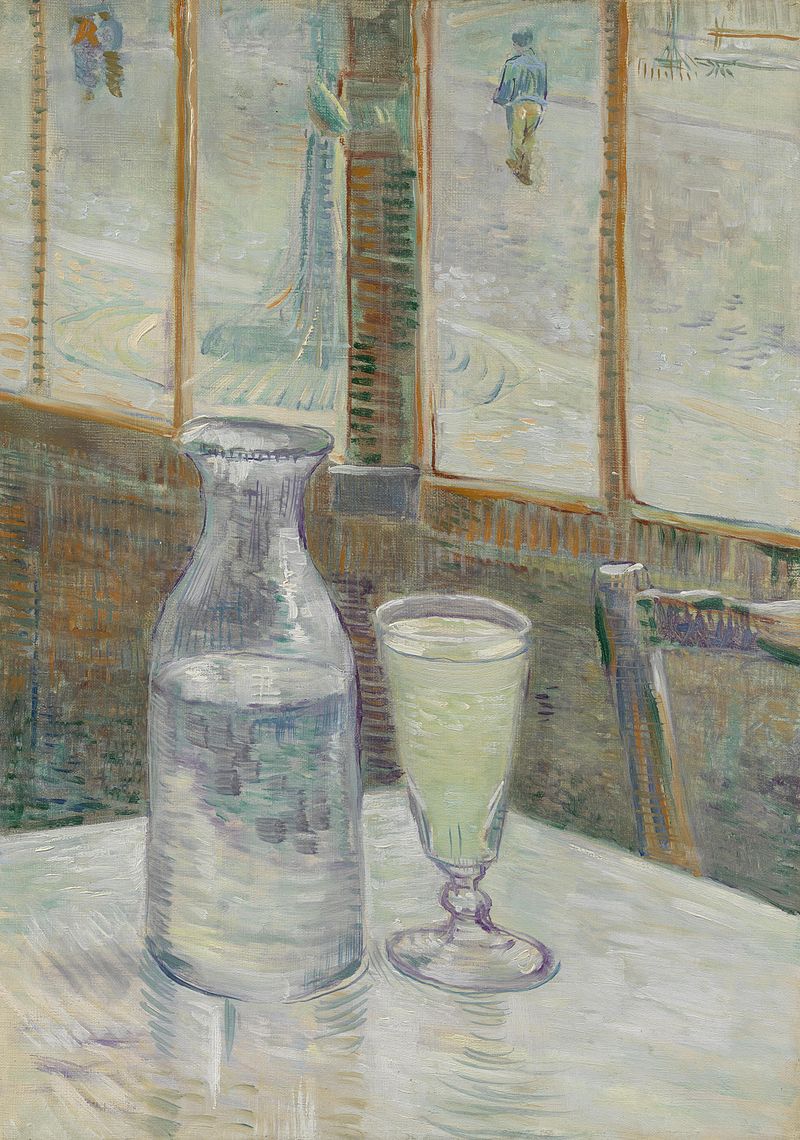
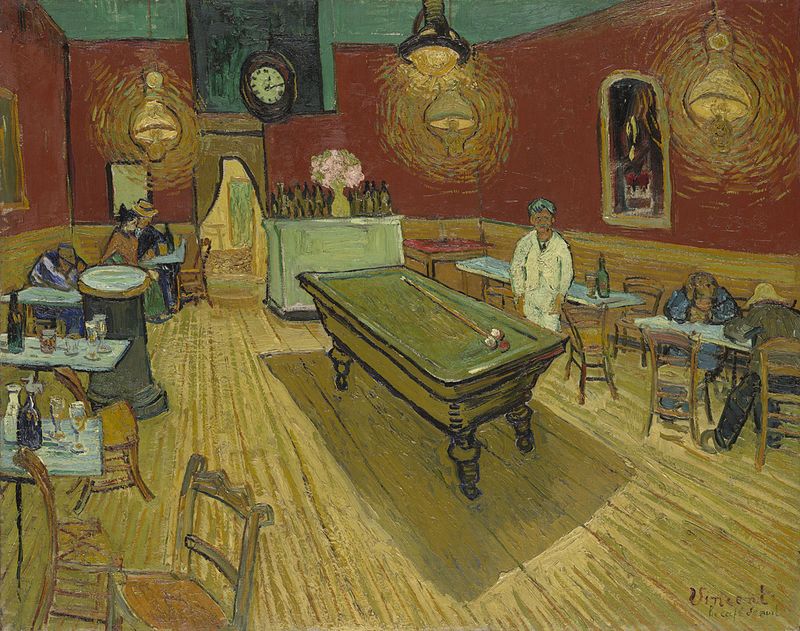
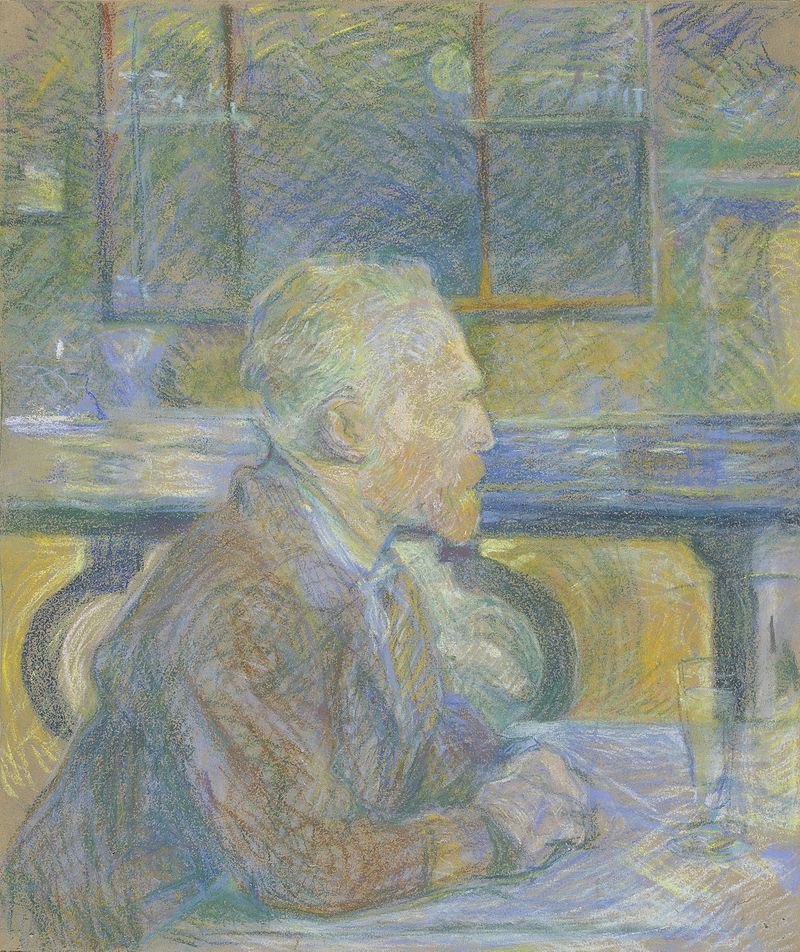
Ill from drink and suffering from smoker’s cough, in February 1888 Van Gogh sought refuge in Arles.[14] He seems to have moved with thoughts of founding an art colony. The Danish artist Christian Mourier-Petersen became his companion for two months, and at first Arles appeared exotic. In a letter, he described it as a foreign country: “The Zouaves, the brothels, the adorable little Arlésienne going to her First Communion, the priest in his surplice, who looks like a dangerous rhinoceros, the people drinking absinthe, all seem to me creatures from another world.”[114]
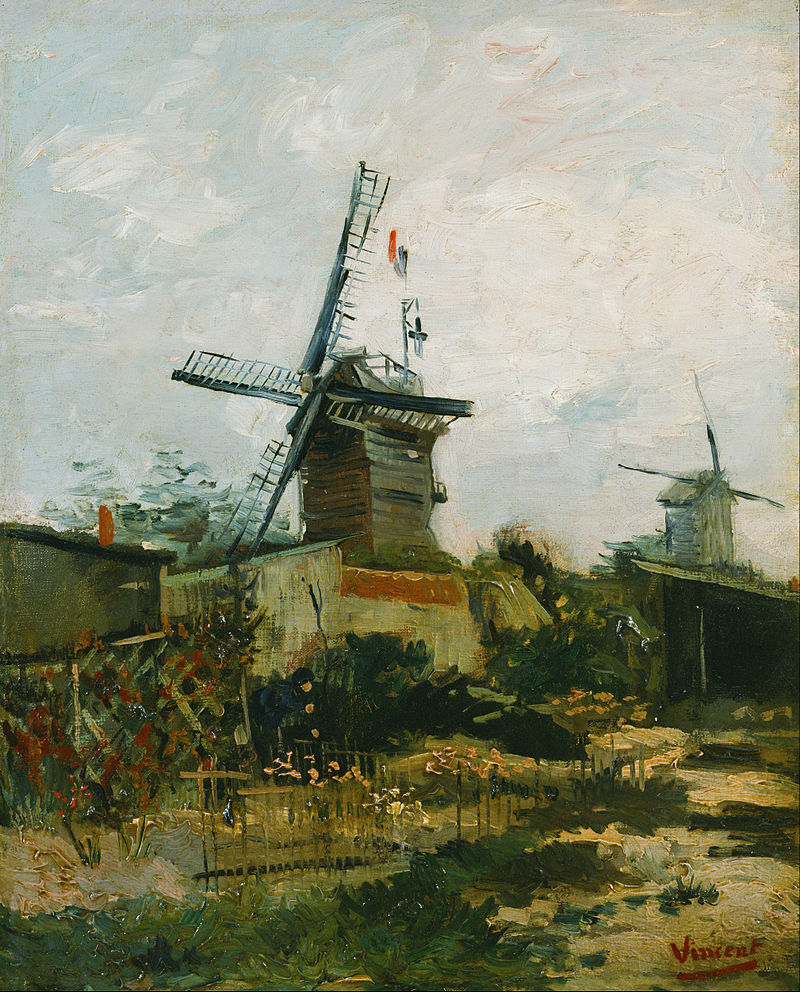
The time in Arles became one of Van Gogh’s more prolific periods: he completed 200 paintings, and more than 100 drawings and watercolours.[115] He was enchanted by the local landscape and light; his works from this period are rich in yellow, ultramarine and mauve. His paintings include harvests, wheat fields and general rural landmarks from the area, including The Old Mill (1888), a picturesque structure bordering the wheat fields.[116] This was one of seven canvases sent to Pont-Aven on 4 October 1888 in an exchange of works with Paul Gauguin, Émile Bernard, Charles Laval and others.[116]
The portrayals of the Arles landscape are informed by Van Gogh’s Dutch upbringing; the patchworks of fields and avenues appear flat and lacking perspective, but excel in their use of colour.[117] His new-found appreciation is seen in the range and scope of his work. In March 1888 he painted landscapes using a gridded “perspective frame”; three of the works were shown at the annual exhibition of the Société des Artistes Indépendants. In April, he was visited by the American artist Dodge MacKnight, who was living nearby at Fontvieille.[118][119] On 1 May 1888, for 15 francs per month, he signed a lease for the eastern wing of the Yellow House at 2 place Lamartine. The rooms were unfurnished and had been uninhabited for months.[120]
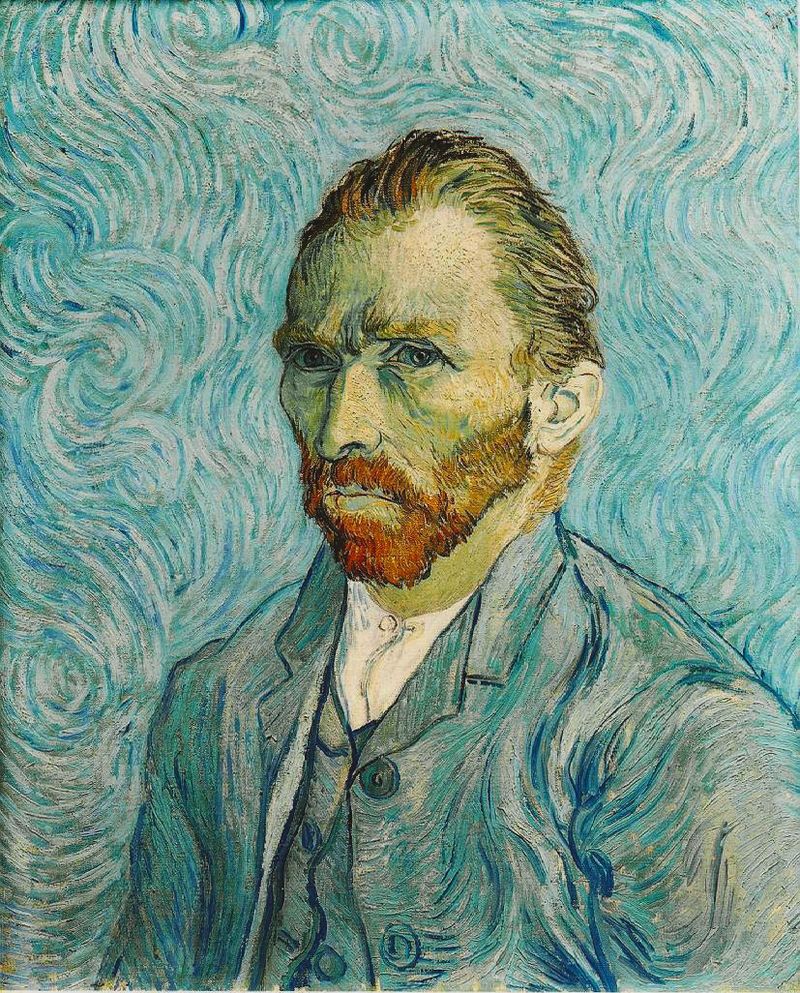
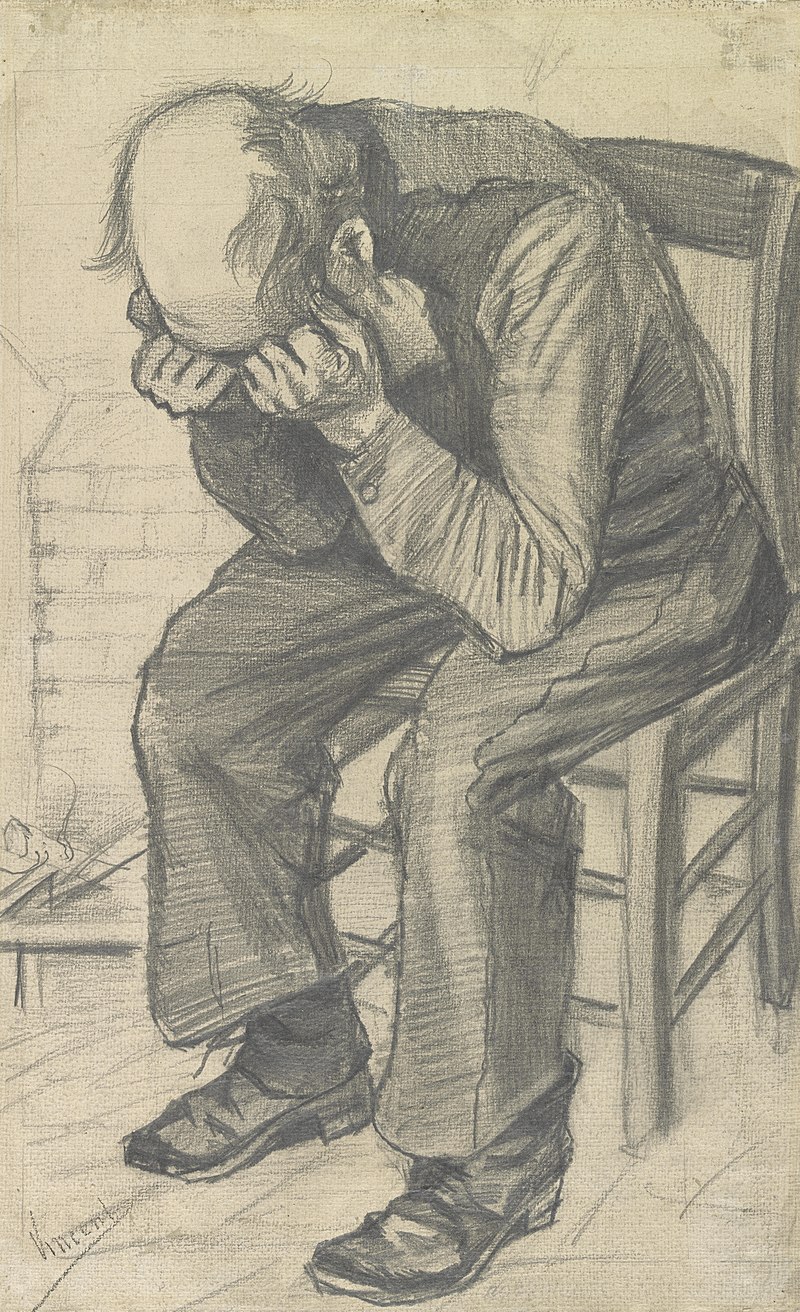
In May 1890 Van Gogh left the clinic in Saint-Rémy to move nearer to both Dr Paul Gachet in Auvers-sur-Oise and to Theo. Gachet was an amateur painter and had treated several other artists – Camille Pissarro had recommended him. Van Gogh’s first impression was that Gachet was “iller than I am, it seemed to me, or let’s say just as much.”[177]

Tree Roots, July 1890, Van Gogh Museum, Amsterdam
The painter Charles Daubigny moved to Auvers in 1861, and in turn drew other artists there, including Camille Corot and Honoré Daumier. In July 1890, Van Gogh completed two paintings of Daubigny’s Garden, one of which is likely his final work.[178]
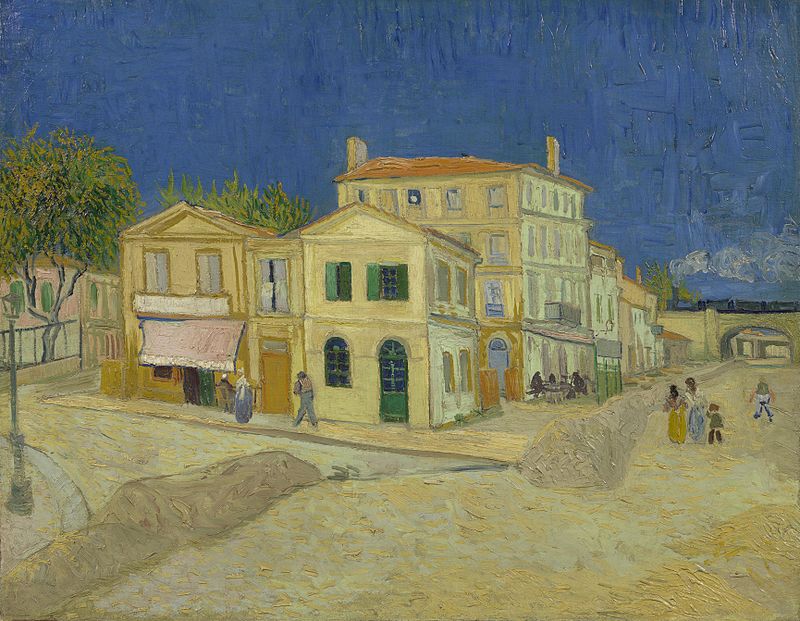
Van Gogh made several painting excursions during visits to the landscape around Arles. He made paintings of harvests, wheat fields and other rural landmarks of the area, including The Old Mill (1888); a good example of a picturesque structure bordering the wheat fields beyond.[116] At various points, Van Gogh painted the view from his window – at The Hague, Antwerp, and Paris. These works culminated in The Wheat Field series, which depicted the view from his cells in the asylum at Saint-Rémy.[255]
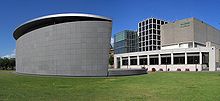
Van Gogh’s nephew and namesake, Vincent Willem van Gogh (1890–1978),[287] inherited the estate after his mother’s death in 1925. During the early 1950s he arranged for the publication of a complete edition of the letters presented in four volumes and several languages. He then began negotiations with the Dutch government to subsidise a foundation to purchase and house the entire collection.[288] Theo’s son participated in planning the project in the hope that the works would be exhibited under the best possible conditions. The project began in 1963; architect Gerrit Rietveld was commissioned to design it, and after his death in 1964 Kisho Kurokawa took charge.[289] Work progressed throughout the 1960s, with 1972 as the target for its grand opening.[287]
The Van Gogh Museum opened in the Museumplein in Amsterdam in 1973.[290] It became the second most popular museum in the Netherlands, after the Rijksmuseum, regularly receiving more than 1.5 million visitors a year. In 2015 it had a record 1.9 million;[291] 85 percent of the visitors come from other countries.[292]
Published: Jun 8, 2018
Latest Revision: Jun 8, 2018
Ourboox Unique Identifier: OB-495629
Copyright © 2018

 Skip to content