






Mel’s Musings on Bad Breath, 2018

Copyright © 2018
Back in the early 1980s I began working with Dr. (now Prof.) Ervin Weiss on a two-phase mouthwash which we hoped would bind and desorb oral bacteria and debris from the oral cavity based on the hydrophobic effect. At a meeting with a local pharmaceutical company (TEVA, now well known) they asked us whether the mouthwash might also ‘work against bad breath’. I was in my early 30s, and had never really thought about bad breath at all. It ended up turning into one of the main focuses of my scientific career!
I quickly discovered that practically no scientists in academia were doing research on bad breath (halitosis). There was little literature available (according to PubMed, among the 1977 articles related to bad breath, only some 230 were written prior to the mid-80s). There was Joseph Tonzetich at the University of British Columbia, who had been performing research showing that volatile sulfide compounds (VSC) in the breath could be assessed and correlated with malodor levels using gas chromatography. I soon met his student Ken Yaegaki and a very small number of scientists scattered around the world. Most of the researchers in the field were employed by mouthwash manufacturers and testing facilities. Their data were largely treated as company IP (intellectual property) and as a result they rarely published their techniques and approaches. Maybe that was a good thing. They sometimes designed methods that would specifically support claims of the particular products they were testing!
Jacob Gabbay and I started talking about developing a ‘bad breath diagnostic machine’ in the mid 80s but when Jacob first brought the portable Interscan 1170 monitor into the lab, we soon realized that Interscan had already begun manufacturing the type of instrument that we were looking for. They just didn’t know that it could be used for measuring oral malodor. Our original research studies showing the correlation between the Interscan monitors and oral malodor were published in two separate studies in 1991. Academic researchers no longer had to rely on complicated VSC apparatuses and protocols, and dentists could use the monitors in the own private practices to monitor their patients. There are now several other technologies with equivalent or perhaps even more robust results, but I am proud that we were able to lead the way in proposing simple quantitative testing methods, alongside odor judge testing. The use of a simple spoon (rather than gauze) to assess the odor from the back of the tongue was an accidental finding that enabled researchers to hone in on the tongue component of the odor. More recently Nir Sterer and I developed a color test which correlates with malodor levels, but this was only briefly commercialized and the product is no longer available.
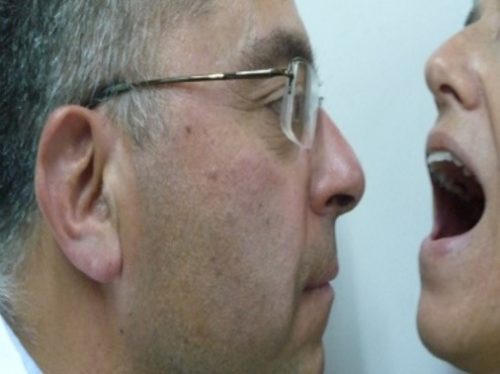
G.L. Grapp had shown back in 1933 that most cases of bad breath seemed to come from the very back of the tongue, and that this area was amenable to physical cleaning (however unpleasant). Tonzetich later showed that merely by eating breakfast, one could reduce the oral emission of VSC by some 70%. This was particularly helpful to us in our early days. We soon found that there were two major types of bad breath (back of tongue and subgingival), each with a distinctive odor and etiology. As patients began coming to the laboratory to seek advice (most universities at the time were not seeing individuals with malodor complaints on a regular basis), we were often able to make an initial diagnosis based on the character of the odor. With more practice I became increasingly adept at sniffing out various distinct types of bad breath: subgingival, back of tongue, dentures, nasal odor. This enabled me to help dentists and physicians with both common and rare cases (e.g., the woman who had placed a plastic bead up her nose as a young child which had remained there for over two decades).
- Future research, then should not lump all bad breaths together and treat them as a single condition or parameter. There is bad breath from the back of the tongue, which is distinct from bad breath from the gingiva, and both are quite distinct from bad breath from other sources. Some odors may contain more of a volatile sulfur component, others less. If you are a dentist in a study who is doubling as an odor judge, you may be scoring the gingival odor (which you are so accustomed to) as either higher or lower than a person outside your profession.
- There should be more microbiome studies that properly sample the back of the tongue. Sadly, I think that most researchers do not know how to sample the area properly. One has to go in with a spoon, and scrape and scoop the mucus film from an area at least 9 cm from the tip of the tongue (I measured it). That is where the odor is, and that is where we have to look for the microorganisms involved. I’m guessing that there will be surprises!
- Postnasal drip has been cited as the major cause of bad breath, by accumulating on the dorsal tongue and being putrefied there. But most everyone exudes postnasal drip, and not all of us have tongue malodor. Are some kinds of postnasal drip more sticky and ‘tongue-o-philic’ than others? Is it the nasal mucus that is being degraded rather than desquamating tongue epithelial cells? Do nasal microorganisms play a role? And are there malodorous gases beyond the VSC that contribute to the specific quality of tongue odor?
- Another source of concern about having bad breath is tonsilloliths. They are more common that it appears (some 5% of the population). And yet, we don’t know whether they contribute to bad breath or rather contribute to the self-estimation of sufferers that they contribute?
- Although most researchers consider the stomach as an extremely rare cause of bad breath, published studies have reported correlations between Helicobacter pylori and bad breath. Some studies show a link, but they are based on self-estimation of bad breath. Here again, the sampling population is key. If you take a hundred patients suffering from burps, gastric discomfort, etc. they may score themselves as having bad breath based on the level of their gastric ailment. Similarly, following antibiotic treatment, they will score an improvement. We must keep in mind that antibiotic treatment of Helicobacter infection will have a concomitant effect on oral microbiota. So improvements following treatment are to be anticipated, whether or not Helicobacter is a factor.
Clearly more research is needed to clarify the proposed relationship between Helicobacter and bad breath.
- Future research is needed to study ‘self-perceived halitosis’. Psychologists and psychiatrists have not yet realized that it seriously affects some 1% of the adult population and that it warrants investigation. Dentists who are the primary care givers for those with self-perception of bad breath need undergraduate and graduate training in this sensitive area.
- More care needs to be given to the time of day of the measurements. It is possible that there is a flux in tongue odor (due to meals and salive a flow) which is less reflected in gingival odor.
Published: Jul 22, 2018
Latest Revision: May 30, 2025
Ourboox Unique Identifier: OB-511350
Copyright © 2018

 Skip to content