







Eric Clapton

Copyright © 2020
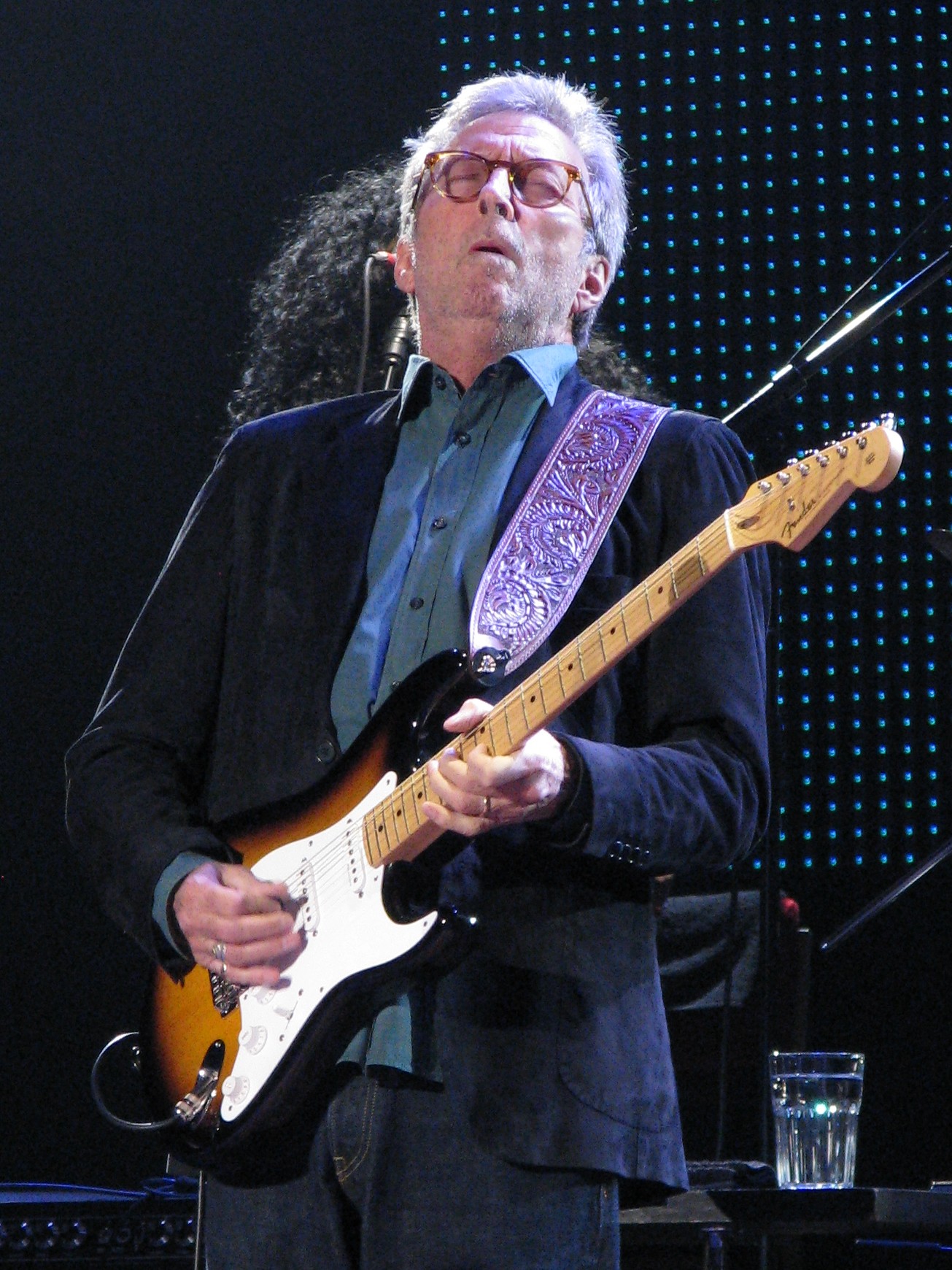
Eric Patrick Clapton is an English rock and blues guitarist, singer, and songwriter. He is the only three-time inductee to the Rock and Roll Hall of Fame: once as a solo artist and separately as a member of the Yardbirds and of Cream. Clapton has been referred to as one of the most important and influential guitarists of all time. Clapton ranked second in Rolling Stone’s list of the “100 Greatest Guitarists of All Time” and fourth in Gibson’s “Top 50 Guitarists of All Time”. He was also named number five in Time magazine’s list of “The 10 Best Electric Guitar Players” in 2009.
Early Life:
Eric Patrick Clapton was born March 30, 1945, in Ripley, Surrey, England. Clapton’s mother was only 16 years old at the time of his birth; his father was a 24-year-old Canadian soldier. As a single teenage mother, his mom was unprepared to raise a child on her own, so her mother and stepfather raised Clapton as their own.
Eric Clapton grew up in a very musical household. His grandmother was a skilled pianist, and his mother and uncle both enjoyed listening to big-band music. As it turns out, Clapton’s absent father was also a talented pianist. Around the age of eight, Clapton discovered the earth-shattering truth that the people he believed were his parents were actually his grandparents and that the woman he considered his older sister was in fact his mother.
The young Clapton, until then a good student and well-liked boy, grew sullen and reserved and lost all motivation to do his schoolwork. Clapton showed a high aptitude for art.
Clapton received an acoustic Hoyer guitar for his thirteenth birthday, but the inexpensive steel-stringed instrument was difficult to play and he briefly lost interest. Two years later Clapton picked it up again and started playing consistently. Clapton was influenced by the blues from an early age, and practised long hours to learn the chords of blues music by playing along to the records. He preserved his practice sessions using his portable Grundig reel-to-reel tape recorder, listening to them over and over until he felt he’d got it right.

Musical Start:
In 1961, Clapton studied at the Kingston College of Art but was dismissed at the end of the academic year because his focus remained on music rather than art. His guitar playing was so advanced that, by the age of 16, he was getting noticed. In 1962, Clapton started performing as a duo with fellow blues enthusiast David Brock in pubs around Surrey. When he was seventeen years old, Clapton joined his first band, an early British R&B group, the Roosters for a few months.
Clapton was especially taken with the blues guitar played by musicians such as Robert Johnson, Muddy Waters and Alexis Korner, the last of whom inspired Clapton to buy his first electric guitar—a relative rarity in England.
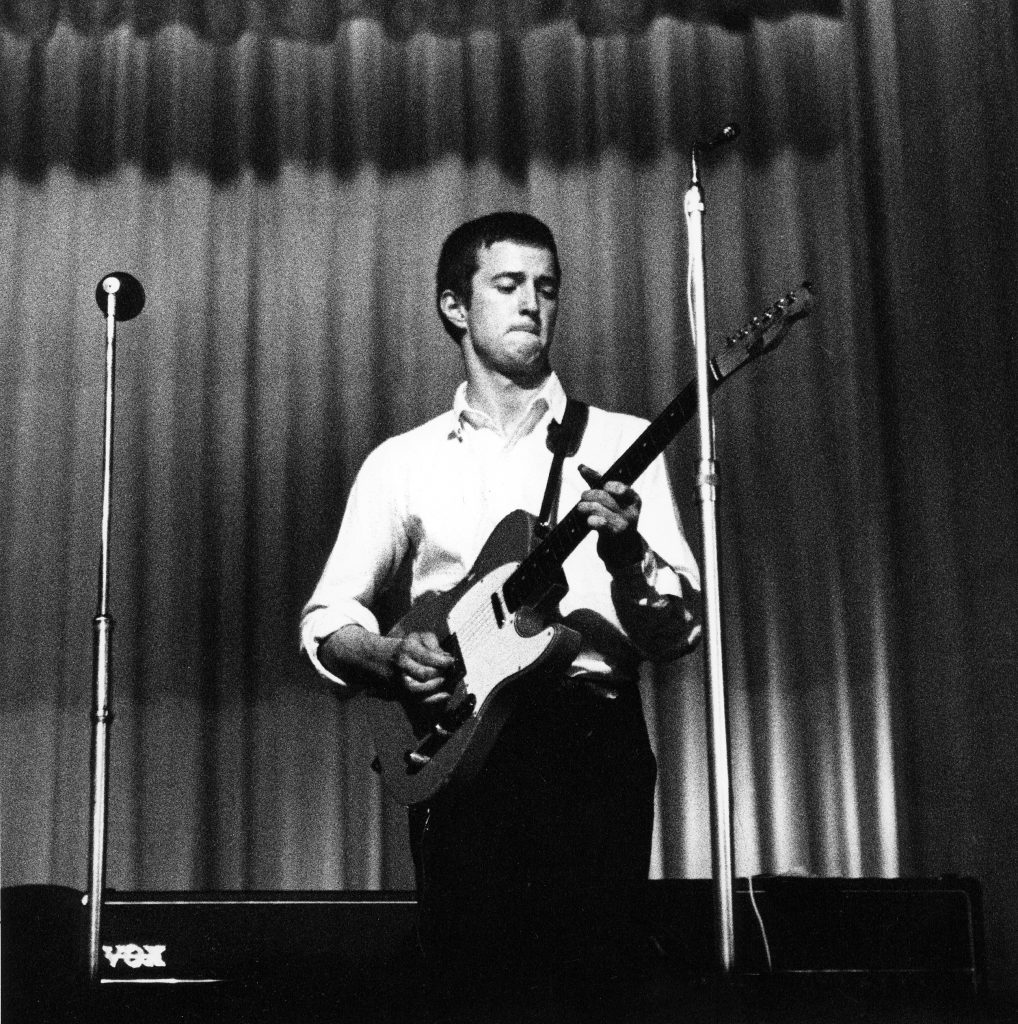
Finished with school, in 1963 Clapton started hanging around the West End of London and trying to break into the music industry as a guitarist. After few experiences that failled as a guitarist in a band, and already one of the most respected guitarists on the West End pub circuit, in October 1963 Clapton received an invitation to join a band called The Yardbirds. With The Yardbirds, Clapton recorded his first commercial hits, “Good Morning Little Schoolgirl” and “For Your Love,” but he soon grew frustrated with the band’s commercial pop sound and left the group in 1965. Synthesising influences from Chicago blues and leading blues guitarists such as Buddy Guy, Freddie King, and B.B. King, Clapton forged a distinctive style and rapidly became one of the most talked-about guitarists in the British music scene.
He left the Yardbirds on the day that “For Your Love” went public. Clapton had also a few musical experiences with John Mayall and others before his breakthrough.
Career Breakthrough:
Cream:
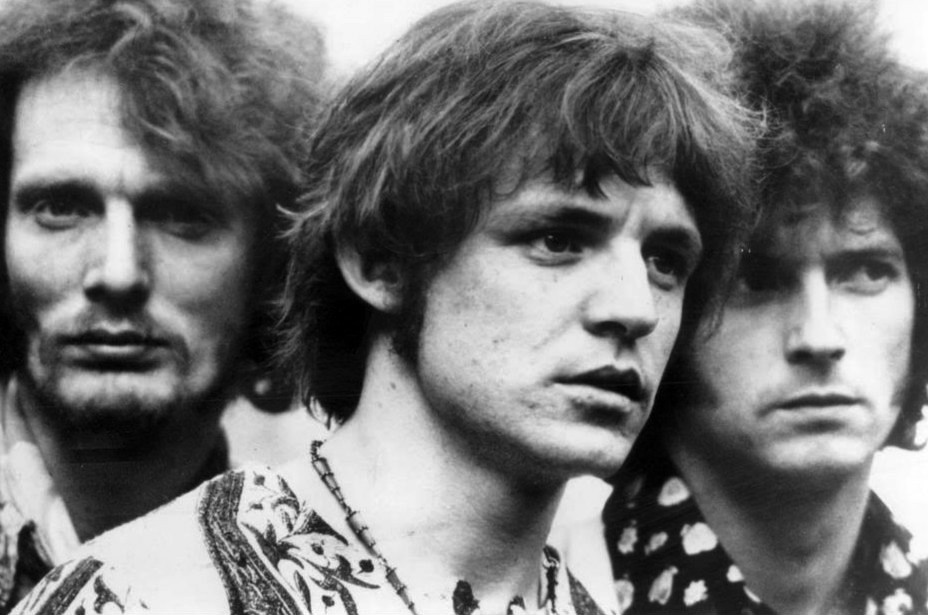
In July 1966, Clapton was invited by drummer Ginger Baker to play in his newly formed band Cream, one of the earliest supergroups, with Jack Bruce on bass. During his time with Cream, Clapton began to develop as a singer, songwriter and guitarist, though Bruce took most of the lead vocals and wrote the majority of the material with lyricist Pete Brown. Cream established its enduring legend with the high-volume blues jamming and extended solos of their live shows. By early 1967, fans of the emerging blues-rock sound in the UK had begun to portray Clapton as Britain’s top guitarist.
Clapton first visited the United States while touring with Cream. In March 1967, Cream performed a nine-show stand at the RKO Theater in New York. Clapton used the guitar for most of Cream’s recordings after Fresh Cream, particularly on Disraeli Gears, until the band broke up in 1968. One of the world’s best-known guitars, it symbolises the psychedelic era. Disraeli Gears contained Clapton’s searing guitar lines, Bruce’s soaring vocals and prominent, fluid bass playing, and Baker’s powerful, polyrhythmic jazz-influenced drumming. Together, Cream’s talents secured them as an influential power trio.
In 28 months, Cream had become a commercial success, selling millions of records and playing throughout the US and Europe. They redefined the instrumentalist’s role in rock and were one of the first blues-rock bands to emphasise musical virtuosity and lengthy jazz-style improvisation sessions. Their US hit singles include “Sunshine of Your Love” (No. 5, 1968), “White Room” (No. 6, 1968) and “Crossroads” (No. 28, 1969). Though Cream were hailed as one of the greatest groups of its day, and the adulation of Clapton as a guitar legend reached new heights, the supergroup was short-lived. Drug and alcohol use escalated tension between the three members, and conflicts between Bruce and Baker eventually led to Cream’s demise.
Clapton met George Harrison and became close friends with him after the Beatles shared a bill with the Clapton-era Yardbirds at the London Palladium. In 1968, Clapton played the lead guitar solo on Harrison’s “While My Guitar Gently Weeps”, from the Beatles’ self-titled double album. The pair would often play in studios and live together as each other’s guest.
Cream briefly reunited in 1993 to perform at the ceremony inducting them into the Rock and Roll Hall of Fame. A full reunion took place in May 2005, with Clapton, Bruce and Baker playing four sold-out concerts at London’s Royal Albert Hall, and three shows at New York’s Madison Square Garden that October.
Blind Faith, Delaney and Bonnie and Friends
Clapton’s next group, Blind Faith, was formed in 1969. The supergroup debuted before 100,000 fans in London’s Hyde Park on 7 June 1969. Blind Faith dissolved after less than seven months.
Clapton subsequently toured as a sideman for an act that had opened for Blind Faith, Delaney and Bonnie and Friends, and also performed as a member of Lennon’s Plastic Ono Band.
Delaney Bramlett encouraged Clapton in his singing and writing. Using the Bramletts’ backing group and an all-star cast of session players (including Leon Russell and Stephen Stills), Clapton recorded his first solo album during two brief tour hiatuses, titled Eric Clapton. Delaney Bramlett co-wrote six of the songs with Clapton, also producing the LP, and Bonnie Bramlett co-wrote “Let It Rain”. The album yielded the unexpected US No. 18 hit, J. J. Cale’s “After Midnight”.
During this period, Clapton also recorded with artists such as Dr. John, Leon Russell, Billy Preston, Ringo Starr, George Harrison and Dave Mason.
Solo career breakthrough:
Layla & Derek and the Dominos:
With the intention of counteracting the “star” cult faction that had begun to form around him, Clapton assembled a new band. It was his intention to show that he need not fill a starring role, and functioned well as a member of an ensemble.
The band was originally called “Eric Clapton and Friends”.
Clapton’s close friendship with George Harrison brought him into contact with Harrison’s wife, Pattie Boyd, with whom he became deeply infatuated.
The album contained the hit love song “Layla”, inspired by the classical poet of Persian literature, Nizami Ganjavi’s The Story of Layla and Majnun.
Clapton’s career successes in the 1970s were in stark contrast with the struggles he coped with in his personal life, which was troubled by romantic longings and drug and alcohol addiction. Still infatuated with Boyd and torn by his friendship with Harrison, he withdrew from recording and touring to isolation in his Surrey residence as the Dominos broke up. He nursed a heroin addiction, which resulted in a lengthy career hiatus interrupted only by performing at Harrison’s Concert for Bangladesh benefit shows in New York in August 1971; there, he passed out on stage, was revived, and managed to finish his performance. In January 1973, the Who’s Pete Townshend organised a comeback concert for Clapton at London’s Rainbow Theatre, titled the “Rainbow Concert”, to help Clapton kick his addiction. Clapton returned the favour by playing “The Preacher” in Ken Russell’s film version of the Who’s Tommy in 1975. His appearance in the film (performing “Eyesight to the Blind”) is notable as he is clearly wearing a fake beard in some shots, the result of deciding to shave off his real beard after the initial takes in an attempt to force the director to remove his earlier scene from the film and leave the set.
In 1974, Clapton started living with Boyd (they would not marry until 1979) and was no longer using heroin (although he gradually began to drink heavily). He assembled a low-key touring band that included Radle, Miami guitarist George Terry, keyboardist Dick Sims (who died in 2011), drummer Jamie Oldaker, and vocalists Yvonne Elliman and Marcy Levy (also known as Marcella Detroit). With this band Clapton recorded 461 Ocean Boulevard (1974), an album with an emphasis on more compact songs and fewer guitar solos; the cover version of “I Shot the Sheriff” was Clapton’s first number one hit and was important in bringing reggae and the music of Bob Marley to a wider audience. The 1975 album There’s One in Every Crowd continued this trend. The album’s original title, The World’s Greatest Guitar Player (There’s One in Every Crowd), was changed before pressing, as it was felt its ironic intention would be misunderstood. The band toured the world and subsequently released the 1975 live LP E. C. Was Here. Clapton continued to release albums and toured regularly. Highlights of the period include No Reason to Cry (a collaboration with Bob Dylan and The Band); Slowhand, which contained “Wonderful Tonight” and a second J. J. Cale cover, “Cocaine”. In 1976 he performed as one of a string of notable guests at the farewell performance of The Band, filmed in a Martin Scorsese documentary titled The Last Waltz.
Personal life:
Clapton briefly dated funk singer Betty Davis. He married Pattie Boyd in 1979, but their marriage was marred by his infidelities and domestic violence. In an interview with The Sunday Times, Clapton admitted he was abusive to Boyd when he was a “full-blown” alcoholic. In 1984 while recording Behind the Sun, Clapton began a relationship with Yvonne Kelly, the manager of AIR Studios Montserrat. Although both were married to other partners at the time, they had a daughter in January 1985. She was named Ruth Kelly Clapton, but her existence was kept from the public until the media realized she was his child in 1991.
He divorced Pattie Boyd in 1988 following his affair with Italian model Lory Del Santo, who gave birth to their son, Conor, on 21 August 1986. Conor died on 20 March 1991 at the age of four after falling out of an open bedroom window on the 53rd floor of a Manhattan apartment building.
In 1998 Clapton, then 53, met 22-year-old administrative assistant Melia McEnery in Columbus, Ohio, at a party given for him after a performance. He quietly dated her for a year, and went public with the relationship in 1999. They married on 1 January 2002 at St Mary Magdalene church in Clapton’s birthplace, Ripley. They have three daughters, Julie Rose (born 13 June 2001), Ella May (born 14 January 2003), and Sophie Belle (born 1 February 2005). His grandson Isaac Eric Owen Bartlett was born in June 2013 to his oldest daughter Ruth.
Hard Times
After the breakup of Cream, Clapton formed yet another band, Blind Faith, but the group broke up after only one album and a disastrous American tour. Then, in 1970, he formed Derek and the Dominos, and went on to compose and record one of the seminal albums of rock history, Layla and Other Assorted Love Songs. A concept album about unrequited love, Clapton wrote Layla to express his desperate affection for Pattie Boyd, the wife of the Beatles’ George Harrison. The album was critically acclaimed but a commercial failure, and in its aftermath a depressed and lonely Clapton deteriorated into three years of heroin addiction.
Clapton finally kicked his drug habit and reemerged onto the music scene in 1974 with two concerts at London’s Rainbow Theater organized by his friend Pete Townshend of The Who. Later that year he released 461 Ocean Boulevard, featuring one his most popular singles, a cover of Bob Marley’s “I Shot the Sheriff.” The album marked the beginning of a remarkably prolific solo career during which Clapton produced notable album after notable album. Highlights include No Reason to Cry (1976), featuring “Hello Old Friend”; Slowhand (1977), featuring “Cocaine” and “Wonderful Tonight”; and Behind the Sun (1985), featuring “She’s Waiting” and “Forever Man.”
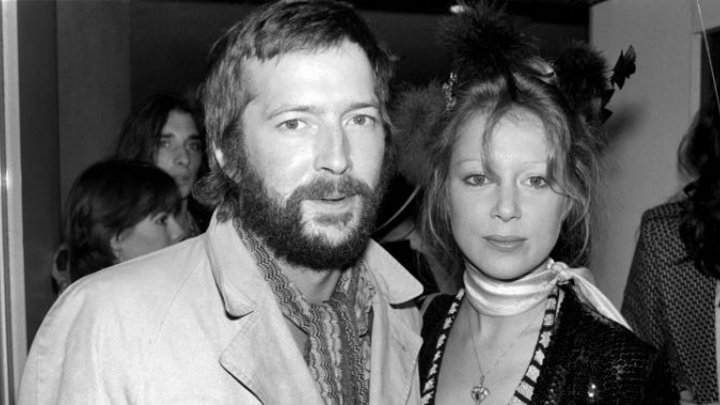
Despite his great musical productivity during these years, Clapton’s personal life remained in woeful disarray. In 1979, five years after her divorce from George Harrison, Pattie Boyd finally did marry Eric Clapton. However, by this time Clapton had simply replaced his heroin addiction with alcoholism, and his drinking placed a constant strain on their relationship. He was an unfaithful husband and conceived two children with other women during their marriage.
A yearlong affair with Yvonne Kelly produced a daughter, Ruth, in 1985, and an affair with Italian model Lory Del Santo led to a son, Conor, in 1986. Clapton and Boyd divorced in 1989. In 1991, Eric Clapton’s son Conor died when he fell out of the window of his mother’s apartment. The tragedy took a heavy toll on Eric Clapton and also inspired one of his most beautiful and heartfelt songs, “Tears in Heaven.”
Hard Times:
In 1970, he composed and recorded one of the seminal albums of rock history, Layla and Other Assorted Love Songs. A concept album about unrequited love, Clapton wrote Layla to express his desperate affection for Pattie Boyd, the wife of the Beatles’ George Harrison. The album was critically acclaimed but a commercial failure, and in its aftermath a depressed and lonely Clapton deteriorated into three years of heroin addiction.
Clapton finally kicked his drug habit and reemerged onto the music scene in 1974 with two concerts at London’s Rainbow Theater organized by his friend Pete Townshend of The Who. Later that year he released 461 Ocean Boulevard, featuring one his most popular singles, a cover of Bob Marley’s “I Shot the Sheriff.” The album marked the beginning of a remarkably prolific solo career during which Clapton produced notable album after notable album. Highlights include No Reason to Cry (1976), featuring “Hello Old Friend”; Slowhand (1977), featuring “Cocaine” and “Wonderful Tonight”; and Behind the Sun (1985), featuring “She’s Waiting” and “Forever Man.”
Despite his great musical productivity during these years, Clapton’s personal life remained in woeful disarray. In 1979, five years after her divorce from George Harrison, Pattie Boyd finally did marry Eric Clapton. However, by this time Clapton had simply replaced his heroin addiction with alcoholism, and his drinking placed a constant strain on their relationship. He was an unfaithful husband and conceived two children with other women during their marriage.
A yearlong affair with Yvonne Kelly produced a daughter, Ruth, in 1985, and an affair with Italian model Lory Del Santo led to a son, Conor, in 1986. Clapton and Boyd divorced in 1989. In 1991, Eric Clapton’s son Conor died when he fell out of the window of his mother’s apartment. The tragedy took a heavy toll on Eric Clapton and also inspired one of his most beautiful and heartfelt songs, “Tears in Heaven.”
In 2007 Clapton learned more about his father, a Canadian soldier who left the UK after the war. Although Clapton’s grandparents eventually told him the truth about his parentage, he only knew that his father’s name was Edward Fryer. This was a source of disquiet for Clapton, as witnessed by his 1998 song “My Father’s Eyes”. A Montreal journalist named Michael Woloschuk researched Canadian Armed Forces service records and tracked down members of Fryer’s family, and finally pieced together the story. He learned that Clapton’s father was Edward Walter Fryer, born 21 March 1920, in Montreal and died 15 May 1985 in Newmarket, Ontario. Fryer was a musician (piano and saxophone) and a lifelong drifter who was married several times, had several children, and apparently never knew that he was the father of Eric Clapton. Clapton thanked Woloschuk in an encounter at Macdonald–Cartier Airport, in Ottawa, Ontario, Canada.
1980s – present:
A few months after his discharge, Clapton began working on his next album, against doctors’ orders. Working with Tom Dowd, he produced what he thought as his “most forced” album to date, Money and Cigarettes. Clapton chose the name of the album “because that’s all I saw myself having left” after his first rehabilitation from alcoholism.
In 1984 he performed on former Pink Floyd member Roger Waters’ solo album The Pros and Cons of Hitch Hiking, and participated in the supporting tour.
The album August was suffused with Phil Collins’s trademark drum and horn sound, and became Clapton’s biggest seller in the UK to date, matching his highest chart position, number 3. The album’s first track, the hit “It’s in the Way That You Use It”, appeared in the Tom Cruise–Paul Newman film The Color of Money. While on tour with the hit August, two concert videos were recorded of the four-man band: Eric Clapton Live from Montreux and Eric Clapton and Friends. Clapton later remade “After Midnight” as a single and a promotional track for the Michelob beer brand. At the 1987 Brit Awards in London, Clapton was awarded the prize for Outstanding Contribution to Music.
In 1988 he played with Dire Straits and Elton John at the Nelson Mandela 70th Birthday Tribute at Wembley Stadium and the Prince’s Trust rock gala at the Royal Albert Hall. In 1989, Clapton released Journeyman, an album that covered a wide range of styles, including blues, jazz, soul and pop.
The 1990s brought a series of 32 concerts to the Royal Albert Hall. At the 35th Annual Grammy Awards, Clapton received six Grammys for the single “Tears in Heaven” and his Unplugged album, for which Clapton performed live in front of a small audience on 16 January 1992. The album reached number one on the Billboard 200, and is certified Diamond by the RIAA for selling over 10 million copies in the US. It reached number two in the UK Albums Chart and is certified four times platinum in the UK. On 9 September 1992, Clapton performed “Tears in Heaven” at the 1992 MTV Video Music Awards, and won the award for Best Male Video.
In 1992 Clapton received the Ivor Novello Award for Lifetime Achievement from the British Academy of Songwriters, Composers and Authors.
Clapton’s 1996 recording of the Wayne Kirkpatrick/Gordon Kennedy/Tommy Sims tune “Change the World” (on the soundtrack of the film Phenomenon) won the Grammy Award for Song of the Year in 1997, the same year he recorded Retail Therapy (an album of electronic music with Simon Climie under the pseudonym TDF). On 15 September 1997, Clapton appeared at the Music for Montserrat concert at the Royal Albert Hall, London, performing “Layla” and “Same Old Blues” before finishing with “Hey Jude” alongside fellow English artists Paul McCartney, Elton John, Phil Collins, Mark Knopfler and Sting. That autumn, Clapton released the album Pilgrim, the first record containing new material for almost a decade.
At the 41st Annual Grammy Awards on 24 February 1999, Clapton received his third Grammy Award for Best Male Pop Vocal Performance, for his song “My Father’s Eyes”. In October 1999, the compilation album, Clapton Chronicles: The Best of Eric Clapton, was released, which contained a new song, “Blue Eyes Blue”, that also appears in soundtrack for the film, Runaway Bride. Clapton finished the twentieth century with collaborations with Carlos Santana and B.B. King.
Collaboration albums:
Clapton released the album Reptile in 2001. In 2004, Clapton released two albums of covers of songs by bluesman Robert Johnson, Me and Mr. Johnson and Sessions for Robert J. In 2004, Rolling Stone ranked Clapton No. 53 on their list of the “100 Greatest Artists of All Time”.
In 2005, Clapton, Jack Bruce, and Ginger Baker reunited as Cream for a series of concerts at the Royal Albert Hall in London. Concert recordings were released on CD and DVD. Later, Cream performed in New York at Madison Square Garden. Clapton’s first album of new original material in nearly five years, Back Home, was released on Reprise Records on 30 August.
A collaboration with guitarist J. J. Cale, The Road to Escondido, was released on 7 November 2006, featuring Derek Trucks and Billy Preston. Trucks became the third member of the Allman Brothers Band to tour supporting Clapton.
On May 2006, Clapton performed with Queen drummer Roger Taylor and former Pink Floyd bassist/songwriter Roger Waters at Highclere Castle, Hampshire, in support of the Countryside Alliance, which promotes issues relating to the British countryside. On 13 August 2006, Clapton made a guest appearance at the Bob Dylan concert in Columbus, Ohio, playing guitar on three songs in Jimmie Vaughan’s opening act. The chemistry between Trucks and Clapton convinced him to invite the Derek Trucks Band to open for Clapton’s set at his 2007 Crossroads Guitar Festival. Trucks remained on set afterward and performed with Clapton’s band throughout his performances.
On 26 February 2008, it was reported that North Korean officials had invited Clapton to play a concert in the communist state. Clapton’s management received the invitation and passed it on to the singer, who agreed in principle and suggested it take place sometime in 2009. Kristen Foster, a spokesperson, said, “Eric Clapton receives numerous offers to play in countries around the world”, and “[t]here is no agreement whatsoever for him to play in North Korea”. In February 2008 Clapton performed with his long-time friend Steve Winwood at Madison Square Garden and guested on his recorded single, “Dirty City”, on Winwood’s album Nine Lives. The two former Blind Faith bandmates met again for a series of 14 concerts throughout the United States in June 2009. Clapton’s 2008 Summer Tour began on 3 May at the Ford Amphitheatre, Tampa, Florida, and then moved to Canada, Ireland, England, Norway, Iceland, Denmark, Poland, Germany, and Monaco. On 28 June 2008, he headlined Saturday night for Hard Rock Calling 2008 in London’s Hyde Park (previously Hyde Park Calling) with support from Sheryl Crow and John Mayer. In September 2008 Clapton performed at a private charity fundraiser for The Countryside Alliance at Floridita in Soho, London, that included such guests as the London Mayor Boris Johnson.
On 4 May 2009 Clapton appeared at the Royal Albert Hall, playing “Further on Up the Road” with Joe Bonamassa.
Clapton was scheduled to perform at the Rock and Roll Hall of Fame’s 25th anniversary concert in Madison Square Garden on 30 October 2009, but cancelled due to gallstone surgery.Van Morrison (who also cancelled) said in an interview that he and Clapton were to do a “couple of songs”, but that they would do something else together at “some other stage of the game”.
On 15 October 2013, Clapton’s popular Unplugged album and concert DVD were re-released, titled Unplugged: Expanded & Remastered. On 20 November 2013, Warner Bros released Crossroads Guitar Festival 2013 in CD/DVD/Blu-ray. On 30 April 2014, Clapton announced the release of The Breeze: An Appreciation of JJ Cale as an homage to J. J. Cale who died on 26 July 2013. This tribute album is named after the 1972 single “Call Me the Breeze” and comprises 16 Cale songs performed by Clapton, Mark Knopfler, John Mayer, Willie Nelson, Tom Petty and others. On 21 June 2014, Clapton abruptly walked off stage during a concert at the Glasgow Hydro. Although he did return to perform one final song, thousands of fans were upset by the lack of explanation from Clapton or the venue and booed after the concert ended around 40 minutes before advertised to finish. Both Clapton and the venue apologised the next day, blaming ‘technical difficulties’ for making sound conditions ‘unbearable’ for Clapton on stage. A week later he confirmed his retirement plans attributing his decision to the road being “unbearable” in addition to “odd ailments” that may force him to put down his guitar permanently. In a 2016 interview with Classic Rock magazine, Clapton revealed that he had been diagnosed with peripheral neuropathy in 2013, a condition involving damage to peripheral nerves that typically causes stabbing, burning, or tingling pain in the arms and legs.
Clapton performed two shows at Madison Square Garden in New York on 1 and 3 May 2015 followed by a 7-night residency at London’s Royal Albert Hall from 14 to 23 May 2015 to celebrate his 70th birthday on 30 March. The shows also mark 50 years since Clapton first played at the Royal Albert Hall – his debut was on 7 December 1964 when he performed as part of The Yardbirds for the BBC’s Top Beat Show. The concert film, Slowhand at 70 – Live at the Royal Albert Hall, was released by Eagle Rock Entertainment on 13 November 2015 on DVD, CD, Blu-ray and LP. The 2-night concerts in the US marked the 46th anniversary since Clapton, with Cream, opened the “new” Madison Square Garden on 2 November 1968. Clapton has performed more times at Madison Square Garden than any other US venue, a total of 45 times. On 20 May 2016, Clapton released his twenty-third studio album I Still Do. On 30 September 2016 the live-album Live in San Diego was released. In August 2018, Clapton announced that he had recorded his twenty-fourth studio album, Happy Xmas, which consists of blues-tinged interpretations of Christmas songs, with the album released on 12 October.
On 2019, The New York Times Magazine listed Eric Clapton among hundreds of artists whose material was reportedly destroyed in the 2008 Universal fire.
Published: Apr 2, 2020
Latest Revision: Apr 2, 2020
Ourboox Unique Identifier: OB-763475
Copyright © 2020

 Skip to content