







From AI to A+ evaluation analysis

Copyright © 2024
Analysis of eTwinning project’s post-survey results
Teachers
Experience with eTwinning projects
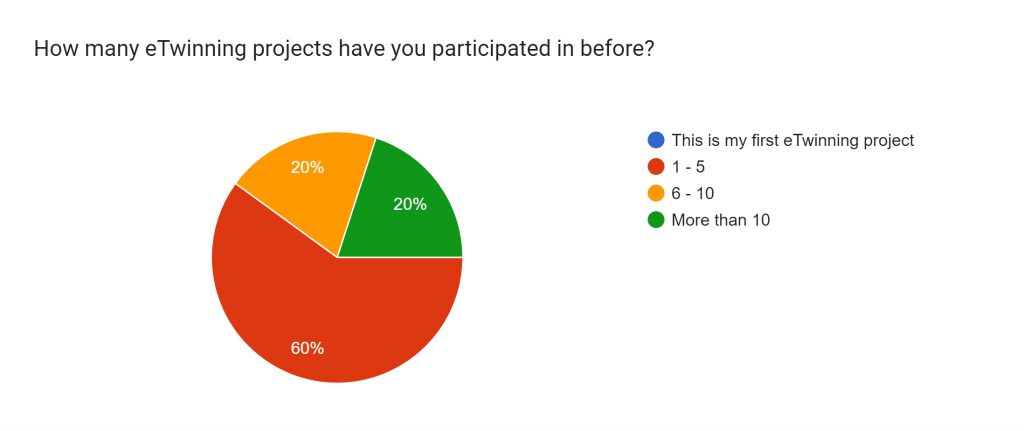
The data reveals that while a majority of participants had prior experience with eTwinning projects, a notable 60% were rather new to the platform. This suggests that the project successfully attracted new participants while retaining experienced users. This balance is beneficial for peer learning and sharing best practices among participants.
Effectiveness of Teaching About Sustainability
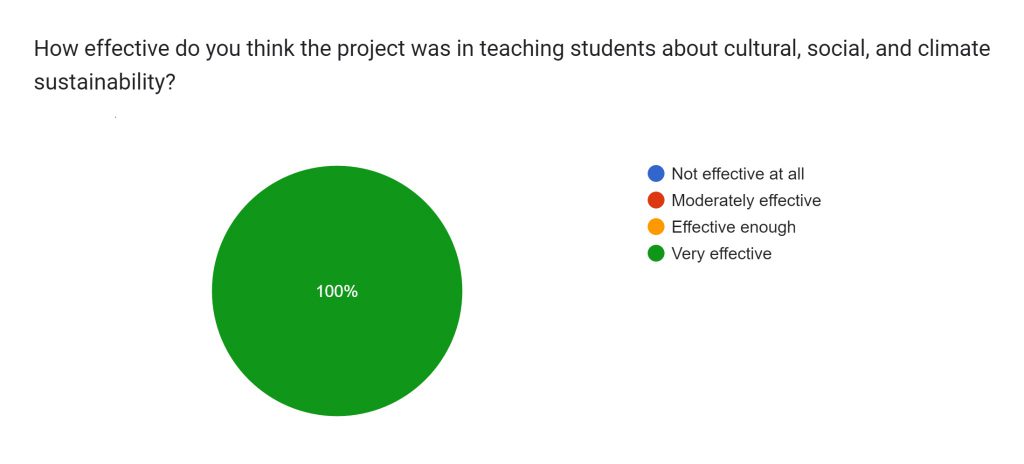
A 100 % of participants found the teaching about sustainability to be very effective. This indicates that the project was successful in its sustainability education objectives. The participants were pleased with comprehensive and creative activities and resources and differentiated instruction strategies.
Experience in Using AI for Educational Purposes Before the Project
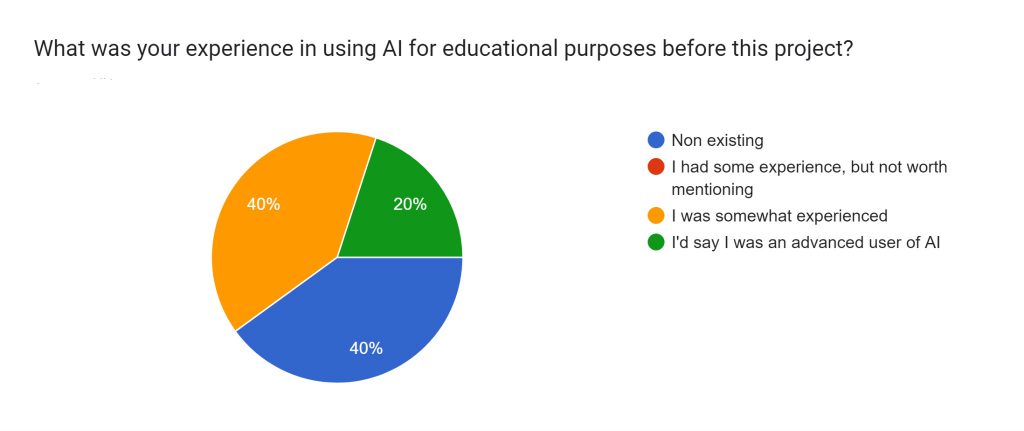
With 40 % of the participants having no prior experience with AI in education, the project faced the challenge of introducing a new concept to many. The fact that 40% had limited or no experience suggests that the project likely needed to include foundational AI training. The successful engagement and learning about AI indicate that the project effectively supported these teachers.
Importance of teaching various topics
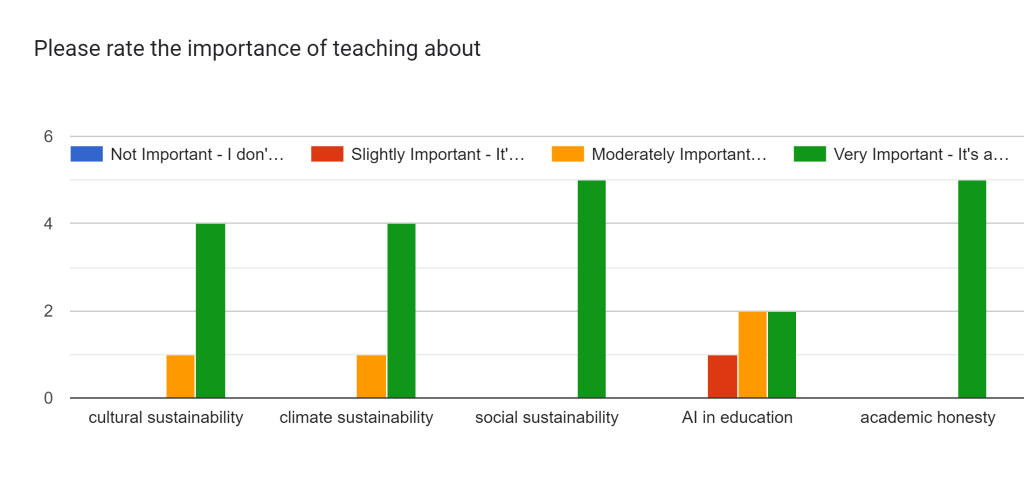
The high importance ratings for sustainability, AI, and academic honesty reflect contemporary educational priorities. The overwhelming support for sustainability aligns well with the project’s focus. The strong support for AI in education also underscores the relevance of these topics in modern education.
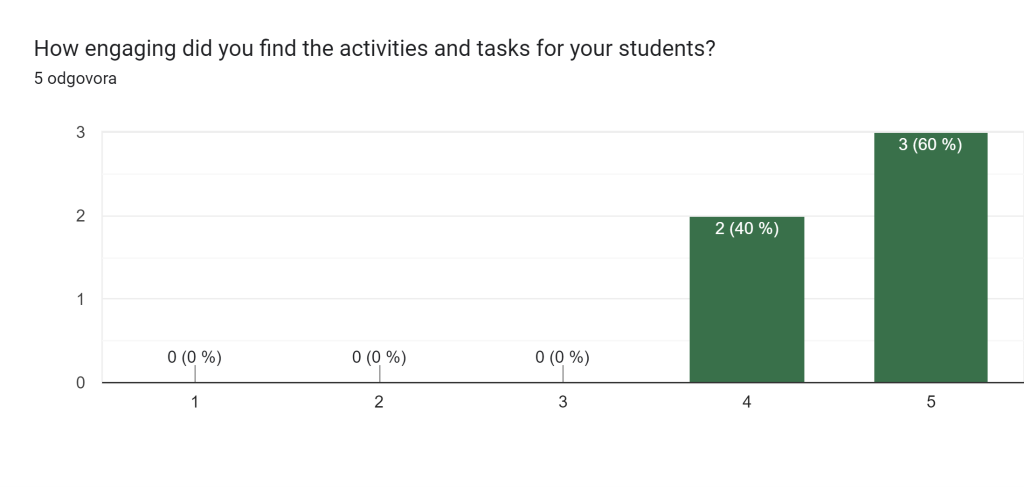
Engagement Level of Activities
The engagement levels were high, with 60 % of participants finding the activities very engaging and 40 % engaging. This suggests that the activities were well-designed and effectively delivered.
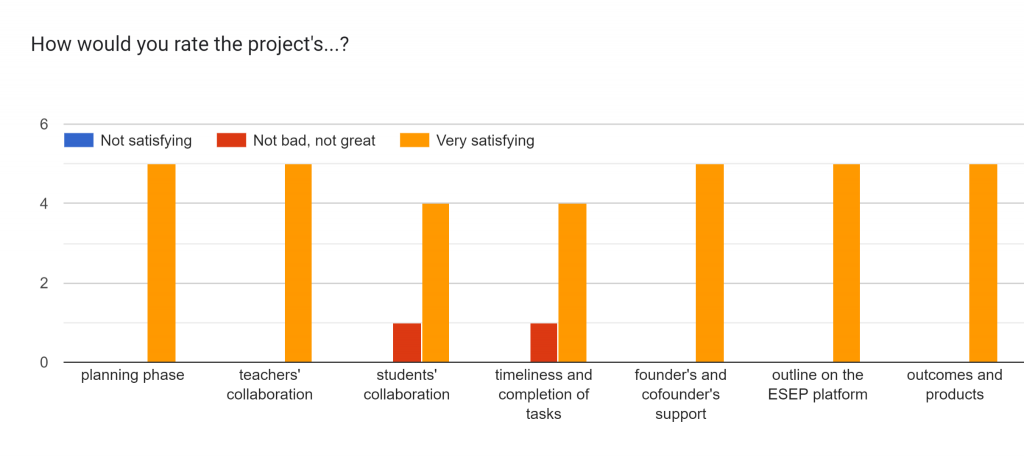
Overall Project Rating
The overall positive ratings for the project’s planning phase, teacher and student collaboration, support, timeliness and project outcomes indicate a high level of satisfaction among participants.
Conclusion
The post-survey analysis reveals that the eTwinning project was largely successful, particularly in teaching about sustainability and engaging participants. The data indicates that while most teachers found the project effective and engaging, there are areas for growth, especially in providing foundational support for those new to AI in education and improving student collaboration strategies. Future projects can build on this feedback to further improve their impact and reach.
Students
Gender, age and previous experience with eTwinning projects
The gender distribution is fairly balanced, with a slight majority of female students. This balance indicates an inclusive project environment that appeals to both genders equally.
The age range is well-distributed across the 10-16 years age group. This spread suggests that the project content was appropriately tailored to engage a wide age range effectively.
A significant majority (60%) of students were participating in their first eTwinning project. This suggests that the project was effective in attracting new participants, which is crucial for expanding the reach and impact of eTwinning initiatives.
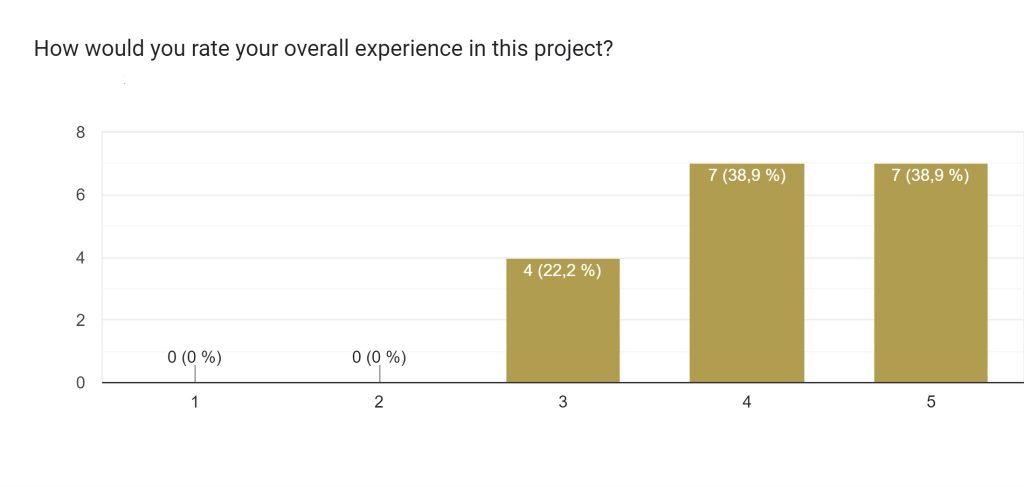
Enjoyment of overall experience with the program
The high levels of enjoyment (73 % either loved or liked it) indicate that the activities were engaging and well-received by the students. The 20 % who enjoyed it moderately point to the need for further diversifying activities to cater to different interests.
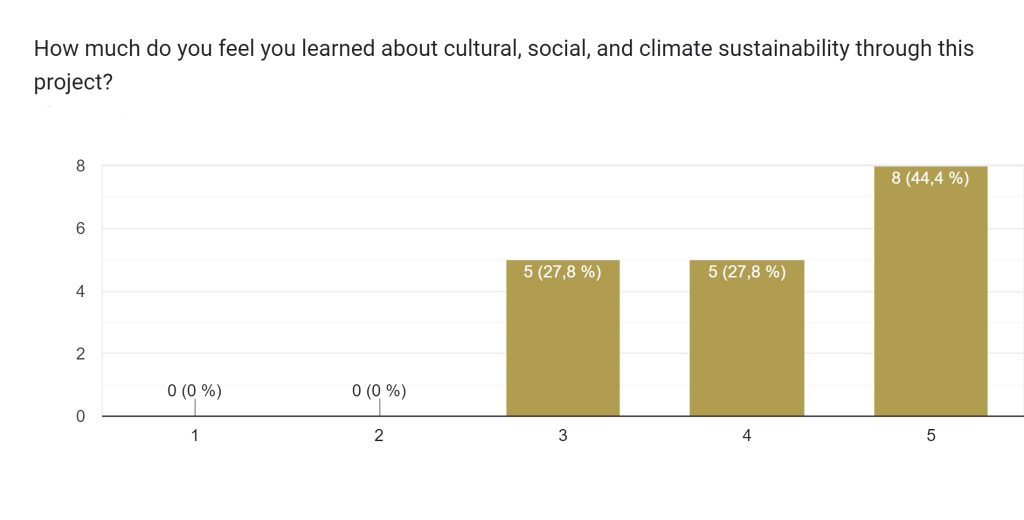
How much they learned about Project Topics
A large majority (44 % and 27 %) found the topics on cultural, social, and climate sustainability to be relevant, underscoring the project’s alignment with current global issues and its success in making these topics accessible and engaging for students and their better understanding.
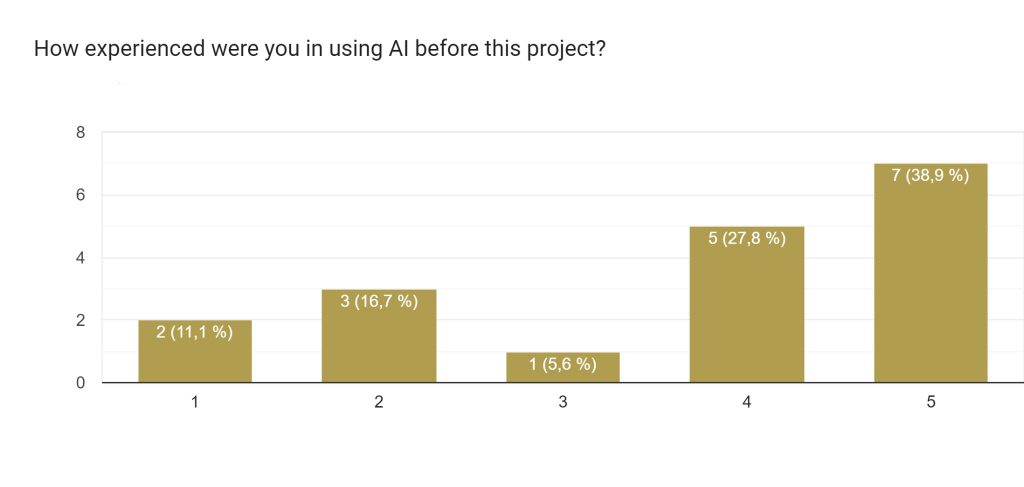
Previous experience with AI
The majority of students (66.7%) rated their experience with AI at levels 4 and 5, indicating a high level of pre-existing knowledge. This suggests that many participants were already familiar with AI, which may have facilitated deeper engagement and understanding during the project. However, there was also a significant portion (27.8%) with minimal to limited experience (levels 1 and 2), highlighting the need for introductory resources to support these learners.
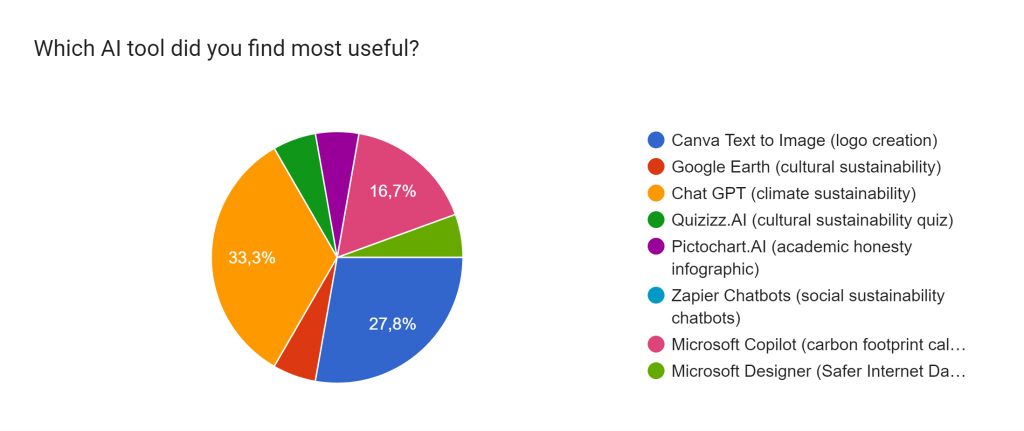
Preferred AI tools
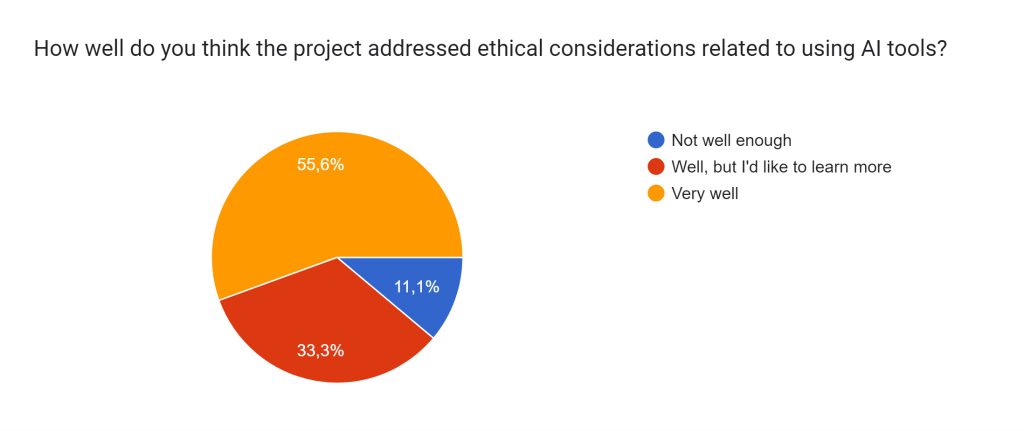
Ethical considerations of using AI
The pie chart depicts how well students felt the project addressed ethical considerations related to using AI tools.
Over half of the students felt the project did an excellent job addressing ethical issues.
Most students were satisfied with how the project handled ethical considerations, though there is a notable interest in more comprehensive coverage on this topic. This suggests that while the project succeeded in this area, there is room for deeper exploration and discussion of ethics in AI use.
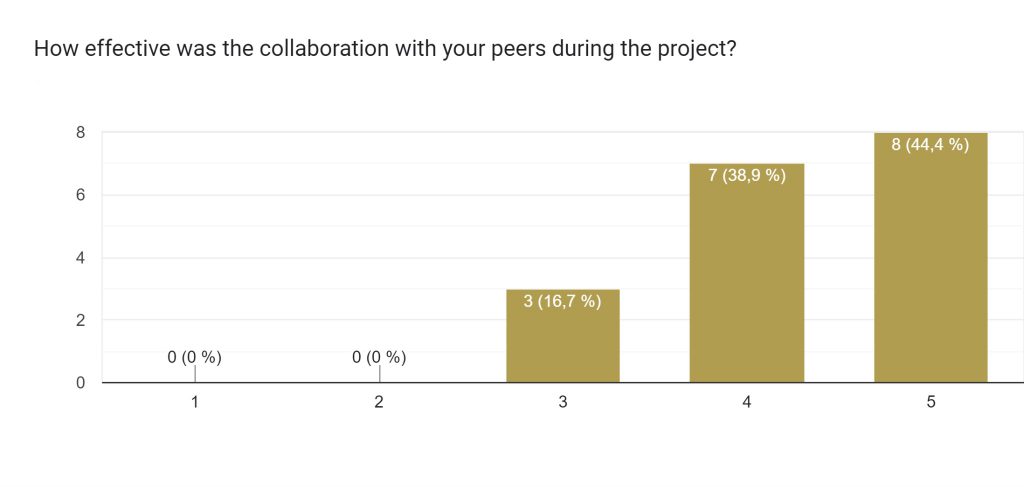
Student collaboration
A vast majority of students (over 80 %) rated the collaboration among students very effective, whereas a small number of students thought it was medium effective.
Thanks to engaging activities, collaborative platforms, zoom meetings and ESEP forums, students had a unique opportunity to meet and collaborate with their peers from other countries which fosters cultural sustainability in a very evident way.
Conclusion
The student post-survey results indicate a high level of success for the “From AI to A+” eTwinning project. The project effectively engaged a diverse, international group of students, many of whom were new to eTwinning. The activities were enjoyable and educational, particularly in enhancing students’ understanding of AI and its ethical implications. The strong relevance of the topics to students’ interests and contemporary issues further demonstrates the project’s effectiveness.
Published: Jun 23, 2024
Latest Revision: Jun 23, 2024
Ourboox Unique Identifier: OB-1598924
Copyright © 2024

 Skip to content